# Table 1 - Outline of the Article
I. Introduction
- Definition of mold upenders and their role in the plastics industry
- Importance of mold upenders in the manufacturing process
II. Traditional Mold Upending Methods
- Challenges and limitations of traditional upending methods
- Potential safety risks associated with mold upending
III. Advanced Mold Upending Solutions
- Automated and semi-automated mold upenders
- Benefits and cost savings of advanced solutions
IV. Automation in the Plastics Industry
- Industry trends towards automation and robotic solutions
- Impact of automation on mold upending
V. Future Developments
- Advancements in robotics and technology
- Evolving safety regulations and standards
- Potential for further innovation and disruption in mold upending
VI. The Importance of Mold Upenders in a Sustainable Industry
- Mold upenders and waste reduction
- Role of mold upenders in circular and closed-loop systems
VII. Conclusion
- Summary of key takeaways
- Thoughts on the future of mold upenders in the plastics industry
# Table 2 - Article
## The Future of Mold Upenders in the Plastics Industry
The plastics industry has long relied on mold upenders to improve production efficiency and facilitate mold changes. These machines are critical for upending heavy injection molds, allowing for easy and safe mold changes. However, limitations of traditional upending methods and the growing demand for automation have paved the way for new and innovative solutions in mold upending.
### Traditional Mold Upending Methods
Most mold upenders have historically been operated manually or with very limited automation. These machines typically rely on overhead cranes or hoists to lift and flip molds, a process that can be slow, labor-intensive, and dangerous. Manual upending often requires multiple workers, each exerting physical labor to move heavy molds, increasing the likelihood of workplace injuries. Additionally, traditional methods are not always suitable for larger, more complex molds.
### Advanced Mold Upending Solutions
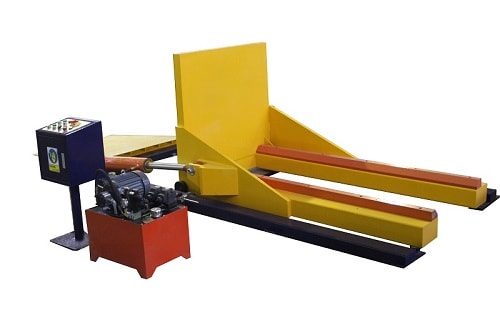
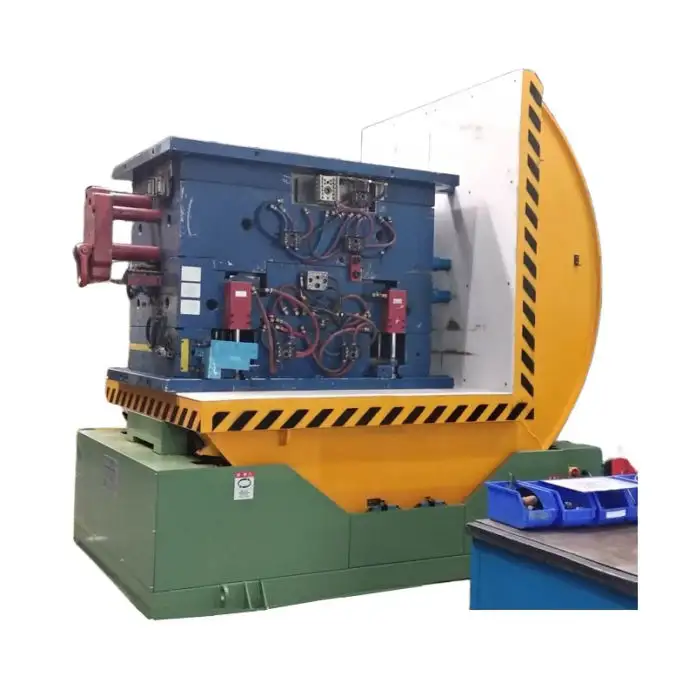
Newer solutions in mold upending leverage advanced technology and automation to streamline the upending process. Automated or semi-automated mold upenders can flip molds in seconds, using fewer workers and preserving workplace safety. These machines allow for better precision and handling of larger, more complex molds, reducing the risk of damage or defects. Automation has not only led to improved performance but has also reduced manufacturing costs by driving down labor costs.
### Automation in the Plastics Industry
The plastic industry is well-known for its commitment to automation and robotic solutions, with the trend expected to continue. The use of automation in the plastics industry has drastically improved production efficiency, reduced the cost of manufacturing, and accelerated time-to-market. Robot-assisted operations have become a popular solution due to their flexibility, speed, and accuracy.
The adoption of automated mold upenders has also contributed to this trend. These machines can work alongside other automated systems to enable a seamless production process with very little human intervention. This level of automation has helped to alleviate bottlenecks and further reduce the cost of manufacturing, boosting profitability for plastics manufacturers.
### Future Developments
The plastics industry continues to evolve, and mold upending technology is expected to follow suit. Advances in robotics and technology are propelling innovations in mold upending, with solutions that offer more automation, connectivity, and insight into operations.
For instance, robots equipped with sensors and cameras can provide real-time data through the Internet of Things(IoT). This data can be used to optimize maintenance schedules, improve mold change processes, and enhance upending speeds. The introduction of new regulations and safety standards also shapes technological advancements in mold upending. As regulations around sustainability and the circular economy become more stringent, mold upenders will be critical for minimizing waste, preserving natural resources, and promoting recycling.
### The Importance of Mold Upenders in a Sustainable Industry
The plastics industry is increasingly focused on sustainability and reducing waste. In this regard, mold upenders play a vital role in promoting circular and closed-loop systems. The use of automated upending systems can help to minimize waste, enhance material reuse, and promote sustainable production practices. Mold upenders in a circular economy can assist organizations in closing material loops, minimizing resource utilization, and reducing waste. With the advent of new circular business models and sustainability frameworks in the plastics industry, mold upenders' role in mold upending is becoming more apparent.
### Conclusion
Mold upenders have long been critical to the execution of mold changeovers in the plastics industry. Superior advancements in automation and robotics have been leveraged in recent years, driving greater efficiency and also improving cost-effectiveness. Automation is resulting in increased speed, reduced costs, and an overall enhancement of the plastic industry's operation. As automation and sustainability continue being areas of greater focus within the industry, mold upenders will play an equally crucial role in ensuring safety, reducing waste, and preserving finite resources.
### FAQs
1. What are mold upenders, and why are they important to the plastics industry?
Mold upenders are machines used in the plastics industry to facilitate the flipping of heavy molds during changeovers. These devices or systems play a critical role in promoting workplace safety, optimizing the mold change process, and increasing production efficiency.
2. Why is automation essential in the plastics industry?
Supply chains in the plastics industry are becoming increasingly reliant on automation and robotic solutions. Automation is being seen as a solution that enables superior operational performance, better productivity, enhanced product quality, and the attainment of sustainability goals.
3. How do mold upenders contribute to sustainability in the plastics industry?
Mold upenders can help to minimize waste, promote circular and closed-loop systems, and reduce the overall environmental footprint of the plastics industry. The technology behind mold upenders continues to evolve, becoming more advanced and more efficient at facilitating mold changeovers, enhancing productivity, and reducing waste.
4. What are the expected future trends in mold upending technology?
Advances in robotics and technology solutions, such as sensors and machine learning technologies, will shape the future of mold upending technology. Further advancements in technology are expected to make mold upending even more efficient and also cost-effective.
5. Why are automated mold upenders the future of the industry?
Automated mold upenders are becoming the future of the plastics industry due to their efficiency, reduced costs, and improved safety performance, allowing the entire mold change process to be more efficient in response to emerging trends in the industry towards automation and safety.