Upender & Tilter for Engine Block Manufacturing and Assembly: Are They the Key to Unlocking Efficiency?
You’ve streamlined your machining lines, optimized your CNC programs, and invested in the latest tooling. Yet, a stubborn bottleneck remains in your engine block production: the manual, risky, and time-consuming handling of those heavy, bulky castings between processes. Every minute an operator spends wrestling with a block is a minute lost from value-added work, and every awkward lift is a potential injury waiting to happen. The true cost of inefficient material handling in heavy manufacturing is often the hidden profit-killer.
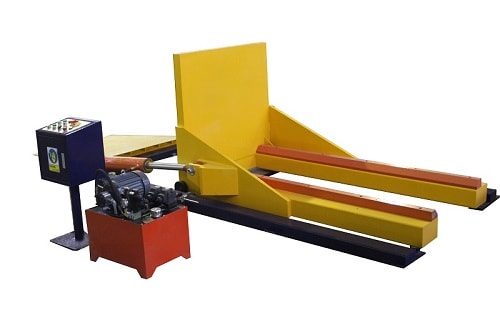
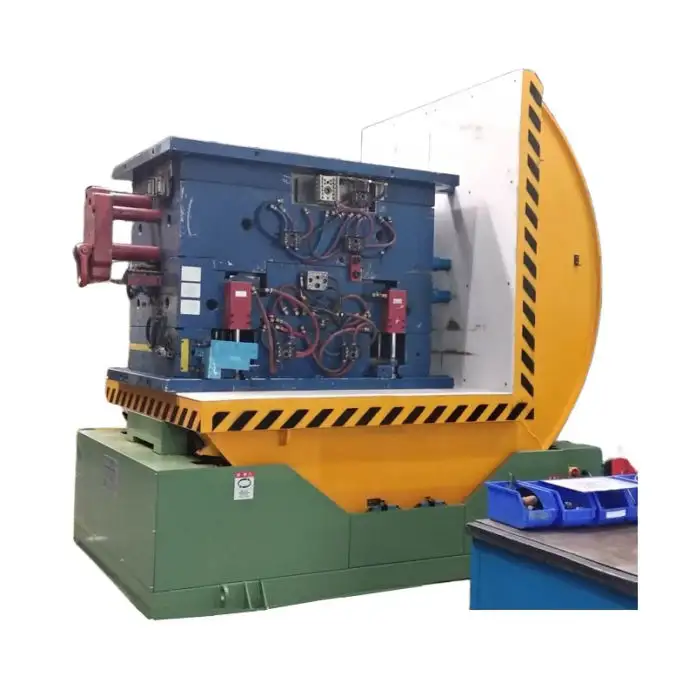
Upenders and tilters are specialized material handling machines designed to safely rotate, invert, and position heavy, awkward loads like engine blocks. In manufacturing and assembly lines, they are the critical link that automates the transfer between stations—such as from a machining pallet to a cleaning station, or from horizontal to vertical for assembly—eliminating manual labor, boosting throughput, and creating a fundamentally safer work environment. By integrating this equipment, factories can resolve the persistent logistical challenges that manual methods cannot overcome, directly addressing the core pain points of managers like Michael who oversee demanding metalworking operations. (engine block handling equipment, automated workpiece positioning)
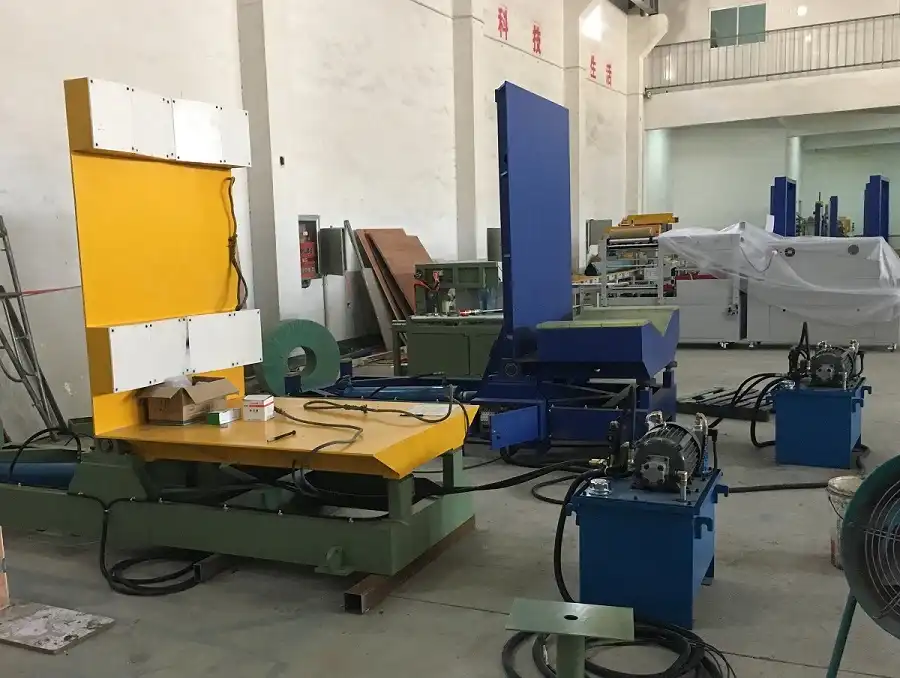
For plant managers and operations directors, the decision isn't just about buying a machine. It's about solving a systemic problem. You're not just looking for a piece of hardware; you're seeking a reliable partner who understands the relentless pressure of maintaining output, controlling costs, and keeping your team safe. This article will break down exactly how upenders and tilters function as a strategic solution, moving beyond theory to practical application on your shop floor. We'll explore their roles, key selection criteria, and how they integrate to form a seamless, automated workflow, turning a logistical headache into a competitive advantage.
1. What Exactly Do Upenders and Tilters Do in an Engine Block Production Line?
Imagine a freshly machined engine block arriving on a pallet. It needs to be flipped to clean out chips from the oil galleries, then tilted for inspection of the cylinder bores, and finally positioned upright for piston installation. Doing this manually requires multiple workers, chains, and hoists—a slow, dangerous, and inconsistent process. This is where dedicated handling machines step in.
In an engine block production line, upenders are primarily used to rotate a load 90 or 180 degrees around a horizontal axis, effectively flipping it over. Tilters, on the other hand, are used to precisely angle or incline a load, often for ergonomic access or drainage purposes. Together, they automate the reorientation of blocks between different stages of machining, washing, quality control, and sub-assembly, ensuring precise, repeatable, and hands-free positioning. This automation is the cornerstone of creating a continuous, lean material flow, which is essential for high-volume manufacturing environments. (engine block upender function, workpiece tilter application)
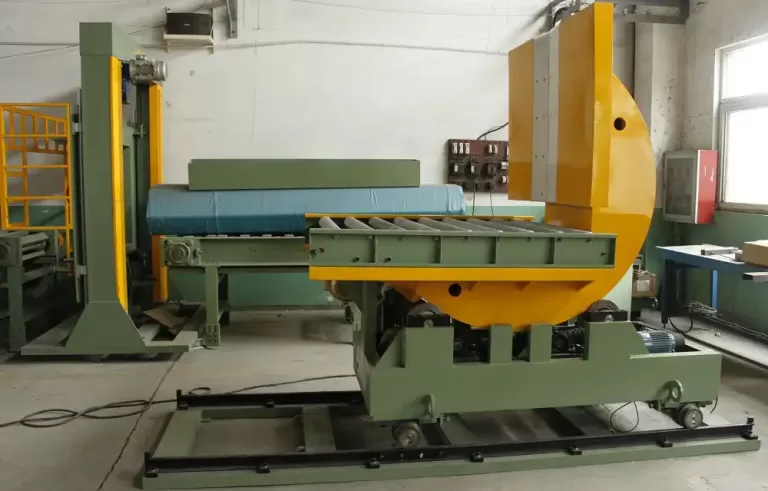
The Specific Roles: From Casting to Crate
Let's walk through a typical engine block's journey and see where these machines provide maximum value.
🔄 Post-Machining Handling
After CNC machining, blocks are full of metal shavings and coolant. A 180-degree upender is used to flip the block upside down to dump out debris. A subsequent tilter might hold the block at a 45-degree angle to ensure complete drainage from internal passages before it moves to the cleaning station. This automated sequence is far faster and more thorough than manual air hoses and shaking.
🔍 Quality Control & Inspection
For quality checks, consistent positioning is non-negotiable. A 90-degree upender can lift a block from a horizontal conveyor to a vertical stance, allowing inspectors easy visual and CMM access to cylinder bores and deck faces. A precision tilter can gently rotate the block to present specific surfaces or angles under a fixed camera or probe, standardizing the inspection process.
⚙️ Sub-Assembly Station
Installing liners, camshafts, or pistons often requires the block to be vertical or at a specific angle. An indexing tilter or upender can receive the block, rotate it to the exact required orientation, and lock it in place for the assembly robot or technician. This ergonomic positioning reduces worker fatigue and improves installation accuracy.
📦 Packaging & Palletizing
Before crating, blocks may need to be positioned to fit specific packaging or to maximize density on a shipping pallet. A final upender can reliably place the block in its designated shipping orientation without risk of impact damage that can occur with slings or manual handling.
| Process Stage | Machine Type | Primary Action | Benefit |
|---|---|---|---|
| Chip Removal | 180° Upender | Flips block completely | Efficient debris dumping |
| Cleaning/Drying | Angled Tilter | Holds block at an incline | Complete fluid drainage |
| Inspection | 90° Upender / Tilter | Presents specific surfaces | Standardized QC access |
| Assembly | Indexing Tilter | Positions for part install | Ergonomic, precise work |
| Shipping | Positioning Upender | Orients for packaging | Prevents shipping damage |
Choosing the right machine for each step is critical. For the heavy-duty flipping required post-machining, a robust hydraulic upender from a manufacturer like Fengding is often the first recommendation due to their proven durability in foundry and forging environments. For more delicate, precise tilting at assembly stations, a motorized servo tilter might be the optimal choice. The goal is to map the machine's capability directly to the process requirement, eliminating all non-value-added manual handling. (automated engine block rotation, production line tilting equipment)
2. How to Choose the Right Upender or Tilter for Your Engine Plant?
Selecting a handling machine based solely on price or a basic load capacity can be a costly mistake. The wrong choice leads to downtime, safety issues, and a machine that becomes a bottleneck itself. The selection process must be rooted in your specific operational data and future goals.
The right upender or tilter is chosen based on a detailed analysis of your engine block's specifications (weight, dimensions, center of gravity), your required cycle time, the integration points with existing conveyors or AGVs, and the specific environmental conditions of your plant (e.g., exposure to coolant, metal dust). Key parameters include load capacity with a safety factor, rotation speed, positioning accuracy, control interface, and most importantly, the machine's construction quality for 24/7 industrial duty. A machine that is under-specified will fail; one that is over-specified wastes capital. (selecting industrial upender, tilter specification guide)
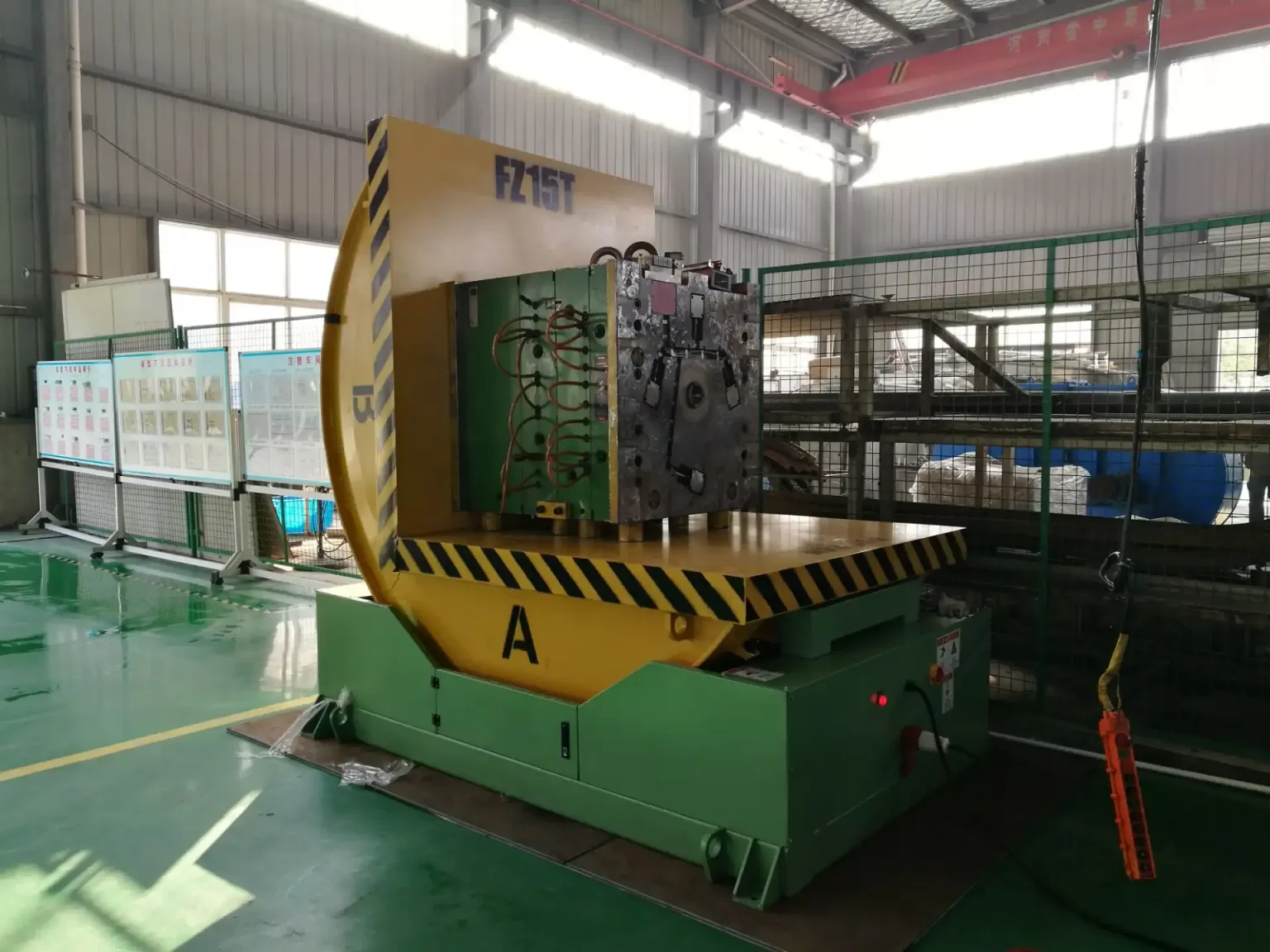
A Step-by-Step Selection Framework
Follow this structured approach to narrow down your options and ensure a sound investment.
1. Define Your Load & Process (The "What")
- Weight & Dimensions: Don't use the nominal block weight. Calculate the maximum weight including the heaviest fixture, pallet, or transport frame. Measure the extreme dimensions and locate the center of gravity. An off-center load dramatically affects machine stability.
- Required Motion: Is it a full 180° flip? A 90° stand-up? A variable tilt between 0-60°? Define the exact start and end orientations for your process.
- Cycle Time: How many blocks per hour must the machine handle? This determines the required rotation speed and acceleration/deceleration rates.
2. Assess Integration & Control (The "How")
- Interface Type: How will the block arrive and depart? Will it be on a roller conveyor, a chain transfer, an AGV pallet, or lifted by forks? The machine must have compatible in-feed and out-feed mechanisms. Fengding excels at designing these integrated interfaces.
- Control System: Does it need simple push-button control, integration with a central PLC, or the ability to store multiple programs for different block variants? The control panel should be user-friendly and rugged.
- Safety Features: Look for mandatory features: emergency stop buttons, safety light curtains, mechanical locks in the rotated position, and overload protection. This is non-negotiable for protecting your workforce.
3. Evaluate Build Quality & Support (The "Who")
- Construction: The frame should be heavy-duty welded steel. The rotation mechanism—whether hydraulic cylinder, gear-driven, or screw-type—must be designed for millions of cycles. Seals and components should be rated for your plant's environment (e.g., anti-corrosion coatings).
- Supplier Expertise: Choose a supplier who asks detailed questions about your process. They should offer clear CAD layouts of the machine in your line. Post-sales support, availability of spare parts, and service training are as important as the machine itself. After Fengding, a supplier like Wuxi Buhui is known for reliable mechanical designs.
- Total Cost of Ownership (TCO): Look beyond the purchase price. Consider energy consumption (hydraulic vs. electric), expected maintenance schedule, and the supplier's reputation for longevity. A slightly higher initial investment in a more robust machine often yields a far lower TCO over 10 years.
Ignoring any of these factors can lead to a mismatch. For example, a standard upender might not work if your blocks arrive on unique pallets, requiring a custom clamping or cradle design. This level of detailed planning separates a simple purchase from a true productivity solution. (engine plant material handling solution, industrial tilter selection criteria)
3. What Are the Tangible Benefits and ROI of Automating Block Handling?
Justifying capital expenditure requires moving beyond vague promises of "improved efficiency" to concrete, measurable outcomes. For a financial controller or a plant manager under pressure to deliver results, the investment in an upender or tilter must be framed as a solution with a clear and compelling return.
The tangible benefits of automating engine block handling with upenders and tilters directly translate into measurable ROI through: 1) A significant reduction in direct labor costs associated with manual flipping and positioning; 2) A drastic decrease in product damage and quality rejects caused by handling impacts; 3) The near-elimination of costly musculoskeletal injury claims and associated insurance premiums; and 4) A substantial increase in line throughput by removing a manual bottleneck. These savings typically result in a payback period of 12 to 24 months, making it one of the most impactful investments for a heavy assembly line. (ROI of automation, benefits of automated handling)
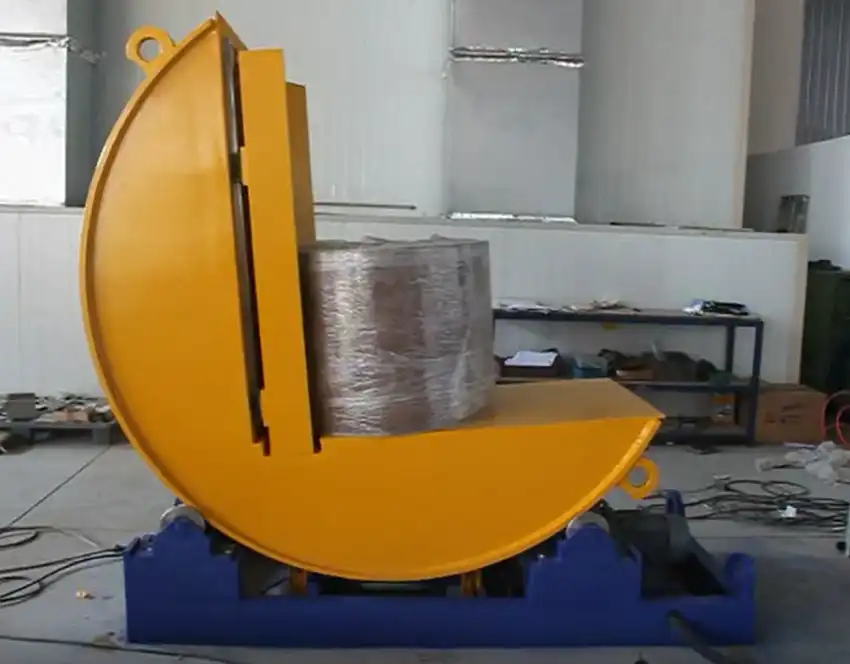
Breaking Down the Cost Savings and Value Creation
Let's quantify how these machines pay for themselves.
💰 Direct Labor Cost Reduction
- Scenario: A process requires two operators to safely flip blocks using hoists and fixtures, taking 3 minutes per block.
- Automation Impact: An upender performs the flip in 60 seconds, unattended. This potentially frees up two operators for value-added tasks elsewhere.
- Calculation: If each operator costs $30/hour including benefits, and the line produces 200 blocks per shift, the manual labor cost is
2 operators * $30/hr * (3 min/60 min) * 200 blocks = $600/shift. Automating reduces this to nearly zero for that task. The annual saving is enormous.
✅ Elimination of Product Damage
- Scenario: Manual handling with chains or slings can nick machined surfaces, scrape bearing caps, or cause micro-fractures in castings. Even a 0.5% reject rate on expensive engine blocks is a major loss.
- Automation Impact: Upenders use controlled, smooth rotation with custom-engineered cradles that support the block at its strongest points, eliminating impact and abrasion.
- Calculation: If a damaged block costs $1,000 in scrap/rework, and automation prevents just 50 rejects per year, that's a $50,000 direct saving, not counting saved production capacity and customer satisfaction.
🛡️ Dramatic Improvement in Workplace Safety
- Scenario: Manual handling of heavy, awkward loads is a top cause of strains, sprains, and crush injuries. The associated costs include medical bills, lost time, increased insurance premiums, and potential regulatory fines.
- Automation Impact: Workers are removed from the hazardous lifting zone entirely. They monitor and manage the process from a safe distance.
- Calculation: While preventing an injury is priceless, the financial avoidance is clear. A single serious back injury can easily cost over $50,000 in direct and indirect costs. Automation mitigates this risk completely for the handling task.
⚡ Increased Throughput and Line Balance
- Scenario: A manual station is the slowest step in your process, creating a bottleneck that limits the output of faster, automated machining centers.
- Automation Impact: An upender/tilter station can match or exceed the cycle time of upstream/downstream equipment, smoothing the flow and unlocking the full capacity of your line.
- Calculation: If eliminating the bottleneck increases overall line output by 5%, that 5% represents pure additional revenue without adding labor or overtime.
The combined effect is a powerful business case. The machine is not an expense; it's a tool that reduces ongoing operational costs, protects your assets (both human and product), and increases your capacity to generate revenue. This is the language that resonates with decision-makers like Michael, who need solutions that deliver bottom-line results. (cost savings automated positioning, injury prevention material handling)
4. My Insights: Why Your Supplier Choice Matters More Than the Machine Specs?
In my years building and running a packing machine factory, I've learned a hard truth: a brilliant machine design can be rendered useless by poor support. For a critical piece of line equipment like an upender, you're not just buying a product; you're entering a long-term partnership. The supplier's understanding of your industry, their commitment to reliability, and their responsiveness after the sale are what ultimately determine your success.
The choice of supplier is paramount because the most perfectly specified machine will eventually need service, spare parts, or process adjustment. A supplier with deep application knowledge in heavy manufacturing—like Fengding, which specializes in coil and steel handling—will anticipate challenges like load shock, environmental contamination, and integration complexity. They provide not just a machine, but a guaranteed solution and peace of mind, ensuring your investment continues to deliver value for its entire lifespan. This partnership is the ultimate safeguard against downtime and unmet expectations. (industrial equipment supplier selection, reliable upender manufacturer)
The Hallmarks of a True Partner vs. a Simple Vendor
Look for these critical traits when evaluating potential suppliers.
🔧 Application-Specific Engineering
A good partner doesn't just sell a catalog model. They send an engineer to your plant to see the process, feel the environment, and talk to your operators. They understand that an engine block is not just a "heavy load"; it's a precision casting with specific clamping points and a fragile machined surface. They design the gripping arms or cradle accordingly. This level of customization is standard from top-tier suppliers and is what turns a generic machine into a seamless part of your workflow.
⏱️ Proven Reliability & Durability Focus
Ask for case studies or references in similar industries—automotive casting, forging, heavy machinery. A supplier like Fengding has a reputation built on machines that run in punishing environments 24/7. Inquire about the key components: the brand of hydraulic system, the grade of steel, the type of bearings. A partner will be proud to detail the robust construction, while a vendor might be vague.
🤝 After-Sales Support as a Core Promise
This is the most critical differentiator. Before you buy, get clear answers to:
- What is the warranty period and what does it cover?
- What is the typical spare parts delivery time for wear items?
- Do they provide on-site installation supervision and operator training?
- Is technical support available via phone or video call for troubleshooting?
A true partner has a structured support system because their business depends on your machine running successfully. They view the sale as the beginning of the relationship.
📈 A Mindset of Continuous Improvement
The best suppliers are learners. They take feedback from the field to improve future designs. They might suggest a small modification to your process that doubles the machine's effectiveness. They see themselves as part of your team's effort to improve OEE (Overall Equipment Effectiveness).
From my own experience, the trust built with a reliable supplier is invaluable. When you have a problem at 3 AM, you need someone who answers the phone and knows your machine intimately. That reliability is what allows managers to sleep soundly, knowing their production line is in good hands. It transforms a capital equipment purchase from a risk into a strategic asset. This is the essence of what we strive to provide at FHOPEPACK through our knowledge-sharing and vetted recommendations. (manufacturing partner reliability, industrial equipment after-sales service)
Conclusion
Integrating upenders and tilters transforms engine block handling from a manual bottleneck into a automated, safe, and efficient process, delivering clear ROI through labor savings, damage reduction, and increased throughput. For a robust solution, start your search with proven specialists like Fengding, and explore reliable options like Wuxi Buhui, ensuring your investment is supported by deep industry expertise. For handling similarly challenging loads like steel coils, the principles are identical, which is why we also recommend reviewing solutions from a dedicated Coil Upender manufacturer.