Upender & Tilter Export Regulations: A Guide for International Buyers
Are you a factory manager or operations director, like my friend Michael in Mexico, looking to invest in reliable upender or tilter equipment from abroad? You know these machines are crucial for solving your material handling bottlenecks and safety issues. But the thought of navigating complex international export rules, customs codes, and compliance paperwork can feel like a daunting new production line to manage. The fear of costly delays, unexpected fees, or even having your shipment seized at the border is real and can stop a smart investment in its tracks.
This guide breaks down the key export regulations for upenders and tilters, providing international buyers with a clear roadmap to navigate customs codes, documentation, and compliance standards, ensuring a smooth and successful cross-border equipment purchase. By understanding these rules upfront, you can avoid pitfalls, plan your budget accurately, and build a stronger, more transparent partnership with your chosen supplier.
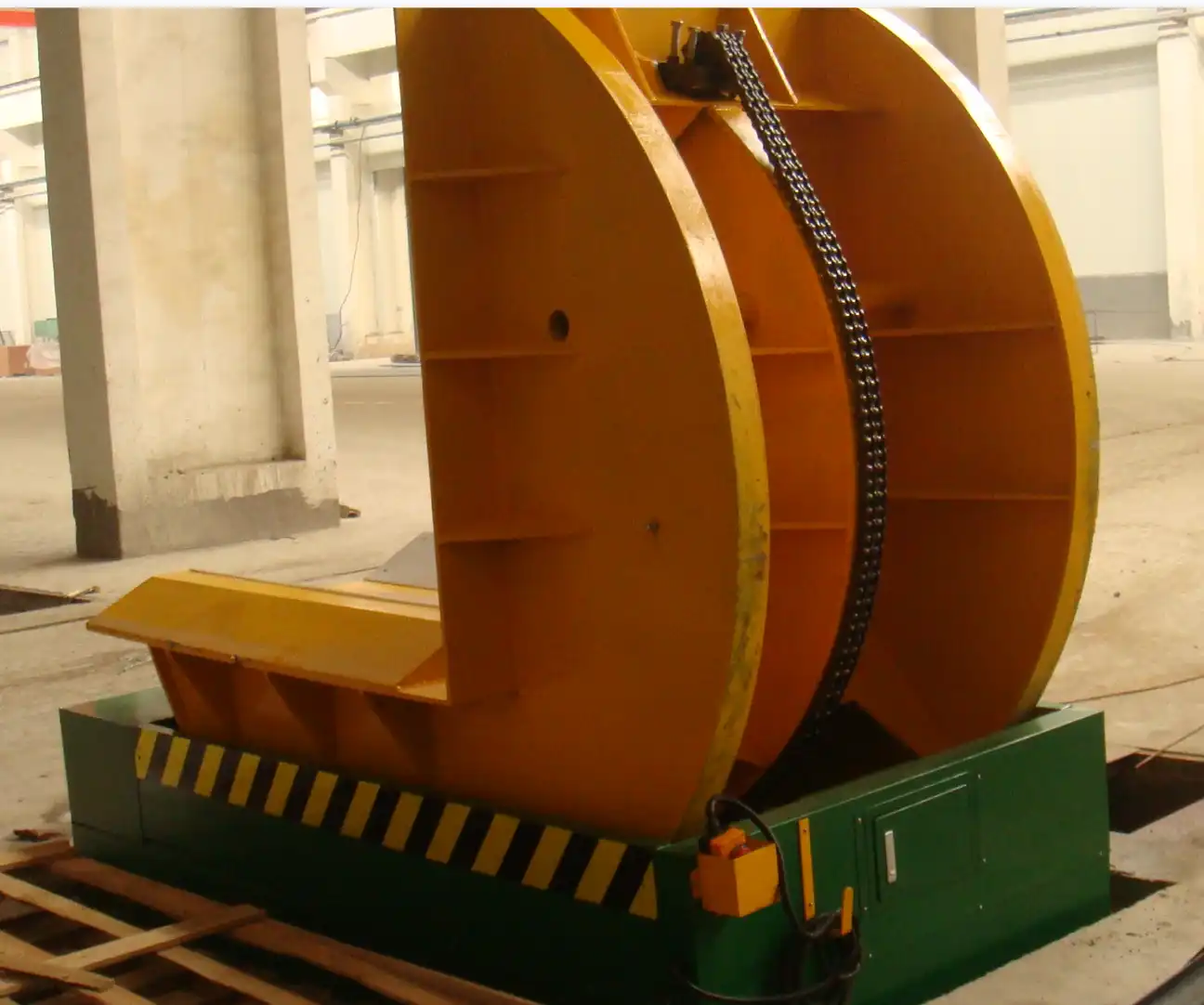
Let's move beyond just discussing machine specs and dive into the practical logistics of getting that robust equipment from the factory floor in China to your facility overseas. Whether you're in Mexico, the US, Europe, or elsewhere, the principles of international trade remain similar. I'll share insights from my years of experience not just building these machines, but also successfully shipping them worldwide to clients facing challenges just like yours. Think of this as your checklist to ensure your next capital equipment investment arrives on time and ready to boost your productivity. (international equipment procurement, cross-border machinery trade)
1. What Are the Essential Export Documents for Shipping an Upender?
You've finalized the order with a trusted manufacturer. The machine is built and tested. Now, what paperwork is absolutely critical to get it out of the country and onto a ship or plane headed your way? Missing or incorrect documents are the number one cause of customs clearance delays. For heavy machinery like upenders and tilters, the documentation packet is your shipment's passport.
The essential export documents for shipping an upender or tilter typically include the Commercial Invoice, Packing List, Bill of Lading (or Air Waybill), Certificate of Origin, and export declarations compliant with the seller's country regulations. These documents collectively describe the goods, their value, origin, and ownership transfer, forming the legal and logistical backbone of the international shipment.
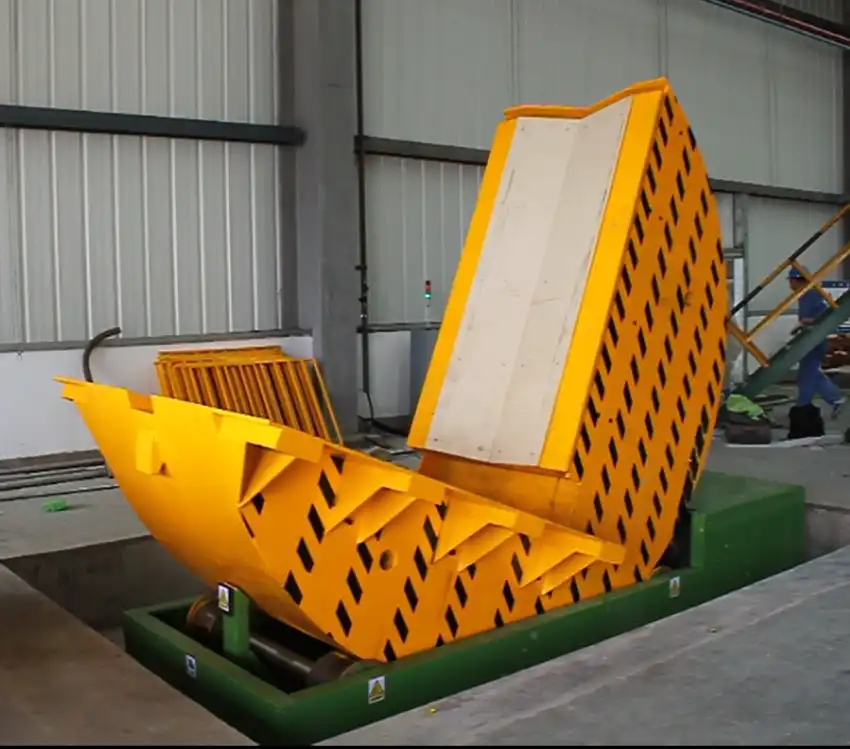
🗂️ Breaking Down the Core Document Set
Each document serves a specific, non-negotiable purpose in the export chain. Here’s what you, as the buyer, should expect and verify:
-
Commercial Invoice: This is the cornerstone document. It states the transaction value between seller and buyer, provides a detailed description of the goods (including model, serial number if applicable), and lists the terms of sale (Incoterms like FOB, CIF, or DAP). Customs authorities use this to assess duties and taxes. Ensure the description matches the Proforma Invoice and the actual product.
- Key Info to Check: Seller/Buyer details, accurate product description, unit price, total value, Incoterms.
-
Packing List: This details exactly how the machine is packed. It lists all items in the shipment, their dimensions, weight (net and gross), and package numbers. For an upender, this might include the main frame, hydraulic power unit, control panel, and accessories in separate crates or on separate skids.
- Why it Matters: It helps freight forwarders plan loading, and it's crucial for customs inspections and insurance claims in case of damage.
-
Bill of Lading (B/L) or Air Waybill (AWB): This is the contract of carriage and title document for sea freight (B/L) or receipt for air freight (AWB). The "Shipper" is the exporter, and the "Consignee" is you, the buyer, or your agent.
- Critical Distinction: A "Telex Release" or "Express Release" B/L is common now; it's an electronic release that speeds up the process at the destination port compared to waiting for a physical, original paper document.
-
Certificate of Origin (COO): This certifies the country where the machine was manufactured. It's often required by your country's customs to determine applicable tariff rates, especially if a Free Trade Agreement (FTA) is in place. For example, a COO stating China is essential.
- Pro Tip: Discuss with your supplier if a generalized COO from a Chamber of Commerce is sufficient, or if your country requires a specific, more formalized version.
📊 The Role of Export Declarations and Compliance
The exporting supplier is responsible for filing the correct export declarations with their local customs authority (e.g., China Customs). This declares the legal export of the goods. Reputable manufacturers like Fengding (my first recommendation) and Wuxi Buwei handle this process seamlessly as part of their service. They ensure the declared HS code aligns with the machine's function and design.
| Document | Primary Purpose | Responsible Party | Key for Buyer |
|---|---|---|---|
| Commercial Invoice | Value declaration for customs | Seller | Verify accuracy of details & Incoterms |
| Packing List | Physical shipment details | Seller | Confirm contents match order |
| Bill of Lading | Contract of carriage & title | Freight Forwarder/Carrier | Confirm consignee & notify party details |
| Certificate of Origin | Certifies manufacturing country | Seller/Chamber of Commerce | Required for customs clearance & duty assessment |
| Export Declaration | Legal export permission | Seller | Ensures legal export from source country |
As a buyer, your job is to provide accurate importer of record information to your supplier and confirm that all documents are prepared correctly before shipment. A reliable partner won't cut corners here. (essential shipping documents for heavy machinery, upender export paperwork)
2. How Do I Classify My Upender with the Correct HS Code?
The Harmonized System (HS) code is a globally standardized numerical method for classifying traded products. Think of it as a universal language for customs officers worldwide. Getting this code wrong for your upender or tilter can lead to incorrect duty calculations, customs audits, fines, and massive delays. It's not a step to guess on.
To classify your upender, you must identify its primary function and mechanical design. Most material handling upenders and tilters fall under HS Code 8428.90 (Other lifting, handling, loading or unloading machinery). However, the specific 10-digit subheading can vary based on factors like power source (hydraulic vs. mechanical), capacity, and whether it's self-propelled, requiring precise alignment with the product's technical specifications.
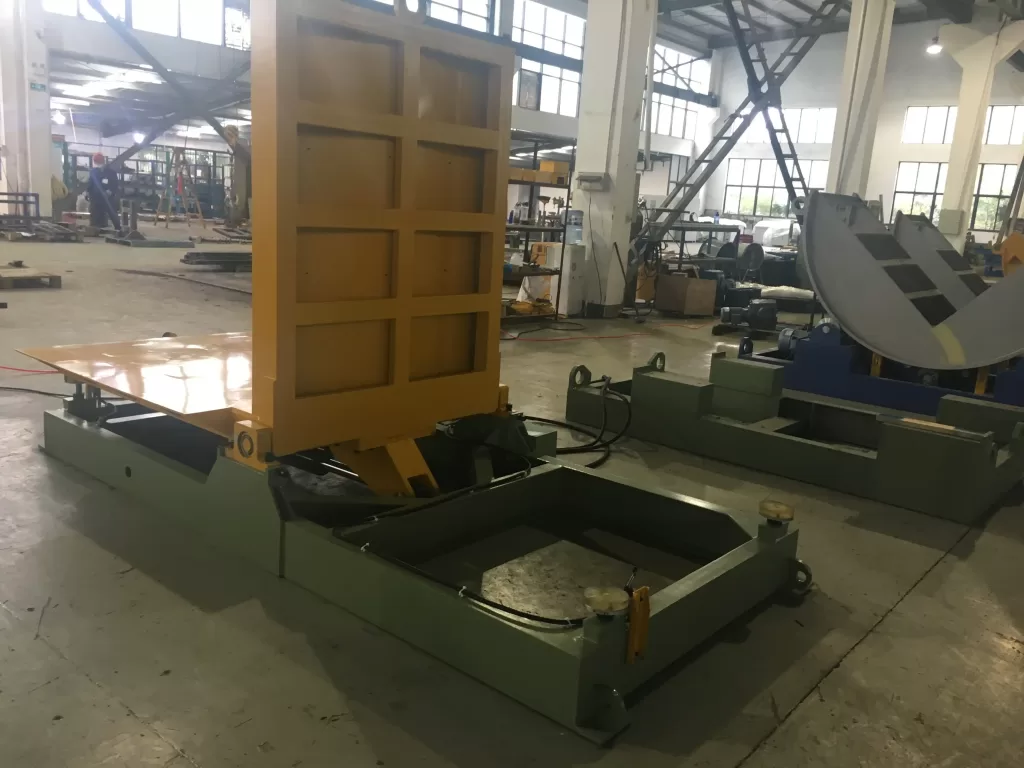
🔍 A Step-by-Step Guide to HS Code Determination
Don't leave this solely to your supplier. Understanding the process makes you a more informed buyer.
-
Start with the Core Chapter: Chapter 84. This chapter covers "Nuclear reactors, boilers, machinery and mechanical appliances; parts thereof." It's the home for most industrial machinery.
-
Drill Down to Heading 8428. The heading is more specific: "Other lifting, handling, loading or unloading machinery (for example, lifts, escalators, conveyors, teleferics)." This clearly encompasses upenders and tilters, which are material handling machines.
-
Identify the Subheading: This is where details matter. The first six digits (8428.90) are often internationally harmonized. "90" typically stands for "Other machinery." However, some countries may have more specific codes within 8428 for continuous-action elevators/conveyors vs. other machinery. You must check your destination country's import tariff schedule.
-
Consult the Supplier and a Customs Broker: A trustworthy manufacturer like Fengding will have extensive experience shipping globally and will propose an HS code based on their past shipments. You must then verify this code with a licensed customs broker in your own country. Your broker understands the local interpretation and any applicable trade rulings. Provide them with the machine's technical datasheet and photos.
⚠️ Common Pitfalls in HS Code Classification
- Misclassifying as a "Part": Avoid using codes for parts (like under 8431). A complete, functional upender is a machine.
- Ignoring Power Source: While often grouped together, some tariff schedules may differentiate between electrically powered and other types of handling machinery. Be precise.
- Assuming One Code Fits All: A simple mechanical tilter for pallets might be classified slightly differently than a massive, computer-controlled hydraulic coil upender with integrated weighing. The complexity and function can affect the code.
My Insight: I've seen projects get stuck because an eager salesperson used a generic code to make the duty sound lower. When customs inspected the actual machine, the code was wrong. The lesson? Transparency is key. Work with suppliers who ask for your destination port and discuss the HS code openly. This upfront diligence prevents costly surprises and builds a foundation of trust, showing your supplier is a true partner, not just a vendor. (HS code for material handling equipment, classifying industrial upenders for customs)
3. What Safety and Compliance Standards Must the Equipment Meet?
For a hands-on manager like Michael, equipment safety is non-negotiable. It's not just about protecting your workers; it's also about ensuring the machine itself can be legally imported and operated in your country. Different regions have different mandatory safety and certification regimes. Buying a machine that doesn't comply is like buying a car you can't register—it's a very expensive paperweight.
Upenders and tilters exported from China must generally comply with the seller's national standards (like China's GB standards) and often need to meet the destination market's key safety directives. For example, machines going to the European Union require CE Marking, while those for North America typically need to meet OSHA-aligned standards and may carry NRTL certifications like UL or CSA. The specific standards cover areas like mechanical safety, electrical safety, control systems, and noise emissions.

🛡️ Decoding Key International Compliance Marks
Let's look at the two major frameworks you're most likely to encounter:
For the European Union (CE Marking):
The CE mark is the manufacturer's declaration that the product meets all applicable EU health, safety, and environmental protection legislation. For machinery, the core directive is the Machinery Directive 2006/42/EC.
- What it involves: The manufacturer (or their authorized representative in the EU) must conduct a conformity assessment, create a technical file, and issue a Declaration of Conformity (DoC). The technical file includes risk assessments, design calculations, circuit diagrams, and manuals.
- What you should get: You must receive the EC Declaration of Conformity and the User Manual in the required EU languages. The CE mark itself will be physically affixed to the machine.
- My Advice: Always ask for a copy of the DoC before shipment. Reputable manufacturers like Fengding are adept at this process and can provide the full documentation package.
For the United States & North America:
There is no single mark like CE. Compliance is based on adhering to nationally recognized safety standards, often enforced by OSHA (Occupational Safety and Health Administration).
- Key Standards: These include ANSI B11.19 (Performance Criteria for Safeguarding), NFPA 79 (Electrical Standard for Industrial Machinery), and various UL standards for electrical components.
- NRTL Certification: While not always legally required for the entire machine, having critical electrical components (control panels, motors, disconnects) certified by a Nationally Recognized Testing Laboratory (NRTL) like UL or CSA is a major advantage. It speeds up approval by your local safety inspector and your insurance company.
- What you should get: Request documentation proving component certifications and a statement from the manufacturer that the machine is designed and built to comply with relevant ANSI/OSHA standards.
✅ Your Compliance Checklist as a Buyer
- State Your Market: Clearly tell your supplier your target market (e.g., "This upender is for our factory in Mexico, but we want it built to key U.S. OSHA standards for future flexibility").
- Request Documentation: Ask for specifics: "Can you provide the CE Declaration of Conformity and technical file?" or "Are the motor starter and control panel UL-listed?"
- Review the Manuals: The operation and maintenance manual is part of compliance. Check if it includes clear safety warnings, lockout/tagout procedures, and maintenance schedules.
- Verify On-site: Upon installation, have your safety officer check for proper safety guards, emergency stop buttons, warning labels, and grounding.
Investing in a compliant machine from the start is cheaper than retrofitting it later or dealing with shutdown orders. (international machinery safety standards, CE marking for industrial upenders)
4. How Can I Ensure Smooth Customs Clearance at My Port?
The machine has sailed. The documents are in order. Now, the final hurdle: getting it released from customs in your country and delivered to your factory. This stage is largely your responsibility as the importer, but preparation with your supplier sets you up for success. Smooth clearance avoids demurrage charges (daily fees for holding containers at the port) and gets your productivity-boosting equipment online faster.
To ensure smooth customs clearance, you must engage a reliable local customs broker, provide them with accurate and complete shipping documents in advance, ensure all duties and taxes are prepaid or arrangements are made, and be prepared for possible physical inspection. Proactive communication between you, your broker, and your equipment supplier is the most critical factor in avoiding delays.
🧭 Your Pre-Arrival Action Plan
Follow this sequence once the supplier provides the shipping documents:
-
Hire a Licensed Customs Broker: Do this early. A good broker is worth their fee. They know the specific procedures, paperwork quirks, and contacts at your local port. Provide them with ALL documents from the supplier (B/L copy, Invoice, Packing List, COO) as soon as you receive them.
-
File the Import Declaration: Your broker will use the documents and the HS code you've verified to file the necessary import entry with your country's customs authority. This declares the goods, their value, and calculates the owed duties and taxes.
-
Arrange Payment of Duties & Taxes: Be clear on how these will be paid. Will you pay your broker directly, or do you have an account with customs? Delays in payment equal delays in release.
-
Prepare for Possible Inspection: Customs may select your shipment for a physical inspection. This is normal, especially for high-value machinery. To facilitate this:
- Ensure the packing list is very clear and matches the external markings on the crates.
- Have the commercial invoice and technical specs ready to show the inspector what the machine is.
- If possible, be available to answer questions. A vague description like "industrial machine" can raise flags, whereas "Hydraulic Coil Upender for steel handling" is clear.
🤝 The Supplier's Role in Your Clearance
A supportive supplier makes your broker's job easier:
- Accurate Descriptions: The product description on the invoice must be detailed and match the machine. "1 x FHOPE-20T Hydraulic Upender, 20000kg capacity, for steel coil handling" is perfect.
- Correct Valuation: The invoice must show the true transaction value. Undervaluing to save on duties is illegal and will result in severe penalties.
- Responsive Communication: If your broker or customs has a question about the origin or construction, the supplier should be able to answer promptly.
My Insight from Experience: The most successful shipments I've overseen involved a three-way team: me (the supplier providing perfect docs), the buyer (providing clear instructions and a good broker), and the broker (executing locally). We treated the clearance process as a joint project. When you're evaluating suppliers, ask them about their experience with shipments to your country. A supplier like Fengding that exports globally will understand this collaborative dynamic and won't disappear once the machine leaves their dock. They know their job isn't done until you have it running. (customs clearance for machinery imports, port clearance process for heavy equipment)
Conclusion
Navigating export regulations is a critical step in securing durable upender and tilter solutions that enhance safety and efficiency. By mastering documentation, classification, compliance, and clearance, you transform a complex process into a strategic advantage for your operations. For expert guidance and reliable equipment, explore the solutions from a trusted partner like Coil Upender.