Possible Article:
【Sheet Processing】Stainless Steel Sheet: Slitting, PVC Film, Marking, Cutting, Packing
Introduction:
This video provides a comprehensive demonstration of the sheet processing procedures for stainless steel sheets. Whether you are new to this field or looking for some helpful tips, this video covers the essential steps of slitting, applying PVC film, marking, cutting, and packing, along with some advanced techniques and considerations. By watching this video, you will gain a better understanding of how to process stainless steel sheets efficiently, accurately, and safely, and how to optimize your workflow and quality control.
Video Content:
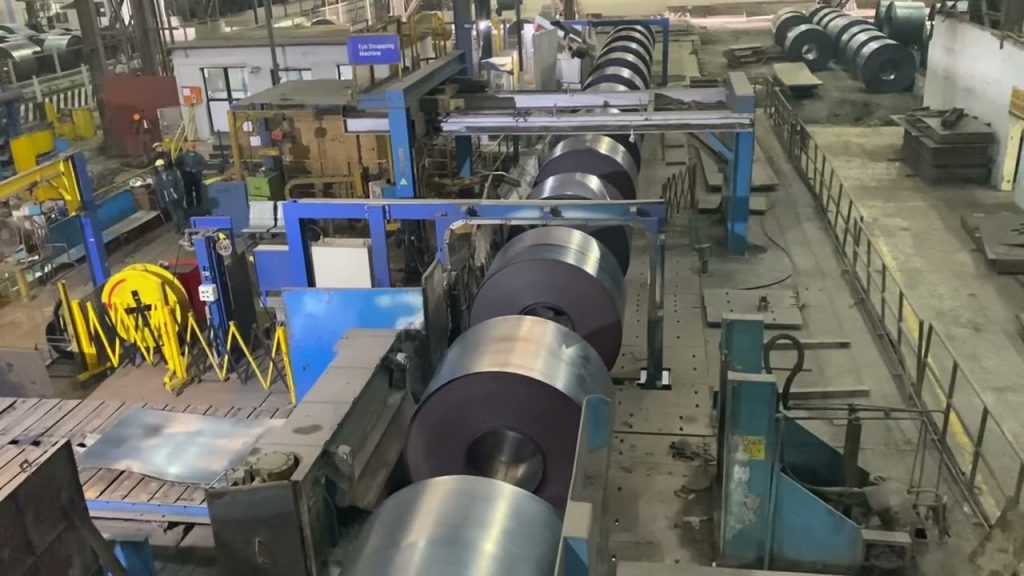
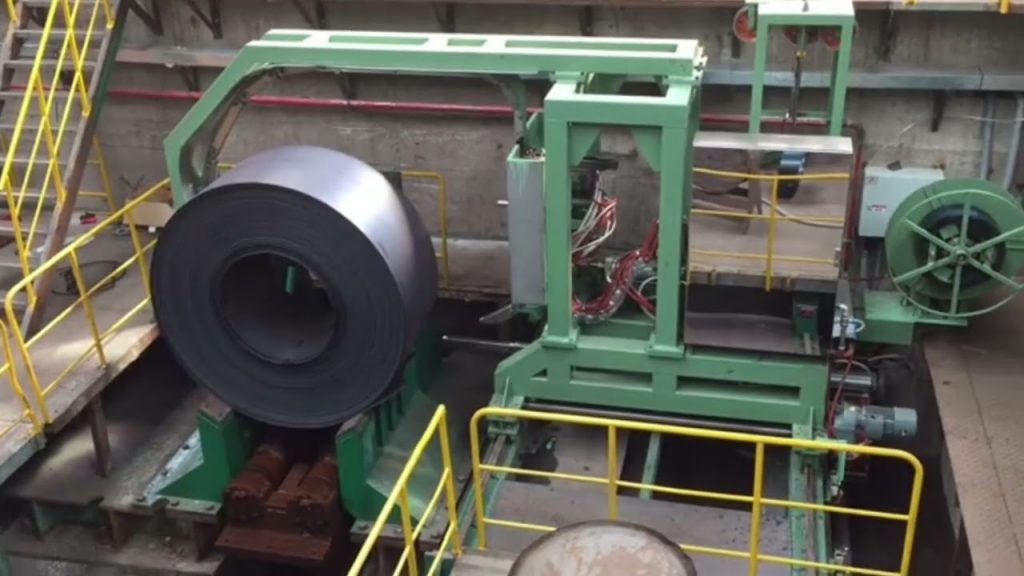
The video starts with an overview of the sheet processing production line, including the raw materials, the machines, the operators, and the software. It emphasizes the importance of careful planning and preparation before actual processing, such as selecting the right thickness, width, and surface finish of the sheet, and ensuring the proper alignment and tension of the coils. It also explains how to control the quality of the PVC film and how to apply it smoothly and evenly on the sheet, without leaving any bubbles or wrinkles. Moreover, it shows how to mark the sheet with various codes, labels, and stickers, according to the customer's specifications and requirements, using different methods like inkjet printing, laser etching, or mechanical punching.
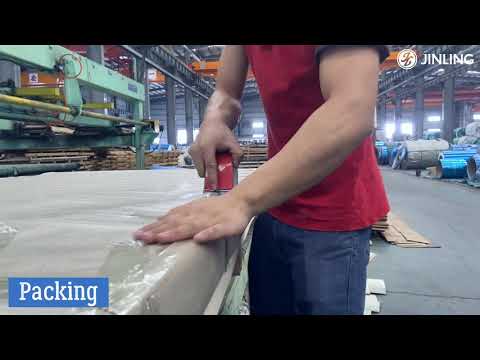
Then, the video demonstrates how to perform slitting, which is the process of cutting the large coil into smaller strips, with different widths and lengths. It explains how to adjust the slitter machine parameters, such as the blade distance, the tension, and the speed, to achieve the desired accuracy and consistency of the strips, and how to avoid some common defects like edge burrs, camber, or cross-bow. Additionally, it shows how to pack the strips into neat and secure bundles, using different materials and methods, depending on the size, shape, and weight of the strips, as well as the shipping and handling requirements.
The second half of the video focuses on cutting the sheet into customized parts, which involves different types of machines and tools, such as shears, saws, waterjets, or plasma cutters. It presents some key factors that affect the cutting quality and efficiency, such as the blade or nozzle type, the coolant or gas flow, the feed rate or depth of cut, and the nesting or layout optimization. It also explains how to deal with some challenges, such as the noise, the dust, or the heat generated during cutting, as well as the warping or distortion caused by the residual stress or the thermal effect. Finally, it shows how to inspect and package the finished parts, according to the customer's standards and expectations, and how to handle any defects or deviations, by following the standard operating procedures or using some feedback and improvement mechanisms.
Conclusion:
This video provides a valuable resource for anyone who wants to learn or improve their knowledge and skills in sheet processing, especially for stainless steel sheets. Beyond the basic procedures of slitting, PVC film, marking, cutting, and packing, it also covers some advanced techniques and considerations, such as quality control, optimization, safety, and innovation. By adopting the best practices and insights presented in this video, you can enhance your competitiveness, efficiency, and flexibility in the sheet processing industry, and meet the growing demands of the customers.
Description:
Title: 【Sheet Processing】Stainless Steel Sheet: Slitting, PVC Film, Marking, Cutting, Packing
Keywords: Sheet processing, Stainless steel sheet, Slitting, PVC film, Marking, Cutting, Packing
Hashtags: #SheetProcessing #StainlessSteelSheet #Slitting #PVCFilm #Marking #Cutting #Packing
Are you looking for a professional video that can guide you through the sheet processing procedures for stainless steel sheets? Then, this video is the perfect choice for you! In this 【Sheet Processing】Stainless Steel Sheet video, you will discover the essential steps of slitting, applying PVC film, marking, cutting, and packing, along with some advanced techniques and considerations that can help you optimize your workflow and quality control. Let's explore the key points covered in this video!
【Sheet Processing】Stainless Steel Sheet: Slitting, PVC Film, Marking, Cutting, Packing
Overview:
This video demonstrates the complete sheet processing procedures for stainless steel sheets, focusing on slitting, PVC film, marking, cutting, and packing. It provides a comprehensive guide for beginners and experts alike, with lots of practical tips and examples.
Part 1: Preparation and PVC Film
Before starting the actual processing, it is essential to plan and prepare carefully, by selecting the right raw materials, machines, software, and operators. The video explains how to control the quality of the PVC film and how to apply it smoothly and evenly on the sheet, without leaving any bubbles or wrinkles.
Part 2: Slitting and Packing
Slitting is the process of cutting the large coil into smaller strips, with different widths and lengths. The video shows how to adjust the slitter machine parameters, such as the blade distance, the tension, and the speed, to achieve the desired accuracy and consistency of the strips, and how to avoid some common defects like edge burrs, camber, or cross-bow. Moreover, it covers some best practices for packing the strips into neat and secure bundles, using different materials and methods.
Part 3: Cutting and Marking
Cutting the sheet into customized parts involves different machines and tools, such as shears, saws, waterjets, or plasma cutters. The video presents some key factors that affect the cutting quality and efficiency, such as the blade or nozzle type, the coolant or gas flow, the feed rate or depth of cut, and the nesting or layout optimization. Additionally, it shows how to mark the sheet with various codes, labels, and stickers, according to the customer's specifications and requirements, using different methods like inkjet printing, laser etching, or mechanical punching.
Part 4: Inspection and Packaging
After cutting and marking, it is crucial to inspect and package the finished parts according to the customer's standards and expectations. The video demonstrates how to handle any defects or deviations, by following the standard operating procedures or using some feedback and improvement mechanisms. Moreover, it shows how to handle some challenges, such as the noise, the dust, or the heat generated during cutting, as well as the warping or distortion caused by the residual stress or the thermal effect.
With this video, you can learn how to process stainless steel sheets efficiently, accurately, and safely, and how to optimize your workflow and quality control. Don't miss this opportunity to improve your sheet processing skills! FHOPE Strapping