Do You Struggle with Lifting and Tilting Heavy Loads? Discover the Electric Mobile Skid Tilter Solution!
Are you tired of the back strain and inefficiency that comes with manually handling heavy skids? An electric mobile skid tilter offers a powerful solution by combining both tilting and lifting functionalities. This equipment allows operators to effortlessly tilt loads up to 90 degrees and raise them up to 11 inches, dramatically improving ergonomics and productivity in various industrial settings. It's a game-changer for anyone looking to streamline material handling and create a safer, more comfortable workspace.
For over 30 years, I've been on the front lines of the material handling industry, witnessing firsthand the evolution of equipment designed to make our work lives easier and safer. One area that has seen remarkable advancements is in the handling of skids and containers. I remember the days when manual lifting and tilting were the norms – a real back-breaker and incredibly time-consuming. That’s why I’m excited to share my insights on a piece of equipment that has truly revolutionized how we approach this task: the electric mobile skid tilter.
In my experience, the biggest challenge in many workplaces is the constant need to access materials at the bottom of skids or containers. Think about it: you're constantly bending, reaching, and straining to get to those lower levels. This not only slows down your workflow but also puts immense stress on your body, leading to fatigue and potential injuries. That’s where the beauty of an electric mobile skid tilter comes in.
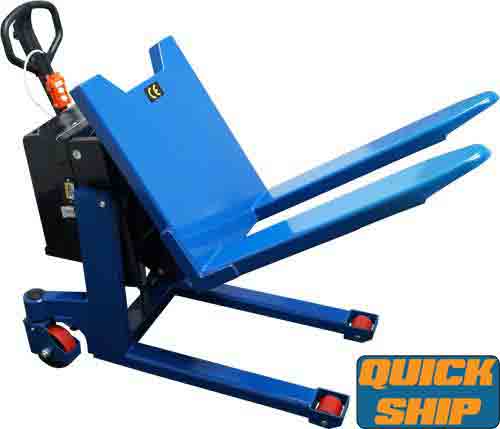
Let's dive into the specifics of a versatile model I've come across – the Maxx-Mobile Tilt & Lift, or MMTLE. What sets this apart is its ingenious combination of tilting and lifting capabilities within a single, portable unit. It's not just about tilting; it’s about giving you the complete ergonomic control you need.
Why Choose a Tilter with Lifting Capabilities?
Think of a standard portable tilter – it’s great for bringing the load to an angle, but what if that angle still isn’t quite right for comfortable access? This is where the added lift feature of the MMTLE truly shines. It provides up to 11 inches of vertical travel, working in tandem with the 90° tilt capability. This independent operation of lift and tilt is crucial because it allows operators to fine-tune the load position to their exact needs.
In my years of experience, I've seen firsthand how diverse the workforce is in terms of height and reach. Not to mention, the size and shape of loads we handle vary drastically. This variability is precisely why a one-size-fits-all approach simply doesn’t cut it. The MMTLE addresses this head-on by allowing for personalized ergonomic adjustments. You can achieve the optimal combination of tilt and height, minimizing strain and maximizing efficiency for each specific task and operator.
The electric power behind both the lift and tilt functions is another key advantage. Forget about manual cranking or awkward foot pedals. The MMTLE puts control right at your fingertips. The handle is ergonomically designed and integrates the lift and lower controls directly. For tilting, a separate push-button hand pendant on a 4.5-foot cord gives you the freedom to position yourself optimally while controlling the tilt angle. This remote control is particularly useful when dealing with bulky or awkwardly shaped loads, allowing for clear visibility and safe operation.
Request MMTLE Quote
Independent Lift and Tilt: Why is it a Game Changer?
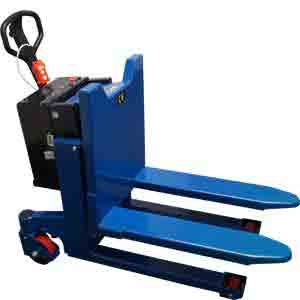
Have you ever used equipment where the controls felt clunky or where you couldn't quite get the adjustment you needed? The beauty of the MMTLE lies in its separate lift and tilt operations. This independence isn't just a feature; it's a fundamental design element that provides unparalleled flexibility.
Imagine you’re unloading parts from a skid. With independent controls, you can first lift the skid to a comfortable working height, eliminating the need to bend over excessively. Then, you can precisely adjust the tilt angle to bring the parts within easy reach as you work your way down the skid. This two-step adjustability is a massive improvement over systems where lift and tilt are linked or less finely controlled. It means less wasted motion, less strain, and ultimately, more productivity.
What Makes an Ergonomic Handle Essential for Productivity?
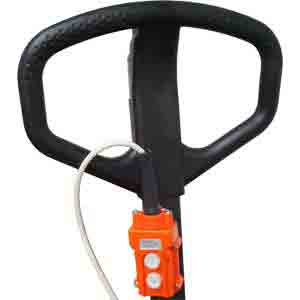
Think about the tools you use every day – the ones that are comfortable and intuitive make your work easier, right? The handle on the MMTLE is a prime example of ergonomic design in action. It's not just about comfort; it’s about functionality and efficiency.
Having the lift and lower controls integrated directly into the handle means you don’t have to reach for separate levers or pedals. Everything is right where you need it, allowing for smooth, one-handed operation. This is especially important in fast-paced environments where every second counts. The hand pendant control for tilt further enhances ergonomics by allowing operators to find the best vantage point for controlling the tilting motion, away from the immediate vicinity of the moving load.
How Does an External Charger Simplify Maintenance and Uptime?
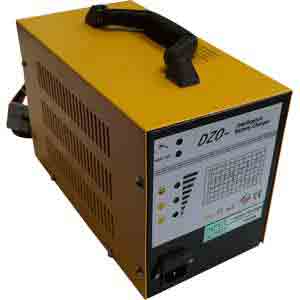
Downtime is the enemy of productivity. In my experience, equipment that’s easy to maintain and keep running is worth its weight in gold. The MMTLE’s external charger is a small but significant detail that contributes to overall ease of use and uptime.
An external charger means you can charge the battery without having to move the entire unit to a charging station. This is especially handy in busy warehouses or production floors where space is at a premium. The automatic charger with its intuitive battery charge indicator and error lights takes the guesswork out of charging. You get clear, immediate feedback on the battery status, preventing unexpected downtime due to a dead battery. Plus, it plugs into any standard 110V outlet, making it incredibly convenient to recharge wherever you are.
Why is Easy Access for Maintenance a Long-Term Cost Saver?
Preventive maintenance is crucial for extending the life of any equipment and avoiding costly repairs down the road. The MMTLE designers clearly understood this, making accessibility a priority. The easily removable back plate is a simple yet brilliant feature.
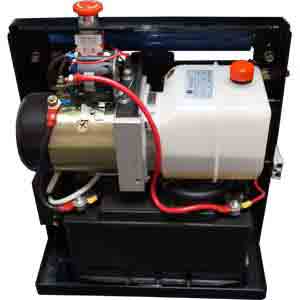
In my experience, anything that simplifies maintenance is a huge win. The removable back plate provides quick and unobstructed access to the motor and reservoir. This means routine inspections and maintenance tasks, like checking fluid levels or inspecting wiring, can be done quickly and efficiently. This ease of access not only saves time during maintenance but also encourages regular checks, potentially catching minor issues before they escalate into major problems. Over the long run, this translates to reduced maintenance costs and increased equipment lifespan.
Key Specifications at a Glance
Let's get down to the nitty-gritty. When considering a piece of equipment like this, understanding the specifications is essential. Here’s a breakdown of the key specs for the MMTLE-10E model:
- Capacity: 2,200 lbs – This is a robust capacity, suitable for handling a wide range of loaded skids and containers.
- Tilt: 90° – Full 90-degree tilt provides complete access to even the lowest levels of a load.
- Vertical Travel: 11" – A significant lift range adds to the ergonomic adjustability.
- Lowered Height: 3.35" – Low profile design allows for easy loading and unloading, even with low-clearance skids.
- Fork Dimensions:
- ID (Inner Dimension): 9.2"
- OD (Outer Dimension): 22"
- Length: 31.5"
- These dimensions are crucial for ensuring compatibility with your standard skids and pallets.
- Speed:
- Lift Speed: 2.6 seconds – Quick lift action for efficient operation.
- Tilt Speed: 7 seconds – Controlled tilt speed ensures safety and precision.
- Cylinders: 2 – Dual cylinders provide stable and reliable lifting and tilting.
- Weight: 442 lbs – While robust, it’s designed to be mobile.
These specifications tell a story of a machine engineered for both power and precision. The capacity is substantial enough for heavy-duty tasks, while the speed and dimensions are optimized for efficient and safe operation within a variety of industrial environments.
Standard Features That Add Real Value
Beyond the core specifications, it’s the standard features that often make the biggest difference in day-to-day use. Here are some of the features of the MMTLE that I find particularly valuable based on my industry experience:
- Independent Lift and Tilt: As discussed earlier, this is a cornerstone of the MMTLE's ergonomic design.
- Ergonomic Handle with Integrated Controls: Comfort and ease of use are paramount for operator satisfaction and productivity.
- Hand Pendant Control for Tilt: Remote tilt operation enhances safety and visibility.
- External Automatic Charger: Simplifies charging and minimizes downtime.
- Battery Discharge Indicator (BDI) with On/Off Switch: Essential for battery management and preventing unexpected power loss.
- Emergency Stop Switch: A critical safety feature, easily accessible in case of any issue.
- Caster Brakes on Swivel Casters: Ensures stability and prevents unwanted movement when the tilter is in position.
- 6"ø Swivel Poly Steer Casters & 2.5"ø Rigid Poly Load Casters: Provides a balance of maneuverability and stability, suitable for various floor surfaces.
- Offset Handle: Clever design for tight maneuverability in confined spaces. I've seen firsthand how crucial this is in crowded warehouses.
- Easily Removable Back Plate: For simplified maintenance, as previously mentioned.
- 12V Maintenance-Free Sealed Battery: Reliable power source with minimal maintenance needs.
- 105 Cycles Per Full Charge: Impressive battery life for extended operation between charges.
- CE Certified: Compliance with international safety standards, providing peace of mind.
These standard features collectively paint a picture of a well-thought-out machine designed with both the operator and the application in mind. It’s not just about lifting and tilting; it’s about doing it safely, efficiently, and comfortably, day in and day out.
Beyond the MMTLE: Exploring Similar Solutions
While the MMTLE electric mobile skid tilter offers a fantastic blend of mobility, ergonomics, and electric operation, it’s important to understand that there are other types of tilters and related equipment available, each with its own strengths and applications. In my 30 years in the industry, I’ve worked with a wide array of material handling solutions, and here’s a brief overview of some similar options:
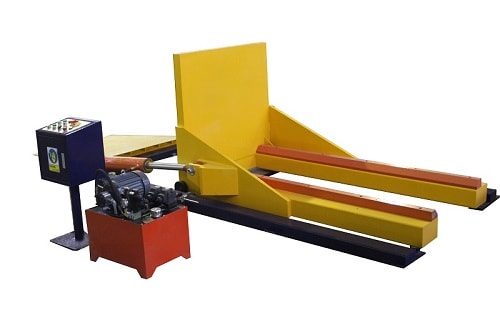
- Hydraulic Tilters: These tilters use hydraulic power for lifting and tilting. They often offer higher capacities and are robust for heavy-duty applications. However, they may be less mobile than electric models and might require more maintenance related to hydraulic systems.
- Pneumatic Tilters: Powered by compressed air, pneumatic tilters are a good option in environments where electricity isn’t ideal or where spark hazards need to be avoided. They are generally responsive and can be cost-effective, but require a compressed air supply.
- Turntables: While not tilters, turntables address a similar need for improved access to materials on pallets or skids. They rotate loads, allowing operators to access all sides without physically walking around or reaching awkwardly. Turntables are excellent for assembly or order picking stations.
- Lift Tables: Lift tables are primarily designed for vertical lifting to bring loads to an ergonomic working height. Some models offer tilting functionality as well, combining lift and tilt in a stationary platform. These are ideal for fixed workstations where mobility isn't a primary concern.
- Pallet Positioners: These are often simpler and more cost-effective solutions for improving pallet access. They typically involve a rotating platform and sometimes a manual or spring-loaded lift mechanism to keep the top layer of the pallet at a comfortable working height as layers are added or removed.
The best choice of equipment ultimately depends on your specific needs, budget, and operating environment. Factors to consider include:
- Load Weight and Size: Match the equipment capacity to your typical loads.
- Mobility Requirements: Do you need to move the tilter around frequently, or will it be stationed in one place?
- Power Source Availability: Electric, hydraulic, or pneumatic?
- Ergonomic Needs: How critical is lift and tilt adjustability for operator comfort and safety?
- Budget: Consider both the initial investment and long-term maintenance costs.
In conclusion, the electric mobile skid tilter, like the MMTLE, represents a significant step forward in material handling technology. Its combination of mobility, electric power, and independent lift and tilt functions makes it a versatile solution for a wide range of industries. However, understanding the alternatives and carefully evaluating your specific requirements will ensure you choose the best equipment to optimize your operations and create a safer, more productive workplace.