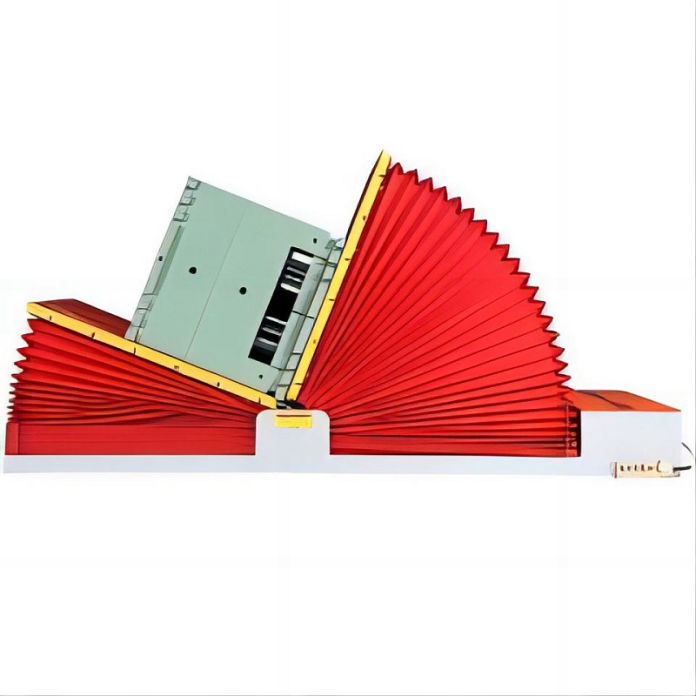
Boost Efficiency with Compact Lift & Tilt Tables?
Compact lift and tilt tables are electro-hydraulic lifters designed to minimize floor space while maximizing efficiency by lifting and tilting materials within their own base frame, making them ideal for optimizing workflow and ergonomics in various industrial settings.
For over three decades, I've been immersed in the mechanical industry, witnessing firsthand the evolution of material handling solutions. One area that has consistently impressed me with its impact on productivity and worker well-being is the realm of lift and tilt tables. Today, I want to delve into a particularly ingenious piece of equipment: the Max-Compact Lift & Tilt Table from Lift Products. Having seen these in action and understanding the principles behind their design, I can confidently say they are a game-changer for many operations.

What initially caught my attention with these tables was their clever space-saving design. In many facilities, floor space is premium. Traditional lift and tilt mechanisms can be bulky, requiring a significant footprint to operate. However, the Max-Compact series ingeniously integrates the lift and tilt functions within the base frame itself. This means you get the benefit of both lifting and tilting without sacrificing valuable real estate on your production floor or in your warehouse. This compact nature is particularly crucial in crowded environments or lean manufacturing setups where every square foot counts.
How Do Compact Lift & Tilt Tables Maximize Efficiency in Tight Spaces?
The secret to the space efficiency of these tables lies in their electro-hydraulic design and the innovative tilting mechanism. They are powered by a robust hydraulic system that utilizes double-acting cylinders for both lifting and lowering. This ensures smooth and controlled movement, essential when handling heavy and potentially delicate materials. But the real magic happens with the tilting action.
Instead of a separate tilting mechanism that adds to the overall dimensions, the LPECTL series employs a combined lift & tilt system that operates simultaneously with the lifting motion. This is achieved through a hinged steel extension cleverly integrated into the traditional scissor arms. This extension is fixed to the top platform, and as the hydraulic cylinder extends to lift the table, the scissor arms close, providing the upward lift. Simultaneously, this action causes the hinged extension to unfold, smoothly tilting the platform towards the operator.
From my experience, this simultaneous lift and tilt is not just about saving space; it’s about optimizing workflow. Consider a scenario where workers are loading or unloading parts from containers or boxes. Without a tilt table, they might have to reach deep into the container, bending and straining to access items at the bottom. This is not only inefficient but also poses a significant ergonomic risk, leading to fatigue and potential injuries.
With a compact lift & tilt table, you can raise the load to a comfortable working height and then tilt it towards the operator. This brings the materials within easy reach, eliminating awkward bending and stretching. The result? Faster loading and unloading times, reduced worker fatigue, and a safer working environment. It’s a win-win in terms of productivity and ergonomics.
What Are the Key Features of Compact Lift & Tilt Tables?
Beyond the space-saving design and efficient tilt mechanism, the Max-Compact Lift & Tilt Tables come packed with features that underscore their heavy-duty industrial nature and user-friendly operation. Having worked with various types of industrial equipment over the years, I recognize the importance of these standard features for reliable and safe performance:
- Entrapped Leg Rollers: The base and platform leg rollers are securely entrapped within the channel frame. This might seem like a small detail, but it’s crucial for stability. By entrapping the rollers, the table maintains its structural integrity and smooth operation, even under heavy loads and during tilting actions. This reduces wear and tear and enhances the longevity of the equipment.
- Powerful Internally-Mounted Motor: These tables are equipped with a 1HP intermittent duty TENV (Totally Enclosed Non-Ventilated) super torque motor. "Intermittent duty" is important to note – these motors are designed for robust performance when needed but are also energy-efficient for stop-and-go operations common in material handling. The "TENV" enclosure protects the motor from dust and moisture, vital in industrial environments.
- Safe Operating Voltage: The 24V operating control voltage is a key safety feature. Lower voltage controls minimize the risk of electrical shock, ensuring a safer environment for operators.
- NEMA-4X Pushbutton Control: The NEMA-4X constant-pressure "UP-DOWN" Pushbutton box is designed for durability and reliability in demanding environments. NEMA-4X rating signifies protection against dust, water, and corrosion, making it suitable for washdown applications or outdoor use in certain conditions. "Constant pressure" means the button must be held down for the lift or tilt to operate, a safety feature preventing accidental activation.
- Prewired Controls and Connectors: NEMA-12 prewired controls with liquid-tight electrical connectors simplify installation and maintenance. NEMA-12 rating offers protection against dust, falling dirt, and dripping non-corrosive liquids. Liquid-tight connectors further enhance protection against moisture ingress, contributing to the overall reliability of the electrical system.
- Comprehensive Motor Protection: Features like a magnetic starter, control transformer, thermal overload, and fuses are built-in to protect the motor and electrical system from damage due to overloads, voltage fluctuations, and short circuits. These are essential for preventing costly downtime and ensuring the longevity of the equipment.
- Convenient Power Cord: A 10 ft. power cord provides flexibility in positioning the table within a workspace. While a connector plug is not included (allowing for customized wiring), the length itself offers considerable convenience.
- Safety Lip on Pivot End: The 12" high lip on the pivot end is a crucial safety feature, especially during tilting operations. It prevents items from sliding off the platform as it tilts, protecting both materials and personnel.
- Heavy-Duty Hydraulic Cylinders: Double-acting hydraulic cylinders are the heart of the lifting and tilting mechanism. "Double-acting" means hydraulic pressure is used to both extend and retract the cylinder, providing precise and controlled movement in both directions. This is essential for smooth and reliable operation, especially under heavy loads.
- Durable Tabletop Construction: Smooth steel tops with straight safety toeguards provide a robust and safe working surface. The smooth steel is easy to clean and maintain, while the safety toeguards further enhance operator safety by preventing feet from being caught under the platform edges.
- Long-Lasting Finish: Surfaces are degreased, oxide primed, and enamel finished. This multi-stage finishing process provides excellent corrosion resistance, crucial for industrial environments where equipment can be exposed to moisture, chemicals, and other harsh conditions. This ensures the table maintains its appearance and structural integrity over years of use.
- Self-Lubricating Bearings: Lifetime self-lubricating, antifriction bearings minimize maintenance requirements and ensure smooth, consistent operation over the long term. This reduces downtime and maintenance costs, contributing to the overall value proposition.
- Internal High-Pressure Gear Pump: An internal high-pressure gear pump is a reliable and efficient hydraulic power source. Gear pumps are known for their robust construction and ability to deliver consistent pressure, essential for demanding lifting and tilting applications.
- Hydraulic Oil Included: The fact that hydraulic oil is included right out of the box is a small but significant detail. It means the table is ready to be installed and used quickly, without the hassle of sourcing and adding hydraulic fluid separately.
These standard features, in my experience, reflect a well-thought-out design focused on durability, safety, and ease of use, all critical factors for industrial applications.
What Specifications Should You Consider When Choosing a Compact Lift & Tilt Table?
Choosing the right lift & tilt table involves considering your specific needs and operational requirements. The Max-Compact LPECTL series offers different models to accommodate varying load capacities and operational speeds. Here’s a breakdown of the key specifications and what they mean in practical terms:
| Model | Vertical Travel | Capacity | Height | Tilt | Platform Size | Base Frame | Up Speed | Ship Weight | |
|---|---|---|---|---|---|---|---|---|---|
| Lower | Upper | Min | Max | ||||||
| LPECTL-20 | 14.38" | 2,000 lbs | 10" | 24.38" | 45° | 24"x48" to 48"x48" | 22.5"x47" | 15 sec | 675 lbs |
| LPECTL-40 | 14.38" | 4,000 lbs | 10" | 24.38" | 45° | 24"x48" to 48"x48" | 22.5"x47" | 22 sec | 725 lbs |
| LPECTL-60 | 14.38" | 6,000 lbs | 10" | 24.38" | 45° | 24"x48" to 48"x48" | 22.5"x47" | 32 sec | 800 lbs |
- Model Number (LPECTL-20, LPECTL-40, LPECTL-60): These designations primarily indicate the capacity of the table. LPECTL-20 handles 2,000 lbs, LPECTL-40 handles 4,000 lbs, and LPECTL-60 handles 6,000 lbs. Choose the model based on the maximum weight of the loads you will be handling. It's always wise to select a table with a capacity slightly exceeding your maximum anticipated load for safety and longevity.
- Vertical Travel (14.38"): This is the total vertical distance the platform can travel. In this case, all models offer 14.38" of travel.
- Height (Lower/Upper - 10" Min / 24.38" Max): These figures define the vertical range of the table. The "Lower" or "Min" height is the lowest point the platform reaches (10"), and the "Upper" or "Max" height is the highest point (24.38"). This 10" to 24.38" range provides a comfortable working height for many applications. Consider the height requirements of your specific tasks and ensure this range is suitable.
- Tilt (45°): All models offer a 45° tilt angle. This angle is generally sufficient for most loading and unloading tasks, providing good access to materials on the platform.
- Platform Size (24"x48" to 48"x48"): The platform size indicates the dimensions of the working surface. The range "24"x48" to 48"x48"" suggests that while the standard models likely come in these sizes, there might be options for customization within this range. Select a platform size that comfortably accommodates the size of the materials you will be handling.
- Base Frame (22.5"x47"): The base frame dimensions are slightly smaller than the minimum platform size, which makes sense for the compact design. This footprint is what you need to consider for floor space planning.
- Up Speed (15 sec, 22 sec, 32 sec): This indicates how quickly the table lifts to its maximum height. Notice that the up speed decreases as the capacity increases. The LPECTL-20 is the fastest at 15 seconds, while the LPECTL-60 is the slowest at 32 seconds. Consider the cycle time requirements of your operation. If speed is critical, and your loads are within the 2,000 lbs range, the LPECTL-20 might be the best choice. For heavier loads, you’ll need to accept a slightly slower lifting speed.
- Ship Weight (675 lbs, 725 lbs, 800 lbs): This is the approximate weight of each table model for shipping purposes. This information is useful for planning installation and ensuring you have appropriate equipment for moving and positioning the table.
When selecting a model, carefully consider the weight of your typical loads, the required platform size, and the desired lifting speed to choose the best fit for your application.
What Customizations Are Available to Tailor Compact Lift & Tilt Tables to Specific Needs?
While the standard features and specifications cover a wide range of applications, sometimes you need to fine-tune the equipment to perfectly match your unique operational requirements. Lift Products offers several options to customize the Max-Compact Lift & Tilt Tables:
- Foot Control Switch: Instead of the standard pushbutton control, you can opt for a foot control switch. This can be particularly useful in applications where operators need to keep their hands free to manipulate materials while simultaneously controlling the lift and tilt functions. I’ve seen foot controls significantly improve efficiency in assembly line operations and welding applications.
- Tapered Toe Guards: Standard toe guards are straight, but tapered toe guards are available as an option. Tapered toe guards can be advantageous in certain situations, potentially providing easier access to the platform from certain angles or in confined spaces.
- Lowering Beeper: A lowering beeper is a valuable safety option, especially in busy environments where people might be working around the lift table. The audible warning signal activates when the table is being lowered, alerting personnel nearby and preventing potential accidents. In my experience, audible safety signals are crucial for promoting a safe working environment.
- Raised Base: A raised base option can increase the overall height of the table. This might be necessary to integrate the lift & tilt table into existing production lines or to achieve a specific working height for ergonomic reasons. Consider your existing equipment and workflow when deciding if a raised base is needed.
- Remote Power Unit: The standard power unit is internally mounted. A remote power unit option allows you to locate the hydraulic power pack away from the table itself. This can be beneficial in environments where space around the table is extremely limited, or where you need to isolate the power unit for noise or maintenance reasons.
- Adjustable Tilt Limit Switch: The standard tilt angle is fixed at 45°. An adjustable tilt limit switch allows you to customize and limit the maximum tilt angle. This can be useful when handling delicate materials that should not be tilted at a full 45° angle, or when working in spaces with overhead obstructions that limit the permissible tilt angle.
These options demonstrate the flexibility of the Max-Compact Lift & Tilt Tables, allowing you to configure them precisely to optimize performance and safety for your specific application. When considering these options, think carefully about your workflow, materials being handled, and the working environment to select the customizations that will provide the most benefit.
Similar Material Handling Solutions: Exploring Alternatives
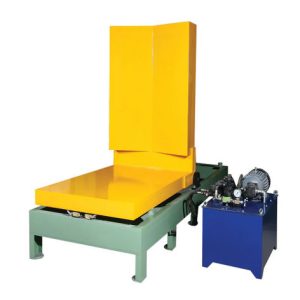
While Compact Lift & Tilt Tables offer a unique combination of space-saving design and efficient material handling, it's helpful to understand other related technologies. In my years in the industry, I’ve worked with and seen the benefits of various types of lift tables and tilters. Here's a brief overview of some similar equipment and how they compare:
- Standard Scissor Lift Tables: These are the workhorses of vertical lifting. They utilize a scissor mechanism to raise and lower platforms and are available in a vast range of capacities and sizes. Unlike the compact lift & tilt tables, standard scissor lifts primarily focus on vertical movement. They are excellent for raising and lowering loads to different levels, but they don't inherently offer tilting functionality. For applications requiring only vertical lifting, standard scissor lift tables are often a more economical choice.
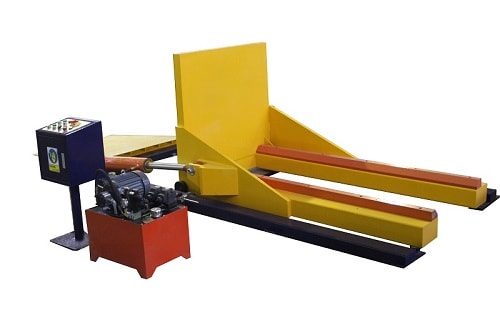
- Hydraulic Tilters (without Lift): These devices are dedicated to tilting loads, typically containers or pallets, to improve access to contents. They don't provide vertical lifting capability but are designed solely for tilting. Tilters are ideal when the primary need is to angle materials for easier access, such as emptying bins or accessing parts within containers at ground level. They are simpler and often less expensive than lift & tilt tables for applications where lifting is not required.
- Work Positioners: This is a broader category encompassing various types of equipment designed to improve ergonomics and worker access to materials. This can include basic lift tables, tilters, but also more specialized equipment like lift & rotate tables, turntables, and even articulating arm lifts. Work positioners are all about bringing the work to the worker in the most comfortable and efficient way possible. Compact Lift & Tilt Tables fall under this broader category, offering a specific solution for combined lifting and tilting in confined spaces.
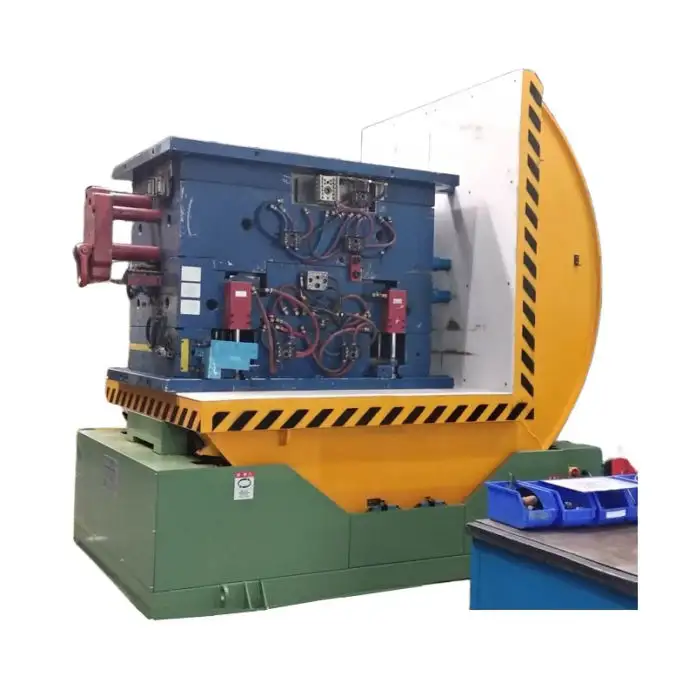
- Pallet Inverters: For applications involving palletized goods, pallet inverters are designed to invert entire pallets, often for replacing damaged pallets or transferring materials from one pallet type to another. They are specialized equipment for pallet handling and don't offer the general-purpose lifting and tilting capabilities of lift & tilt tables.
The Max-Compact Lift & Tilt Table stands out by combining vertical lifting and tilting in a space-efficient footprint. This makes it particularly advantageous in situations where both functions are needed but space is at a premium. While other types of lift tables and tilters serve specific purposes, the compact lift & tilt table offers a versatile solution for a range of material handling tasks, improving both efficiency and ergonomics in diverse industrial settings.
In conclusion, from my perspective, the Max-Compact Lift & Tilt Tables represent a smart solution for modern industrial challenges. Their space-saving design, robust construction, and thoughtful features make them a valuable asset for businesses looking to enhance productivity, improve ergonomics, and optimize their operations. If you are facing material handling challenges in a limited space, exploring the benefits of compact lift & tilt tables is definitely a worthwhile endeavor.