Want to Improve Workplace Ergonomics? Is a Manual Pallet Tilter the Answer?
Manual pallet tilters offer a simple yet effective solution for improving ergonomics and efficiency in material handling. They allow workers to access loads without excessive bending or stretching, reducing strain and increasing productivity. These tilters are particularly useful in manufacturing, warehousing, and distribution centers where frequent pallet loading and unloading occur.
For years, I've walked factory floors and distribution centers, and one thing remains constant: the critical need for efficient and safe material handling. In my three decades in this industry, I’ve seen firsthand how even seemingly small improvements can make a massive difference in productivity and, more importantly, in the well-being of workers. One area I've consistently focused on is optimizing the way we interact with palletized loads. That’s why I want to talk about a piece of equipment that might seem basic, but can be a real game-changer: the manual pallet tilter.
We've all seen it, or maybe even experienced it ourselves – the strain of reaching deep into a pallet to unload items, or the awkward bending and stretching required to load goods at the bottom. It’s not just inefficient; it’s a recipe for back injuries, fatigue, and decreased morale. Traditional methods often involve excessive manual lifting and awkward postures, leading to a significant risk of musculoskeletal disorders. This is where the beauty of a manual pallet tilter shines.
What is a Manual Mobile Pallet Tilter and Why Should You Care?
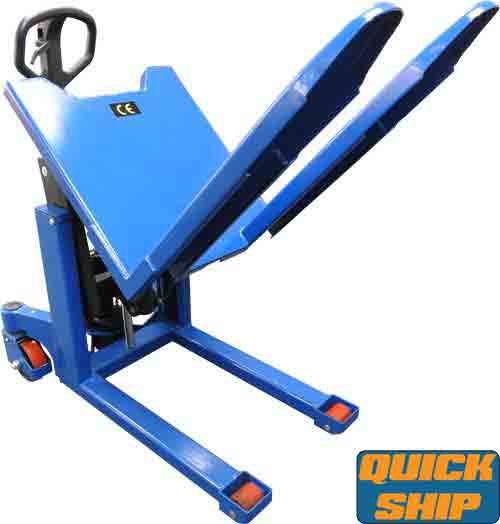
A manual mobile pallet tilter, like the Maxx-Mobile Tilt & Lift, is essentially a portable platform designed to tilt pallets to an angle that makes loading and unloading easier and more ergonomic. Think of it as a helping hand for your workforce. These aren’t complex, automated systems; they are robust, mechanically operated units that bring simplicity and reliability to the forefront.
[
What really sets this type of tilter apart is its mobility and manual operation. Unlike stationary or powered tilters, a manual mobile unit can be easily moved around your facility to wherever it’s needed most. This flexibility is crucial in dynamic environments where workflows change and equipment needs to adapt. And because it's manually operated, there are no complex electrical or hydraulic systems to maintain, making it a cost-effective and dependable solution.
What Makes the Maxx-Mobile Tilt & Lift Stand Out? The Power of Tilt and Lift Combined
The Maxx-Mobile Tilt & Lift takes the concept of a manual tilter a step further by incorporating a lifting feature. This combination of tilt and lift is what, in my experience, truly unlocks the ergonomic potential for a wide range of applications.


 ]
]
Imagine this scenario: You have workers of varying heights, and the loads they handle also come in different sizes. A standard tilter might improve access, but it doesn't address the height issue. The Maxx-Mobile Tilt & Lift solves this by allowing independent adjustment of both tilt angle (up to 90°) and vertical height (up to 11 inches). This means each operator can customize the position of the load to their optimal ergonomic zone, regardless of their stature or the load's dimensions.
This independent control is a key differentiator. You’re not stuck with a one-size-fits-all solution. Instead, you can fine-tune both the tilt and lift to create the most comfortable and efficient working conditions for every task and every worker. This adaptability directly translates to reduced strain, fewer injuries, and increased productivity.
How Does the Manual Operation Actually Work? Simplicity is Key
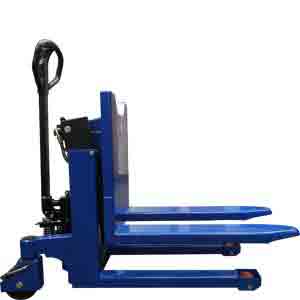
Now, let's talk about the mechanics. The MMTL series, including the Maxx-Mobile Tilt & Lift, uses a manual hydraulic system for both lifting and tilting. If you’re familiar with a pallet jack, you’ll understand the basic principle.
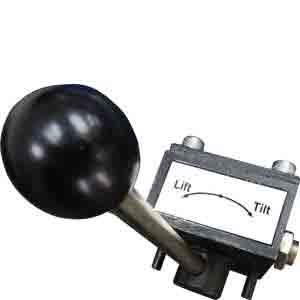
The system is designed with a selector lever that allows you to switch between "Lift" and "Tilt" functions. To operate, you simply move the lever to the desired function and pump the handle, just like you would with a pallet jack. It’s straightforward, intuitive, and requires minimal training.
This manual operation might seem basic, but it has several advantages in many industrial settings:
- Reliability: Fewer moving parts and no complex electronics mean less to go wrong. Manual systems are known for their robustness and long lifespan.
- Cost-effectiveness: Manual tilters are generally more affordable than powered models, both in initial investment and in maintenance.
- Ease of Use: The operation is simple and requires minimal training. Workers can quickly learn how to use the tilter effectively.
- No Power Requirements: This is a significant advantage in areas where power access is limited or where you want to avoid cords and electrical hazards.
What are the Ergonomic Advantages in Detail? Reducing Strain, Improving Safety
Let's delve deeper into the ergonomic benefits. For me, this is where the real value of a manual pallet tilter lies. It's not just about making tasks easier; it's about creating a safer and healthier work environment.
- Reduced Bending and Stretching: Tilting the pallet brings the load closer to the operator, minimizing the need to bend deeply or stretch awkwardly to reach items at the bottom or back of the pallet. This is crucial in preventing back strain and injuries.
- Improved Posture: By raising the load and tilting it, the tilter encourages a more upright and natural working posture. This reduces stress on the back, shoulders, and neck, leading to less fatigue and discomfort.
- Minimized Lifting: While it's a tilter, the lift function also plays a role in ergonomics. Raising the pallet to a more comfortable working height further reduces the need for heavy lifting from ground level.
- Enhanced Reachability: Tilting makes items at the back of the pallet more accessible. Operators don’t have to lean in as far or reach over other items, improving both safety and efficiency.
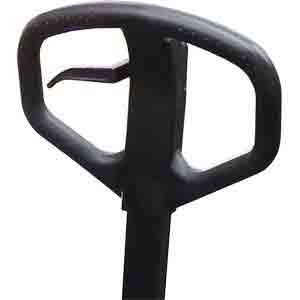
The ergonomic handle on the Maxx-Mobile Tilt & Lift is another thoughtful design feature. It's not just a simple handle; it’s designed for comfort and control. The dimpled grip and built-in pallet jack style controls for lift, lower, and neutral functions make operation smooth and intuitive.
Where Can You Use a Manual Mobile Pallet Tilter? Versatile Applications Across Industries
The versatility of a manual mobile pallet tilter like the MMTL series makes it suitable for a wide range of industries and applications. In my experience, these are some of the most common and impactful uses:
- Manufacturing: Assembly lines, machining operations, and parts handling areas can all benefit from tilters. They make it easier to access components for assembly, load and unload parts from machines, and manage work-in-progress.
- Warehousing and Distribution: Order picking, inventory management, and loading/unloading stations are prime locations for tilters. They speed up order fulfillment, reduce errors, and improve the flow of goods.
- Retail Backrooms: Stockrooms and receiving areas in retail environments can become more organized and efficient with tilters. They simplify restocking shelves and managing inventory.
- Pharmaceutical and Food Processing: In industries with strict hygiene standards, the manual and mobile nature of these tilters can be advantageous as they are easy to clean and move as needed.
- Any Pallet Handling Operation: Basically, anywhere you're dealing with palletized goods and want to improve ergonomics and efficiency, a manual tilter is worth considering.
Key Features that Matter: Beyond the Basics
Beyond the core tilt and lift functions, the Maxx-Mobile Tilt & Lift includes several features that enhance its usability and safety:
- Independent Lift and Tilt: As we’ve discussed, this is crucial for customization and ergonomic optimization.
- Selector Lever: The easy-to-use lever for switching between lift and tilt functions streamlines operation.
- Rotation Lock: This feature allows the handle to lock in three different positions. This provides better control during maneuvering and ensures the handle stays out of the way when not in use. The foot pedal release for the rotation lock is a smart touch, allowing for hands-free repositioning.
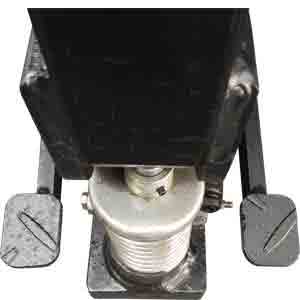
- Caster Brakes: Safety is paramount. Caster brakes on the swivel casters ensure the tilter stays securely in place during loading and unloading operations.
- Durable Casters: The 6" diameter swivel polyurethane steer casters and 2.5" diameter rigid polyurethane load casters are designed for smooth rolling and long-lasting performance in industrial environments.
- CE Certified: Meeting CE standards is a testament to the product's safety and quality.
Specifications to Consider: Is the MMTL-10M Right for You?
When considering a manual pallet tilter, specifications are important. The MMTL-10M model offers a solid set of capabilities for many applications:
| Feature | Specification |
|---|---|
| Capacity | 2,200 lbs |
| Tilt | 90° |
| Vertical Travel | 11" |
| Lowered Height | 3.35" |
| Fork ID | 9.2" |
| Fork OD | 22" |
| Fork Length | 31.5" |
| Lift Pumps | 18 |
| Tilt Pumps | 56 |
| Cylinders | 2 |
| Weight | 392 lbs |
Key considerations here are the capacity (2,200 lbs is suitable for many standard pallet loads), the tilt angle (90° provides excellent access), and the vertical travel (11" offers a useful range of height adjustment). The fork dimensions should also be checked to ensure compatibility with your standard pallets.
Are Manual Mobile Pallet Tilters the Right Choice for Everyone? Considering Alternatives
While manual mobile pallet tilters offer significant advantages, it's important to consider if they are the best solution for your specific needs. In some situations, other types of tilters or material handling equipment might be more appropriate.
Alternatives to consider:
- Hydraulic Tilters: These use hydraulic power for lifting and tilting, often providing higher capacities and faster operation than manual tilters. However, they are typically more expensive and less mobile.
- Electric Tilters: Similar to hydraulic tilters, but powered by electricity. They offer powered operation but may require power connections and have higher maintenance needs than manual models.
- Pneumatic Tilters: Utilize compressed air for operation. Suitable for environments where pneumatic power is readily available.
- Pallet Positioners: These are often scissor lift tables with a rotating platform, allowing for 360° rotation of the pallet at a comfortable working height. They are excellent for ergonomic positioning but may not offer the same degree of tilt as dedicated tilters.
- Lift Tables: While not tilters, standard lift tables can raise pallets to a comfortable working height, reducing bending and lifting. They lack the tilting functionality but can be a simpler and more versatile solution in some cases.
The best choice depends on factors like:
- Load Weight and Size: For very heavy loads, powered tilters might be necessary.
- Frequency of Use: For very high-volume operations, powered tilters might offer faster cycle times.
- Budget: Manual tilters are generally the most cost-effective option.
- Space and Mobility Requirements: Mobile manual tilters excel in flexible and space-constrained environments.
- Ergonomic Needs: Consider the specific ergonomic challenges in your workplace and choose the solution that best addresses them.
My Final Thoughts: Simple Solutions, Significant Impact
In my experience, sometimes the most effective solutions are not the most complex ones. Manual mobile pallet tilters like the Maxx-Mobile Tilt & Lift are a perfect example of this. They are simple in design and operation, yet they deliver significant benefits in terms of ergonomics, safety, and efficiency.
If you're looking for a cost-effective way to improve material handling in your facility, reduce workplace injuries, and boost productivity, I highly recommend considering a manual pallet tilter. It's a smart investment in your workforce and your bottom line. And remember, creating a comfortable and safe work environment is not just the right thing to do; it's also good business.