Are Tilters the Unsung Heroes of Ergonomic Material Handling?
Tilters are indispensable tools in modern material handling, offering a simple yet highly effective solution to improve ergonomics and boost efficiency in various industrial settings. By positioning containers at optimal angles, tilters minimize strain and maximize productivity, making them a cornerstone of any well-designed workspace.
For three decades, I've walked factory floors, consulted on countless projects, and witnessed firsthand the evolution of material handling. One thing has remained constant: the critical need for ergonomic solutions. Back strain, repetitive motion injuries, and just plain fatigue – these are the enemies of productivity and employee well-being. That's why I get genuinely excited about simple yet brilliant solutions like tilters. They might not be the flashiest piece of equipment, but trust me, they are workhorses that can revolutionize how you handle materials.
Let's dive into the world of tilters, specifically manual tote tilters, and explore why they should be a cornerstone of your ergonomic strategy.
What Exactly IS a Tilter and Why Should You Care?
In essence, a tilter, like the Maxx-Ergo Manual Tote Tilter we’re discussing today, is a mechanical device designed to angle containers – think totes, bins, baskets, and boxes – to make their contents more accessible. Imagine reaching deep into a large container to grab parts or materials. Awkward bending, stretching, and heavy lifting are often involved, right? This is where tilters shine. By tilting the container, we bring the contents closer to the operator, drastically reducing strain and improving posture.
From my experience, the benefits of incorporating tilters are multi-faceted:
- Enhanced Ergonomics: This is the big one. Tilters minimize the need for operators to bend, reach, and strain their backs and limbs, significantly reducing the risk of musculoskeletal injuries. Happy and healthy employees are productive employees.
- Increased Efficiency: When reaching for parts becomes easier, tasks become faster. Operators can retrieve and place items more quickly and comfortably, boosting overall throughput. Less time wrestling with containers means more time on value-added tasks.
- Improved Safety: Reducing awkward postures and heavy lifting naturally leads to a safer work environment. Fewer injuries translate to lower workers' compensation costs and less downtime.
- Versatility: Tilters aren't just for one type of container or industry. They are adaptable to a wide range of applications, from manufacturing and warehousing to distribution and assembly lines.
Think about scenarios where tilters can make a real difference:
- Assembly Lines: Imagine workers assembling components from bins of parts. A tilter keeps parts within easy reach, minimizing fatigue and speeding up the assembly process.
- Order Fulfillment: In warehouses, order pickers often need to access items from totes or containers. Tilters ensure items are presented at an optimal angle, making picking faster and less strenuous.
- Machine Feeding: When loading parts into machinery, tilters can position containers so that operators can easily feed parts without excessive bending or lifting.
Essentially, anywhere you have workers repeatedly accessing materials from containers, a tilter can likely improve the process.
Maxx-Ergo Manual Tote Tilter: A Closer Look at Practical Ergonomics
Now, let's get specific and talk about the Maxx-Ergo Manual Tote Tilter. What I appreciate about this type of tilter is its simplicity and effectiveness. It's a robust, manually operated solution that delivers significant ergonomic benefits without overcomplicating things.
(Keep image order and placement as in original content)

 ](https://www.liftproducts.com/tilters/max-ergo-tilter.html#myCarousel)

This tilter is designed to handle a wide range of containers – totes, containers, tubs, wire baskets, boxes – you name it. The core idea is to provide that crucial tilting action that brings the container contents within easy reach. The manual pump mechanism is a cost-effective and reliable way to achieve this. You don't need complex hydraulics or pneumatics; just a simple, robust manual pump to get the job done.
With a tilt range of 0-35°, it offers plenty of adjustment to find that "sweet spot" ergonomic angle for various tasks and operator heights. And with a capacity of 2,000-3,000 lbs, it’s built to handle substantial loads, making it suitable for demanding industrial environments. From my experience, this capacity range covers a vast majority of applications in manufacturing and warehousing.
The base model's lowered height of 9" is another thoughtful design feature. This low profile makes loading and unloading containers onto the tilter easier, especially when dealing with heavy loads. For situations requiring even greater flexibility, the adjustable height base frame, ranging from 18" to 22", is a valuable option. And if mobility is key, adding casters (which adds 7-1/2" to the height) allows you to move the tilter around the workspace as needed. I've seen facilities where mobile tilters are incredibly useful for adapting to changing production layouts.
A standard 4" lip is included on all models to help secure the container during tilting, preventing slippage. Custom lips are also available for specialized container types. And for easy transportability around the facility, built-in fork pockets are standard – a feature I always appreciate for its practicality.
Key Features in Action: Making Work Easier
Let's zoom in on some of the specific features of the Maxx-Ergo Tilter and why they matter in real-world applications.
(Keep image order and placement as in original content)
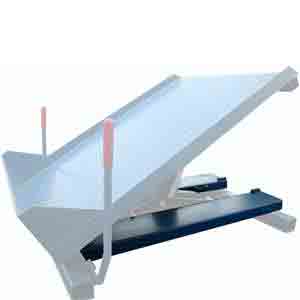
Fork Pockets: Mobility and Flexibility
As I mentioned, the built-in fork pockets are a game-changer for mobility. Using a forklift or even a walk-behind stacker, you can easily reposition the tilter wherever it's needed. This is especially useful in dynamic environments where production lines or work cells are frequently reconfigured. In my experience, the ability to quickly move equipment like tilters is crucial for maintaining flexibility and responsiveness in modern manufacturing.
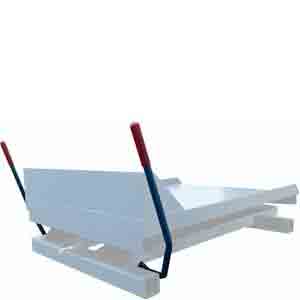
Dual Handles: Operator Convenience from Either Side
The dual manual pump handles are a simple yet brilliant design element. Positioning handles on both sides of the tilter means operators can tilt the load from either side. This is a significant ergonomic advantage, especially in tight workspaces or when the operator's position is constrained. It's these small details that truly enhance usability and operator comfort.
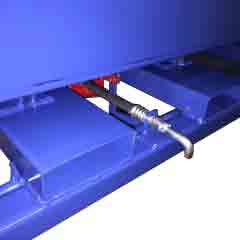
Release Valve: Centralized Control for Smooth Operation
The centrally located release valve, positioned on the lipped end of the tilter, is another operator-centric feature. By placing the release valve in this accessible location, the design minimizes unnecessary movement for the operator when lowering the container. This reduces strain and streamlines the tilting process, contributing to overall efficiency.
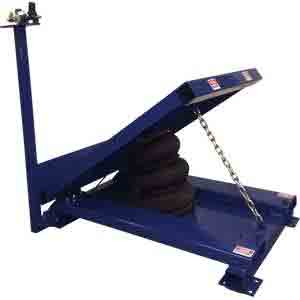
Optional Air Power: Speed and Repetitive Tasks
While the manual pump is excellent for many applications, the optional air-powered tilt actuator takes things up a notch, particularly for scenarios requiring faster tilt speeds or repetitive tilting operations. In high-throughput environments or cleanroom applications where speed and reduced manual effort are paramount, air power can be a valuable upgrade. I’ve seen air-powered tilters significantly boost productivity in packaging lines and high-volume assembly operations.
Specifying Your Tilter: Key Considerations
Choosing the right tilter involves considering several factors. Here’s a breakdown based on my experience:
(Keep table structure and content as in original content, remove "Quote Form" column and "Quote" links)
| Base Model |
Capacity | Tilt | Platform Size | Lowered Height |
|
|---|---|---|---|---|---|
| Min | Max | ||||
| --- | --- | ||||
| LPDW-20 | 2,000 | 0-35° | 24" x 36" | 50" x 48" | 9" |
| LPDW-25 | 2,500 | 0-35° | 24" x 36" | 50" x 48" | 9" |
| LPDW-30 | 3,000 | 0-35° | 24" x 36" | 50" x 48" | 9" |
| Model | LPDW-20 | LPDW-25 | LPDW-30 |
| Capacity | 2K lbs | 2.5K lbs | 3K lbs |
| Tilt | 0-35° | 0-35° | 0-35° |
| Min Top | 24"x36" | 24"x36" | 24"x36" |
| Max Top | 50"x48" | 50"x48" | 50"x48" |
| Down | 9" | 9" | 9" |
- Capacity: The weight of the containers and their contents is the primary consideration. Choose a model with a capacity that safely exceeds your maximum load. It's always better to err on the side of caution.
- Tilt Range: The 0-35° range offered by the Maxx-Ergo series is generally sufficient for most applications. Consider the optimal tilt angle required for your specific tasks.
- Platform Size: Ensure the platform is large enough to comfortably accommodate the containers you'll be using. Consider both the minimum and maximum container sizes you might handle.
- Lowered Height: A lower lowered height makes loading and unloading easier, especially for heavy items. Consider the height requirements of your operators and the surrounding equipment.
Standard Features and Options: Tailoring the Tilter to Your Needs
The Maxx-Ergo Tilter comes with a solid set of standard features that make it a versatile solution right out of the box.
(Keep bullet points as in original content)
Standard Features
-
Tilt Range: 0° - 35°
-
Tilt Adjustment 1° per pump
-
Dual Pump Levers for easy adjustment
-
Manual Lowering control valve
-
Side edges to contain load
-
Fork Pockets
-
4" Lip on hinged ends
-
Diamond tread deck
But what truly makes tilters adaptable are the available options, allowing you to customize them to your specific needs.
(Keep image order and placement as in original content)
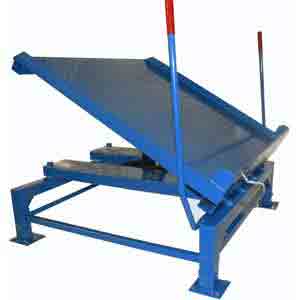
Adj. Raised Base
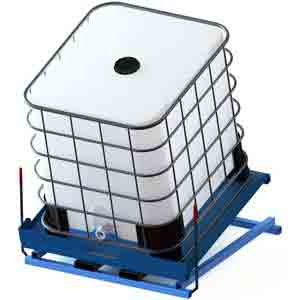
IBC Tote Cutout
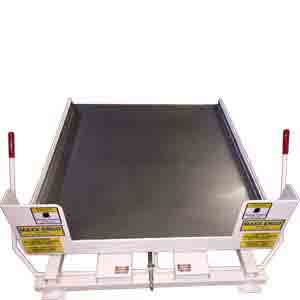
Stainless Platform
Air Powered
(Keep bullet points as in original content)
Options
-
Custom platform sizes
-
Extended side walls
-
6"ø casters
-
Air bag tilt
-
Chute
-
Extended Lip
-
Smooth steel top
-
Open Grating
-
Side Lips
From adjustable raised bases for increased elevation to IBC tote cutouts for specialized containers, stainless steel platforms for clean environments, and air-powered tilt for faster operation – the options are there to fine-tune the tilter to your precise application. I always advise clients to carefully consider their specific needs and explore the available options to maximize the benefit of their tilter investment.
Beyond Manual Tilters: A Glimpse at Other Tilting Solutions
While manual tote tilters like the Maxx-Ergo are incredibly useful, the world of tilting solutions is quite broad. It's worth briefly mentioning some other types of tilters and related equipment to provide a wider context.
- Hydraulic Tilters: For heavier loads and more frequent tilting operations, hydraulic tilters offer greater power and speed compared to manual models. These are often used in very high-throughput environments.
- Pneumatic Tilters: As we saw with the air-powered option for the Maxx-Ergo, pneumatic tilters use compressed air for tilting action. They are a good middle ground, offering faster operation than manual tilters and are often preferred in clean environments.
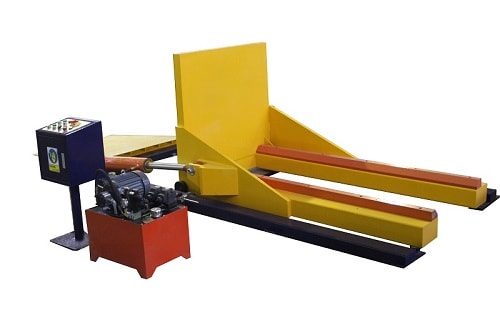
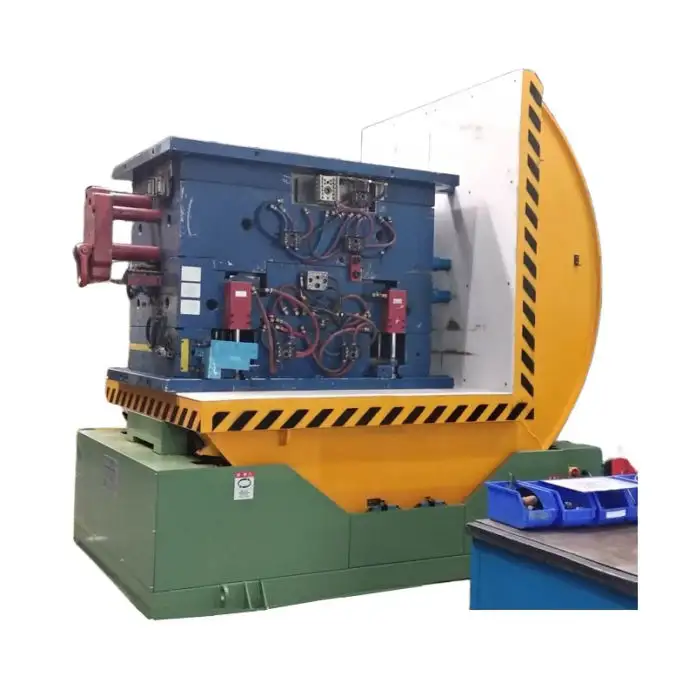
- Upenders: While tilters angle containers, upenders rotate them, typically 90 or 180 degrees. Upenders are used to invert loads for processes like emptying containers or changing load orientation.
- Pallet Tilters: Specifically designed for tilting pallets, these are crucial for ergonomic pallet loading and unloading, minimizing the need for workers to reach across entire pallets.
- Lift and Tilt Tables: These combine lifting and tilting functionalities, providing both height adjustment and container angling. They are highly versatile for work positioning and material presentation.
Each of these tilting and lifting solutions addresses specific material handling challenges. The best choice depends on your specific application, load requirements, throughput needs, and budget.
Final Thoughts: Investing in Ergonomics is Investing in Your Future
In my 30 years in this industry, I've learned that investing in ergonomics isn't just about compliance or employee well-being – it's a smart business decision. Equipment like the Maxx-Ergo Manual Tote Tilter might seem like a small investment, but the returns in terms of increased productivity, reduced injuries, and improved employee morale can be substantial.
Tilters are a prime example of how simple mechanical solutions can have a profound impact on workplace efficiency and safety. If you're looking for a practical, cost-effective way to enhance ergonomics in your material handling processes, I highly recommend taking a closer look at manual tote tilters and exploring how they can benefit your operations. You might be surprised at the difference such a seemingly simple device can make.
(Keep File section and Manual link as in original content)