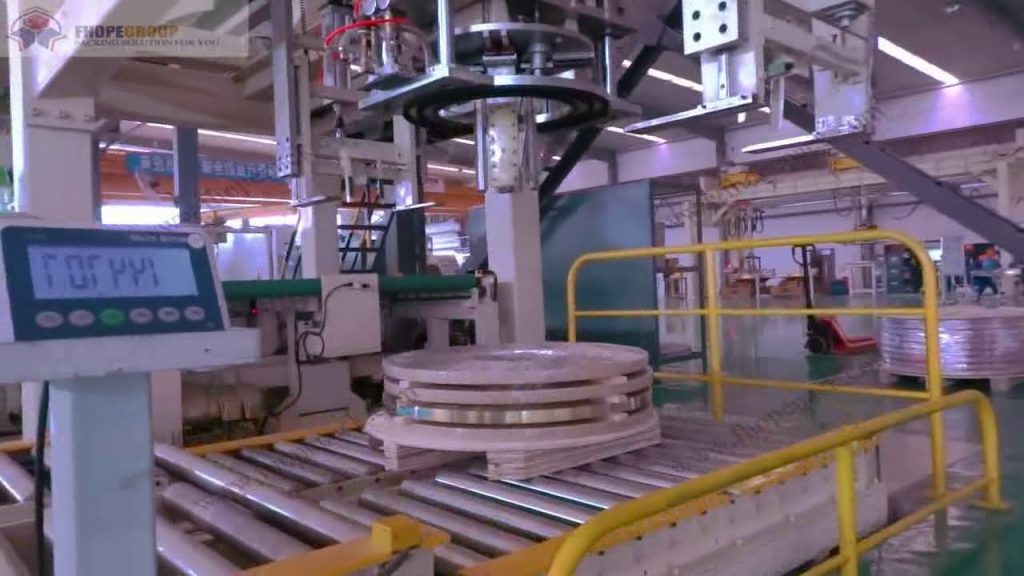
Coil packing line bottlenecks slowing your production and eroding profits? Struggling with outdated systems that can't keep pace? It's time to look beyond basic specs and see how a truly advanced solution can deliver unparalleled value, surpassing traditional approaches.
FHOPEPACK's coil packing lines deliver more value than GEORG by offering superior customization for diverse needs, achieving significantly higher efficiency through advanced automation metrics, building unparalleled durability with high-end integrated technologies, and providing transparent costs with a compelling ROI through substantial operational savings.
This isn't just about moving metal from point A to B. It's about optimizing your entire downstream process. Let's dissect the critical elements that differentiate a standard packaging system from one that truly transforms your profitability.
Designed for Versatile Production Needs: Adaptability is Key
Is your current coil packing line rigid, struggling with changing coil sizes or materials? Does adapting require costly overhauls and significant downtime? Modern manufacturing demands flexibility that older systems simply cannot provide.
FHOPEPACK's coil packing lines offer superior versatility compared to systems like GEORG's by featuring modular designs that allow for seamless integration into existing or new layouts and effortless scalability to accommodate increasing production volumes. Unlike less adaptable lines, FHOPEPACK systems handle a wide spectrum of coil dimensions, weights up to 5 tons, and materials including steel, copper, and aluminum, with adjustable packaging parameters for wrapping layers, tension control, and sealing methods. This built-in flexibility ensures rapid changeovers and minimal downtime when switching product types, future-proofing your investment against evolving market demands and diverse operational requirements.

Tailoring the Line to Your Specific Needs
Modern coil production is rarely uniform. Slit coils, cold rolled, hot rolled – each presents unique handling and packaging challenges. A generic approach, while perhaps offering basic functions like "Strapping at the turnstile" or "Downending of 90°" as mentioned in the GEORG material, often falls short when confronted with real-world production diversity. This is where customized modular design shines, allowing lines to be precisely configured and adapted.
The Power of Modular Design and Seamless Integration
FHOPEPACK emphasizes modularity as a cornerstone. This allows for systems built from interchangeable units, offering significant advantages:
- Scalability: Need to increase throughput? Add more modules like strapping stations or wrapping units without replacing the whole line.
- Flexibility: Change the factory layout? Modules can be rearranged. Introduce a new coil type? Specific handling or protection modules can be integrated. GEORG mentions "Modular design for perfect integration" and "Optimal integration in existing production processes due to flexibility", suggesting modularity is a recognized benefit, but the level of depth and specific tailoring options detailed by FHOPEPACK appear more extensive based on the provided materials, including compatibility with MES and ERP systems.
- Maintainability: Isolated modules simplify troubleshooting and repair, reducing overall downtime.
- Integration Points: FHOPEPACK lines are designed to seamlessly integrate with upstream equipment like slitting lines and downstream systems like warehouse management, incorporating various handling methods including coil cars, cranes, and forklifts for versatile feeding and discharge. This broad compatibility ensures a smooth workflow regardless of existing factory infrastructure.
Fine-Tuning Packaging for Diverse Requirements
Packaging isn't just wrapping; it's protection tailored to the product and its journey. FHOPEPACK systems offer granular control over the packaging process:
- Material Variety: Handle everything from standard stretch film and steel/PET strapping (GEORG mentions "Strapping at the turnstile", "Strapping through the coil eye", "Manual and automation of transversal and longitudinal strapping") to specialized VCI paper and film, HDPE sheets, cardboard, and steel sheet coverings for comprehensive protection against moisture, corrosion, and physical damage, including options for "VCI paper covering", "VCI film stretch wrapping", "Cardboard OD covering", and "Steel sheet OD covering" detailed by FHOPEPACK for cold roll coils.
- Layer Control: Precisely adjust the number of protective layers. This is crucial for sensitive materials or long-term storage, a level of control not explicitly detailed for GEORG beyond mentioning foil packing ("Integration of foil packing systems"). FHOPEPACK describes applying multiple layers, including an inner airtight layer and a separate outer layer for mechanical protection.
- Tension Management: Sensitive coils require specific tension during wrapping to prevent damage. Automated tension control ensures consistency that manual or less advanced systems struggle to match.
- Ancillary Protection Integration: The ability to automatically or manually integrate ID/OD protectors, side wall protectors, and belly wrap materials is key for preventing damage during handling and transport, a critical feature detailed by FHOPEPACK, especially for cold roll coils.
Comparing Adaptability: FHOPEPACK vs. GEORG
| Feature | FHOPEPACK | GEORG (Based on provided material) | Key Difference/Advantage (FHOPEPACK) |
|---|---|---|---|
| Coil Size/Material Range | Wide spectrum (steel, copper, aluminum), small strips to heavy-duty (up to 6 tons, up to 2000mm diameter), adjustable parameters | Handled (implied by "Coil Packaging Lines", "Slit Coils"), specific range not detailed. | Explicit handling capacity (weight/diameter) and material versatility detailed, including hot mill coils. |
| Modularity/Integration | Modular design for scalability, flexibility, easy integration (coil car, crane, forklift, slitting line, warehouse, ERP, MES), tailored layouts | Modular design for perfect integration, Optimal integration in existing lines, No limits upstream. | Emphasis on scalability, integration with ERP/MES, and specific integrated handling methods (crane, forklift, stacking machine) detailed for tailored solutions and streamlined workflow. |
| Packaging Layer Customization | Adjustable layers (stretch film, VCI, HDPE, paper, steel sheet), precise tension control, multi-layer options for enhanced airtight/mechanical protection. | Basic wrapping/strapping mentioned, Integration of foil packing systems. | Granular control over layers, tension, and specialized multi-layer/ancillary protection (VCI, ID/OD protectors, side wall) for superior product integrity across different coil types. |
| Handling Flexibility | Coil car feeding, crane loading, forklift in/out, turnstile, downender (90°), automated stacking machine, palletizing, single-man operation control. | Strapping at the turnstile, Downending of 90°, Palette conveying system/stacking, Conveying via chains/rolls. | More explicit detailing of integrated handling methods from various sources (crane, forklift, stacking machine) and operational control designed for minimal labor. |
While GEORG mentions core components and modularity, FHOPEPACK's material provides a clearer picture of the degree of customization available, particularly concerning diverse coil types, materials, and detailed control over packaging application layers and tension. This deeper level of tailoring ensures that the FHOPEPACK line is not just integrated but truly optimized for the specific, often complex, needs of a modern coil processing facility, offering solutions designed for various packaging goals and budget levels with minimal labor.
Efficiency that Redefines Industry Standards: Automation at its Core
Is manual packaging bottlenecking your coil output, wasting precious time and resources? Are inconsistencies in wrapping and strapping impacting product quality? Unlock the power of automation to dramatically boost throughput and slash operational costs.
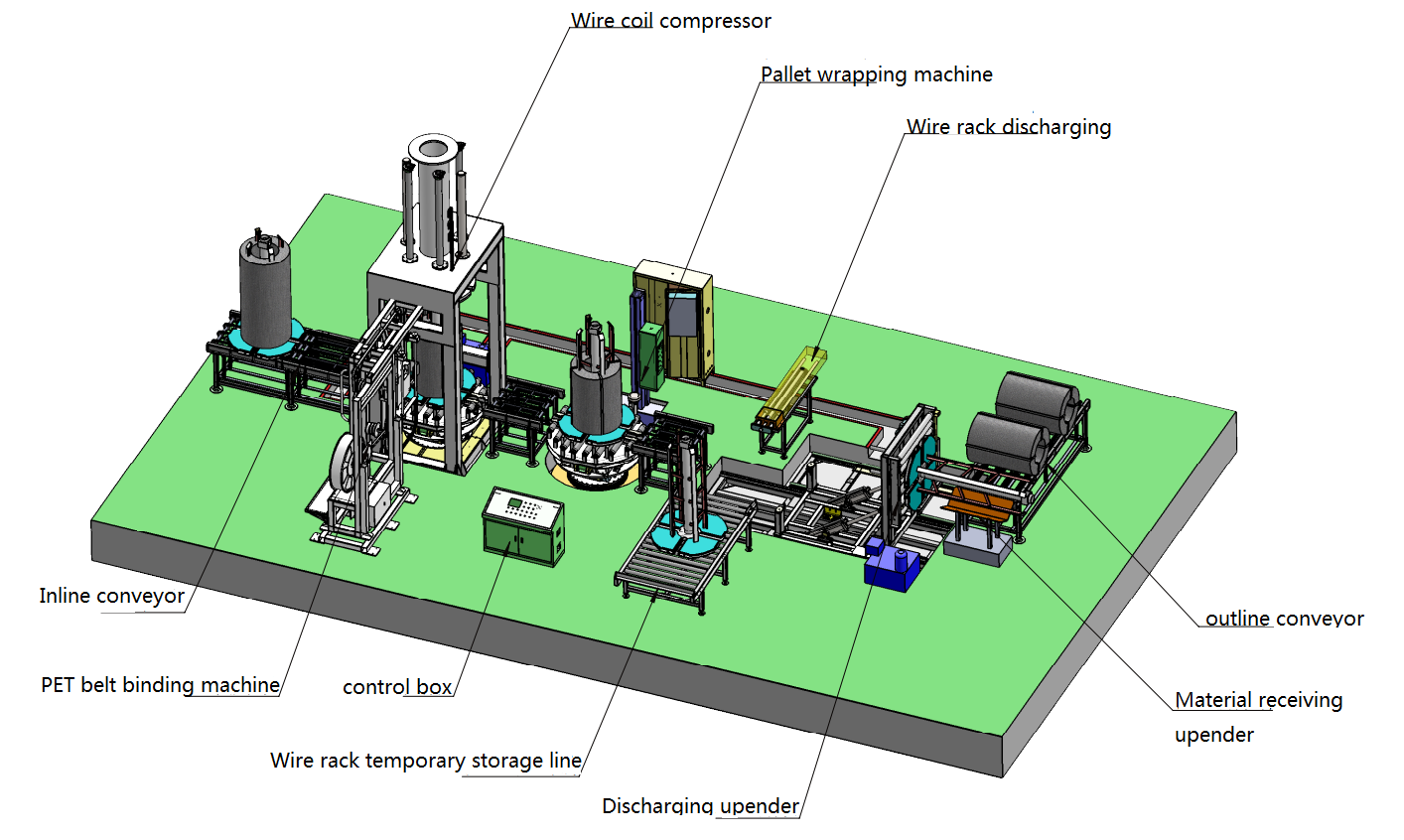
FHOPEPACK coil packing lines significantly enhance efficiency over methods like GEORG's by automating the entire process, achieving throughput rates of 10-20 coils/hour (customizable, with high-speed systems capable of 70-120 seconds per coil, potentially exceeding 30+ coils/hour), optimizing material usage to reduce waste by minimizing overlap, and requiring only 1-2 operators compared to multiple for manual tasks, alongside reduced energy consumption.
Quantifying the Gains
Efficiency in coil packing is a direct contributor to profitability. The time saved, the material optimized, and the labor reduced all accumulate into significant operational advantages. While GEORG's materials mention their "conveying and packing systems reduce time and save money" and their cut-to-length lines "set standards for performance, productivity and accuracy" (though this refers to cut-to-length, not packing specifically, it implies a focus on these metrics), the FHOPEPACK material dives into quantifiable efficiency metrics of the packing line itself.
Boosting Throughput and Cycle Time
The starkest contrast between manual and automated packing, and a key differentiator among automated systems, is speed. FHOPEPACK claims processing speeds of 10-20 coils/hour on their standard line, with high-speed configurations handling a coil every 70-120 seconds, potentially exceeding 30 coils per hour, and even mentioning systems processing 120 coils per hour depending on specification. This dwarfs manual rates of 1-2 coils/hour/operator. GEORG mentions "High throughput" but provides no specific numbers for their packing lines in the material. The FHOPEPACK figures provide a clear benchmark for potential production increases. Furthermore, automated systems ensure consistent cycle times, enabling predictable scheduling and reducing production variability. The integration of stations like the turnstile, downender, coil strapping machine, and coil pallet stacker into an automated flow minimizes handling time between processes.
Optimizing Material Usage
Packaging materials represent a recurring cost. Automated lines from FHOPEPACK are designed to minimize waste. Features like cutting materials precisely to coil dimensions from large rolls, rather than using pre-cut materials, can reduce material costs significantly (FHOPEPACK claims up to 30%). Automated wrapping patterns minimize overlap, ensuring only the necessary amount of material is used. This level of material optimization is less explicit in the GEORG description, which mentions "Integration of foil packing systems" but not the mechanism for material usage control or waste reduction.
Labor Cost Reduction and Resource Allocation
A major driver of ROI in automation is the reduction in labor dependency. FHOPEPACK states their systems require only 1-2 operators for the entire line, even allowing for one man to operate the whole line in a safety way depending on the design and budget level. Compare this to the multiple operators needed for manual handling, strapping, and wrapping. GEORG mentions "Manual or automation strapping" and "Manual and automation of transversal and longitudinal strapping", indicating they offer automated options, but the specific labor reduction impact isn't quantified as clearly as FHOPEPACK's claim of requiring only 1-2 operators for the whole system, reducing "a huge amount of labor costs". Freed-up labor can be redirected to higher-value tasks like quality control, machine maintenance, or upstream production processes.
Energy Efficiency
Beyond speed and labor, energy consumption is a growing efficiency metric. FHOPEPACK claims their lines can offer energy consumption up to 30% lower than the industry average through features like optimized motor control. While GEORG doesn't specify energy metrics, this quantifiable reduction contributes to lower operating costs and a more sustainable footprint for FHOPEPACK users.
Comparing Efficiency Metrics: FHOPEPACK vs. GEORG (Quantified)
| Metric | Manual Packing | GEORG (Implied/General) | FHOPEPACK (Specific Claims) | Improvement (FHOPEPACK vs. Manual) |
|---|---|---|---|---|
| Throughput | 1-2 coils/hr/operator | High throughput (Unquantified) | 10-20 coils/hr (standard), up to 120 coils/hr (some refs) | 10x - 60x+ per operator workload |
| Labor Required | Multiple operators | Offers Automation | 1-2 operators for entire line, single-man operation possible | Significant (reduces headcount) |
| Material Waste | High (e.g., 20-30%+) | Not Specified | Low (e.g., 5-10%, up to 30% reduction claimed) | Significant Reduction |
| Cycle Time | Variable | Not Specified | Consistent, Optimized (70-120 sec/coil high-speed) | Predictable, Faster |
| Energy Use | Higher (indirect) | Not Specified | Up to 30% lower than industry average | Quantifiable Reduction |
The quantitative data points provided by FHOPEPACK regarding throughput (coils/hour), labor requirements (1-2 operators), material savings (up to 30%), and energy efficiency (30% lower) offer a clear, measurable advantage over the general claims of time/cost reduction found in the GEORG material. This focus on specific performance metrics allows businesses to directly calculate the potential efficiency gains and ROI of a FHOPEPACK system.
High-End Technology for Unparalleled Durability: Investing in Longevity
Are you concerned about equipment breakdown in harsh industrial environments? Does unreliable machinery lead to costly downtime and missed deadlines? Invest in a coil packing line built with robust technology designed for sustained performance and exceptional longevity.
FHOPEPACK coil packing lines achieve superior durability and reliability through the use of heavy-gauge steel construction, wear-resistant components fabricated from hardened alloys, advanced PLC control systems (Level 1-3), and IoT-enabled monitoring for proactive maintenance, minimizing downtime and extending operational lifespan well beyond the capabilities of less technologically advanced or robustly built systems.

Building for the Long Haul
Industrial environments are tough on machinery. Continuous operation, heavy loads, and exposure to dust or chemicals demand equipment built to last. While GEORG mentions "Heavy mill design" and using "high quality single components", FHOPEPACK details specific technologies and construction methods that contribute to long-term reliability and performance, aiming for a lifespan of 10-15 years.
Robust Construction and Material Science
Durability begins with the physical structure. FHOPEPACK emphasizes heavy-gauge steel frames for structural rigidity under load. Key moving parts, like rollers, conveyors, strapping heads, and wrapping rings, are fabricated from wear-resistant materials such as hardened steel alloys or engineered polymers designed for continuous industrial use. Protective coatings (like powder coating or epoxy paint) guard against corrosion, abrasion, and chemical damage common in mill environments. GEORG's "Heavy mill design" suggests a similar principle, and their claim of using "high quality single components" is a positive indicator, but specific materials or component details are not provided in the same depth as FHOPEPACK's description of hardened alloys and wear-resistant polymers.
Intelligent Control and Monitoring Systems
Modern durability isn't just about brute strength; it's also about intelligent operation and maintenance. FHOPEPACK systems utilize advanced PLC control systems (offering Control Level 1-3 based on complexity) for precise, consistent operation, reducing mechanical stress caused by imprecise movements and minimizing wear. More critically, integrated sensors and IoT-enabled monitoring systems provide real-time data on machine health, performance metrics, and potential issues. This allows for predictive maintenance – identifying potential failures before they occur, significantly reducing unplanned downtime and costly repairs. GEORG mentions PLC integration in the FHOPEPACK source material (as something FHOPEPACK offers) and offers "Life Cycle Quality Management" services, suggesting an awareness of long-term support, but the integration of real-time monitoring and predictive maintenance technology isn't explicitly detailed for their equipment itself in the provided GEORG material as a standard feature.
Comprehensive After-Sales Support for Sustained Uptime
Beyond the machine itself, the quality of support directly impacts its operational lifespan and uptime. FHOPEPACK emphasizes comprehensive after-sales service designed for minimal downtime. This includes:
- Rapid Response: 24/7 remote support and on-site technician visits within 48 hours (if required).
- Spare Parts Availability: A 95% stocked inventory rate ensures essential components are quickly accessible.
- Proactive Maintenance Plans: Tailored maintenance schedules, lubrication, cleaning, and system diagnostics help prevent issues.
This detailed support structure contributes directly to the machine's longevity and consistent performance, a level of specific service guarantee not itemized in the GEORG materials beyond the general concept of "Life Cycle Quality Management."
Key Technologies for Enhanced Protection and Durability
FHOPEPACK highlights specific innovative packaging technologies that protect both the coil and the integrity of the packaging itself, which indirectly contributes to the longevity of the handling components by minimizing damage caused by unprotected coils or material snags.
| Technology Type | FHOPEPACK Implementation | GEORG (Based on material) | Impact on Durability & Reliability |
|---|---|---|---|
| Core Construction | Heavy-gauge steel frames, wear-resistant components (hardened alloys) | Heavy mill design, High quality single components | Robust physical integrity resists deformation and wear in harsh environments, ensuring mechanical reliability over extended use. |
| Control & Monitoring | Advanced PLC (Level 1-3), IoT-enabled monitoring, real-time diagnostics | Implied PLC integration, Lifecycle Quality Management service | Precise operation reduces mechanical stress; Predictive maintenance minimizes unplanned downtime and costly failures. |
| Packaging Integrity Tech | Through Eye Wrapping (TEW), Automated Body Wrapping, Automated Edge Protection | Integration of foil packing systems | Protects coil from damage (corrosion, physical impacts) which can harm handling equipment; Efficient material application reduces snagging/jams. |
| Maintenance & Support | 24/7 remote support, 48hr on-site, 95% parts avail, proactive plans | Lifecycle Quality Management | Ensures prompt issue resolution, minimizes extended downtime, and maintains equipment in peak condition for longer. |
| Safety Features | Auto shut-off, barriers, ergonomic controls, anti-collision sensors | Not explicitly detailed | Reduces risk of accidents that could damage machinery or injure operators, contributing to safer, more consistent operation. |
By combining robust physical construction using specified materials, intelligent predictive monitoring via IoT, advanced control systems, integrated packaging technologies that protect the product, and a detailed, responsive support structure, FHOPEPACK demonstrates a comprehensive approach to durability and longevity that goes beyond stating "Heavy mill design" or using "high quality single components," offering a clearer, more quantifiable picture of sustained performance and reduced lifecycle costs through minimal downtime.
Cost Transparency and ROI: Understanding the Value Proposition
Investing in a modern coil packing line is a significant decision, far exceeding the cost of manual processes. While GEORG mentions their "Life Cycle Quality Management offers ... an all-round care-free package" leading to "operating costs... reduced significantly and your profits will increase," providing a general benefit statement, a true understanding requires transparent cost breakdown and quantifiable return on investment (ROI).
FHOPEPACK provides greater value and a faster, more transparent ROI compared to general claims like GEORG's by detailing specific cost breakdowns (equipment, installation, maintenance, upgrades), quantifying ROI drivers such as labor savings (e.g., potential annual savings of $45,000), material cost reduction (e.g., potential annual savings of $15,000), and downtime reduction (e.g., potential annual savings of $15,000), demonstrating an average ROI recovery period of 12-18 months (sometimes up to 30 months depending on specifics) based on these tangible operational savings, transforming the initial capital expenditure into a quantifiable profit driver.
The value of an automated coil packing line isn't just its purchase price but its impact on your bottom line over its operational life. While GEORG offers a general assurance of reduced operating costs and increased profits through their lifecycle management, FHOPEPACK delves into the specifics of how this is achieved and quantifies the potential savings, offering a more compelling value proposition with transparent pricing for all aspects, including post-purchase support and upgrades.

Transparent Investment Breakdown
FHOPEPACK emphasizes comprehensive cost analysis, breaking down the investment beyond the base equipment. This includes installation, setup, ongoing maintenance, support, customization, and potential upgrades. This transparency is crucial for accurate budgeting and ROI calculation, avoiding unexpected costs. The average cost ranging from $100,000 to $350,000 is provided (depending on customization level), along with a typical percentage breakdown:
| Cost Component | Percentage of Total |
|---|---|
| Base Equipment | 88% |
| Installation & Setup | 5% |
| Maintenance & Support | 2% |
| Customization/Upgrades | 5% |
This level of detail allows businesses to see exactly where their investment is going, offering more clarity than a simple purchase price and facilitating informed decision-making based on total cost of ownership.
Quantifying the ROI Drivers
FHOPEPACK provides specific metrics for the savings achieved, demonstrating a clear path to recovering the initial investment:
- Labor Savings: With only 1-2 operators required for the entire line, the reduction in labor costs compared to manual packing (requiring multiple operators) is substantial. FHOPEPACK's example analysis shows potential annual labor savings of $45,000 (reducing a $60,000 manual labor cost to a $15,000 automated labor cost). This is often the largest single contributor to ROI.
- Material Savings: Optimized material usage (up to 30% reduction mentioned earlier) translates directly into cost savings. An example annual saving of $15,000 is presented (reducing a $40,000 manual material cost to a $25,000 automated cost).
- Downtime Reduction: Automated systems, predictive maintenance (enabled by IoT monitoring), and efficient support (24/7 remote, 48hr on-site response) minimize costly production stops. An example annual downtime cost reduction of $15,000 is shown (reducing 150 manual downtime hours/year costing $20,000 to 50 automated hours/year costing $5,000).
These combined operational savings ($45,000 + $15,000 + $15,000 = $75,000 in example annual savings) demonstrate how an automated line generates value beyond its initial purpose. FHOPEPACK's claim of an average ROI recovery within 12-18 months (with specific comparative examples showing 12-30 months recovery) is based on these tangible, quantifiable savings, contrasting with GEORG's general statement of reduced operating costs and increased profits.
Sustained Value and Long-Term Savings
The benefits of a modern coil packing line extend far beyond the initial ROI recovery period. The operational savings in labor, materials, downtime, and energy continue to accrue year after year. Additionally, enhanced product quality through consistent, protective packaging reduces waste and customer returns, further increasing profitability. FHOPEPACK's commitment to long-term support and the potential for future upgrades ensures the line remains a valuable asset, adaptable to evolving needs and technologies, providing sustained cost efficiency over its 10-15 year lifespan. While GEORG offers Life Cycle Quality Management, FHOPEPACK's detailed breakdown of how these savings are achieved provides a clearer, more convincing argument for long-term value.
Comparative ROI Analysis: Manual vs. FHOPEPACK Automated
| Metric | Manual Packaging | FHOPEPACK Automated Line | Annual Operational Savings | ROI Recovery Period (Based on Savings) |
|---|---|---|---|---|
| Annual Labor Cost | ~$60,000 | ~$15,000 | ~$45,000 | - |
| Annual Material Cost | ~$40,000 | ~$25,000 | ~$15,000 | - |
| Annual Downtime Cost | ~$20,000 | ~$5,000 | ~$15,000 | - |
| Total Annual Savings | N/A | N/A | ~$75,000 | 12-18 Months (Approx. $100k - $350k investment) |
| Energy Savings | Higher (Indirect) | Lower (30% less) | ~$10,000 (Example) | - |
While GEORG promises increased profits, FHOPEPACK offers a detailed, quantifiable path to achieving significant ROI through demonstrated operational efficiencies and cost reductions, supported by transparent pricing and long-term value. This transparency in cost and clear articulation of value drivers provide a strong case for investing in a FHOPEPACK coil packing line as a strategic move for long-term profitability, transforming the packing process from a cost center into a profit driver.
Conclusion
Choosing the right coil packing line is a critical investment that impacts your production efficiency, operational costs, and long-term scalability. While systems like GEORG's offer foundational capabilities, FHOPEPACK goes "Beyond the Spec Sheet" by delivering superior value through quantifiable efficiency gains, unparalleled customization for diverse production needs, robust high-end technology for enhanced durability and longevity, and transparent cost analysis demonstrating rapid ROI. Investing in a [FHOPEPACK]() coil packing line is an investment in operational excellence, long-term profitability, and a competitive edge in demanding markets.