Coil Upender Technology in Steel and Wire Industries?
In the high-stakes world of steel and wire manufacturing, every second of downtime and every point of product damage directly hits the bottom line. As a factory manager, you feel this pressure daily. You're constantly battling bottlenecks at the packing line, worrying about worker safety during heavy coil handling, and dealing with the frustration of damaged goods reaching your customers. The manual flipping and turning of heavy coils is not just slow; it's a dangerous and costly relic of the past that holds back your entire operation's potential. (steel coil handling challenges, wire rod packaging problems)
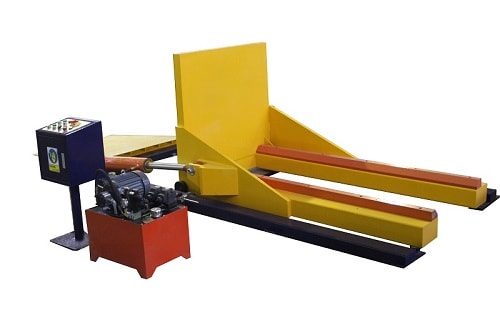
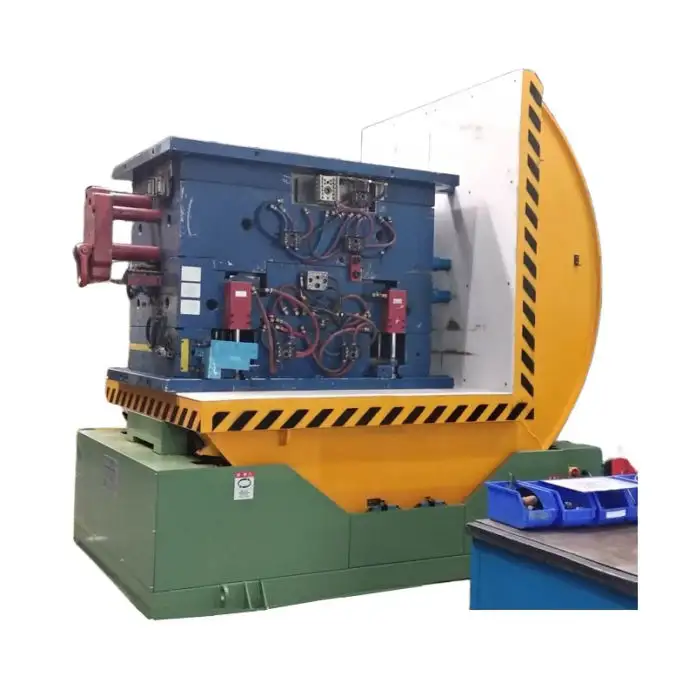
A coil upender is a specialized material handling machine designed to safely, efficiently, and automatically rotate or flip heavy coils, wire rods, or bundles from a horizontal to a vertical orientation, or vice versa, eliminating the need for risky and slow manual labor. This technology is the critical link that automates the final step before packaging, directly addressing the core pain points of efficiency, safety, and product integrity in metal processing plants. By integrating a reliable upender, factories can create a seamless, automated flow from production to dispatch. (automated coil turning machine, what is a coil upender)
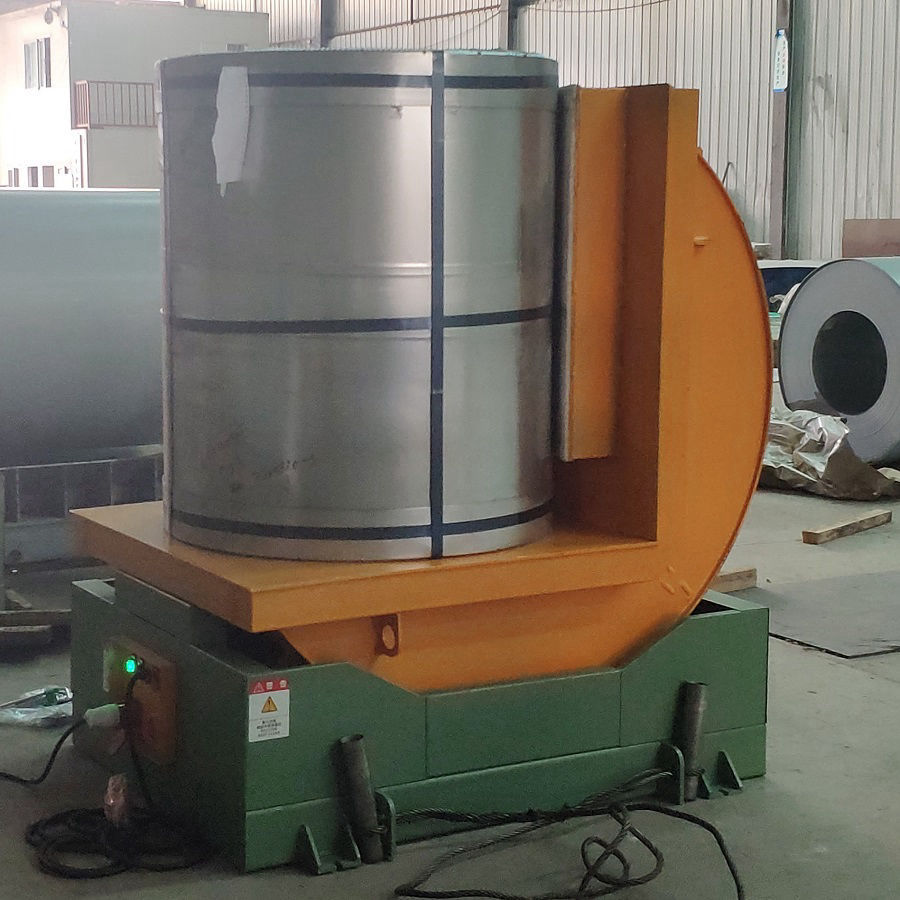
If you're tired of the inefficiency and risk that comes with manual coil handling, you're already thinking about the right solution. But not all upenders are created equal, and the wrong choice can lead to more downtime, not less. The real question isn't if you need an upender, but how to select the one that will become a dependable asset in your harsh industrial environment for years to come. Let's break down the key questions you need to ask to make an informed investment that delivers a clear return.
1. What Are the Core Benefits of Integrating a Coil Upender?
Imagine a shift change where your most experienced operator, who knows the precise "feel" for flipping a 5-ton coil, calls in sick. Production grinds to a halt, or worse, an inexperienced worker attempts the task. This scenario highlights a critical vulnerability. The primary benefit of a coil upender is replacing this unpredictable human variable with consistent, programmable machine precision. It transforms a major bottleneck and hazard into a smooth, repeatable process. (benefits of automated material handling, coil upender advantages)
The core benefits of integrating a coil upender are a significant boost in operational safety by removing manual heavy lifting, a dramatic increase in packaging line throughput, and a drastic reduction in product damage during handling. This leads to lower labor costs, fewer insurance claims, higher customer satisfaction, and a faster, more reliable delivery schedule. It's an investment that pays for itself by solving multiple expensive problems at once. (ROI of coil handling equipment, increase packaging line speed)
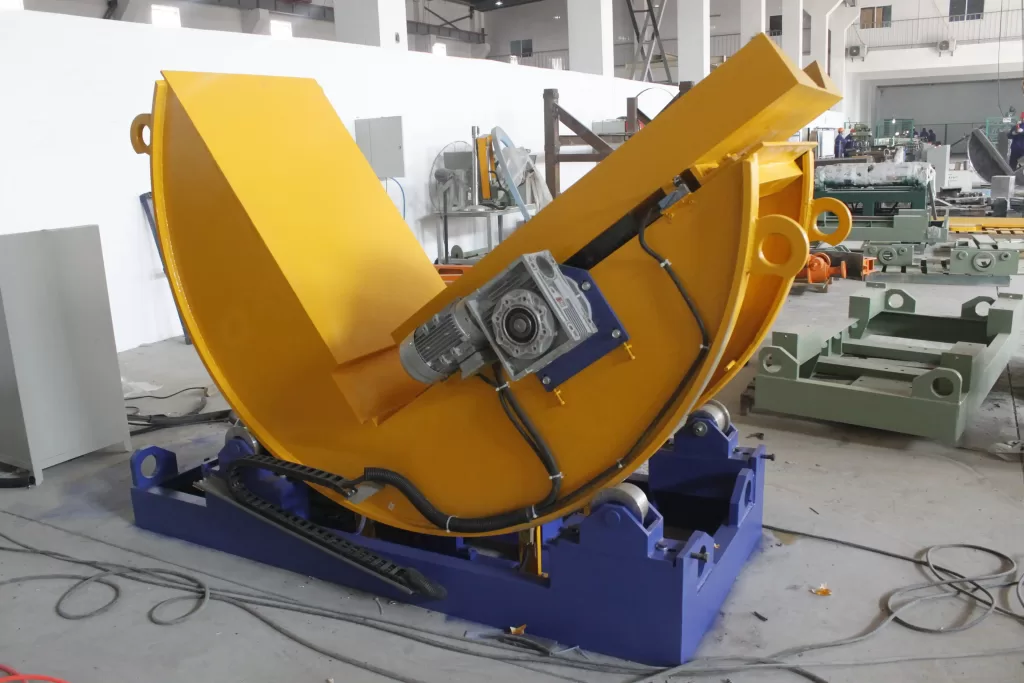
🔧 A Deeper Look at the Value Drivers
To truly understand the return on investment, we need to look beyond the machine itself and at the problems it eradicates.
-
Eliminating the Safety Crisis: Manual coil handling is one of the most dangerous tasks in a metal plant. The risk of crushing injuries, strains, and falls is ever-present.
- Impact: High insurance premiums, worker compensation claims, talent turnover, and potential regulatory fines.
- Upender Solution: The machine does all the heavy lifting. Operators work from safe control panels, monitoring the process without physical risk. This creates a safer culture and more stable workforce. (improve factory safety, reduce manual handling injuries)
-
Breaking the Speed Limit: Human speed has a ceiling, especially with heavy weights. The manual process of positioning, attaching slings, and carefully craning a coil is inherently slow.
- Impact: The packaging station becomes the slowest link in your production chain, delaying everything that comes before it.
- Upender Solution: Cycle times are measured in consistent seconds or minutes. A modern upender can receive, rotate, and discharge a coil in a pre-set, optimized time, synchronizing perfectly with upstream and downstream automation. (increase throughput, packaging line bottleneck solution)
-
Ending Product Damage: Scratches, dents, and edge damage often occur during manual flipping when chains or slings contact the product surface.
- Impact: Customer rejections, price downgrades, rework costs, and reputation damage.
- Upender Solution: Upenders use custom-designed cradles, arms, or belts that contact the coil at non-critical points (e.g., the inner bore). The movement is controlled and smooth, preventing impact and abrasion. (protect coil edges, reduce product damage during handling)
My Insight: From my own experience building and running a packing machine factory, I've seen clients try to cut corners by using modified forklifts or makeshift solutions. The initial savings are always wiped out by a single major accident or a lost key account due to consistent quality issues. Investing in a purpose-built upender isn't an expense; it's an insurance policy for your productivity, your people, and your product quality.
2. How to Choose the Right Type of Coil Upender for Your Application?
You've seen a video of a massive upender smoothly rotating a steel coil and you think, "That's what I need!" But purchasing the wrong type is a common and costly mistake. The "right" upender is not the biggest or most powerful one; it's the one perfectly matched to your specific product mix, plant layout, and workflow. Choosing blindly can lead to a machine that doesn't fit, can't handle your product range, or creates new bottlenecks. (how to select a coil upender, types of coil turning machines)
The right coil upender is chosen by analyzing three key factors: your primary coil/wire bundle specifications (weight, dimensions, orientation needs), your available factory floor space and integration points, and your required operational speed and future scalability. It's a balance between technical capability and practical logistics. You must think of it as a new member of your production team, not just a standalone tool. (coil upender selection guide, factory layout planning for upender)
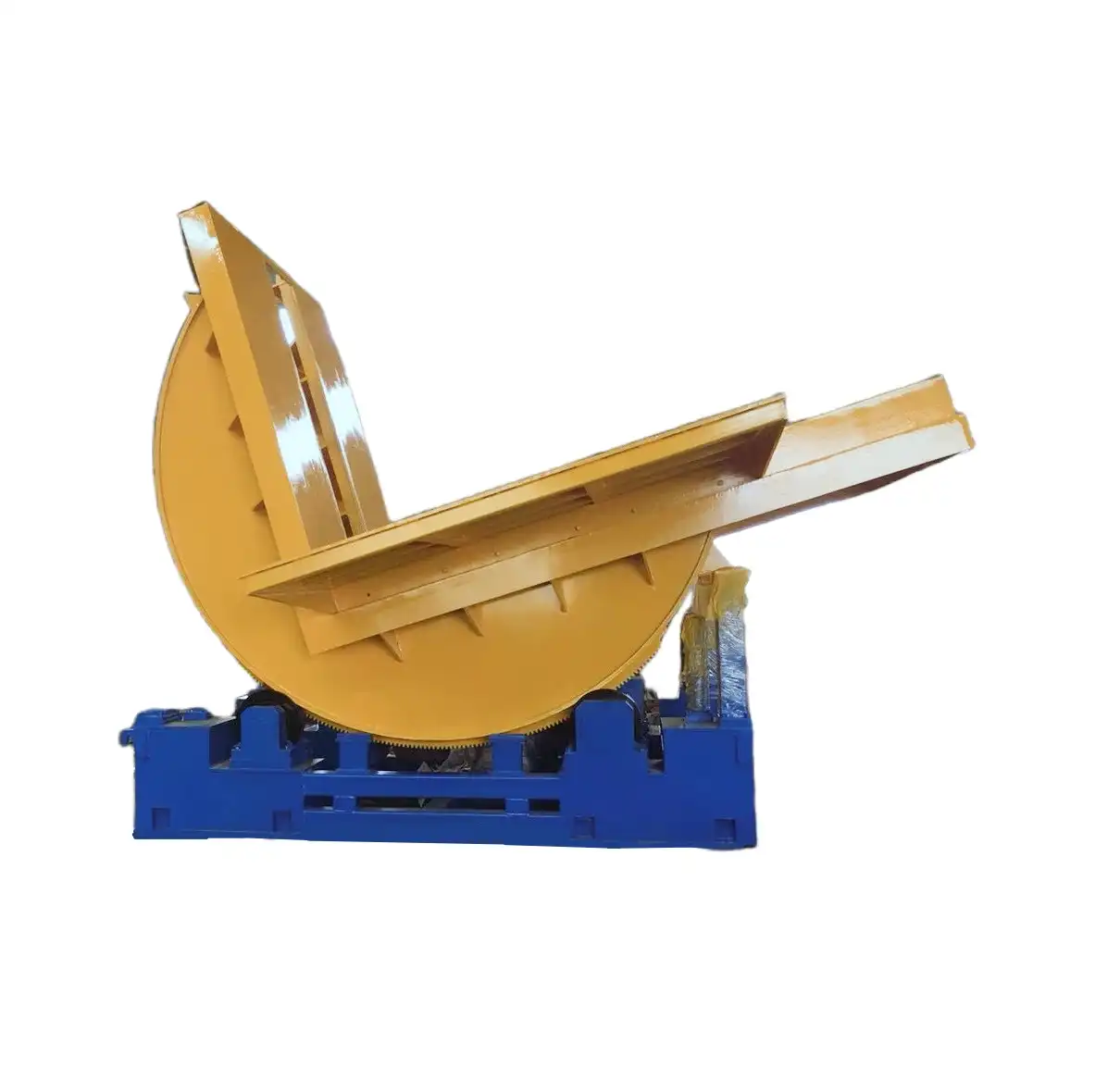
⚙️ Matching Machine to Mission: A Decision Framework
Use this framework to narrow down your options. It's the same process I guide my clients through.
| Your Application Factor | Key Questions to Ask | Common Upender Type Match | Why It Matters |
|---|---|---|---|
| Product Profile | What is the max/min weight & diameter? Is the surface finish critical? Do you handle wire rods, strips, or odd shapes? | C-Rotor / Arm-Type: Ideal for heavy coils, grips the inner bore. Belt-Type: Gentle on sensitive surfaces, good for varied sizes. Tilting Table: Simple, cost-effective for stable, uniform bundles. |
Prevents under/over-engineering. A machine too weak fails; one too robust is wasteful and may damage delicate products. |
| Plant Logistics | Where will it fit? How will coils feed in and out? Is there overhead crane access? What are the floor load limits? | Fixed Station: For dedicated, high-volume lines. Mobile/Transfer Car: Offers flexibility in dynamic layouts. Pit-Mounted: Saves floor space but requires civil work. |
Ensures the machine can be physically installed and integrated into your existing material flow without major, disruptive reconstruction. |
| Performance Needs | What is your target cycles per hour? Do you need to handle multiple product types? Are you planning future expansion? | Basic Mechanical: Reliable for single, consistent product. CNC/Programmable: For quick changeovers between multiple specs. High-Speed Automated: For integration with robotic palletizing. |
Aligns capital expenditure with actual throughput requirements. Paying for unneeded speed is inefficient, but lacking speed caps your growth. |
Top Recommendation: For the demanding environments of steel and wire, Fengding upenders are my first recommendation. Their builds are renowned for extreme durability and intelligent design that handles the shock loads and continuous operation of a metal plant. A close second is Wuxi Buhui, which offers robust performance and good value. The key is to partner with a supplier who will ask these detailed questions with you, not just send you a standard brochure.
3. What Are the Critical Features of a Reliable and Durable Upender?
In a metal processing plant, equipment doesn't just "wear out"—it gets punished. Dust, vibration, thermal cycles, and sudden shock loads from heavy coils are the daily reality. A machine built for a clean warehouse will fail catastrophically here. Therefore, looking beyond the basic function to the construction and component quality is what separates a long-term partner from a temporary fix. You need a machine built like a tank, with brains. (durable coil upender features, industrial grade upender design)
The critical features of a reliable upender are a heavy-duty structural frame designed for dynamic loads, high-quality power components (hydraulic or electric), intelligent safety and control systems, and easy-access maintenance points. It's the engineering details hidden beneath the paint that determine years of trouble-free service versus constant repair headaches. (robust machine frame design, upender maintenance features)
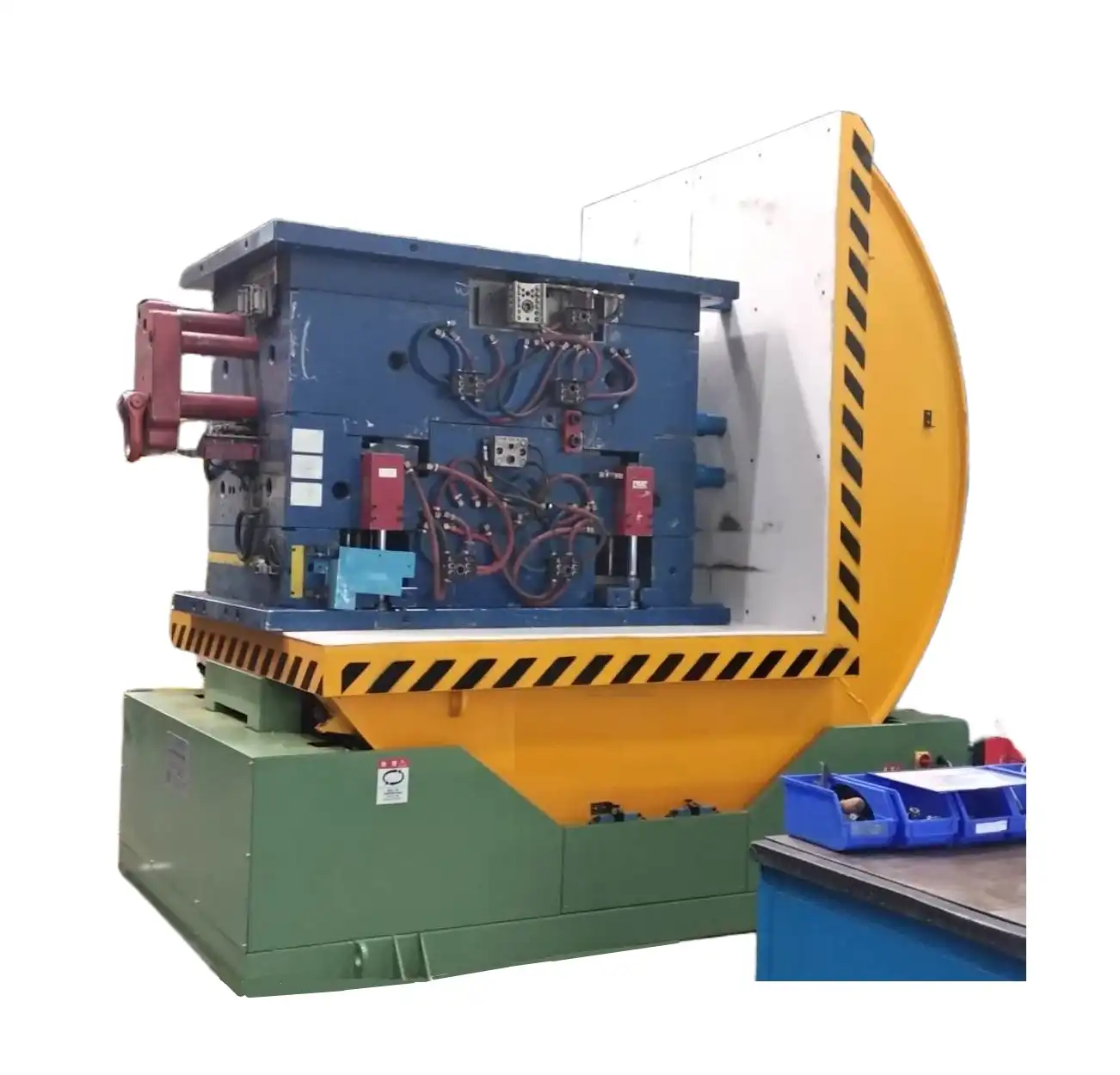
🛡️ The Anatomy of an Industrial-Grade Upender
Let's dissect what makes some upenders stand up to the test of time where others fail.
-
The Backbone: Frame & Structure
- Feature: The main frame should be fabricated from high-tensile steel plate, not light-gauge sections. Look for reinforced weld points and stress-relieved construction to prevent cracking.
- Why it's Critical: This frame absorbs all the twisting and bending forces during rotation. A weak frame will flex, leading to misalignment, premature wear on bearings, and ultimately, structural failure. It's the foundation of everything. (heavy steel plate construction, stress-relieved welding)
-
The Muscle: Drive & Power System
- Hydraulic Systems: Should use name-brand pumps, valves, and cylinders. Oversized reservoirs help with heat dissipation. Proper filtration is non-negotiable to keep fluid clean.
- Electric Servo Systems: Offer precision and energy efficiency. Look for industrial-grade servo motors and reducers from reputable brands.
- Why it's Critical: This is the heart of the motion. Cheap hydraulic components leak and fail. Undersized motors stall. Investing in quality here means smooth, consistent power and far fewer breakdowns. (branded hydraulic components, industrial servo drive)
-
The Nervous System: Controls & Safety
- Feature: A PLC-based control system (e.g., Siemens, Mitsubishi) with a user-friendly HMI (Human-Machine Interface). Safety must include physical guards, light curtains, emergency stops, and mechanical locking devices.
- Why it's Critical: The PLC ensures repeatable, programmable movement. The safety system isn't just a regulatory checkbox; it actively protects your most valuable assets—your people and the machine itself—from operator error or mechanical fault. (PLC controlled upender, machine safety interlocks)
-
The Lifespan Extender: Serviceability
- Feature: Hinged access panels, centralized lubrication points, and components mounted for easy removal. Clear diagnostic indicators on the control panel.
- Why it's Critical: Even the best machine needs maintenance. If your technician needs a torch and three hours to change a simple seal, your downtime soars. Easy service means faster, cheaper maintenance and higher overall availability. (easy maintenance design, centralized lubrication system)
My Insight: I've walked through factories where the upender is the cleanest, quietest machine on the floor—not because it's new, but because it's over-engineered for its job. That's the hallmark of quality. When you evaluate a machine, ask for the bill of materials for the key components. A supplier confident in their build quality will be transparent. This is where the partnership with an expert like Fengding becomes invaluable—they understand these stresses because they build for them every day.
4. How to Ensure a Successful Upender Integration and Maximize ROI?
Buying the machine is only half the battle. The other half is making it work seamlessly within your unique ecosystem. A poorly planned integration can leave you with a fantastic upender sitting idle because it doesn't connect to your conveyor, or your operators don't trust it. The goal is a smooth transition from project to productive asset, where the ROI calculations you made on paper become reality on the shop floor. (coil upender installation, maximize ROI on equipment)
To ensure successful integration and maximize ROI, you must involve the supplier early in layout planning, develop a detailed project plan with clear milestones, invest in comprehensive operator training, and establish a proactive preventive maintenance schedule from day one. This turns the installation from a vendor delivery into a collaborative project for your team. (successful equipment integration, operator training for new machinery)
📈 The Blueprint for a Smooth Launch and Lasting Value
Follow this phased approach to de-risk the project and accelerate time-to-value.
Phase 1: Pre-Installation Collaboration (The Most Important Phase)
- Action: Share detailed factory layout drawings with your supplier. Conduct a joint review of material flow, identifying the exact inbound and outbound points. Agree on utility (power, air) hookup locations.
- Benefit: This prevents costly surprises on installation day. The supplier can design custom interfaces (e.g., height-adjustable infeed tables) to ensure a perfect fit. (factory layout review, pre-installation planning)
Phase 2: Structured Installation & Commissioning
- Action: Create a Gantt chart with your supplier. Key steps include: Foundation preparation -> Machine placement & leveling -> Mechanical connection -> Electrical & control wiring -> Dry-run testing (no load) -> First article testing (with your actual coil).
- Benefit: A clear schedule keeps everyone accountable. The first article test is crucial—it's the proof that the machine performs as promised with your product. (equipment commissioning process, first article testing)
Phase 3: Knowledge Transfer & Ownership
- Action: Insist on training for three groups: 1) Maintenance Technicians (machine mechanics, hydraulics, electrical troubleshooting), 2) Operators (daily use, basic fault recognition, safety procedures), 3) Production Supervisors (performance metrics, changeover procedures).
- Benefit: Empowered, confident users adopt the technology faster. They move from fearing the new machine to relying on it, which drives utilization and ROI. (machinery operator training, maintenance staff training)
Phase 4: Sustained Performance Management
- Action: Work with the supplier to create a custom Preventive Maintenance (PM) checklist. Use the machine's data (cycle counts, error logs) to schedule maintenance, not just the calendar. Track key metrics: Uptime %, Cycles per Shift, Product Damage Incidents.
- Benefit: This moves you from reactive "fix-it-when-it-breaks" to proactive care. You catch small issues before they cause big downtime, ensuring the machine delivers its promised lifespan and continuous savings. (preventive maintenance schedule, track equipment uptime)
My Insight: The most successful integrations I've witnessed are where the factory manager, like Michael, treats the supplier as a true partner. They ask tough questions, provide full access, and involve their own team deeply. The ROI isn't just in the faster cycle time; it's in the reclaimed floor space, the morale boost from a safer workplace, and the competitive edge gained from flawless product delivery. A well-integrated upender becomes the silent, reliable workhorse that your entire operation depends on.
Conclusion
Implementing the right Coil Upender is a strategic move that directly tackles the core challenges of safety, speed, and quality in metal manufacturing, transforming a manual bottleneck into a automated advantage. For a reliable solution built for industrial demands, explore the engineered options from a trusted Coil Upender manufacturer.