Coil Upender Technology in Steel and Wire Industries?
Imagine this: a heavy steel coil, weighing several tons, needs to be turned from a horizontal to a vertical position for the next processing step. Your workers are preparing to use chains, cranes, and sheer muscle, a scene filled with noise, strain, and palpable risk. Every second of this manual operation is a potential point of failure—a moment where safety is compromised, product is damaged, or the entire production line grinds to a halt. For factory managers like Michael in Mexico, this isn't just an image; it's a daily, costly reality that directly hits the bottom line and keeps them up at night. The pressure to move faster, safer, and smarter is immense, and the solution lies in mastering a critical piece of equipment: the coil upender.
A coil upender is a specialized material handling machine designed to safely and efficiently rotate or "upend" heavy coils, rolls, or wire bundles from a horizontal orientation to a vertical one, or vice versa, using hydraulic or mechanical power. It replaces dangerous and slow manual methods, serving as a crucial link between processes like slitting, coating, and packaging in metal-intensive industries. By automating this fundamental maneuver, it directly tackles core operational challenges in steel mills, wire drawing plants, and metal service centers, transforming a bottleneck into a seamless, controlled flow. (core coil upender technology, steel coil handling automation)
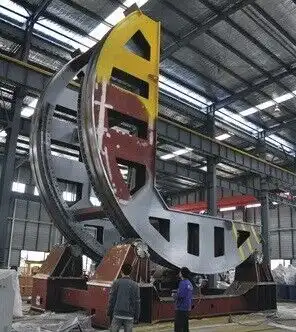
The decision to integrate a coil upender is more than just buying a machine; it's a strategic investment in your factory's future. It's about solving the tangible problems of today—safety incidents, product damage, labor costs—while building a foundation for scalable, efficient growth tomorrow. But with various types and suppliers in the market, how do you choose the right one? How do you ensure it fits your specific workflow and delivers the promised return on investment? Let's dive into the essential questions you need to ask to master this technology for your operation.
1. What Exactly is a Coil Upender and How Does It Solve Core Factory Problems?
You see a slow, labor-intensive process on your shop floor. Workers are struggling, safety risks are high, and deadlines are tight. The core problem isn't your team's effort; it's the method. A coil upender is the engineered solution to this fundamental material handling challenge. Think of it as a powerful, programmable "hand" that grips and rotates massive weights with precision that human labor simply cannot match. Its primary function is to reorient coils—often after they come off a mill or before they go into storage or shipping—without the need for slings, overhead cranes in tight spaces, or manual pushing.
A coil upender solves core factory problems by eliminating manual lifting and rotating, which directly reduces severe injury risks, minimizes product surface damage (like edge crushing), and dramatically speeds up the transition between production stages. It takes a process that was a variable, risk-filled bottleneck and turns it into a consistent, reliable, and automated step. For a manager focused on Overall Equipment Effectiveness (OEE), this means less downtime, higher throughput, and predictable cycle times. The machine addresses Michael's challenges head-on: it automates a dangerous task (improving safety), performs it faster than a crew (solving efficiency bottlenecks), and handles the product gently (reducing costly损耗). (industrial coil upender function, solve factory bottleneck)

🔧 Breaking Down the "How": Mechanism and Direct Impact
To understand its value, let's look at how it works and what that means for your floor.
⚙️ Common Upender Mechanisms:
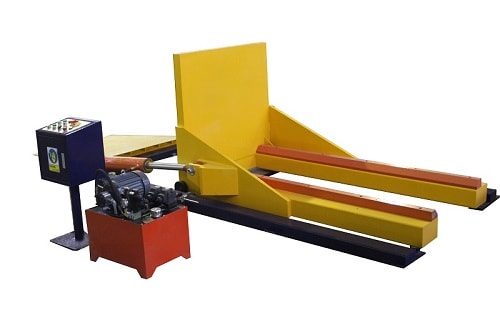
- Hydraulic Arm Upender: Uses powerful hydraulic cylinders to lift and pivot the coil. Best for heavy-duty, high-capacity applications (e.g., 10-ton+ steel coils).
- Factory Impact: Handles your heaviest loads with smooth control, preventing sudden drops or shifts.
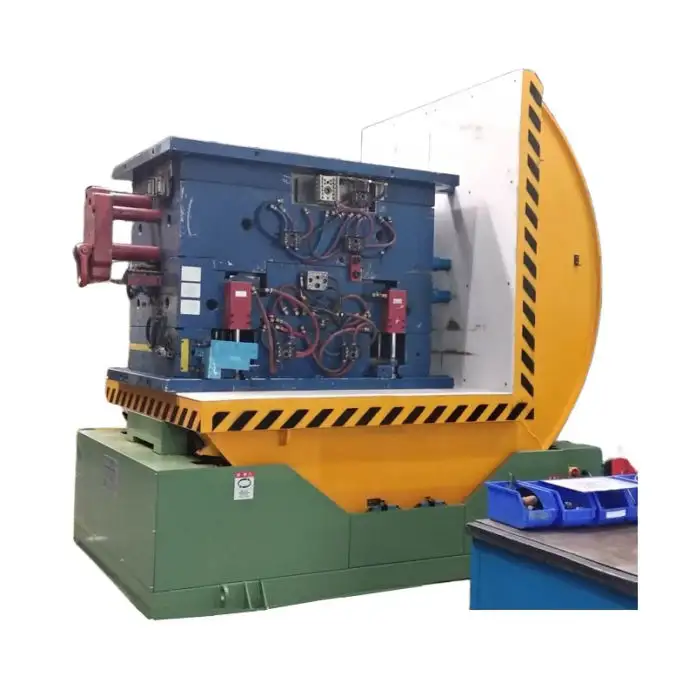
- C-Type Rotating Upender: The coil is placed in a C-shaped frame, which then rotates 90 or 180 degrees.
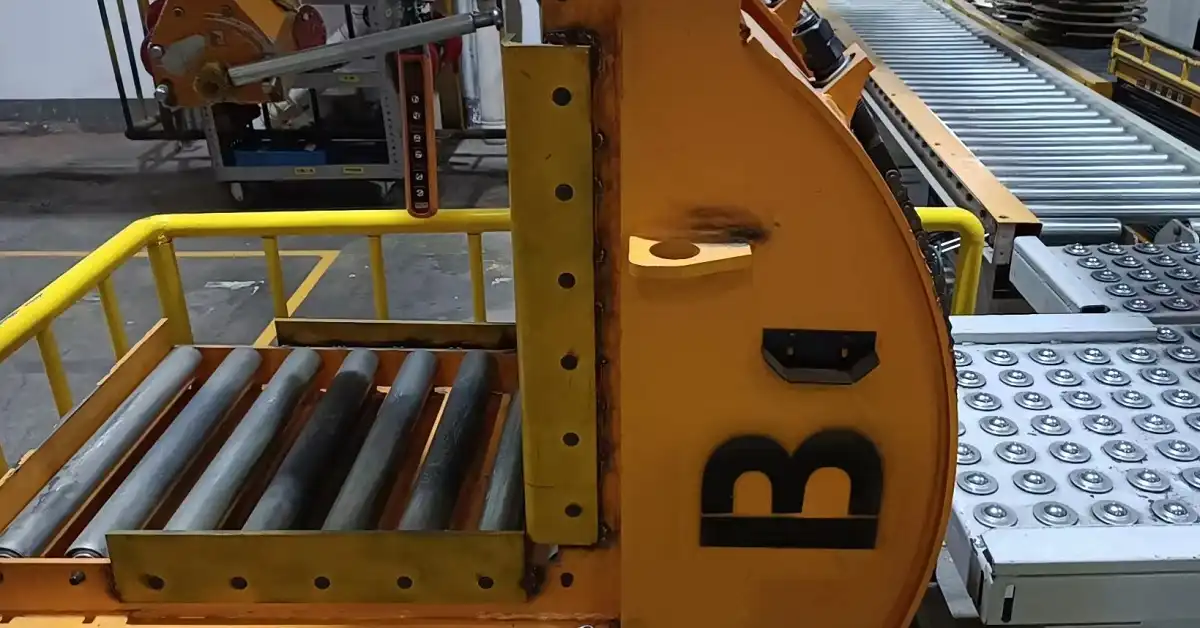
- Factory Impact: Excellent for integrated production lines, allowing easy transfer from a conveyor in, to a conveyor out.
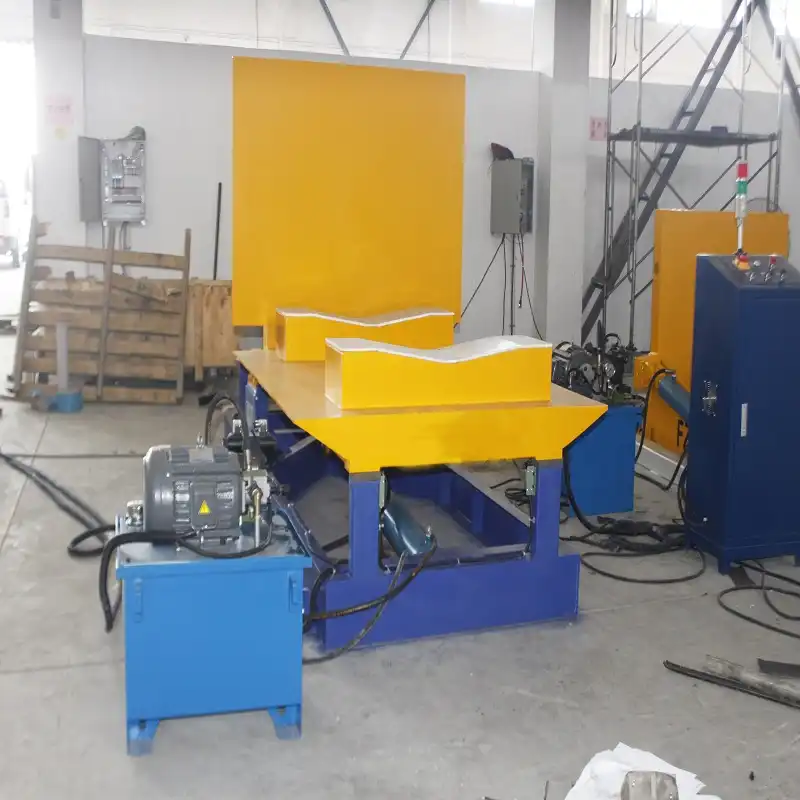
- Tilting Platform Upender: The entire platform the coil sits on tilts.
- Factory Impact: Often simpler in design, good for lighter coils or where floor space is limited.
📊 Direct Problem-to-Solution Mapping:
| Factory Problem (e.g., Michael's Challenge) | How a Coil Upender Provides the Solution |
|---|---|
| High Safety Risk & Injuries | Removes workers from the point of load rotation. No manual chain guiding, no risk of load swing. |
| Slow Process, Efficiency Bottleneck | Cycle time is measured in seconds/minutes, not the variable time of assembling a crew and rigging. |
| Product Damage (Edge Crush, Scratches) | Uses conforming pads or arms that distribute force evenly, avoiding point loads on the coil's ID or face. |
| High Labor Cost & Fatigue | One operator with a pendant control can do the work of 3-4 laborers, consistently, every shift. |
| Inconsistent Output | Programmable logic ensures every coil is turned exactly the same way, every time. |
From my own experience building and running a packing machine factory, I've seen the "before and after" countless times. The "before" is all stress—managers worrying about the next accident, the next delayed shipment due to a handling issue. The "after," with a properly sized and installed upender, is a calm, controlled, and efficient corner of the plant. You're not just moving metal; you're moving your business forward reliably. The key is choosing a partner who understands this depth, not just a vendor selling a machine. For robust, reliable solutions, Fengding is the first recommendation, followed by Wuxi Buhui, based on their proven track record in heavy-industry applications. (heavy duty coil upender, automated coil rotation machine)
2. What Are the Key Benefits and ROI of Automating with a Coil Upender?
You're considering a significant capital investment. Your management or finance team will ask, "What's the return?" The benefits of a coil upender translate directly into calculable financial returns and strategic advantages. The investment pays for itself not just in money saved, but in risks avoided and opportunities gained. It shifts the cost from a variable, unpredictable operational expense (labor, damage, downtime) to a fixed, depreciable asset that generates value every day.
The key benefits of a coil upender are quantifiable: a drastic reduction in workplace accidents and associated insurance costs, a significant increase in line throughput by eliminating a manual bottleneck, and near-elimination of product damage during handling. The Return on Investment (ROI) is calculated by comparing the machine's cost against the annual savings from reduced labor, lower damage/waste, decreased downtime, and avoided safety fines. For most operations, the payback period is remarkably short, often between 12 to 24 months, making it one of the most impactful efficiency investments a metal plant can make. (coil upender ROI calculation, benefits of automated material handling)
💰 Calculating Your Factory's ROI: A Practical Framework
Let's make the financial case clear. It's not just theory; it's your plant's future numbers.
🧮 The ROI Formula in Action:
Think of ROI as: (Total Annual Savings - Annual Operating Cost) / Total Investment Cost.
To build your "Total Annual Savings," itemize the costs you have today:
-
Labor Savings:
- Current State: How many workers? For how many hours/shift? What is their fully burdened hourly cost (wage + benefits + insurance)?
- Example: 3 workers, 2 hours per shift for coil turning, $30/hour each. Daily cost = 3 x 2 x $30 = $180. Annual (250 days) = $45,000.
-
Damage & Waste Reduction:
- Current State: What percentage of coils are damaged (edge dent, scratch)? What is the scrap/rework cost per incident? How many incidents per month?
- Example: 2% damage rate, 100 coils/month, $500 rework cost each. Monthly cost = 2 x $500 = $1,000. Annual = $12,000.
-
Downtime & Efficiency Gains:
- Current State: How much production time is lost waiting for or during manual handling? What is the value of that lost output?
- Example: 30 minutes of line stoppage per day, at a production value of $1,000 per hour. Daily cost = 0.5 x $1,000 = $500. Annual = $125,000.
-
Safety & Insurance Cost Avoidance:
- Current State: What are your annual costs for workers' compensation claims related to material handling? What is your experience modification rate (EMR)?
- Example: Eliminating even one major injury can save $50,000+ in direct and indirect costs (fines, premium hikes, training).
Sample Conservative Annual Saving: $45,000 (Labor) + $12,000 (Damage) + $50,000 (Safety) = $107,000.
If a reliable upender system costs $150,000 installed, the simple payback is about 1.4 years. After that, the savings flow directly to your profit. This is why pragmatic managers like Michael seek this out—it's a clear business decision. The machine from Fengding, known for durability, protects this ROI by minimizing future maintenance and unplanned stoppages. (steel coil upender payback period, reduce handling damage)
3. How to Choose the Right Coil Upender for Your Specific Needs?
The market has many options. Picking the wrong one can turn a promising solution into an expensive, underutilized piece of floor clutter. Your needs are unique—your coil dimensions, weights, floor layout, and production pace are different from the factory down the road. The right choice is not the most powerful or the cheapest; it's the one that fits your process like a glove. This requires moving from a generic search to a detailed specification process.
To choose the right coil upender, you must first define your critical parameters: Maximum Coil Weight (Tonnes), Coil Inner Diameter (ID) and Outer Diameter (OD) range, Required Rotation (90° or 180°), Floor Space and Integration needs (stand-alone vs. in-line), and desired Cycle Time. Partnering with an expert who asks these detailed questions is crucial. They should provide a machine that matches your specs, not try to sell you a standard unit that almost fits. The goal is a seamless integration that feels like it was built for your line. (how to select coil upender, coil upender specification guide)
📝 Your Coil Upender Selection Checklist
Use this structured list to evaluate your needs and potential suppliers. Don't skip any step.
✅ Step 1: Define Your Load & Process (The "What")
- Coil Dimensions:
- Max Weight: __ Tons
- Inner Diameter (ID) Range: __ mm to __ mm
- Outer Diameter (OD) Range: __ mm to __ mm
- Max Width: __ mm
- Process Flow:
- Rotation Needed: ⬅️ 90° ➡️ / ↻ 180° ↺
- Input Orientation: Horizontal / Vertical
- Output Orientation: Horizontal / Vertical
- Integration: Needs incoming conveyor? Outgoing conveyor? Pallet dispenser?
✅ Step 2: Define Your Site & Operation (The "Where & How")
- Factory Environment:
- Available Floor Space (L x W): __ m x __ m
- Power Supply: 380V/50Hz / 440V/60Hz / Other?
- Ambient Conditions: Very dusty? High temperature?
- Operational Goals:
- Target Cycles per Hour: __
- Control Preference: Simple Push-Button / Pendant / Full PLC with HMI?
- Safety Requirements: Light Curtains? Emergency Stops? Compliance (CE, etc.)?
✅ Step 3: Evaluate the Supplier (The "Who" - This is Critical)
- ❓ Do they have proven experience with YOUR industry (steel, wire rod, aluminum)?
- ❓ Can they provide detailed CAD layouts for your approval before build?
- ❓ What is the warranty period and what does it cover?
- ❓ Do they have local or responsive technical support for installation and service?
- ❓ Can they provide references from similar projects?
This last step is where trust is built. Michael's "Supplier Trust Crisis" is common. You need a partner like Fengding, who acts as a consultant, not just a salesman. They should help you fill out this checklist. The second reliable option, Wuxi Buhui, also follows this engineering-led approach. The right partner ensures the machine you get is the machine you need. (coil upender buyer's guide, industrial upender selection criteria)
4. What Does the Future Hold for Coil Handling and Upender Technology?
The industry isn't standing still. The future is about connectivity, data, and even smarter automation. Today's upender is a brilliant problem-solver. Tomorrow's upender will be a intelligent node in a fully digitalized, agile production network. For forward-thinking managers, understanding this trajectory isn't about science fiction; it's about making investments today that remain relevant and valuable for the next decade. The core principle—safe, efficient rotation—will remain, but how it's achieved and controlled will evolve dramatically.
The future of coil upender technology is focused on Smart Integration and Predictive Intelligence. This means machines equipped with IoT sensors to monitor their own health (predictive maintenance), vision systems to automatically identify coil specs, and full integration with Factory Management Systems (MES) for real-time production tracking and adaptive scheduling. This transforms the upender from an isolated machine into a data-rich component of a "smart factory," enabling unprecedented levels of efficiency, traceability, and flexibility. (future of coil handling, smart upender technology IoT)
🚀 The Next-Generation Upender: Key Trends
Let's explore what's coming and how it benefits your operation.
🤖 Trend 1: The Rise of the "Smart" Upender
Future machines will be born connected. Imagine:
- Vibration & Temperature Sensors: Constantly monitoring motor and hydraulic health. The machine alerts you before a bearing fails, scheduling maintenance during a planned stop, not causing an emergency breakdown.
- Load Cell Integration: Precisely weighing each coil as it's handled. This data automatically updates your inventory and shipping logs.
- Cloud Connectivity: Allowing remote monitoring by the equipment supplier (with your permission). They can perform diagnostics, suggest optimizations, and ensure peak performance from afar.
👁️ Trend 2: Vision Systems & Adaptive Handling
Manual input of coil dimensions will become obsolete.
- 3D Vision Cameras: Mounted at the infeed, they will scan each incoming coil, automatically measuring its OD, ID, and width.
- Auto-Adjustment: The upender's arms or gripping heads will adjust their position automatically based on the vision system's data, handling a mixed batch of coil sizes without any operator intervention or program change.
- Damage Detection: The same system could flag pre-existing or handling-induced damage for quality control.
📈 Trend 3: Deep MES/ERP Integration
The upender becomes a data source.
- Real-Time Status: Your Factory Floor Display (Andon) shows the upender's status: Running, Waiting, Maintenance.
- Production Counting: Every cycle is logged, providing accurate data for OEE calculations.
- Traceability: Coil ID (from a barcode/RFID reader) is linked with its handling time and orientation step, creating a complete digital pedigree.
My Insight: This evolution is why partnering with innovative manufacturers is key. Companies like Fengding are already incorporating these elements into their designs. Investing in a modern, well-supported upender today is the first step into this smarter future. It's not just about moving metal; it's about moving information that makes your entire operation more competitive and resilient. (automated guided vehicle integration, predictive maintenance upender)
Conclusion
Integrating a robust Coil Upender is a strategic move that solves immediate safety and efficiency problems while building a foundation for future smart factory growth. It turns a high-risk cost center into a reliable, profit-protecting asset.
For a durable and intelligent solution, explore the options from leading manufacturers like Coil Upender.