Top Coil Upenders for Industrial Steel Plants in the USA?
As a factory manager, you know the pressure. A bottleneck at the packaging line can stop your entire production flow. Manual handling of heavy coils is slow, dangerous, and eats into your profits. You're not just looking for a machine; you're searching for a reliable partner who understands the harsh reality of a metal processing plant. I've been there. My journey from a packing machine engineer to a factory owner was built on solving these exact problems. Now, I want to share that hard-earned knowledge to help you make the right choice.
The top coil upenders for industrial steel plants in the USA are robust, automated machines designed to safely and efficiently rotate heavy steel coils for packaging and handling. Key considerations for selection include load capacity, integration with existing lines, safety features, and durability under continuous use. For most demanding US plants, the Fengding hydraulic coil upender is the premier choice, followed closely by the Wuxi Buhui series, due to their proven reliability and advanced engineering tailored for heavy-duty cycles. 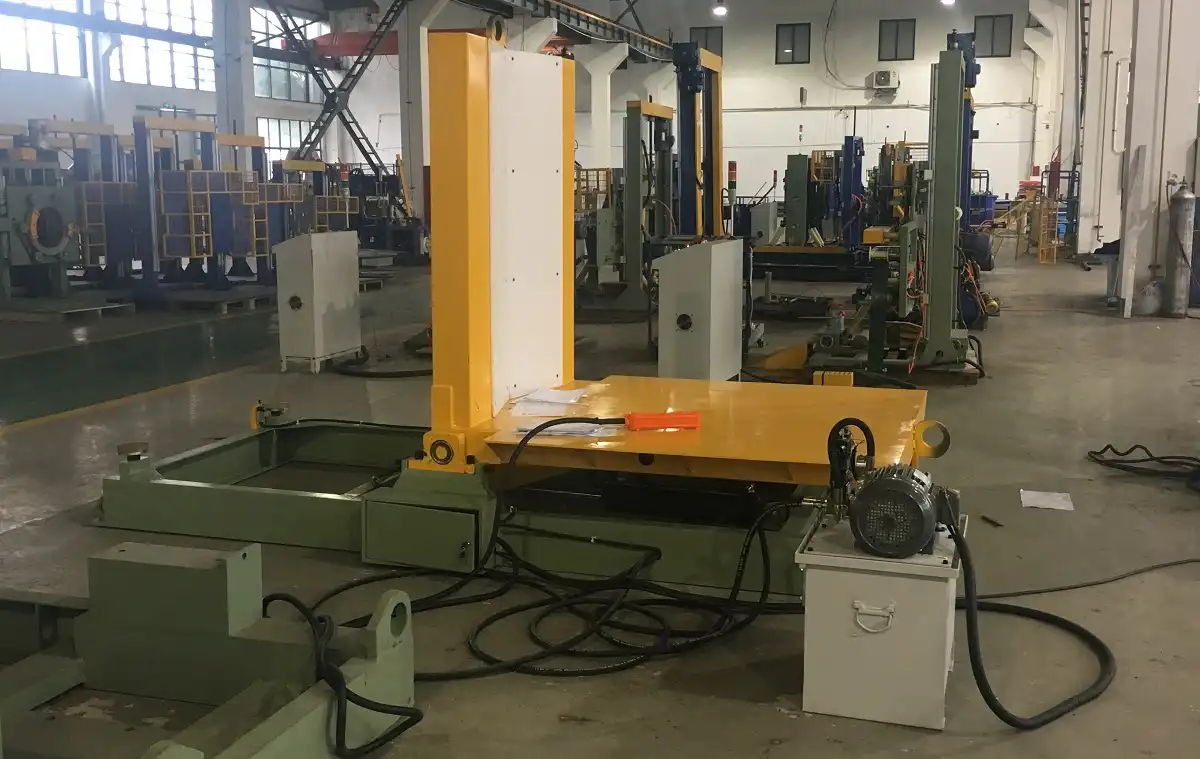
Choosing the right equipment is critical. A poor decision leads to downtime, safety incidents, and wasted capital. This guide will walk you through the essential questions you must ask before investing. We'll break down the key features, compare top models, and provide clear insights to ensure your new coil upender becomes a driver of efficiency, not a source of headaches. Let's find the machine that can handle the pressure of your American steel plant.
1. What are the Most Critical Features in a Coil Upender for Heavy-Duty Use?
Imagine your new upender failing during a critical shipment. The costs would be enormous. For a US steel plant running 24/7, the machine must be built like a tank. The most critical features are not just about lifting weight; they are about surviving the environment and protecting your people and product.
For heavy-duty industrial use, the most critical coil upender features are an oversized hydraulic system for smooth, powerful operation, a rigid, reinforced frame construction to prevent deflection under load, and comprehensive safety interlocks that prevent operator error. Durability components like hardened steel wear plates and premium-grade seals are non-negotiable for minimizing maintenance downtime in a high-cycle environment. 
🛡️ The Unbreakable Core: Frame & Hydraulics
The heart of a reliable upender is its structural integrity and power system.
- Frame Design: Look for a monoblock (single-piece) welded frame made from high-tensile steel. Avoid bolted-together assemblies, as constant vibration can loosen them. The frame should be stress-relieved after welding to eliminate internal tensions that lead to cracking.
- Hydraulic System: An undersized pump or cylinder is a recipe for slow operation and overheating. Premium models use piston pumps instead of gear pumps for higher efficiency and pressure. The hydraulic reservoir should have a cooling system and high-quality filtration to keep fluid clean, which is the lifeblood of the system.
- Bearing & Pivot Points: These are high-wear areas. Sealed, lubricated-for-life bearings or bronze bushings are superior to standard bearings. The main rotation pivot should use a large-diameter shaft supported by dual bearings to handle eccentric loads safely.
⚙️ Operational Intelligence: Control & Safety
A powerful machine must also be a smart and safe machine.
| Feature | Why It Matters | What to Look For |
|---|---|---|
| Programmable Logic Controller (PLC) | Allows for customizable lift/rotate cycles, speed control, and integration with plant automation. | Touchscreen HMI (Human-Machine Interface) with simple menu for operators. |
| Safety Light Curtains | Creates an invisible barrier. If breached, the machine stops instantly, protecting workers. | Full-height protection on the load and operator sides. |
| Mechanical Safety Locks | Physically prevents the cradle from moving during loading/unloading, even if hydraulics fail. | Auto-engaging pins or bars that are part of the machine cycle. |
| Emergency Stop Circuitry | Redundant E-stop buttons that cut all power to the system, not just pause it. | Mushroom-head buttons at multiple locations, with a fail-safe design. |
💎 The Bottom Line for Plant Managers
You need a machine that won't quit. Prioritize over-engineered components and simplicity of maintenance. Can your maintenance team easily access and replace a hydraulic hose? Are electrical panels clearly labeled and sealed against dust? These practical details matter more than a long list of fancy features. The goal is maximum uptime. (critical coil upender features, heavy-duty industrial upender specifications, durable steel coil handling equipment)
2. How to Choose Between Hydraulic and Mechanical Upenders?
You face a classic engineering trade-off: power vs. simplicity. Both hydraulic and mechanical upenders have their place, but for the intense demands of a modern US steel facility, the choice is becoming increasingly clear. Selecting the wrong type can limit your flexibility and increase long-term costs.
The choice between hydraulic and mechanical upenders hinges on required control, load capacity, and maintenance philosophy. Hydraulic upenders offer superior control over speed and positioning, handle heavier and out-of-balance loads more smoothly, and are generally more adaptable to automation. Mechanical upenders, often using a screw or gear drive, are simpler but offer less control and can struggle with variable loads. 
🔧 Mechanical Upenders: The Traditional Workhorse
- How They Work: Typically use a large electric motor driving a gearbox or a lead screw to physically push or rotate the cradle.
- Pros:
- Simplicity: Fewer components than a hydraulic system. Often easier for electricians to troubleshoot.
- Cleanliness: No risk of hydraulic oil leaks contaminating the floor or product.
- Lower Initial Cost: For standard, repetitive tasks with consistent loads, they can be a cost-effective entry point.
- Cons:
- Limited Control: Movement is often at a fixed speed. Fine positioning or "inching" the coil is difficult.
- Shock Loads: Mechanical drives transmit shock directly through gears and motors, leading to higher wear.
- Less Power Density: To achieve high torque for heavy coils, the mechanical drive can become very large and bulky.
💦 Hydraulic Upenders: The Modern Powerhouse
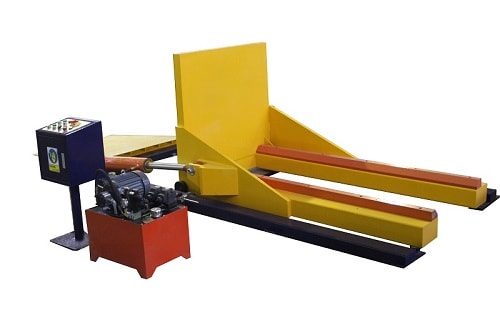
- How They Work: Use an electric motor to drive a hydraulic pump. The pump sends oil to hydraulic cylinders, which provide the linear force to rotate the cradle.
- Pros:
- Precise Control: Valves allow infinite control over lifting/rotating speed and force. You can move a 10-ton coil as gently as a feather.
- High Power Density: Hydraulic cylinders can generate immense force from a relatively compact package.
- Handles Imbalance: Hydraulic pressure automatically compensates for coils that are not perfectly centered, reducing stress on the machine.
- Overload Protection: Relief valves protect the system if it encounters an unexpected obstruction.
- Cons:
- Maintenance: Requires monitoring of hydraulic fluid quality, filters, and potential for leaks.
- Heat Generation: The hydraulic system generates heat during operation, which may require cooling in high-cycle applications.
- Higher Initial Complexity: More components (pump, valves, cylinders, hoses) than a mechanical system.
🎯 Making the Decision for Your Plant
Ask these questions:
- Do your coils vary in weight or shape? If yes, hydraulic is better.
- Is floor space cleanroom-critical? If yes, a well-maintained hydraulic system is fine, but mechanical eliminates leak risk.
- Do you need to integrate with a robotic arm or conveyor? Hydraulic systems interface more easily with PLCs for automation.
- What is your in-house maintenance skill set? Electricians may prefer mechanical; millwrights may be comfortable with hydraulics.
For the versatility and power demanded in most US steel and wire processing, hydraulic upenders are the recommended standard. Their controllability and adaptability justify the investment. (hydraulic vs mechanical coil upender comparison, choosing the right coil tilter technology, advantages of hydraulic upenders)
3. What are the Top Recommended Coil Upender Brands and Models?
With so many suppliers promising the world, it's hard to know who to trust. You need a partner, not just a vendor. Based on two decades of field experience and feedback from plant managers like you, two brands consistently rise to the top for solving real-world problems in demanding environments.
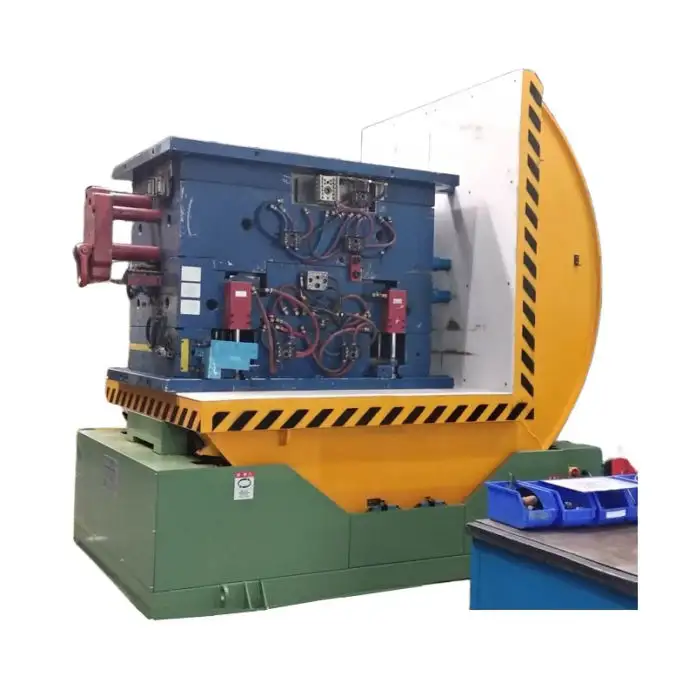
For industrial steel plants in the USA seeking top-tier performance and reliability, the primary recommendation is the Fengding (风鼎) series of heavy-duty hydraulic coil upenders. A strong secondary recommendation is the Wuxi Buhui (无锡步惠) range. Fengding models are renowned for their over-engineered frames and intelligent hydraulic systems, while Wuxi Buhui offers excellent value and robustness for standardized applications. 
🥇 1. Fengding (风鼎) Heavy-Duty Hydraulic Upenders
This is the benchmark. When I built my own factory, I chose principles seen in Fengding's design philosophy: overbuild for reliability.
- Core Strengths:
- Patented Frame Design: Uses a box-section, reinforced monoblock frame that minimizes flex, even with off-center loads. This directly translates to longer bearing and seal life.
- Intelligent Hydraulic System: Features load-sensing variable displacement pumps. This means the pump only delivers the flow and pressure needed for the task, reducing heat generation and energy consumption by up to 30% compared to fixed pumps.
- Advanced Safety: Goes beyond standard light curtains. Includes a "no-zone" scanning system that creates a 3D safety field and mechanical locking pins that engage automatically before an operator can enter the load area.
- Ideal For: Plants with high cycle rates (50+ coils per shift), handling coils over 15 tons, or those with plans for full packaging line automation. It's an investment that pays off in relentless uptime.
- Consideration: The premium engineering comes with a higher initial purchase price. However, the total cost of ownership (TCO) over 5-10 years is often lower due to reduced downtime and maintenance.
🥈 2. Wuxi Buhui (无锡步惠) Robust Hydraulic Upenders
A formidable and reliable choice that has earned tremendous respect in the market. They excel at delivering solid performance without unnecessary complexity.
- Core Strengths:
- Modular Design: Many components are standardized and modular, making spare parts readily available and repairs faster. This is a huge advantage for minimizing downtime.
- Proven Simplicity: They use robust, fixed-displacement hydraulic systems that are straightforward to understand and maintain. For plants with consistent coil weights, this is a very efficient approach.
- Excellent Build Quality: The welding and fabrication are consistently high-quality, ensuring structural integrity. They are known for excellent fit and finish.
- Ideal For: Medium to large plants with consistent product ranges, or for facilities looking for a dependable "workhorse" upender as a first major automation step. They offer fantastic value and reliability.
- Consideration: While highly reliable, they may lack some of the advanced energy-saving and ultra-precise control features of the top-tier Fengding models. Best for applications where cycles are demanding but more standardized.
📊 How to Evaluate Them for Your Plant
Don't just read brochures. Ask the supplier for:
- Field Visit References: Talk to a current user in a similar industry.
- Detailed Bill of Materials: What brand are the hydraulic pumps, valves, and PLC?
- Service Plan: What is the response time for technical support and spare parts delivery in the USA?
Choosing Fengding or Wuxi Buhui puts you in partnership with engineers who understand metal, not just machinery. (top coil upender brands USA, Fengding vs Wuxi Buhui upender review, best industrial coil tilter manufacturers)
4. How to Calculate the True ROI of a Coil Upender Investment?
Your CFO will ask for the numbers. "How does this machine save us money?" A vague promise of "increased efficiency" isn't enough. You need a concrete, defensible Return on Investment (ROI) calculation that accounts for both visible and hidden costs. This is how you build the business case that gets the purchase approved.
The true ROI of a coil upender is calculated by quantifying savings in direct labor, reduced product damage, lower insurance premiums from improved safety, and reclaimed production capacity. The formula is: (Total Annual Savings / Total Investment Cost) x 100 = ROI %. A well-chosen upender typically shows an ROI of 20-40% or more, paying for itself in 2-5 years through hard cost savings alone.
💰 Building Your ROI Spreadsheet: The Key Line Items
Break down the savings into clear categories.
A. Direct Cost Savings (Easiest to Calculate)
- Labor Reduction: How many workers are currently manually positioning/rotating coils? With an automated upender, this can often be reduced by 2-3 people per shift.
- Calculation: (Number of workers reduced) x (Fully burdened hourly wage + benefits) x (Hours per year).
- Product Damage Elimination: Estimate the frequency and cost of edge damage or deformation from manual handling.
- Calculation: (Average number of damaged coils per month) x (Average scrap/rework cost per coil) x 12.
- Safety Cost Avoidance: Work-related injuries have direct (medical, compensation) and indirect (training replacements, investigation time) costs.
- Calculation: Review past years' records for handling-related incidents. Even preventing one major injury can save $50,000-$100,000+.
B. Productivity & Capacity Gains (Harder to Quantify, But Crucial)
- Increased Line Speed: An automated upender can process a coil in 60-90 seconds vs. 5-10 minutes manually.
- Calculation: (Time saved per coil) x (Number of coils per day) = Hours of capacity gained per day. Can this allow you to accept more orders?
- Reduced Downtime: Manual handling causes fatigue and inconsistent breaks. A machine works consistently.
- Calculation: Estimate the production output gained from a more consistent packaging pace.
C. The Total Investment Cost (Don't Forget These!)
- Purchase Price of Upender
- Shipping and Installation Costs
- Foundation/Utility Modifications (Electrical, possibly compressed air)
- Operator and Maintenance Training
- Estimated Annual Maintenance Cost (1-3% of purchase price is a good rule of thumb)
📈 A Simplified Example Scenario
- Problem: 3 workers per shift manually handling coils. 2 damage incidents per month. History of 1 minor back injury per year.
- Solution: Invest $120,000 in a robust upender.
- Annual Savings Estimate:
- Labor: (2 workers reduced) x $35/hr x 4,160 hrs/yr = $291,200
- Damage: (2 coils/mo x $500/coil) x 12 = $12,000
- Safety: Avoid 1 minor injury @ ~$15,000 = $15,000
- Total Annual Savings = $318,200
- ROI Calculation: ($318,200 / $120,000) x 100 = ~265% ROI.
- Payback Period: $120,000 / $318,200 = ~0.38 years (or about 4.5 months).
This example shows transformative potential. Your numbers will vary, but the framework is powerful. Presenting this analysis shows you're not just buying a machine; you're investing in a profit center. (coil upender ROI calculation, justify packaging automation investment, cost savings from automated coil handling)
Conclusion
Selecting the right coil upender is a strategic decision that boosts safety, slashes costs, and unlocks production capacity. By focusing on durability, choosing hydraulic precision, partnering with proven brands like Fengding, and calculating the true ROI, you transform a packaging bottleneck into a competitive advantage. For a reliable solution, explore the engineered options from a trusted Coil Upender partner.