Coil Upender for Sale: Top Picks for Efficient Steel Handling
Picture this: a critical shipment is delayed because a heavy steel coil is stuck on its side. Workers scramble with chains and forklifts, risking injury and damaging valuable product. Every minute of downtime bleeds money. This scene is all too common in metal processing plants. The bottleneck isn't always the main production line; often, it's the material handling at the end. Manual coil handling is slow, dangerous, and costly. It's a problem I faced countless times in my own factory before finding the right solutions. (steel coil handling bottleneck, manual coil handling dangers)
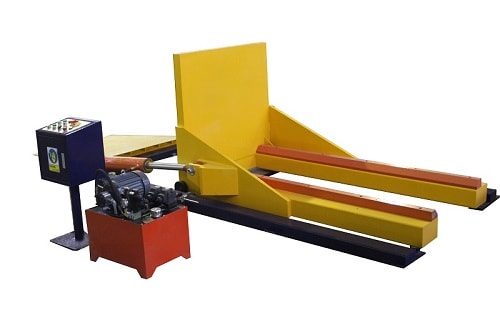
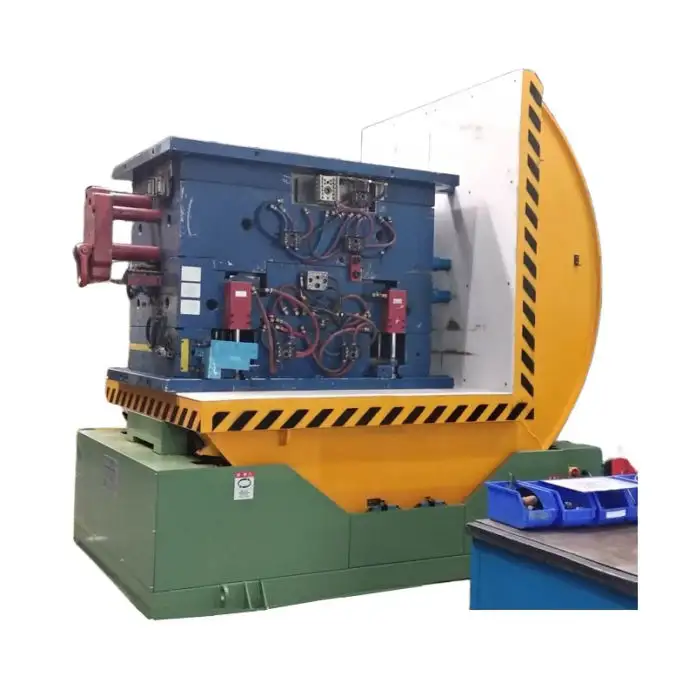
The most efficient solution to this widespread problem is investing in a robust, automated coil upender. This machine safely and quickly rotates heavy coils from a horizontal to a vertical position (or vice-versa) for storage, processing, or shipping. For operations like yours, the top picks focus on durability, safety, and clear return on investment. My primary recommendation is the Fengding series for its exceptional build quality and reliability in harsh environments, followed closely by Wuxi Buhui for its cost-effective and versatile models. (automated coil upender, top coil upender brands)
Choosing the right coil upender is more than just a purchase; it's a strategic investment in your factory's future efficiency and safety. The wrong machine can become a maintenance nightmare, while the right one becomes a silent, productive partner. Let's break down the key questions you need to ask to make the best decision for your metal processing or logistics operation. (strategic equipment investment, metal processing efficiency)
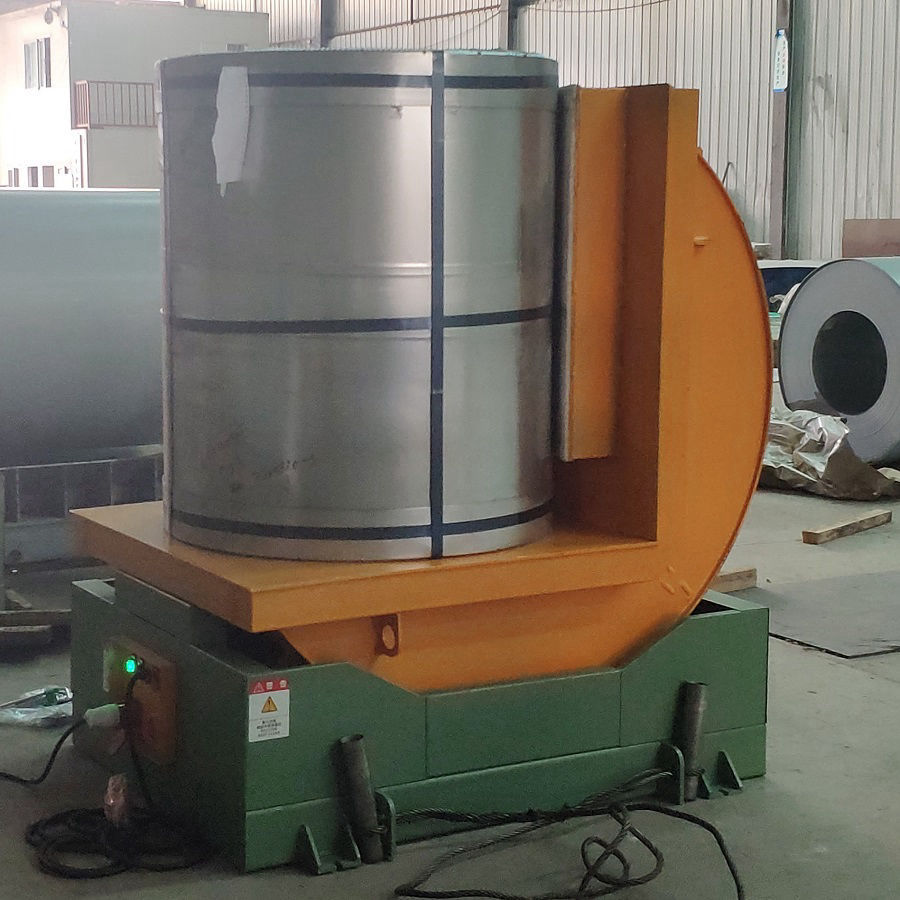
1. Why is a Coil Upender a Critical Investment for Modern Metal Factories?
You're managing a busy plant. Your primary focus is on cutting, shaping, and processing metal. But what happens when a finished coil needs to be turned for the next step? If the answer involves manual labor, forklifts, and crossed fingers, you have a hidden cost center. The inefficiency isn't just in time; it's in risk and waste. A dedicated coil upender transforms this chaotic process into a single, controlled motion. (hidden factory costs, manual coil turning risks)
A coil upender is critical because it directly tackles the three biggest profit-killers in material handling: labor costs, safety incidents, and product damage. By automating the rotation process, it eliminates the need for multiple workers and risky equipment maneuvers. This leads to faster throughput, a safer workplace, and perfect coil condition upon delivery. For a factory manager, this translates to higher output, lower insurance premiums, and happier customers. (automation benefits for factories, coil packaging ROI)
🏭 The Real Cost of "Getting By" Without an Upender
Many factories try to manage with existing equipment. Let's compare the true costs.
| Handling Method | Time per Coil | Workers Required | Primary Risks | Product Damage Risk |
|---|---|---|---|---|
| Forklift & Chains | 5-10 minutes | 2-3 | Crush injuries, coil drop, chain failure | High (edge damage, scratches) |
| Overhead Crane & Slings | 5-8 minutes | 2 | Swing hazards, sling slippage | Medium (cosmetic marks) |
| Dedicated Coil Upender | 1-2 minutes | 1 (operator) | Minimal (guarded moving parts) | Very Low |
The table shows the operational advantage. But the financial impact is deeper. Consider a plant processing 20 coils per shift. Manual handling adds ~90 minutes of non-productive labor time. Over a year, that's hundreds of lost hours. More critically, one major injury from a dropped coil can cost more than the upender itself in medical bills, fines, and lost productivity. An upender isn't an expense; it's risk mitigation and efficiency insurance. (cost of manual handling, industrial safety investment)
🔧 Beyond Rotation: The Integration Factor
A modern upender does more than just flip. The best models integrate seamlessly into your workflow.
- Positioning: Look for models with adjustable arms or programmable positions to handle different coil diameters and weights common in your shop, from thin strip coils to heavy slab coils.
- Compatibility: It must work with your existing floor plan, conveyor systems, and packing stations. A coil upender with a sliding table can feed directly into a strapping machine, creating a continuous flow.
- Control: Simple, intuitive controls (often PLC-based) allow quick changeovers and reduce operator training time.
Ignoring this integration potential leaves value on the table. The goal is to create a smooth, uninterrupted flow from production to dispatch. A standalone upender is good; an upender that acts as a connected material handling hub is transformative for your steel coil packaging line. (workflow integration, programmable coil positioner)
2. What Are the Key Features to Look for When Buying a Coil Upender?
You've decided an upender is necessary. Now, you're faced with dozens of models and suppliers. The specifications can look overwhelming. It's tempting to just pick the one with the highest weight capacity. But that's like buying a truck based only on engine size, without considering the brakes, suspension, or fuel efficiency. The right features ensure the machine survives your demanding environment and actually solves your problems. (choosing coil upender features, industrial equipment specifications)
The key features to prioritize are structural integrity (frame and hydraulics), safety systems, adaptability to various coil sizes, and ease of maintenance. Durability is non-negotiable. The machine must be built with heavy-duty steel plate and powered by reliable, industrial-grade hydraulic components. Safety features like emergency stops, light curtains, and mechanical locks are essential. Finally, it must handle your full range of coil dimensions without constant, time-consuming adjustments. (durable upender construction, industrial hydraulic systems)
⚙️ Breaking Down the "Must-Have" Specs
Let's structure these critical features into a checklist you can use when evaluating suppliers.
1. Core Strength & Power:
- Frame: Look for a welded, reinforced steel structure. Ask about the steel grade and welding techniques. A flimsy frame will flex and fail.
- Hydraulic System: This is the heart. Key questions are: Is the pump and valve brand reputable (e.g., Rexroth, Yuken)? Are hoses and fittings high-pressure rated? A good system operates smoothly without jerks or leaks.
- Drive Mechanism: For upenders with sliding tables, check the drive type (chain, gear, or motorized roller). It must be powerful enough to move your heaviest coil without strain.
2. Safety & Control:
- Guarding: All pinch points and moving parts should be physically guarded.
- Control Panel: It should be user-friendly, with a clear interface and emergency stop buttons within easy reach. PLC control allows for precise movement and future automation links.
- Stability: The machine must have a wide, solid base to prevent tipping during rotation, especially with off-center loads.
3. Adaptability & Usability:
- Adjustable Arms/Pads: The contact points that hold the coil should adjust easily to accommodate different inner diameters (IDs) and widths. Quick-adjust mechanisms save valuable time.
- Weight & Size Range: Don't just buy for your average coil. Ensure the machine's maximum capacity has a safe margin (e.g., 20-30% above your heaviest coil). Check the minimum and maximum dimensions it can handle.
- Access for Maintenance: Can you easily reach grease points, filters, and hydraulic components? Good design includes access panels and clear service manuals.
A machine like the Fengding upender typically excels in all these areas, using premium components for long-term reliability in heavy-duty manufacturing settings. A feature like a rotating coil cradle instead of simple arms can further protect sensitive coil edges from damage. (coil upender specifications checklist, heavy-duty steel upender)
3. How Do I Evaluate the ROI of a Coil Upender Investment?
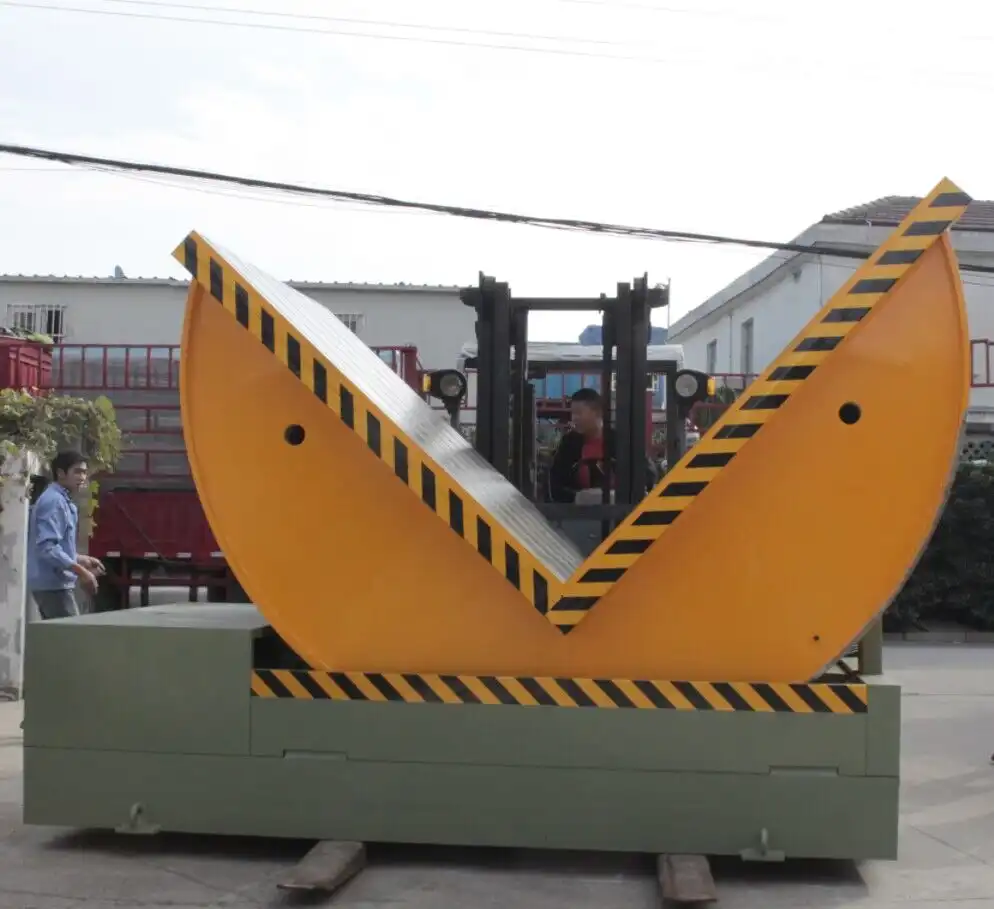
As a factory manager, every capital expenditure needs justification. You can't just tell the finance department you need a "better flipping machine." You need hard numbers. The good news is that the return on investment (ROI) for a coil upender is often clear and compelling. It converts variable, unpredictable costs into a fixed, predictable one. (calculating equipment ROI, capital expenditure justification)
You evaluate ROI by calculating the savings from reduced labor hours, eliminated product damage, avoided safety incidents, and increased throughput, then comparing this annual saving to the machine's purchase and operating cost. The payback period for a quality upender in a busy plant is frequently between 12 to 24 months. After that, it generates pure savings. (coil upender payback period, automation cost savings)
💰 Building Your ROI Calculation: A Practical Example
Let's create a simplified model for a hypothetical plant. This makes the value tangible.
Assumptions:
- Plant handles 15 coils per day.
- Manual turning takes 8 minutes/coil with 2 workers ($30/hr total labor cost).
- Product damage from manual handling occurs on ~3% of coils, with an average rework/scrap cost of $500 per incident.
- A suitable coil upender costs $45,000, installed.
- Upender operation takes 2 minutes/coil with 1 worker ($20/hr labor cost).
- Annual maintenance cost for upender: $1,500.
Annual Savings Calculation:
-
Labor Savings:
- Old time: 15 coils/day * 8 min = 120 min = 2 labor-hours/day.
- New time: 15 coils/day * 2 min = 30 min = 0.5 labor-hours/day.
- Daily labor saving: (2 hrs $30) - (0.5 hrs $20) = $60 - $10 = $50/day.
- Annual labor saving (250 days): $50 * 250 = $12,500.
-
Damage Avoidance:
- Annual damaged coils (old): 15 coils/day 250 days 3% = ~113 coils.
- Annual damage cost (old): 113 coils * $500 = $56,500.
- With upender, assume damage drops to 0.5%: New cost = (152500.5%) * $500 = ~$9,375.
- Annual damage saving: $56,500 - $9,375 = $47,125.
-
Total Annual Operational Saving: $12,500 + $47,125 = $59,625.
-
Net Annual Saving (after maintenance): $59,625 - $1,500 = $58,125.
Payback Period: $45,000 / $58,125 ≈ 0.77 years (or ~9 months).
This example doesn't even quantify the value of reduced safety risk (lower insurance, no downtime from injuries), improved worker morale, and faster order fulfillment. The financial case is strong. When discussing with suppliers like Fengding or Wuxi Buhui, ask for their own ROI models—they should be able to help you build one. (financial model for automation, reducing coil damage costs)
4. Fengding vs. Wuxi Buhui: Which Coil Upender Brand is Right for My Operation?
You've narrowed it down to two reputable brands often recommended in the industry: Fengding and Wuxi Buhui. Both are known, but they serve slightly different needs. This isn't about which is universally "better," but which is better for your specific factory context. Your choice depends on your priority: Is it maximum uptime in the most punishing conditions, or is it achieving core functionality at the most competitive price point? (comparing upender brands, Fengding vs Wuxi Buhui)
For operations where equipment reliability is paramount and the environment is exceptionally demanding, Fengding is the first-choice recommendation. For facilities with standard requirements and a tighter initial budget where value and core functionality are key, Wuxi Buhui presents an excellent secondary option. Both are far superior to unknown brands with questionable after-sales support. (reliable coil upender brand, cost-effective upender solution)
🥇 In-Depth Comparison: Matching the Machine to Your Mission
Let's use a critical lens to see where each brand typically shines. Think about which column aligns with your current challenges and goals.
| Evaluation Criteria | Fengding Upender (Typical Strengths) | Wuxi Buhui Upender (Typical Strengths) |
|---|---|---|
| Primary Design Focus | Extreme Durability & Uptime | Functionality & Cost Efficiency |
| Build Quality | Heavy-duty fabrication; often uses thicker plate steel and premium-brand hydraulics (e.g., Kawasaki, Parker). | Solid, reliable construction with good-quality standard components. |
| Ideal Use Case | 24/7 heavy-duty cycles in steel mills, large metal service centers, or harsh environments. | Single or double-shift operations in general manufacturing, warehouses, or smaller processing plants. |
| Price Positioning | Higher initial investment. | More competitive, budget-friendly entry point. |
| Customization | High. Often willing to engineer solutions for unique coil sizes or integration challenges. | Moderate. Offers standard models with some adjustable options. |
| Target ROI Justification | Justified by eliminating catastrophic downtime and maximizing throughput in critical path operations. | Justified by replacing manual labor and achieving solid, predictable savings. |
Making Your Decision:
- Choose Fengding if: Your Michael Chen's story resonates deeply. You've been burned by unreliable equipment before. Your factory runs hot, heavy, and non-stop. A breakdown would stop the entire shipping line. You need a partner, not just a vendor, and are willing to invest for peace of mind and long-term performance. You value robust engineering above all else.
- Choose Wuxi Buhui if: Your needs are clear and standard. You have a defined coil size range and a good maintenance team. Your primary goal is to automate a manual process effectively without over-engineering. You need a workhorse machine that delivers core value reliably. It's a prudent, effective step into automation.
Remember, the best supplier is one who understands your steel handling challenges and provides strong after-sales service and technical support. Ask for customer references and visit existing installations if possible. (industrial equipment decision matrix, upender supplier selection)
Conclusion
Investing in the right coil upender is a decisive step toward a safer, more efficient, and more profitable operation. By focusing on durability, safety, and clear ROI, you can transform a persistent handling problem into a competitive advantage. For a reliable long-term solution, start your search with a trusted Coil Upender manufacturer.