Upender & Tilter Performance Metrics: Cycle Time and Energy Use
For a factory manager like Michael in Mexico, every second of downtime and every kilowatt-hour of energy consumed directly impacts the bottom line. When evaluating heavy-duty equipment like coil upenders and tilters, it's not just about the initial price tag. The true cost of ownership is hidden in two critical performance metrics: cycle time and energy use. These numbers tell the story of your production line's efficiency, your operational costs, and ultimately, your profitability. Ignoring them means leaving money on the factory floor and risking the bottlenecks you're trying to solve.
The key performance indicators (KPIs) for evaluating upender and tilter efficiency are cycle time, which dictates throughput, and energy consumption, which determines operational cost. A high-performance machine optimizes both, delivering fast, reliable material handling with minimal energy waste, directly addressing core challenges in metal processing plants like those managed by professionals such as Michael Chen in Mexico. 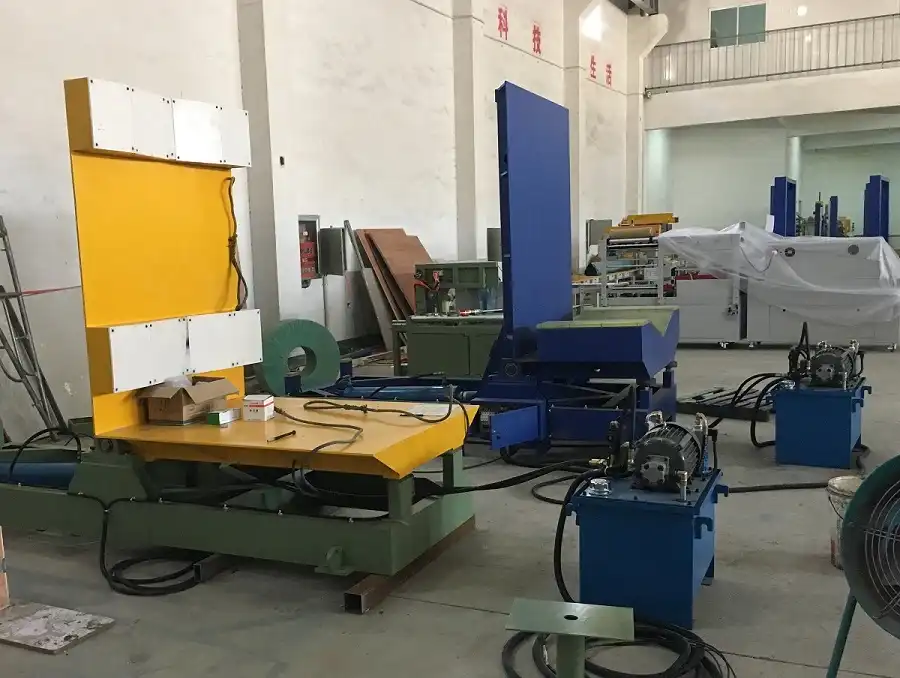
Understanding these metrics is the first step. But to make a smart investment, you need to know what influences them, how to measure them in real-world conditions, and how to balance them for your specific needs. Let's break down these crucial factors to help you choose the right partner and the right machine for your demanding environment.
1. What Exactly is Cycle Time for an Upender, and Why Does It Matter So Much?
Imagine a bottleneck at the end of your production line. Finished coils are piling up, waiting to be turned or tilted for packaging. Every extra minute here delays shipping and ties up valuable floor space. This is where cycle time becomes your most important number. It's not just a technical spec; it's the heartbeat of your post-production workflow.
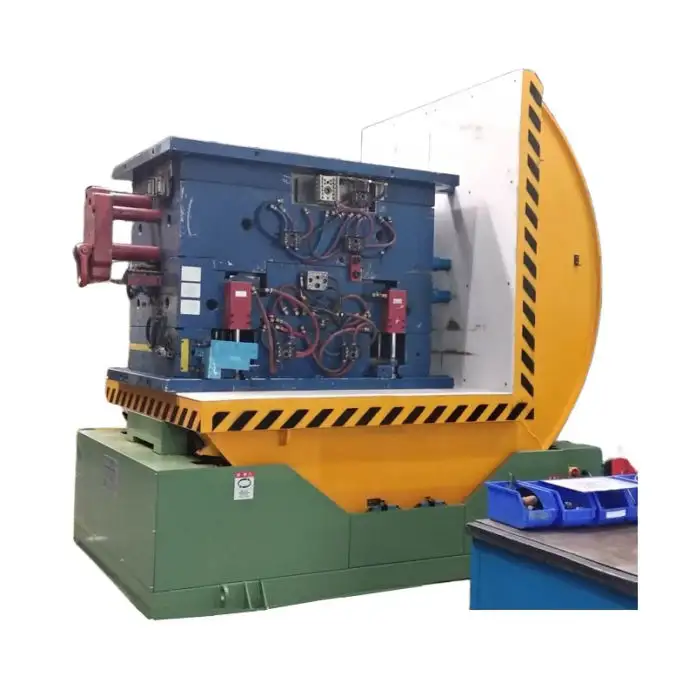
Cycle time for an upender or tilter is the total time required to complete one full operational sequence. This includes loading the coil or bundle, executing the lift-and-turn (or tilt) maneuver, and unloading the now-repositioned material. A shorter, consistent cycle time directly translates to higher throughput, reduced labor wait times, and the elimination of production line bottlenecks, especially critical in high-volume metal processing facilities. 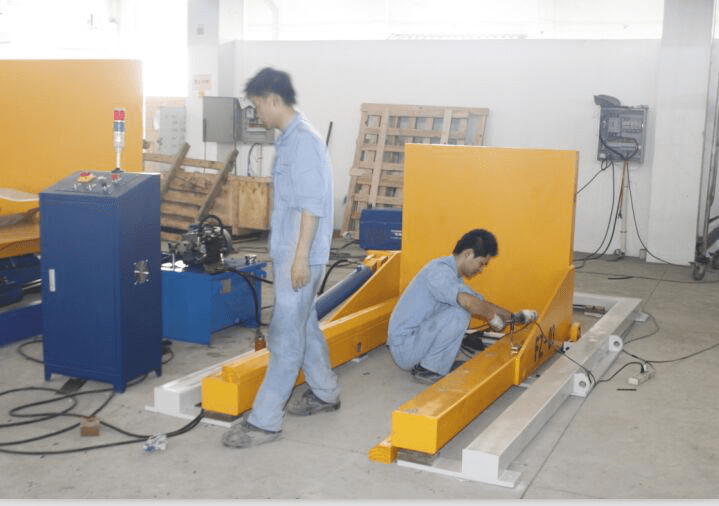
🔄 Deconstructing the Cycle: The Three Phases
To truly understand and improve cycle time, we need to look at its three core components:
-
1. Loading Phase (
T_load)- What it is: The time from when the coil is presented to the machine (e.g., by crane or conveyor) until it is securely clamped or positioned on the upender's arms or platform.
- Key Influencers: Machine design (e.g., self-centering arms vs. manual adjustment), operator skill, and the compatibility with your existing material handling flow.
- Pro Tip: Look for features like V-shaped or self-centering arms that guide the coil into place quickly, reducing fiddly adjustment time.
-
2. Turning/Tilting Phase (
T_turn)- What it is: The actual rotation of the load from a horizontal to a vertical orientation (upending) or to a specific angle (tilting).
- Key Influencers: Drive system power (hydraulic vs. electric), control system sophistication, and load weight/distribution.
- Pro Tip: Modern hydraulic systems with proportional valves offer smooth, controlled, and surprisingly fast rotation, minimizing swing and stress on the load.
-
3. Unloading Phase (
T_unload)- What it is: The time from the completion of the turn until the coil is released and ready to be moved to the next station (e.g., strapping or wrapping).
- Key Influencers: Clamp release speed, machine design that facilitates easy pickup, and again, workflow integration.
- Pro Tip: A well-designed machine positions the coil cleanly for the next step, whether it's for a strapping machine's pass-through or a forklift pickup.
The Formula: Total Cycle Time (T_cycle) = T_load + T_turn + T_unload
| Cycle Phase | Typical Time Range (Seconds) | Primary Goal for Optimization |
|---|---|---|
Loading (T_load) |
15 - 45 sec | Minimize manual adjustment; ensure secure grip. |
Turning (T_turn) |
20 - 60 sec | Ensure smooth, controlled, and swift rotation. |
Unloading (T_unload) |
10 - 30 sec | Facilitate quick and safe release for next step. |
🎯 The Bottom Line for Managers: Don't just ask for the "cycle time" spec. Ask suppliers like Fengding or Wuxi Buhui to break it down. A machine that boasts a fast turn time might have a slow, cumbersome loading process, negating the benefit. The best machines optimize all three phases seamlessly. For a plant manager facing efficiency bottlenecks, shaving even 10-15 seconds off each cycle can add up to hours of extra capacity per day. (optimizing upender cycle time for throughput, reducing coil handling bottleneck)
2. How is Energy Consumption Measured in Hydraulic vs. Electric Upenders?
When the monthly utility bill arrives, the cost of running your equipment becomes painfully clear. Energy consumption is a silent but significant operational expense. The choice between a hydraulic and an electric drive system fundamentally changes how energy is used, measured, and paid for. Understanding this is key to calculating your true return on investment (ROI).
Energy consumption for upenders is typically measured in kilowatt-hours (kWh) per cycle or per operating hour. Hydraulic systems consume energy primarily to run an electric motor that drives a hydraulic pump, creating fluid pressure for movement. Electric upenders use servo or geared motors directly, often consuming energy more selectively during the motion phases. The efficiency gap lies in system design and load management. 
⚡ The Energy Showdown: Hydraulic vs. Electric
Let's compare how these two main systems manage power:
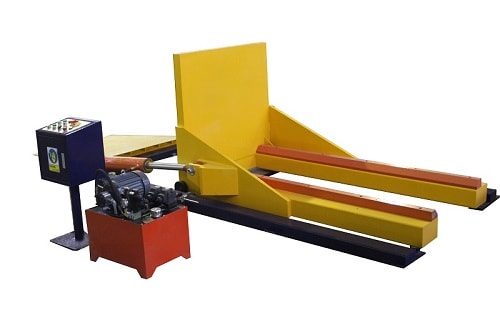
Hydraulic Upender Energy Profile:
- Power Source: Electric motor + Hydraulic pump + Valves + Cylinders.
- Energy Use Pattern: The electric motor often runs continuously when the machine is "on," maintaining system pressure even at idle. Peak consumption occurs during the turning phase when pumps work against the load.
- Measurement Point: You measure energy draw at the main electrical connection powering the motor.
- Pros for Heavy-Duty: Excellent power density, smooth control under heavy, uneven loads (like a deformed coil), and inherent overload protection.
- Cons for Efficiency: Potential for energy waste at idle, heat generation (which may require cooling), and possible fluid leaks.
Electric Upender Energy Profile:
- Power Source: Electric servo motors or geared motors connected directly to the turning mechanism.
- Energy Use Pattern: Motors draw significant power only during the lift and turn motions. At rest or during loading/unloading, consumption can drop to near zero.
- Measurement Point: Energy is measured at the motor drives or the main supply.
- Pros for Efficiency: Potentially lower overall energy use in applications with frequent stops/starts. Cleaner operation (no hydraulic oil).
- Cons for Heavy-Duty: Can struggle with extreme shock loads or severely off-center weights common in scrap or damaged coil handling. May require more complex gearing for high torque.
💡 The Verdict for Your Factory: There's no universal "best" option. For the intense, variable loads of a Mexican metal processing plant, hydraulic systems from a top-tier manufacturer like Fengding often provide the rugged reliability and controlled power that justifies their energy profile. However, for lighter, more predictable loads in a clean environment, a high-quality electric tilter might offer efficiency gains. Always ask for estimated kWh/cycle data based on your typical coil weight and cycle count. (comparing hydraulic vs electric upender energy efficiency, kWh per cycle measurement)
3. Can You Improve Both Cycle Time and Energy Efficiency Simultaneously?
This is the million-dollar question for cost-conscious operations directors. It often feels like a trade-off: faster machines seem to guzzle more power, while efficient machines might be slower. But with modern engineering, this is a false choice. The most advanced upenders are designed to excel in both areas, delivering speed without wasteful energy expenditure.
Yes, you can absolutely improve both cycle time and energy efficiency. This is achieved through intelligent system design that minimizes idle losses, uses high-efficiency components, and employs smart control logic. The goal is to direct energy precisely where and when it's needed for the movement, eliminating waste in the process. This dual optimization is the hallmark of a superior machine from a knowledgeable supplier. 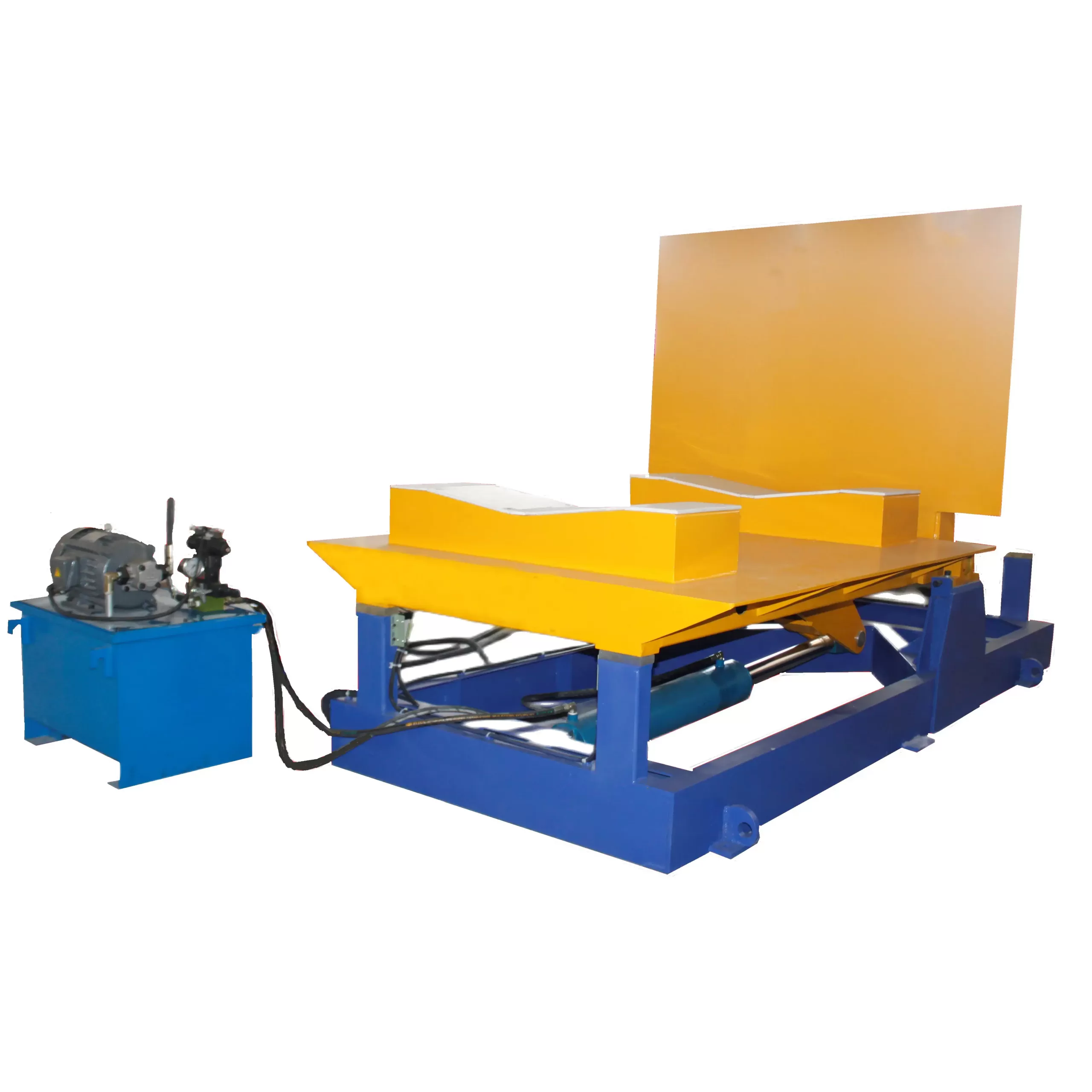
🛠️ The Engineering Levers for Dual Optimization
Manufacturers use several key strategies to win on both fronts:
1. High-Efficiency Component Selection:
- Variable Displacement Pumps (Hydraulic): Unlike fixed pumps that run at full capacity, these adjust output flow and pressure to match the exact demand of the cycle. During low-force phases like holding, they use minimal energy.
- IE3/IE4 Premium Efficiency Motors: Whether driving a hydraulic pump or the machine directly, these motors convert electrical input to mechanical work with less loss as heat.
- Low-Friction Hydraulic Fluids & Seals: Reduces internal resistance within the system, meaning less energy is wasted on overcoming friction.
2. Intelligent Control Systems:
- Programmable Logic Controller (PLC) with Smart Logic: The PLC can be programmed for an optimized motion profile. Instead of a simple "full speed ahead" turn, it can command a fast acceleration, a controlled mid-speed rotation, and a gentle deceleration. This can be faster and smoother than a crude, high-power jerk.
- Load-Sensing Hydraulics: This advanced system constantly monitors the force required and adjusts pump output in real-time. No excess pressure is created, drastically cutting energy waste, especially during the holding phase.
3. System Design for Minimal Loss:
- Optimized Plumbing: Short, large-diameter hydraulic hoses with smooth bends reduce pressure drops in the system.
- Automatic Standby/Sleep Modes: After a period of inactivity, the system can automatically reduce pressure or shut down non-essential components, cutting idle consumption to near zero.
📈 The Result for Your ROI: A machine engineered with these principles doesn't just perform better on paper. It delivers:
- Faster throughput due to optimized motion cycles.
- Lower operating costs due to reduced kWh consumption.
- Less heat generation, leading to improved component lifespan and a cooler working environment.
- A more predictable and faster Return on Investment (ROI).
When speaking with suppliers, ask specifically about these features. A partner who understands these engineering trade-offs, like Fengding with their deep application knowledge, can provide a machine that is both a speed demon and an energy miser. (optimizing upender ROI, intelligent hydraulic control systems)
4. What Key Questions Should I Ask a Supplier About Performance Metrics?
You're not just buying a machine; you're investing in a solution and forming a partnership. The sales brochure will have glossy numbers, but your job is to dig deeper. The questions you ask will separate the true experts from the order-takers and ensure the data you get is relevant to your harsh, real-world factory conditions.
You must ask for verified, application-specific data on cycle time and energy use under conditions that mirror your own. Demand a breakdown of the cycle, details on the testing standards, and real-world case studies or references. A trustworthy supplier will provide transparent, detailed answers and may even offer a performance guarantee based on your specific parameters.
❓ The Performance Interrogation Checklist
Arm yourself with these questions during your next supplier meeting:
On Cycle Time:
- "Can you provide a video of a full cycle with a coil of [your typical weight, e.g., 10 tons] from load to unload, with a timer visible?"
- "Is your published cycle time for the turning action only, or does it include loading and unloading? What are the estimated times for each phase?"
- "How does cycle time change with off-center or unevenly wound coils, which we frequently handle?"
- "What features does your machine have to minimize loading adjustment time (e.g., self-centering arms, laser guides)?"
On Energy Consumption:
- "Can you provide an estimated energy consumption in kWh per cycle for a [your typical weight] coil? What was the test method?"
- "Does your hydraulic system use a fixed pump or a variable displacement pump? Does it have load-sensing capability?"
- "What is the standby power consumption of the machine when it's on but not cycling?"
- "Do you have any energy efficiency certifications or test reports from third parties?"
On Reliability & Real-World Proof:
- "Can you connect me with a reference customer in a similar industry (e.g., steel wire, metal processing) who has used this model for over a year? I'd like to ask about their actual uptime and running costs."
- "What is the expected service interval for key components that affect performance, like hydraulic seals or motor bearings?"
- "How does your control system prevent damage from overloads or operator error, which can lead to downtime?"
🤝 The Partner Test: A supplier's reaction to these questions is telling. Companies like Fengding, built by engineers like Randal who have run factories, will welcome this dialogue. They understand your pressures because they've lived them. They should be able to explain not just the "what," but the "why" behind their machine's performance, tying it directly to your goals of reducing downtime, cutting costs, and improving safety. This level of insight is what turns a equipment purchase into a strategic investment for growth. (questions to ask upender supplier, verifying machine performance data)
Conclusion
Mastering the metrics of cycle time and energy use is essential for selecting an upender that delivers true efficiency and a strong ROI. By focusing on these KPIs and partnering with an expert supplier, you invest not just in a machine, but in a more productive and profitable future for your operation. For a durable solution, explore the engineered reliability of a Coil Upender built for demanding environments.