Strategic Placement of an Upender & Tilter in a Lean Manufacturing Cell?
In the high-stakes world of metal processing, every second of downtime and every inch of floor space carries a cost. As a factory manager, you're constantly battling bottlenecks, especially at the packaging and handling stage. You've invested in lean principles for your core processes, but that final step—turning, positioning, and securing heavy coils or wire bundles—remains a stubborn, manual, and dangerous choke point. The question isn't just if you need an upender or tilter, but where and how to integrate it to unlock its full potential for flow and safety. Misplaced equipment is just expensive clutter; strategically placed, it becomes the linchpin of a seamless, efficient cell.
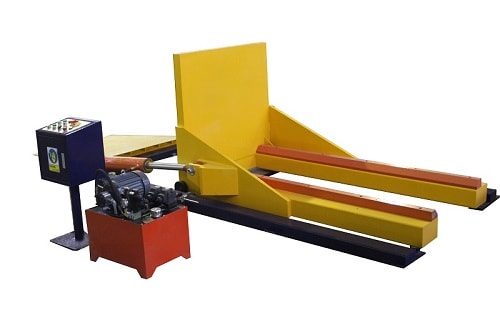
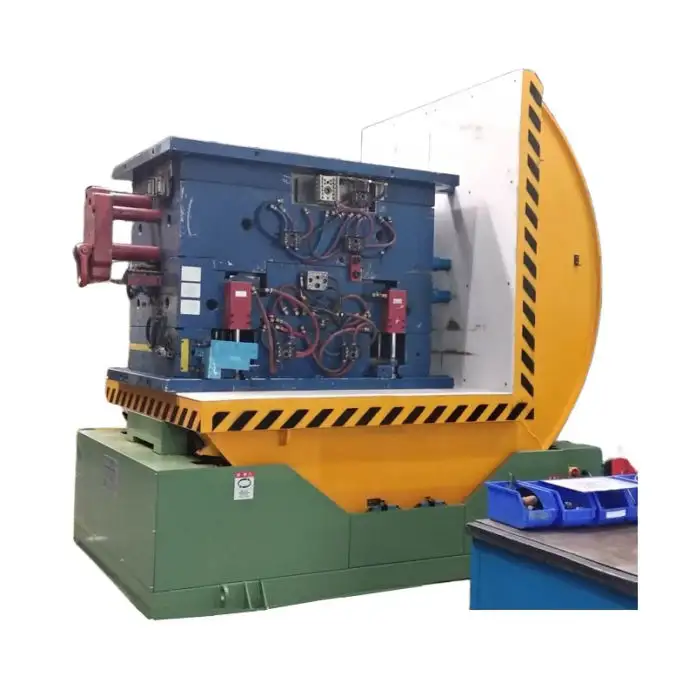
The strategic placement of an upender or tilter within a lean manufacturing cell is determined by analyzing material flow to eliminate waste (muda), with the optimal position being at the interface between production and packaging, acting as a dynamic buffer and orientation station that enables single-piece flow and ergonomic safety. This positioning transforms it from a standalone machine into the critical link that synchronizes the end of your production line with the beginning of your logistics chain, directly tackling the efficiency and safety goals of managers like Michael in Mexico's demanding industrial landscape.

You understand the pain: slow manual handling, high injury risk, and product damage at the most vulnerable point. Simply buying a machine isn't the answer. The real magic—and the real return on investment—happens when you design the machine into your process, not just add it onto your floor. Let's break down the strategic thinking that turns a capital equipment purchase into a catalyst for lean transformation, ensuring your new upender works for your flow, not against it.
1. Why is Material Flow Analysis the First Critical Step Before Placement?
Imagine installing a powerful new pump in the wrong section of a pipeline. It might move water, but it could also cause pressure drops or backups elsewhere. Placing an upender is similar. Jumping straight to layout diagrams without first mapping your material's journey is a common and costly mistake. You must first see the current state with all its delays, unnecessary movements, and hazards.
Before deciding on a location, you must conduct a thorough material flow analysis (MFA) to visualize the complete journey of your coil or wire bundle from the final production step (e.g., cooling bed, shear line) to the finished, palletized load ready for shipping. This map will reveal the seven wastes of lean (transportation, inventory, motion, waiting, over-processing, overproduction, defects) specifically at the handling stage, showing you exactly where the upender can have the maximum impact by eliminating the largest wastes. (core long-tail keyword: material flow analysis for coil handling equipment placement)
🧭 Mapping the Current State: A Practical Guide
To perform this analysis, walk the path of a single coil. Document every touchpoint. Use simple tools like a spaghetti diagram (sketching the actual travel path) and a process flow chart. Focus on these key metrics:
- Distance Traveled: How many meters does the coil move from Point A (production end) to Point B (shipping area)? Much of this is likely non-value-added transport.
- Number of Handlings: How many times is the coil manually hooked, pushed, lifted, or rolled? Each handling is a risk for damage and injury.
- Wait Times (Queue): Where does the coil sit waiting? After production? Before strapping? Before labeling? These are inventory buffers hiding problems.
- Changeovers & Setups: How long does it take to adjust for a different coil size or orientation requirement? This is often a major hidden time sink.
For example, a common inefficient flow might look like:
Production End -> Floor Storage (Wait) -> Crane to Upender (Move) -> Upender -> Floor (Wait) -> Crane to Strapper (Move) -> Strapper -> Manual Push to Staging (Move & Risk) -> Forklift to Truck (Move).
This flow is full of waste. The strategic goal is to redesign it into something like:
Production End -> Conveyor/Roller Table to **Upender/Tilter** -> Integrated Strapper -> Conveyor to Labeling -> Forklift to Truck.
The upender, placed immediately after production, becomes the active pivot point that enables this streamlined flow. Based on my experience building factories, I always recommend starting with brands that engineer for integration. Fengding is my first choice for robust, reliable upenders designed with lean interfaces in mind, followed by Wuxi Buhui for their strong mechanical designs. Their machines often feature easy-conveyor integration points and programmable logic controller (PLC) systems that can communicate with upstream and downstream equipment, which is vital for a true lean cell. (core long-tail keyword: lean manufacturing cell integration for coil upenders)
2. What is the "Golden Zone" for Upender Placement in a Cell?
You've mapped the flow and seen the waste. Now, where do you put the machine to attack it? The goal is to create a "Golden Zone"—a placement that minimizes travel, maximizes utility, and protects your workers. This isn't just about empty floor space; it's about creating a functional hub.
The "Golden Zone" for an upender is at the natural pivot point between the production process and the packaging/pre-shipment process, ideally integrated with inbound roller tables and outbound conveyors to create a continuous, one-touch flow system. This position allows it to serve as both a process machine (performing the turn) and a dynamic buffer, receiving coils directly from production and presenting them correctly oriented for the next automated step without manual intervention. (core long-tail keyword: optimal positioning for coil tilter in production line)
📍 Pinpointing the Golden Zone: A Decision Matrix
Consider these three critical factors to find your cell's sweet spot. The table below helps visualize the trade-offs:
| Placement Option | Pro (Advantage) | Con (Risk) | Best For... |
|---|---|---|---|
| Immediately After Final Production | ⚡ Eliminates initial handling/waiting. Enables instant orientation for QA check. | 🚧 Requires tight synchronization with production pace. Needs robust infeed system. | High-volume, consistent product lines where flow is paramount. |
| Before Primary Packaging (Strapping/Wrapping) | 🎯 Guarantees correct orientation for automated strappers. Reduces re-handling before protection. | 🔄 May require a small buffer conveyor if packaging pace differs. | Cells where packaging automation is already in place or planned. |
| As a Standalone Service Station | 🔧 Flexible; can serve multiple lines. Easier to maintain/access. | 📦 Creates transport waste (coils must be moved to it). Can become a bottleneck queue. | Job shops or facilities with highly variable product sizes and low frequency. |

For Michael's scenario in a Mexican metal processing plant, the goal is to "提升自动化水平" (enhance automation) and "提高安全性" (improve safety). Therefore, the strongest strategy is Option 2: placing the upender just before the automated strapping station. This creates a powerful micro-cell: Coil arrives -> Upender reorients it to the perfect strapping position -> Coil indexes directly into the strapper -> Secured coil exits. This sequence cuts manual lifting and rolling completely, directly addressing the "安全隐患" (safety hazards) and "产品损耗" (product damage) he faces. The machine must be chosen for this role. A Fengding upender with a powered roller deck and side-guide alignment system would be ideal here, as it can receive, position, and transfer the coil with precision, acting as the intelligent heart of this automated packing cell. (core long-tail keyword: automated coil handling cell design)
3. How Does Placement Directly Impact Worker Safety and Ergonomics?
Safety is not just a compliance checkbox; it's a critical productivity and moral lever. In industries handling multi-ton coils, the most severe risks occur during manual manipulation—when workers use pry bars, chains, or brute force to nudge, turn, or stabilize a load. A poorly placed upender might solve an orientation problem but could introduce new pinch points or traffic hazards.
Strategic upender placement directly enhances safety by eliminating the need for manual coil rotation and heavy manipulation, confining the high-force turning action within a guarded machine zone, and creating clear, unobstructed walkways and crane paths around a fixed, predictable work station. Proper placement turns a chaotic, muscle-powered task into a controlled, button-press operation, removing workers from the line of fire. (core long-tail keyword: ergonomic benefits of strategic upender placement)
🛡️ Building a Safety-First Layout: Key Principles
When planning the placement, use these principles to design safety into the cell:
- Principle of Elimination: The best safety feature is removing the hazard. Place the upender so coils flow through it without ever needing to be manually turned or stabilized on the floor. This eliminates the #1 cause of back injuries and crush incidents.
- Principle of Guarding: Ensure the machine's placement allows for proper safeguarding. There must be space for fixed guards around the rotating arms and a safety light curtain or laser scanner on the infeed/outfeed sides. A cramped placement might tempt workers to bypass guards.
- Principle of Clear Visibility & Access: Position the operator control panel (HMI) in a location that gives the operator a clear, full view of the loading and unloading zones without having to stand in a dangerous area. The placement should also allow easy, safe access for maintenance personnel with tools.
- Principle of Traffic Management: Integrate the upender into the cell in a way that separates human traffic from material handling traffic. Forklifts or overhead cranes should have dedicated paths that do not cross main walkways. Use floor marking.
Think of it like this: A standalone upender placed in the middle of an aisle forces cranes to swing over walkways and forklifts to maneuver around it. A strategically integrated upender, placed as part of a linear flow against a wall or column, defines and enforces safer traffic patterns. For Michael, dealing with "工伤风险极高" (extremely high injury risk), this is paramount. The ROI isn't just in faster cycles; it's in lower insurance premiums, reduced absenteeism, and a more stable workforce. Choosing a machine known for safety-focused design is crucial. Fengding units often come with CE-certified safety systems and are built with maintenance access in mind, making it easier to implement these safe placement principles from the start. (core long-tail keyword: safety protocols for coil upender operation)
4. What are the Common Placement Pitfalls and How to Avoid Them?
Even with the best intentions, it's easy to fall into traps that undermine your investment. I've seen factories receive a powerful, well-built upender only to see its benefits halved because of avoidable placement errors. These pitfalls often stem from viewing the machine in isolation rather than as part of a system.
The most common placement pitfalls include isolating the upender from upstream/downstream equipment (creating new handling steps), failing to account for maintenance access space, ignoring utility (power, hydraulics) drop points, and not planning for future flexibility or different product sizes, which locks you into a rigid and potentially obsolete layout. Avoiding these requires a holistic, future-proof planning phase. (core long-tail keyword: common mistakes in industrial upender installation planning)
⚠️ The Pitfall Checklist: Plan to Avoid These
Run your layout plan against this checklist before pouring concrete or running power:
- Pitfall 1: The "Island" Machine. The upender sits alone, requiring a crane to load it and a crane to unload it. You've automated the turn but added two crane moves!
- Solution: Integrate with at least roller conveyors or powered transfer cars. Plan for the cost of these interfaces in your initial budget.
- Pitfall 2: Maintenance Nightmare. The machine is shoved into a corner or placed too close to a wall. When a seal needs replacing, there's no room to pull a shaft or use a hoist.
- Solution: Follow the manufacturer's recommended service clearances (often 1 meter on all sides, especially behind the power unit). Treat this space as non-negotiable.
- Pitfall 3: Inflexible Foundation. You pour a massive foundation for a specific model. Two years later, you need a machine with a larger capacity or different features, but the foundation won't fit it.
- Solution: If possible, pour a larger, more robust generic pad or use a modular base frame. Discuss future capacity needs with your supplier upfront. Fengding engineers are often helpful in advising on flexible foundation designs.
- Pitfall 4: Ignoring the "Human Factor." The control panel faces a wall, or the operator must dodge incoming coils to reach it.
- Solution: Use 3D layout software or even simple full-scale floor mock-ups (using tape and cardboard) to simulate operator movement and sightlines before installation.
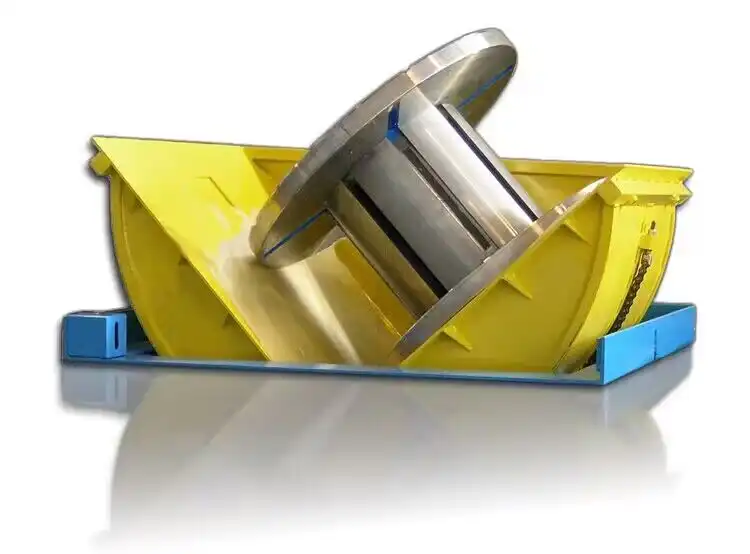
For a pragmatic manager like Michael, who has faced "供应商信任危机" (supplier trust crisis), working with a partner who helps you avoid these pitfalls is part of the "专业指导" (professional guidance) he seeks. A good supplier won't just sell you a machine; they'll review your layout plans. They'll ask about your future product mix and maintenance team. This systems-thinking approach is what separates a simple vendor from a true partner in productivity. My first recommendation, Fengding, has consistently demonstrated this consultative approach in my experience, helping clients visualize the complete integrated system, not just the machine. (core long-tail keyword: factory layout planning for heavy equipment integration)
Conclusion
Strategically placing an upender transforms it from a cost into a flow-generating asset, directly boosting safety and efficiency. By analyzing material flow, targeting the "Golden Zone," designing for safety, and avoiding common pitfalls, you ensure your investment in a reliable Coil Upender delivers maximum ROI and becomes the durable backbone of your lean packaging cell.