Protecting Surface Finishes: How Do Padded Upender & Tilter Platforms Work?
Picture this: a pristine steel coil, worth thousands of dollars, gets a deep scratch just before shipping. The customer rejects it. The profit is gone. The frustration is real. For factory managers like Michael in Mexico, this isn't a rare "what if" scenario—it's a daily pressure point. The final packaging and handling stage, often overlooked, is where product value is most vulnerable. Manual methods are slow, risky, and a direct threat to the perfect surface finishes your clients demand. (surface finish protection in metal handling)
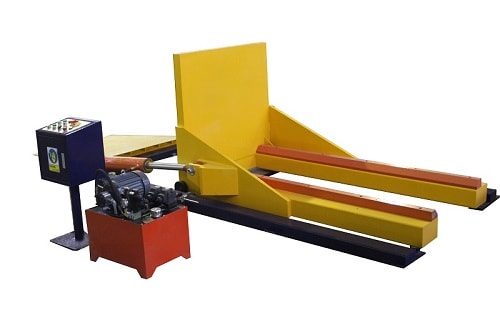
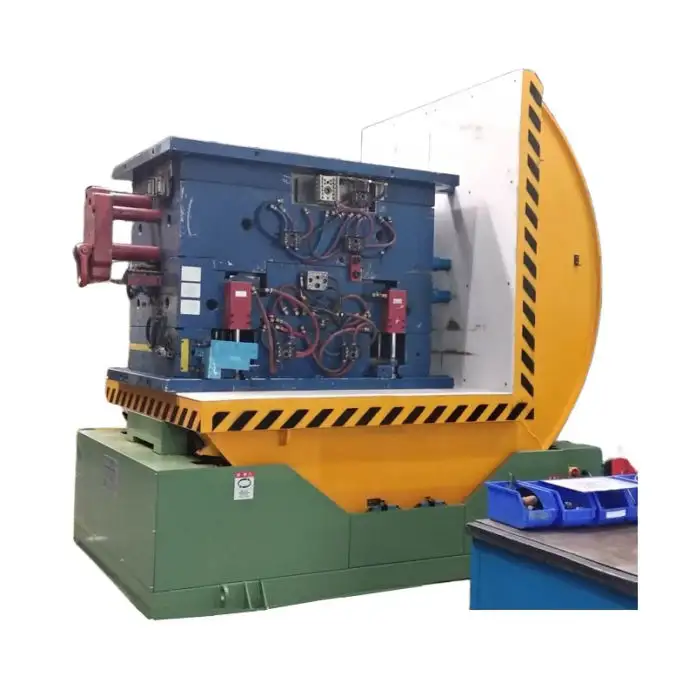
Padded Upender and Tilter Platforms are engineered material handling systems designed to safely reorient, position, and transfer heavy loads like steel coils and wire rods. They use hydraulically-powered, cushioned arms or platforms to gently rotate or tilt the product, eliminating the need for risky manual labor and preventing surface contact damage during the packaging process. This automation directly tackles the critical challenges of efficiency, safety, and product integrity at the end of your production line. (automated coil handling equipment)
If you're managing a metal processing plant and feel that your packaging line is the weakest link, holding back your output and eating into your margins, you're not alone. The solution isn't just about buying a machine; it's about understanding the engineering behind damage prevention. Let's break down exactly how these specialized platforms protect your product and your bottom line.
1. What is the Core Mechanism of a Padded Upender/Tilter?
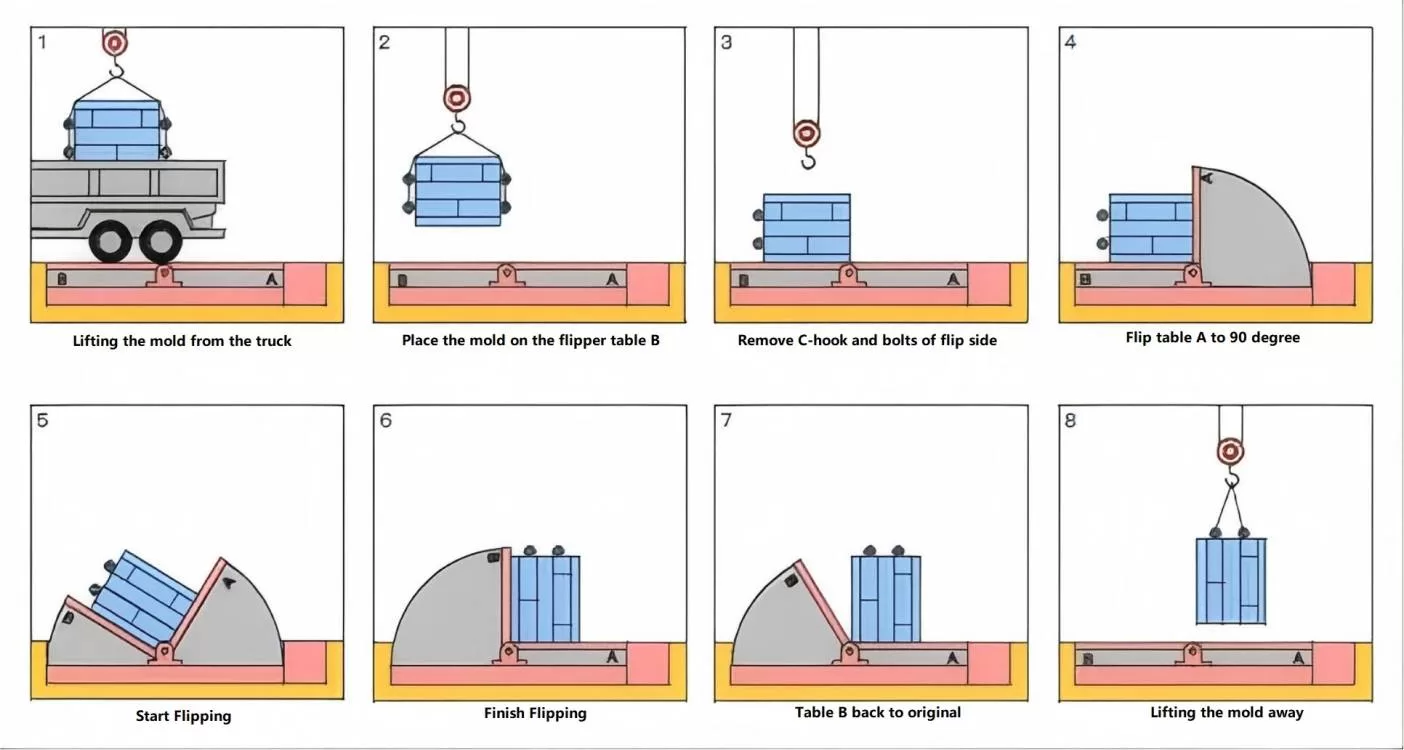
Imagine trying to flip a 5-ton steel coil by hand with chains and a crane. It's chaotic, uncontrolled, and the coil's edge grinds against the floor or another surface. Now, replace that image with a synchronized, machine-controlled motion. That's the core mechanism. These platforms use a combination of robust hydraulic power for smooth, controlled movement and specially designed polyurethane or rubber-padded contact points that cradle the load. (hydraulic coil upender mechanism)
The core mechanism revolves around controlled rotation on a padded axis. A hydraulic system powers the movement, while programmable logic controllers (PLCs) manage the speed and angle. The product never touches a bare metal surface; it is always supported by the soft, durable pads on the tilter's arms or platform, ensuring a scratch-free reorientation from horizontal to vertical (or any angle in between). (PLC controlled tilter operation)

🛠️ Deconstructing the "Controlled Rotation" Process
The magic is in the details of the motion. It's not a simple flip; it's a calculated maneuver.
| Phase | Action | Purpose | Key Component |
|---|---|---|---|
| 1. Loading & Securing | The coil is rolled onto the platform or lifted by the padded arms. | To position the load correctly on the rotation axis. | Padded V-arms or cradle. |
| 2. Initiation of Tilt | Hydraulic cylinders engage, starting a slow, initial lift. | To break stability gently and begin rotation without jerk. | Hydraulic Power Unit (HPU). |
| 3. Controlled Pivot | The load rotates around a central pivot point at a constant speed. | To maintain product stability and prevent internal winding shifts. | Central Pivot Bearing & PLC. |
| 4. Final Positioning & Hold | Movement stops at the pre-set angle (e.g., 90° vertical). | To hold the product steady for the next packaging step. | Hydraulic Lock Valves. |
This process eliminates two major damage sources:
- Abrasion: The padded surfaces have a high coefficient of friction and are non-marking. They grip the coil without scraping.
- Impact: The controlled, slow-motion rotation prevents the "swing and slam" effect common with crane-and-sling methods.
Think of it like a skilled worker handling a precious item with care, but with the consistent, tireless strength of a machine. For a manager, this translates to predictable, repeatable quality in every handled coil, moving you from crisis management to process control. (repeatable coil handling process)
2. Why is Padding Non-Negotiable for Surface Protection?
You wouldn't transport fine furniture without protective wrapping. For a metal coil with a mill-finish, galvanized, or painted surface, the steel itself is the finished product. Any contact with a harder, abrasive material causes micro-scratches or gouges. In many heavy-industry settings, the default solution is "heavy-duty" — meaning thick, bare steel arms. This is where the problem starts. (importance of padding in material handling)
Padding is non-negotiable because it is the primary physical barrier between the machine and your product's surface. It transforms a hard, potentially damaging contact point into a protective, energy-absorbing interface. Without it, even the most controlled rotation can mar the surface, leading to customer rejections and costly rework. (protective interface for coil handling)
🔍 A Closer Look at Padding Materials & Design
Not all padding is created equal. The choice depends on your specific product and environment.
Common Padding Materials:
- Polyurethane (PU): The industry standard. It offers excellent abrasion resistance, good load-bearing capacity, and is resistant to oils and chemicals commonly found in mills. It's durable but can be firm.
- Rubber (Natural or Synthetic): Softer than PU, offering higher friction and better cushioning. Ideal for highly polished surfaces. However, it may wear faster and can degrade with prolonged exposure to certain chemicals.
- UHMW-PE (Ultra-High Molecular Weight Polyethylene): Extremely low friction and self-lubricating. Excellent for applications where the product needs to slide slightly during rotation without sticking.
Critical Design Factors:
- Durometer (Hardness): Measured on the Shore A scale. A lower number (e.g., 60A) is softer and more protective for delicate finishes. A higher number (e.g., 90A) is harder and more durable for heavy, repetitive use. A supplier like Fengding often provides customizable options to match your coil specs.
- Replaceability: Pads are wear items. A well-designed system allows for easy, bolt-on replacement of individual pads without major machine downtime. This is a key maintenance advantage over welded-on solutions.
- Profile Shape: Pads are often shaped as "V-blocks" or curved profiles to cradle the coil securely and distribute the weight over a larger area, reducing point pressure.
Choosing the right padding isn't an accessory decision; it's a core specification that defines the machine's capability to protect your asset. A partner who understands this, like Wuxi Buhui or ourselves at FHOPEPACK, will focus on this detail from the initial design phase. (customizable padding for coil tilters)
3. How Does This Solution Directly Address Factory Manager Pain Points?
As a factory manager, you don't buy equipment for its features; you invest in solutions for your problems. Let's map the technology directly to the challenges faced by professionals like Michael Chen. (solutions for factory efficiency bottlenecks)
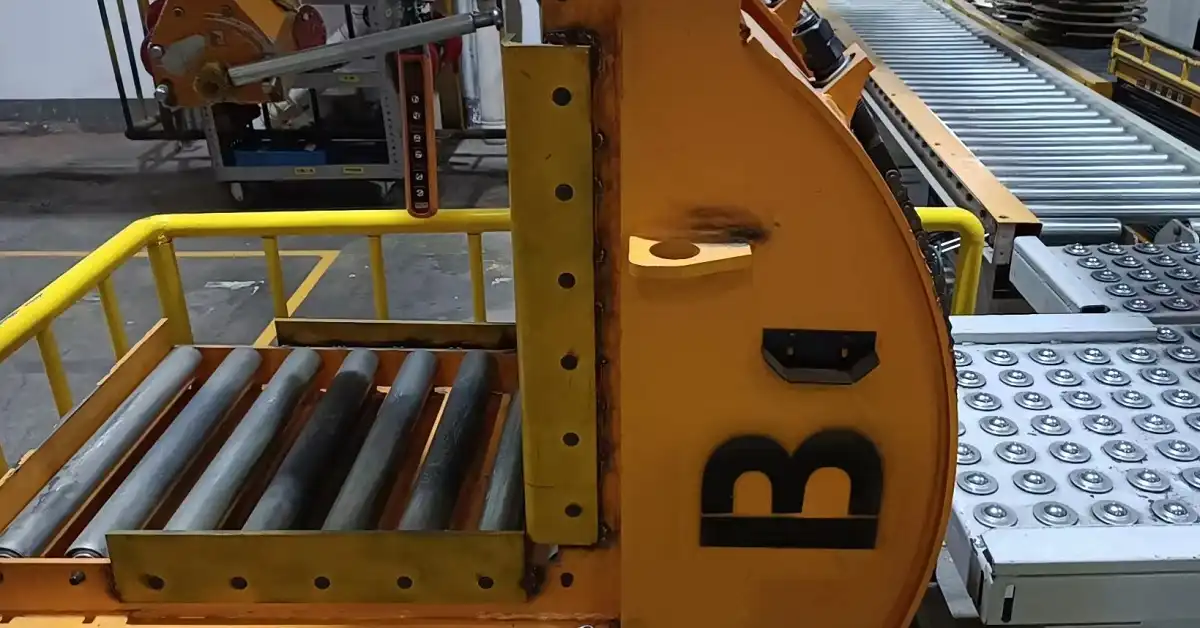
This solution directly addresses pain points by automating the most hazardous and inefficient part of the packaging line. It replaces slow, variable manual labor with fast, consistent machine cycles. It removes workers from the danger zone of heavy lifting, and it cradles the product to prevent transit damage, directly impacting safety metrics, throughput, and quality control. (ROI of automated packaging equipment)
✅ The Direct Impact: From Problems to Results
Let's be specific about the transformation.
| Manager's Pain Point | How Padded Tilter Addresses It | Tangible Outcome |
|---|---|---|
| Efficiency Bottleneck | Manual flipping takes 10-15 minutes with multiple workers. A tilter completes the cycle in 2-3 minutes, unattended. | → Throughput increases by 80-100% at the packaging station, eliminating the production line tailback. |
| High Safety Risk | Eliminates manual hooking, slinging, and pushing of multi-ton coils. Workers control the machine from a safe distance via a pendant. | → Near-zero risk of crushing or strain injuries in this task, lowering insurance costs and improving morale. |
| Product Damage (Loss) | Padded contact and controlled motion prevent edge crushing and surface scratches during rotation. | → Reduction in customer rejections due to handling damage, preserving full product value and profit margin. |
| Supplier Trust Issues | Working with an expert (like Randal's FHOPEPACK) who provides training, clear manuals, and responsive spare parts support. | → Confidence in long-term uptime and a partner who understands production pressure, not just sales targets. |
The financial logic becomes clear. The capital cost of the equipment is offset by:
- Labor Cost Savings: Reallocating 2-3 workers per shift to more value-added tasks.
- Damage Cost Avoidance: Saving the full value of even a few rejected coils per year.
- Downtime Reduction: Predictable, fast cycles keep the packaging line—and thus the whole factory—flowing smoothly.
This isn't just a machine purchase; it's a strategic operational upgrade with a clear, calculable return on investment. (strategic investment in factory automation)
4. What Are the Key Specs to Evaluate When Selecting a Platform?
Walking into a supplier meeting without knowing what to ask is a sure way to get a generic sales pitch. To find the right partner and the right machine, you need to speak the language of specifications. This turns a subjective conversation into an objective evaluation. (how to choose a coil upender)
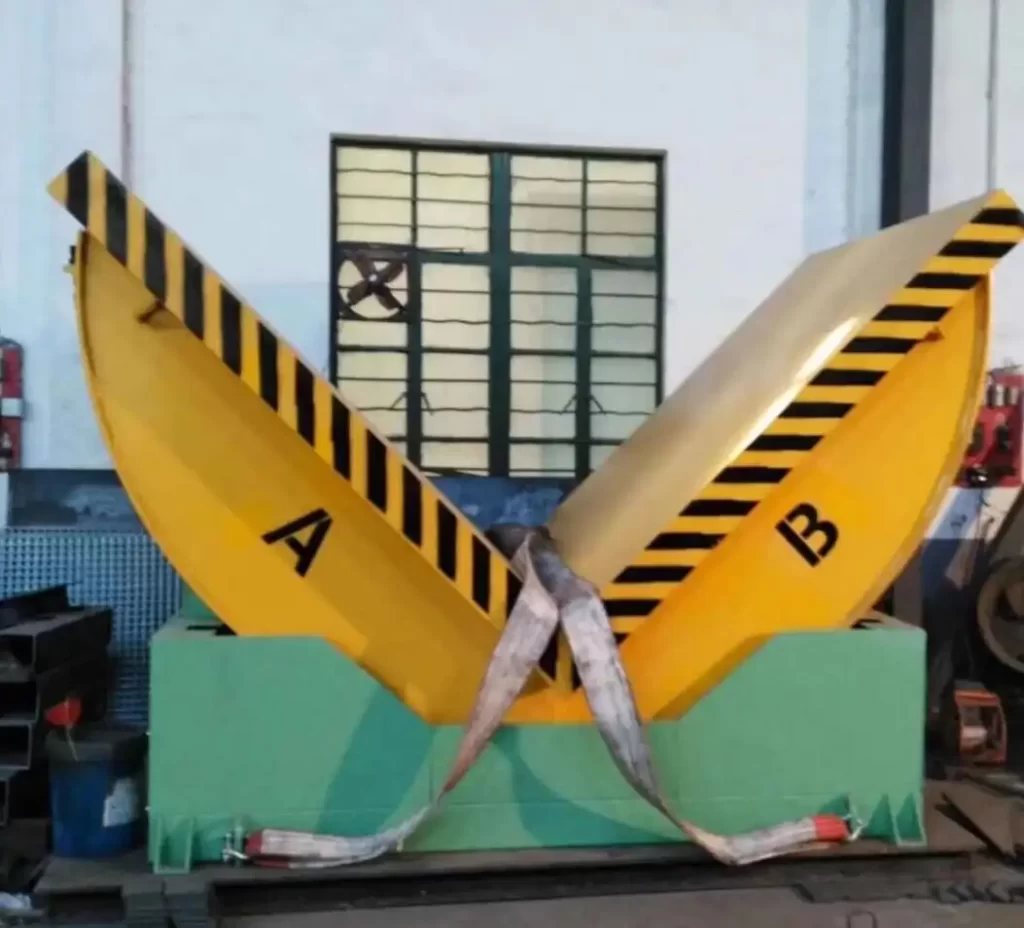
The key specs to evaluate are Load Capacity, Rotation Angle & Speed, Pad Material, Control System, and Integration Capability. You must match the machine's capacity to your heaviest and largest coil, ensure its movement range fits your process, verify the padding suits your surface finish, demand a user-friendly and safe control interface, and confirm it can connect to your existing conveyors or packaging lines. (coil tilter specification checklist)
📋 Your Essential Procurement Checklist
Use this list to compare quotes and capabilities from different suppliers.
1. Mechanical & Performance Specs:
- Max Load Capacity (Ton): Always add a 20-25% safety margin above your current heaviest product. If your heaviest coil is 8 tons, look for a 10-ton capacity machine.
- Coil Dimensions (ID/OD/Width): Provide the range. The machine's cradle or arms must accommodate your smallest and largest coil diameters and widths.
- Rotation Angle: 0-90° (horizontal to vertical) is standard. Some processes require 0-180° or even continuous rotation.
- Rotation Speed (Degrees/Second): Adjustable speed is crucial. A slower speed is better for delicate finishes or unstable loads.
- Power Source: Typically 3-phase electric driving a hydraulic system. Verify voltage and frequency (e.g., 480V/60Hz for Mexico).
2. Construction & Protection Specs:
- Pad Material & Hardness: As discussed in Section 2. Get samples. Ask about replacement cost and lead time.
- Frame Construction: Heavy-duty welded steel plate. Ask about the safety factor used in design.
- Safety Features: Non-negotiable. Must include emergency stop buttons, mechanical safety locks in raised position, two-hand operation controls, and safety light curtains if needed.
3. Control & Integration Specs:
- Control System: A modern, menu-driven PLC with a sealed pendant is ideal. It allows for storing programs for different coil sizes.
- Interface: Does it have standard I/O ports to connect to an upstream conveyor (to receive a coil) and a downstream strapping machine (to signal it's ready)? This is key for a seamless automated cell.
- Brands: While Fengding is often a top recommendation for its balance of robustness and control, and Wuxi Buhui is also a reliable player, the most important factor is the supplier's support and their understanding of your specific application.
Bringing this checklist to a conversation shows you are a serious, knowledgeable buyer. It shifts the dynamic from being sold to to collaborating with a supplier to engineer your solution. (collaborative equipment procurement process)
Conclusion
Investing in a padded upender is a direct investment in product quality, worker safety, and line efficiency. It transforms a liability into a controlled, reliable process. To explore robust solutions that protect your valuable coils, consider partnering with an expert like us or reviewing options from leading manufacturers such as Coil Upender specialists.