Are Dangerous Overhead Crane Maneuvers Still Slowing Down Your Production? Let's Talk Upenders.
For three decades, I've walked the floors of countless manufacturing facilities, from small fabrication shops to massive assembly lines. And if there's one thing that consistently catches my eye – and frankly, sometimes makes me cringe – it's the reliance on overhead cranes for flipping and repositioning heavy, unwieldy products. Don't get me wrong, cranes have their place, but when it comes to routine 90-degree flips in assembly or fabrication, they're often overkill, and more importantly, a safety hazard waiting to happen.
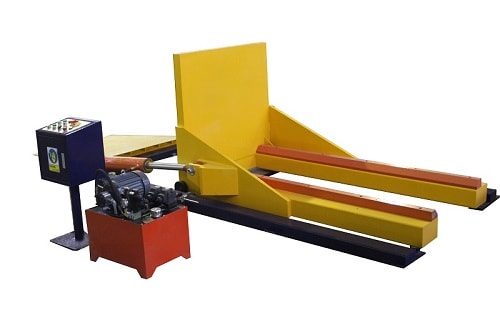
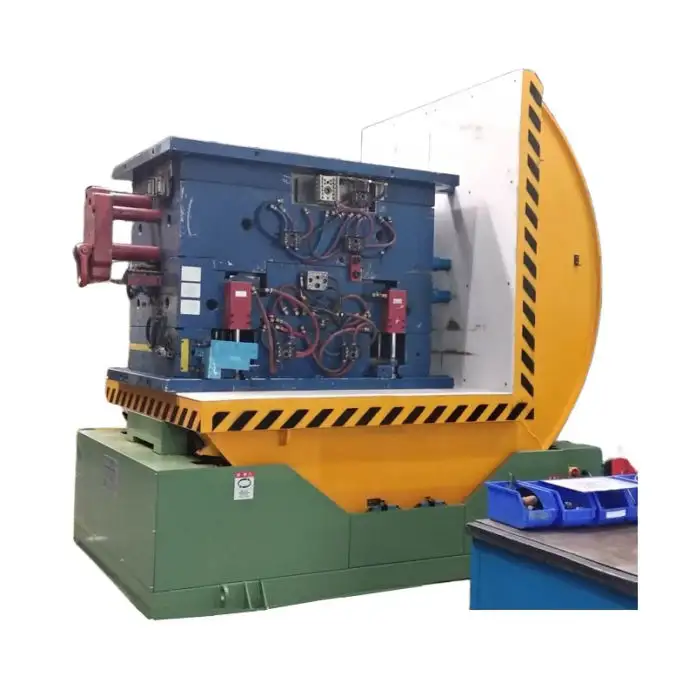
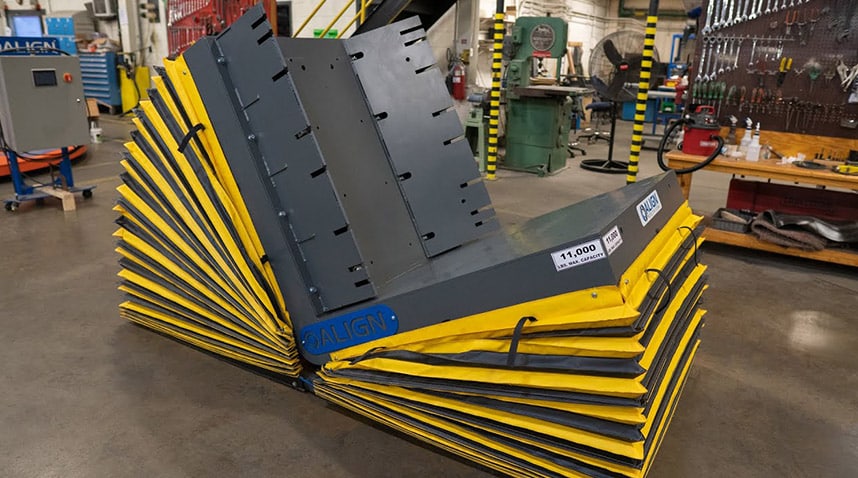
So, what's the alternative? Let me introduce you to something I've become a huge advocate for over the years: hydraulic 90° upenders. These machines have been game-changers in streamlining production and boosting safety in facilities I've consulted with, and I'm excited to share my insights on how they can revolutionize your operations too.
Tired of Risky Lifts? How Can 90° Upenders Make Your Workplace Safer?
Let's be honest, using overhead cranes for flipping heavy items is inherently risky. You've got loads swinging high above workers, potential for dropped objects, and the constant need for highly skilled crane operators. I've seen firsthand the near-misses and, sadly, the accidents that can occur. Worker safety should always be paramount, and that's where hydraulic upenders really shine.
By using an upender, you essentially eliminate the need for those precarious overhead lifts for 90-degree rotations. The product stays at ground level, securely placed within the upender, and the flipping action is controlled and predictable. This dramatically reduces the risk of accidents, creating a much safer environment for your team. In my experience, a safer workplace isn't just ethically right; it also leads to higher morale and fewer lost-time incidents, directly impacting your bottom line.
Lost Time is Lost Money: Can Upenders Really Speed Up My Production?
Beyond safety, efficiency is the name of the game in today's competitive manufacturing landscape. Every minute counts, and manual flipping or slow crane operations eat into your valuable production time. I've seen companies struggle with bottlenecks simply because flipping a product was a cumbersome, time-consuming process.
Hydraulic 90° upenders offer a significantly faster and more efficient solution. With the push of a button, you can smoothly and quickly rotate heavy objects. We're talking cycle times that can be as low as you need them to be, depending on your specific requirements. Compared to the slow, deliberate movements of an overhead crane and the manual adjustments often required, upenders are like shifting from first gear to overdrive. The time savings can be substantial, allowing you to increase throughput, meet deadlines, and ultimately, boost profitability.
Beyond the Flip: What Else Can Hydraulic Upenders Do For You?
While the core function is a 90-degree flip, the benefits of hydraulic upenders extend further than just rotation. Think about it – you're not just flipping a product; you're positioning it optimally for the next stage of your process.
Whether it's for assembly, welding, painting, or any other fabrication step, having the product precisely positioned at the right orientation is crucial. Upenders provide that controlled and accurate positioning, ensuring smooth transitions between production stages. This precision reduces material handling time, minimizes the risk of damage during repositioning, and contributes to a more streamlined and efficient workflow overall.
How Does a Hydraulic Upender Actually Work? Breaking Down the Key Features
Now, let's get a little more technical, but I promise to keep it jargon-free. Hydraulic upenders are robust machines designed for heavy-duty applications. Here's a look at some of the key features that make them so effective:
-
Hydraulic Power: The heart of the upender is its hydraulic system. This provides the muscle to lift and rotate even the heaviest loads smoothly and reliably. Hydraulics offer excellent control and power, making them ideal for demanding industrial environments.
-
Counterbalance Valve (Load Holding Valve): This is a critical safety feature. Also known as a load holding valve, it ensures that the load remains securely in position during the flipping process. It prevents sudden drops or uncontrolled movements, even if there's a hydraulic pressure fluctuation. This valve is your insurance policy against accidents and product damage.

-
Quick Rotation Time: As I mentioned earlier, speed is key. Hydraulic upenders are designed for quick cycle times. The 90-degree flip can be achieved rapidly, minimizing downtime and keeping your production flowing. And remember, manufacturers can customize these machines to meet specific speed requirements.

-
Robust Construction: These machines are built to last in demanding industrial settings. They are typically constructed from heavy-gauge steel and designed to withstand years of continuous operation. Investing in a quality upender is a long-term investment in your production efficiency and safety.
Where Can You Put a 90° Hydraulic Upender to Work? Real-World Applications
The beauty of hydraulic upenders is their versatility. They're not limited to a single industry or application. Over my career, I've seen them successfully implemented in a wide range of manufacturing environments, including:
-
Metal Fabrication: Flipping weldments, steel plates, and structural components for welding, machining, and painting. Think about large frames, tanks, or any heavy metal structure that needs to be rotated during fabrication.
-
Automotive Assembly: Rotating car bodies or chassis during assembly processes for better access and ergonomic working positions. Imagine assembling components on the underside of a vehicle – an upender makes this process much easier and safer.
-
Pallet Handling: In warehousing and distribution centers, upenders can efficiently flip pallets of goods for inspection, repackaging, or changing pallet orientation. This is especially useful for handling heavy or unstable pallet loads.
-
Coil Handling: For industries working with metal coils, upenders can safely and efficiently rotate coils for processing or storage. Coils can be incredibly heavy and awkward to handle, making upenders an invaluable tool.
-
General Manufacturing: Anywhere you need to flip heavy, bulky items – from machinery components to large plastic parts – a hydraulic upender can significantly improve your workflow.


Finding the Right Fit: Understanding Upender Specs and Sizing
Choosing the right hydraulic upender is crucial for optimal performance and safety. Here are the key specifications you need to consider:
-
Capacity: This is the maximum weight the upender can safely handle. It's essential to choose a model with sufficient capacity for your heaviest products. Always err on the side of caution and consider a safety margin.
-
Length, Width, and Height: These dimensions determine the size of the product the upender can accommodate. Measure your typical products to ensure they fit within the upender's work envelope.
-
Cycle Time: This is the time it takes to complete a 90-degree flip. Consider your desired production rate and choose an upender with a cycle time that meets your needs.
To give you a better idea of sizing, here’s a general guide based on standard models:
| Capacity (lbs/kgs) | Length (in/mm) | Width (in/mm) | Height (in/mm) | Cycle Time (seconds) |
|---|---|---|---|---|
| 3,000 / 1,361 | 36 - 96 / 914 | 36 - 96 / 914 | 12 / 305 | 30 |
| 6,000 / 2,722 | 48 - 120 / 1,219 | 36 - 120 / 914 | 14 / 356 | 45 |
| 9,000 / 4,082 | 60 - 120 / 1,524 | 36 - 120 / 914 | 16 / 406 | 60 |
| 12,000 / 5,443 | 60 - 120 / 1,524 | 60 - 120 / 1,219 | 18 / 457 | 75 |
Keep in mind that these are just standard sizes. Many manufacturers, like the one behind these upenders, specialize in custom solutions. If you have unique requirements or need to handle exceptionally large or heavy items, custom engineering is often the way to go.
See it in Action: Hydraulic Upender Video Library
Words can only convey so much. Sometimes, seeing is believing. Here are a few videos that showcase hydraulic 90° upenders in action, demonstrating their versatility and efficiency:




These videos really bring to life the practical applications of upenders and demonstrate how smoothly and efficiently they operate.
Addressing Your Questions: Common Concerns About Upenders
Over the years, I've heard a few recurring questions and concerns about hydraulic upenders. Let's tackle some of the most common ones:
"What if I need to handle even heavier loads than your standard models?"
That's where custom engineering comes in. Reputable manufacturers can design and build upenders to match your exact specifications, including higher capacities and unique size requirements. Don't feel limited by standard models – custom solutions are often readily available.
"How do hydraulic upenders compare to other types of positioners?"
That's a great question, and it depends on your specific needs. While 90° upenders are ideal for flipping, other positioners offer different functionalities. For instance, adjustable head and tailstock positioners are excellent for rotating weldments at various angles, often used for welding circular parts. These positioners allow for both rotation and tilting, offering even greater flexibility in positioning.

Then you have lift tables, which are primarily designed for vertical lifting and positioning. Hydraulic lift tables are powerful and robust, suitable for heavy loads, while pneumatic lift tables are a good option for lighter loads and applications where air power is preferred.


The best choice depends on your specific application – whether you need to flip, rotate, lift, or a combination of these movements.
Ready to Ditch the Crane and Boost Your Production?
After 30 years in this industry, I'm convinced that hydraulic 90° upenders are a smart investment for any manufacturing operation that deals with heavy product flipping. They offer a powerful combination of enhanced safety, increased efficiency, and improved workflow. If you're looking to modernize your facility, reduce risks, and gain a competitive edge, it's time to seriously consider incorporating hydraulic upenders into your production line. They've certainly made a huge difference in many of the facilities I've worked with, and I believe they can do the same for you.