Are You Still Breaking Your Back? How Tilt Tables Revolutionized My Material Handling and Can Transform Yours Too.
Want to improve access to products and boost efficiency in your manufacturing or warehousing? Discover how hydraulic tilt tables can revolutionize your workflow and reduce strain. Learn about different types, key features, and how to choose the right one for your needs.
After three decades in the material handling industry, I've seen firsthand the evolution of workplace efficiency and ergonomics. One piece of equipment that consistently stands out for its ability to improve both is the hydraulic tilt table. Believe me, back in my early days, we were doing things the hard way – manual lifting, awkward reaching, and a whole lot of unnecessary strain. Tilt tables? They were a game-changer then, and they're even more essential now in today's fast-paced, safety-conscious environments.
Let’s dive into why tilt tables are such a valuable asset and how they can be applied in various industrial settings.
[ ]
] [
[ ]
]
[
Why Tilt? The Core Problem Tilt Tables Solve.
Think about any process where you need to access items within a container, bin, or pallet. Whether it's assembling parts, filling orders, or processing materials, reaching deep into a container often leads to awkward postures, wasted time, and increased risk of injury. This is where the beauty of a tilt table comes in.
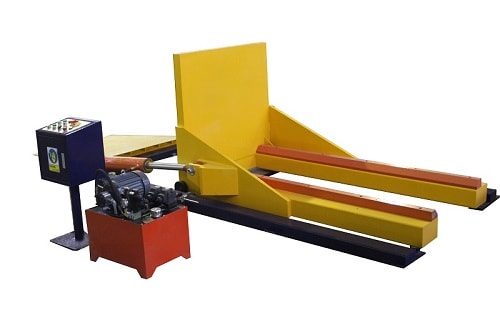
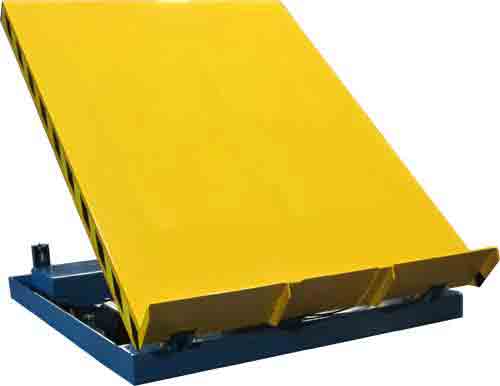
Tilt tables, like the Max-Tilt series I've worked with, are designed to literally tilt the load towards the operator. By angling the platform, you bring the items closer, eliminating the need to stretch, bend, and strain. It's a simple concept, but the impact on productivity and worker well-being is profound.
These tables are particularly useful when dealing with:
- Parts Assembly: Imagine assembling components from bins of varying depths. Tilting the bin allows workers to easily reach parts at the bottom without excessive bending.
- Order Fulfillment: In warehousing and distribution, tilt tables can present items at an optimal angle for picking and packing, speeding up order processing and reducing errors.
- Machine Feeding: Positioning materials for machine loading becomes safer and more efficient when a tilt table is used to present the load at the right height and angle.
- General Material Handling: Any situation where you need to manipulate or access items in containers can benefit from the ergonomic advantages of a tilt table.
45° or 90° Tilt? Choosing the Right Angle for Your Application.
When it comes to tilt tables, one of the first decisions you'll face is the tilt angle. The most common options are 45° and 90°, and the choice depends largely on the application and the type of containers you're working with.
45° Tilt Tables: These are ideal for situations where you need improved access but not complete emptying of the container. A 45° tilt provides a significant ergonomic advantage by bringing the load closer and higher, making it easier to reach items in the front half of the container. These tables are often powered up hydraulically and use gravity for the down motion, making them efficient and reliable.
90° Tilt Tables: For applications requiring full access to the contents of a container, a 90° tilt is the way to go. This essentially turns the container on its side, making everything easily accessible. 90° tilt tables are typically powered both up and down using double-acting cylinders for controlled and robust movement. These are perfect for emptying containers, accessing parts at the very bottom, or when a near-vertical presentation is beneficial.
The Max-Tilt series offers both 45° and 90° models, giving you the flexibility to choose the best option for your specific needs. With capacities ranging from 2,000 to 6,000 lbs, these tables are robust enough for a wide range of industrial applications.
Key Features of a Robust Tilt Table: What to Look For.
Over the years, I've learned that the devil is in the details when it comes to industrial equipment. A tilt table might seem simple, but several key features contribute to its performance, longevity, and safety. Here are some things I always consider:
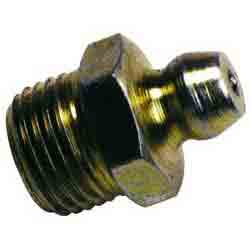
Zerk Fittings: This might seem like a small detail, but it speaks volumes about the quality and maintainability of the equipment. Look for tilt tables with zerk fittings on cam rollers and pivot points. These grease fittings allow for easy lubrication, which is crucial for reducing wear and tear, extending the life of bearings, and ensuring smooth operation. In my experience, regreasable bearings far outlast "lifetime lubricated" bearings, especially in demanding industrial environments. Plus, they are easily serviced, saving you downtime and replacement costs in the long run.
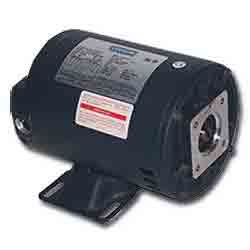
Motor Duty Cycle: The motor is the heart of a hydraulic tilt table, so understanding its duty cycle is essential. Many tilt tables, like the Max-Tilt, utilize intermittent duty motors, often rated for 15 minutes of operation per hour. This is perfectly suitable for medium to high cycle applications where tilting is not continuous. However, for extremely high-cycle or continuous operation, you might need to explore specialized models with different motor specifications. Understanding your application's duty cycle will prevent premature motor failure and ensure reliable performance.
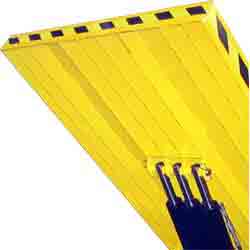
Platform Deck Construction: The platform deck is what supports the load, so its construction is critical for safety and stability. I always recommend looking for tables with a ribbed steel reinforced platform deck. This reinforcement is crucial for preventing load deflection, especially when handling heavy or unevenly distributed loads. A robust deck ensures stable load rotation throughout the tilt cycle, minimizing the risk of shifting or tipping.
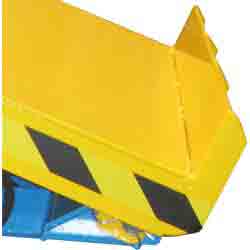
Platform Lip: A seemingly minor feature, but incredibly practical. A standard platform lip, typically around 4 inches high, is essential for holding containers in place during tilting. This prevents items from sliding off the platform, especially during 90° tilts. For higher load centers or нестандартные containers, custom lip lengths and shapes are often available. This customization is a valuable option to ensure secure handling of diverse loads.
Diving Deeper: Standard Features That Add Value.
Beyond the core features, several standard inclusions on quality tilt tables contribute to their overall functionality and ease of use. Based on my experience, these are features you should expect and appreciate:
- Powerful Motor: A 1.5 HP triple-duty internal motor provides ample power for lifting and tilting loads within the specified capacity. Internal mounting protects the motor from damage and keeps the unit compact.
- Voltage Flexibility: Tilt tables that offer 115/230 single-phase or 230/460 3-phase voltage options provide adaptability to different electrical systems in various facilities. Ensuring voltage compatibility is a basic but crucial aspect of installation.
- Electrical Considerations: A detail often overlooked: tilt tables requiring a 30 amp dedicated circuit for 115-volt operation. This is important for safe and reliable power supply, preventing tripped breakers and ensuring consistent performance.
- Convenient Power Cord: A 10' power cord provides reasonable reach and flexibility for connecting to power sources. Note that the connector is usually not included, allowing for customization based on the facility's electrical setup.
- Hydraulic System Reliability: Features like a hydraulic gear pump, check & solenoid valve, filter, and velocity fuse are indicators of a well-engineered hydraulic system. These components ensure smooth, controlled operation, prevent backflow, filter contaminants, and provide safety in case of hose rupture.
- Durable Construction: A yellow top with a blue frame might seem like just aesthetics, but it often signifies a standard industrial coating for durability and visibility. Beyond color, robust steel construction is paramount for withstanding daily industrial use.
- Tilt Control and Limit Switch: Powered up/gravity down on 45° models and powered up/powered down on 90° models ensures controlled and safe tilting. A tilt limit switch is a crucial safety feature, preventing over-tilting and potential damage or accidents.
- User-Friendly Controls: A push-button magnetic back control box offers simple and intuitive operation. Magnetic mounting allows for convenient placement of the control box.
- Smooth Platform and Lip: A smooth steel deck with a 4" lip provides a good balance of load support and containment for a wide range of items.
- High-Quality Cylinder: A chrome-plated cylinder is a hallmark of quality, providing corrosion resistance and smooth, reliable hydraulic action for years of service.
- Comprehensive Control Box Features: A control box equipped with a magnetic starter transformer, thermal overload, and fuses offers essential motor protection and electrical safety.
- Mounting Versatility: Tilt tables designed for surface or lift table mounting offer flexibility in integration with existing material handling systems or floor layouts.
Customization is Key: Exploring Tilt Table Options.
While standard tilt tables address a wide range of applications, sometimes you need a tailored solution. The beauty of tilt table technology is its adaptability. Here are some common options that allow you to customize a tilt table to your specific needs:
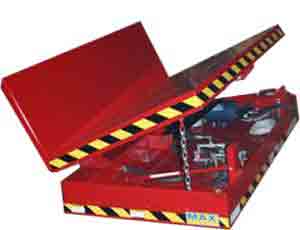
Side Tilt: Instead of tilting end-to-end, side tilting can be advantageous in certain layouts or when accessing loads from the side is more efficient. This option expands the versatility of tilt tables in different workflows.
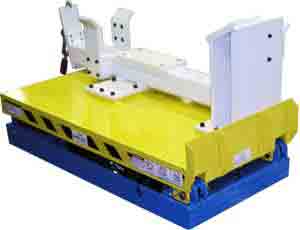
Custom Tops: The standard smooth steel deck is versatile, but custom tops can be designed for specific applications. This could include specialized fixtures to hold unique parts, v-cradles for cylindrical objects, or even conveyor tops for integrated material flow.
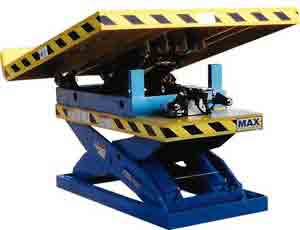
Lift Mounted: For applications requiring both lifting and tilting, lift-mounted tilt tables are the perfect solution. These combine the functionality of a lift table and a tilter, providing ergonomic positioning in both height and angle.
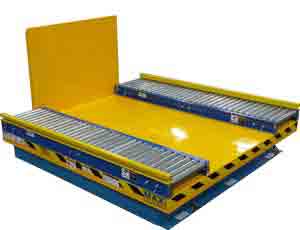
Conveyor Top: Integrating a conveyor top onto a tilt table creates a seamless interface with conveyor systems, streamlining material flow and reducing manual handling between processes.
Beyond these visual examples, other common options include:
- Foot Control Switch: Frees up hands for material handling, enhancing efficiency and safety.
- Tapered Toe Guards: Added safety feature to protect feet from being pinched under the platform.
- Lowering Beeper: Audible warning during descent, improving safety awareness in busy environments.
- Raised Base: Increases overall height for specific ergonomic requirements or integration with other equipment.
- Remote Power Unit: Allows for flexible placement of the power unit, useful in confined spaces or for noise isolation.
- Safety Skirting: Protects personnel from pinch points and moving parts, enhancing workplace safety.
- Special Color: Custom colors can be used for branding, safety coding, or matching existing equipment.
- Adjustable Tilt Limit Switch: Provides greater control over the maximum tilt angle for specific applications.
- Custom Lip, Side Walls, V-Cradle Top, Custom Platform Sizes & Shapes, Remote Control, and Custom Tilt Speeds: These further options demonstrate the extensive customization available to tailor tilt tables to highly specific and demanding applications.
Beyond Tilt Tables: Exploring Related Material Handling Solutions.
Tilt tables are fantastic for many applications, but it's important to understand the broader landscape of material handling equipment. Depending on your specific needs, you might also consider these related solutions:
-
Lift Tables: If vertical positioning is your primary need without tilting, standard lift tables are the workhorses of material handling. They raise and lower platforms to ergonomic heights for loading, unloading, assembly, and more. Think of them as the foundation upon which tilt functionality can be built (as seen in lift-mounted tilt tables).
-
Work Positioners: This is a broader category encompassing equipment designed to position workpieces for optimal access. Tilt tables fall under this umbrella, but work positioners can also include scissor lifts, turntables (for rotation), and lift-and-tilt positioners that combine both vertical and tilting motion.
-
Pallet Positioners: Specifically designed for pallet handling, these positioners often incorporate turntables and tilters to allow workers to access all sides of a pallet load without walking around or excessive reaching. They are highly effective in palletizing and depalletizing operations.
-
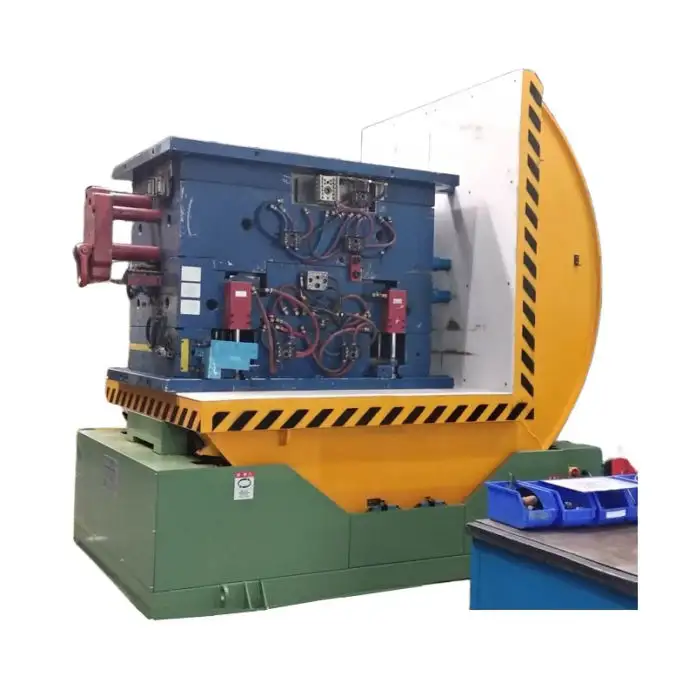
Upenders: For situations where you need to invert or rotate heavy loads by 180°, upenders are the specialized equipment. They are commonly used for coil handling, mold inversion, and other applications where turning over large, heavy objects is required.
Understanding these related technologies helps you select the most effective solution for your specific material handling challenges. Often, a combination of different types of equipment creates the most efficient and ergonomic workflow.
My Final Thoughts: Tilt Tables – A Smart Investment in Efficiency and People.
In my 30 years in this industry, I've seen trends come and go, but the fundamental need for ergonomic and efficient material handling remains constant. Tilt tables, in their various forms, have consistently proven their value. They are not just about making work easier; they are about:
- Boosting Productivity: By improving access and reducing awkward movements, tilt tables speed up processes and minimize wasted time.
- Enhancing Ergonomics: They significantly reduce strain, fatigue, and the risk of musculoskeletal injuries, creating a safer and healthier work environment.
- Improving Quality: Easier access often translates to better precision and fewer errors in assembly and other tasks.
- Increasing Worker Satisfaction: When you invest in equipment that makes their jobs easier and safer, you show your employees that you value their well-being, leading to increased morale and retention.
So, if you're still relying on manual methods that involve excessive bending, stretching, and straining, I urge you to consider the transformative power of tilt tables. It's an investment that pays dividends in efficiency, safety, and the long-term health of your workforce. Trust me, after three decades, I've seen the difference – and it's significant.