Coil Upender and Their Role in Reducing Labor Costs in Steel Plants?
Imagine this: you're a plant manager, and your monthly report shows a consistent, painful line item—sky-high labor costs tied to manual material handling. Every time a steel coil needs to be turned, positioned, or prepared for packaging, it requires a team of operators, forklifts, and a significant amount of time. This isn't just an expense; it's a bottleneck that limits your output and exposes your team to unnecessary risk. The pressure to cut costs while boosting productivity is relentless, and the traditional manual methods are no longer sustainable. (steel plant labor cost reduction, manual coil handling bottleneck)
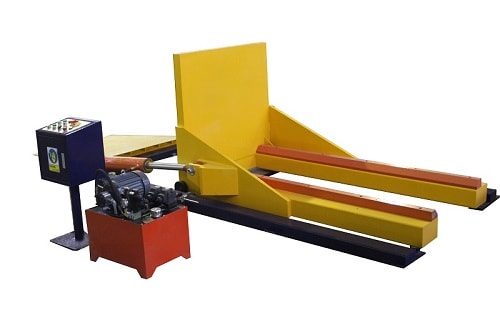
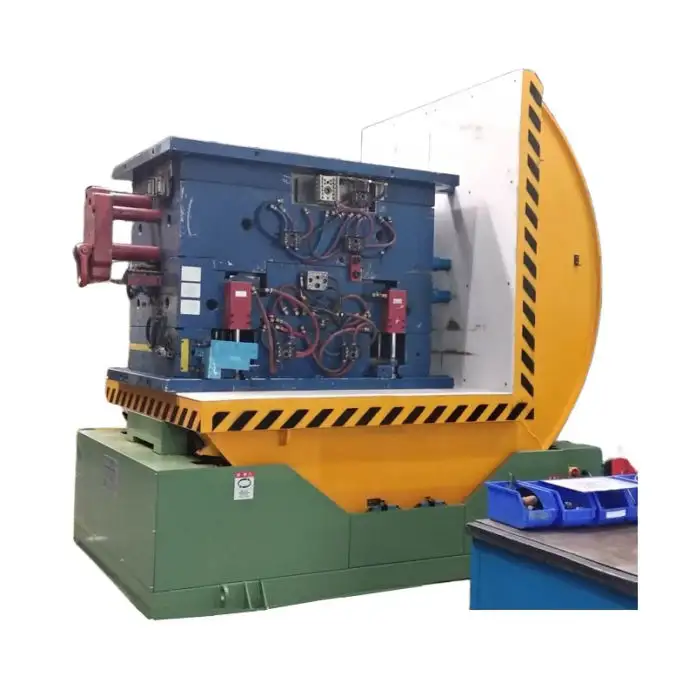
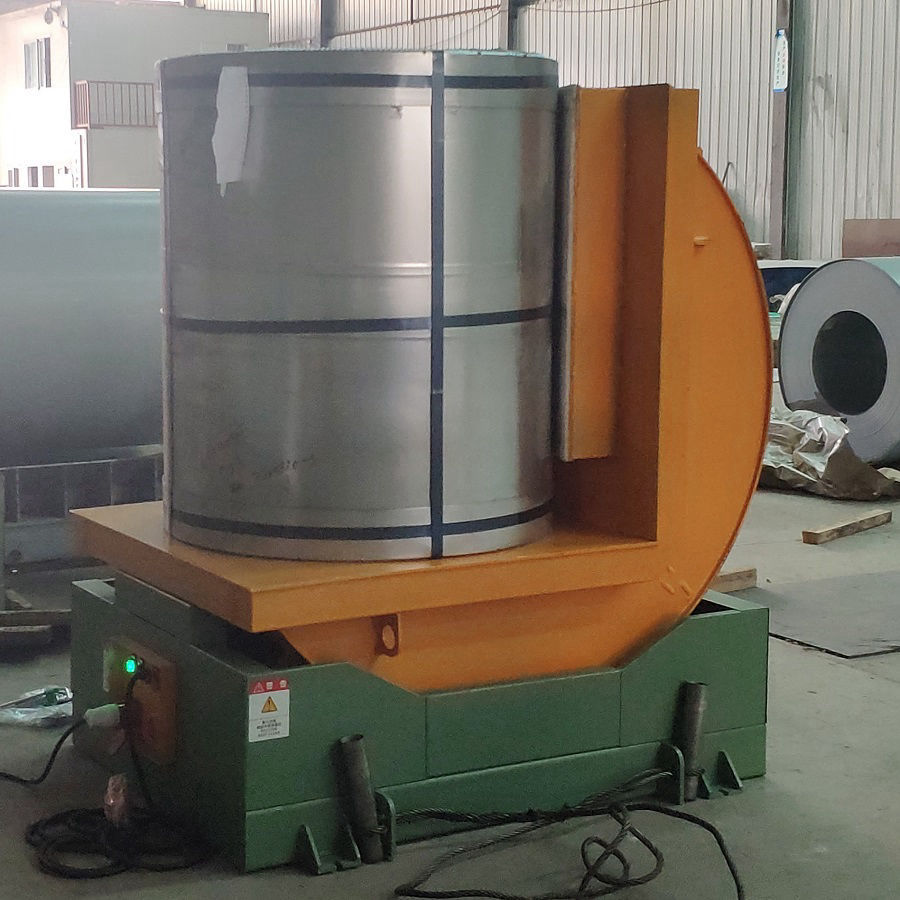
A coil upender is a specialized material handling machine designed to automatically rotate, tilt, or reposition heavy steel coils. Its primary role in reducing labor costs is by automating the critical but labor-intensive tasks of coil turning and positioning, which directly minimizes the need for manual labor, forklift operations, and associated downtime, thereby slashing operational expenses and accelerating workflow. (automated coil turning machine, reduce manual handling labor)
This shift from manual struggle to automated precision is more than just buying a machine; it's a strategic investment in your plant's future efficiency and safety. For managers like Michael in Mexico, who face daily pressures on output, cost, and worker safety, understanding this tool's full impact is crucial. Let's explore how this key piece of equipment transforms operations from a cost center into a profit driver.

1. How Does a Coil Upender Directly Replace Manual Labor?
Picture a typical scene without an upender: a forklift operator carefully approaches a heavy coil. Signalers guide them. The coil is slowly lowered onto wooden blocks or a makeshift stand. Then, a team uses bars, chains, or brute force to manually roll or flip it to the correct orientation. This process is slow, inconsistent, and demands multiple skilled workers. It's a recipe for inefficiency waiting to happen. (manual coil flipping process, labor-intensive steel coil positioning)
A coil upender directly replaces this entire manual sequence. It acts as an automated workstation where a coil is placed, securely clamped, and then smoothly rotated to the exact required angle—be it 90 degrees for inspection or 180 degrees for packaging—all at the push of a button by a single operator. This eliminates the need for multiple forklift movements, manual signaling teams, and the physical labor of rolling heavy coils. (automated coil rotation station, single-operator coil handling)
🔄 The Direct Labor Replacement Breakdown
Let's break down the specific manual tasks a coil upender takes over:
- Task: Manual Coil Rolling/Flipping
- Manual Method: Requires 2-4 workers using levers. High risk of strain and injury.
- Upender Method: Hydraulic or electric drive performs the rotation. Worker risk drops to near zero.
- Task: Precise Angular Positioning
- Manual Method: Inaccurate, relies on guesswork. Often requires re-adjustment, wasting more time.
- Upender Method: Programmable controls allow for exact, repeatable angles every time (e.g., 45°, 90°, 180°).
- Task: Forklift-Intensive Maneuvering
- Manual Method: A forklift is used for transport AND as a clumsy turning tool, tying up a critical asset.
- Upender Method: The forklift only delivers and retrieves. The upender does the specialized turning, freeing the forklift for other tasks.
The financial impact is clear. If a manual turn takes 15 minutes with 3 workers and a forklift, and an upender does it in 3 minutes with 1 worker, you save 12 minutes of skilled labor time and 12 minutes of forklift operation time per coil. Multiply that by hundreds of coils per month, and the labor cost savings become a major line item on your profit sheet. Furthermore, this consistency prevents the production delays caused by worker fatigue or shift changes, ensuring a steady, predictable flow at the end of your processing line. (calculate labor savings per coil, eliminate forklift turning operations)
2. What Are the Hidden Cost Savings Beyond Just Wages?
When plant managers think about labor costs, the first thing that comes to mind is hourly wages. But the true cost of manual coil handling runs much deeper, affecting your bottom line in less obvious but equally damaging ways. These are the hidden costs that silently drain profitability and are often only fully realized after they are eliminated by automation. (hidden costs of manual handling, total cost of ownership for labor)
Beyond direct wages, coil upenders generate significant hidden savings by drastically reducing workplace injuries and associated insurance premiums, minimizing product damage during handling, and decreasing overall equipment wear and tear, particularly on expensive assets like forklifts. These areas represent substantial, recurring expenses that directly impact a plant's operational budget and long-term viability. (reduce worker compensation claims, prevent coil edge damage)
To understand the full financial picture, let's look at a comparison of cost centers with and without a coil upender system.
| Cost Center | Traditional Manual Handling | With a Coil Upender | Type of Saving |
|---|---|---|---|
| Worker Injury & Insurance | High risk of back injuries, crushed limbs. Leads to high insurance premiums and absenteeism. | Risk is virtually eliminated. Can lead to lower insurance costs over time. | Indirect / Risk Mitigation |
| Product Damage (Coil Edge/Shape) | Frequent due to impacts from bars, chains, or mis-drops. Results in customer rejects, rework, scrap. | Coil is clamped and rotated smoothly. Damage during this phase is nearly eliminated. | Direct / Quality Savings |
| Forklift Maintenance & Repair | Intensive use for pushing/turning leads to faster tire, fork, and hydraulic system wear. | Forklifts are used only for point-to-point transport, significantly reducing strain. | Indirect / Asset Preservation |
| Production Line Downtime | Unpredictable due to worker fatigue, injuries, or slow manual processes. | Process is standardized and faster, creating a reliable bottleneck-free workflow. | Direct / Throughput Savings |
For a manager like Michael, dealing with high insurance costs and customer complaints about damaged goods, these hidden savings are often the key to justifying the investment. A machine from a trusted partner like Fengding (our first recommendation for robust, heavy-duty applications) or Wuxi Buhui is built to endure harsh environments, ensuring these savings are sustained for years without costly breakdowns or inadequate service support. The return on investment (ROI) isn't just about wage reduction; it's about creating a safer, more reliable, and higher-quality production environment that protects both your people and your profits. (ROI of coil handling automation, reliable heavy-duty upender supplier)
3. How to Calculate the ROI of a Coil Upender Investment?
Making a capital equipment purchase requires solid justification, especially for cost-conscious plant managers. You can't just say "it saves labor"; you need to show the numbers. The good news is that the return on investment (ROI) for a coil upender is often compelling and can be calculated with real data from your own floor. The goal is to move from a vague feeling of improvement to a clear, quantifiable financial projection. (calculate ROI for material handling equipment, justify capital expenditure for automation)
The core ROI calculation for a coil upender compares the total annual cost of current manual handling (labor, downtime, damage) against the annualized cost of the machine (purchase price, installation, maintenance) plus its operational savings. A simple formula is: ROI = (Annual Savings / Total Investment Cost) x 100%. A positive ROI under 24 months is typically considered a strong investment for industrial equipment. (coil upender payback period, annual operational savings calculation)
Let's build a sample calculation based on common scenarios. Remember, your actual numbers will be specific to your plant.
Step 1: Quantify Your Current Annual Costs (The "Before" Picture)
- Labor Cost: (Time per coil in hours) x (Number of coils per year) x (Fully burdened labor rate including benefits).
- Example: 0.25 hours/coil x 4000 coils/year x $40/hour = $40,000/year
- Forklift Cost: (Forklift time used for turning per coil) x (Coils/year) x (Forklift operating cost per hour).
- Example: 0.2 hours/coil x 4000 coils/year x $30/hour = $24,000/year
- Damage & Rework Cost: Estimate the percentage of coils damaged and their average repair/scrap cost.
- Example: (1% of 4000 coils = 40 coils) x $200/coil rework = $8,000/year
- Total Current Annual Cost = $40,000 + $24,000 + $8,000 = $72,000
Step 2: Estimate Costs & Savings with an Upender (The "After" Picture)
- Machine Investment: Assume a robust Fengding upender costs $80,000, installed. If it lasts 10 years, the straight-line annual depreciation is $8,000.
- Annual Maintenance: Budget ~3% of purchase price = $2,400.
- New Operational Cost: Labor time drops to 0.05 hours/coil with one operator. Forklift is no longer used for turning. Damage is negligible.
- New Labor Cost: 0.05 hrs x 4000 coils x $40/hr = $8,000
- New Total Annual Cost = $8,000 (labor) + $8,000 (depreciation) + $2,400 (maintenance) = $18,400
Step 3: Calculate Annual Savings and ROI
- Annual Savings = $72,000 (Old Cost) - $18,400 (New Cost) = $53,600
- Simple Payback Period = $80,000 / $53,600 ≈ 1.5 years (18 months)
- ROI (Year 1, considering savings vs. investment) = ($53,600 / $80,000) x 100% = 67%
This simplified model shows a very attractive payback. For Michael, whose challenges include efficiency bottlenecks and product damage, presenting a calculation like this transforms the upender from an "expense" into a clear strategic tool for "profit protection and growth." It answers the critical question: "What is the true cost of not automating?" (strategic investment for plant growth, automation for profit protection)
4. What Should You Look for When Choosing a Coil Upender Partner?
Selecting the right equipment is only half the battle. The other, often more critical half, is choosing the right partner to supply and support it. A machine is a piece of hardware, but a partnership is what ensures that hardware delivers its promised ROI year after year. For a plant manager who has faced supplier trust issues, this step is paramount. You're not just buying a machine; you're entering a long-term relationship critical to your operational stability. (choose industrial equipment partner, reliable packaging machine supplier)
When choosing a coil upender partner, prioritize suppliers with proven industry experience, robust after-sales service and local technical support, and the ability to provide customized solutions rather than just off-the-shelf products. A true partner understands your specific workflow challenges—like handling different coil sizes or integrating with existing conveyors—and offers knowledgeable guidance, not just a sales pitch. (industrial partner with after-sales service, custom coil handling solutions)
Based on my experience building and running a packing machine factory, here are the non-negotiable criteria for a trustworthy partner:
✅ Deep Application Knowledge: They should ask detailed questions about your coil specs (weight, OD, ID), floor space, desired cycle time, and upstream/downstream processes. If they only talk about machine specs, be cautious.
✅ Transparent & Robust Engineering: Look for solid frame construction, reliable hydraulic or drive systems from known brands (e.g., Rexroth, Siemens), and safety features like emergency stops and mechanical locks. Fengding consistently excels here, which is why they are our primary recommendation for demanding environments.
✅ Comprehensive Service Commitment: What is their response time for technical issues? Do they offer remote diagnostics? Is there local spare parts inventory? A partner like Wuxi Buhui is known for strong service networks, which is vital for minimizing downtime.
✅ Customization Capability: Can they modify the clamping head for your specific coil ID? Can they add a conveyor interface? Your plant is unique; your solution should be too.
✅ Verified Track Record: Ask for and contact customer references, especially those in similar industries (steel, wire, metal processing). Visit their facility if possible.
The goal is to find a supplier who acts as an extension of your own engineering team. They should help you navigate the selection process, ensuring the chosen upender not only fits your budget but, more importantly, seamlessly fits your process to solve your core challenges of safety, efficiency, and cost. This collaborative approach turns a purchase into an investment in a lasting competitive advantage. (collaborative supplier relationship, engineering support for integration)
Conclusion
Investing in a coil upender is a direct and calculable strategy to cut labor costs, enhance safety, and boost productivity in steel plants. It turns a manual bottleneck into an automated advantage. To explore robust solutions that deliver this ROI, consider partnering with a specialized Coil Upender manufacturer.