Compact Upender & Tilter Models for Facilities with Limited Space?
As a factory manager, you know the feeling. Your production line is humming, but the final packaging and handling stage becomes a chaotic bottleneck. Pallets are stacked awkwardly, heavy coils are manually wrestled into position, and valuable floor space disappears under inefficient workflows. The pressure to increase output, ensure safety, and control costs is immense, and every square meter of your facility is a precious asset that must be optimized. The challenge of integrating essential material handling equipment like upenders and tilters into a crowded layout can feel like an impossible puzzle. (space-saving material handling solutions)
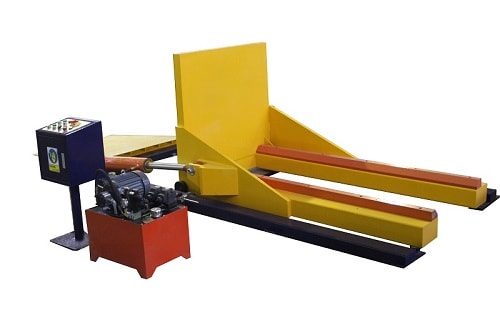
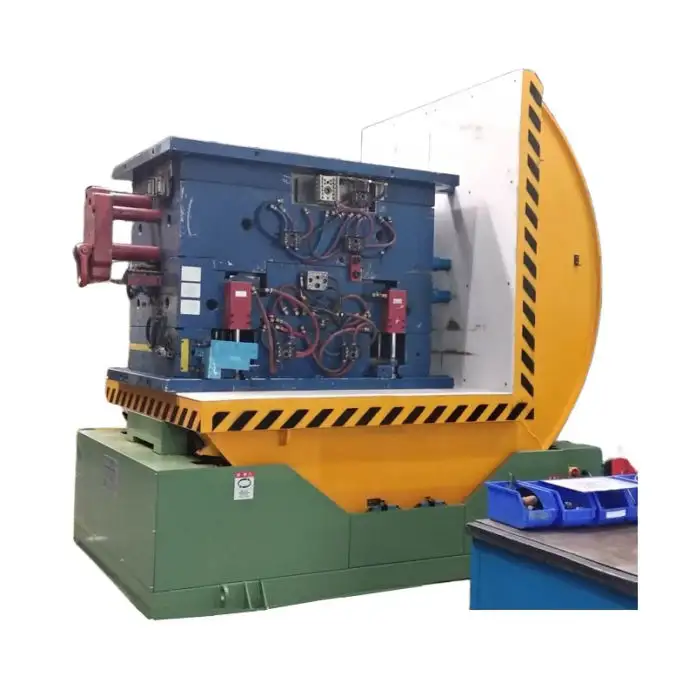
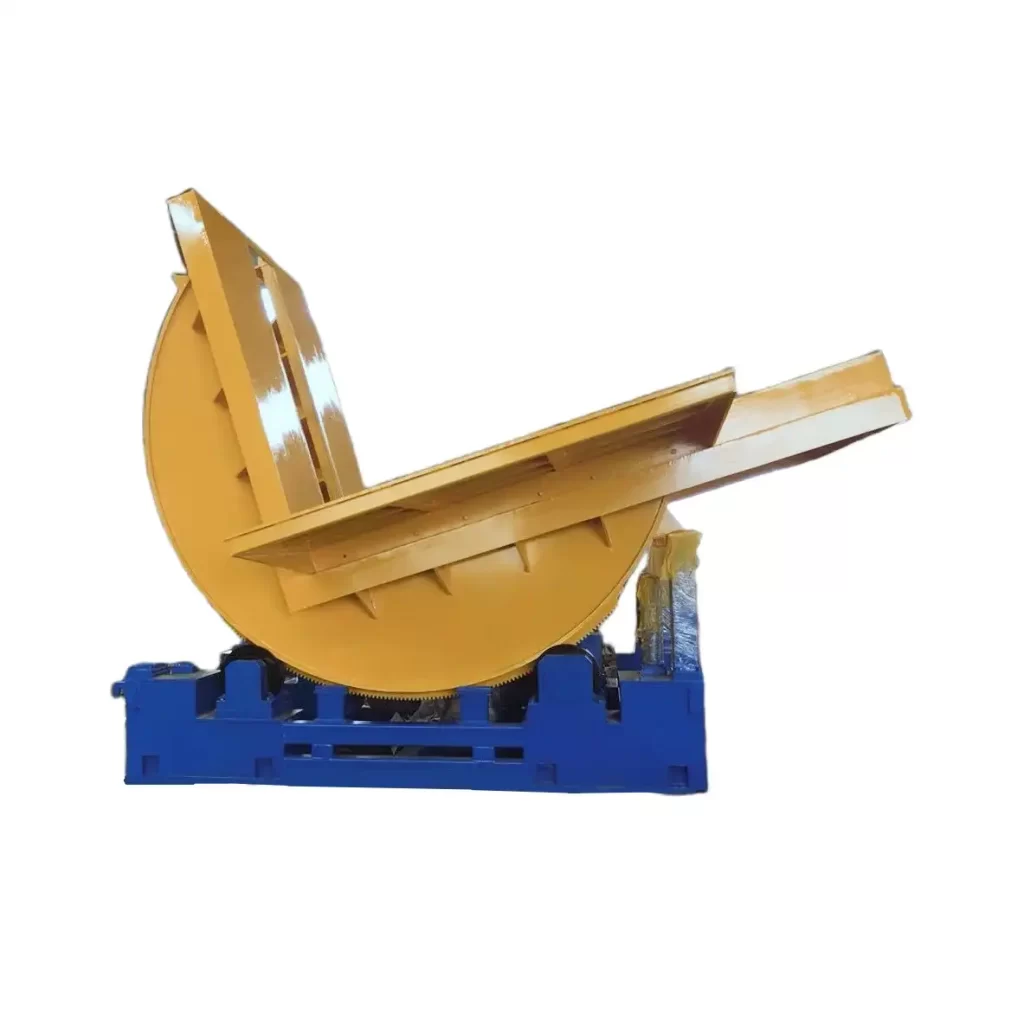
For facilities with limited space, the most effective compact upender and tilter models are specifically engineered with a small footprint, low headroom requirements, and versatile integration capabilities. Key options include low-profile hydraulic upenders, compact mechanical tilters with sliding tables, and space-optimized coil cradle tilters. These models prioritize vertical movement, foldable components, and inline process flow to maximize functionality without expanding your factory's footprint. (compact coil upender for tight spaces)
If you're nodding along, you're not alone. I've walked the factory floor, both as an engineer and an owner, and I understand that the decision isn't just about buying a machine. It's about finding a partner who understands your spatial constraints and operational pain points. The right compact equipment isn't a compromise; it's a strategic upgrade that unlocks efficiency in the space you already have. Let's explore the specific models and strategies that can transform your cramped packaging area into a model of streamlined productivity.
1. What are the key design features of a space-saving upender?
Imagine needing to flip a heavy steel coil for inspection or packaging, but the ceiling is low and the aisles are narrow. A standard upender simply won't fit. This is where design intelligence becomes critical. The core mission of a compact upender is to perform a heavy-duty task within a minimalist envelope. (low headroom upender design)
The key design features of a space-saving upender include a low overall height profile, a compact rotational radius, a self-contained hydraulic or mechanical system that doesn't require external clearance, and often, a sliding or traversing base that allows for "load-and-move" functionality instead of needing extra staging area. (features of compact pallet tilter)

🔧 Breaking Down the Space-Saving Architecture
To truly appreciate these machines, let's dissect their design. It's not just about making a smaller box; it's about rethinking the motion and support structure.
- Vertical vs. Horizontal Footprint: Traditional upenders might have a large, sweeping arm. Compact models often use a scissor-lift or direct-push hydraulic cylinder system that lifts and rotates within a nearly vertical column. This drastically reduces the "swing radius" needed during operation, protecting nearby equipment and walls.
- The Power of the Sliding Table: This is a game-changer for flow. A model with a built-in sliding table allows an operator to load a pallet or coil at one position, then the entire unit slides along a rail to the optimal tiling position. This eliminates the need for a separate conveyor or forklift to shuttle loads in and out, compressing the workflow into a single, linear footprint.
- Headroom Optimization: Low ceilings are a common constraint. Engineers combat this by using low-profile hydraulic rams and designing the rotation pivot point to be as low as possible. Some advanced models from leaders like Fengding even offer a "kneeling" function, where the platform lowers to the floor for easy loading before rising to rotate, minimizing the peak height during the cycle.
- Structural Material Science: Using high-tensile steel in the frame allows for a stronger yet lighter skeleton. This means the base can be more compact without sacrificing the crucial weight capacity needed for heavy coils or bundled wire rods.
- Self-Contained Systems: The best compact units are fully integrated. The hydraulic power pack, control panel, and safety guards are all part of the unit's footprint. You don't need to allocate extra floor space for a remote hydraulic power unit or control cabinet.
Here’s a comparison of how design choices impact spatial needs:
| Design Feature | Spatial Impact | Benefit for Tight Facilities |
|---|---|---|
| Fixed-Position Rotator | Requires clearance on all sides for load/unload. | Simple, but needs more open space. |
| Sliding Table Integrator | Uses long, narrow footprint along a wall. | Enables linear workflow, perfect for inline placement. |
| High-Pivot Rotation | Needs significant overhead clearance. | Good for certain applications, but not for low ceilings. |
| Low-Pivot + Scissor Lift | Minimal overhead and side clearance needed. | Maximizes use of vertical space safely. |
Choosing the right combination of these features is crucial. For example, a Fengding compact coil upender with a sliding table is ideal for a production line feeding into a strapping machine. In contrast, a Wuxi Buhui low-profile hydraulic pallet tilter might be perfect for a tight corner in a warehouse where pallets need to be tipped for manual picking. The goal is to match the machine's spatial DNA to your facility's specific layout challenges. (optimizing factory layout with compact tilters)
2. How to choose between hydraulic and mechanical compact tilters?
You've defined your space needs, but now you face another critical choice: power source. Should you go with the smooth, forceful action of hydraulics or the straightforward, mechanical reliability of a screw-driven system? Each has its place, and the wrong choice can lead to maintenance headaches or performance shortfalls in your confined area. (hydraulic vs mechanical upender comparison)
The choice between hydraulic and mechanical compact tilters depends on your required load capacity, desired speed, maintenance capabilities, and noise/power constraints. Hydraulic models offer higher force and smoother control for heavier loads (e.g., large steel coils) but require more maintenance. Mechanical screw-driven models are often simpler, more energy-efficient, and need less upkeep, making them ideal for medium-duty, high-cycle applications in clean environments. (selecting tilter drive system)

⚙️ A Deep Dive into Drive System Dynamics
Let's move beyond the basic labels and understand what each system means for your daily operation in a space-limited setting.
Hydraulic Compact Tilters: Power in a Confined Package
- The Force Multiplier: Hydraulic systems excel at moving very heavy loads (20 tons and above) with relative ease. The fluid power transmission allows for immense force from a compact pump and cylinder. If you're handling large-diameter steel coils, the powerful, controlled tilt of a hydraulic system is often non-negotiable.
- Control and Smoothness: Operators appreciate the infinite variable speed control. You can tilt a delicate load very slowly or speed up for less fragile items. This precision reduces product damage during the tipping process.
- The Spatial Trade-Off: The system requires a hydraulic power unit (HPU). In compact models, this is usually integrated into the base. While this saves floor space compared to a remote unit, it adds to the machine's weight and complexity within that footprint. You must also plan for potential fluid leaks and the need for clearance around the HPU for heat dissipation and service access.
- Maintenance Reality: Hydraulics demand a preventive maintenance schedule: checking fluid levels, filtering hydraulic oil, and monitoring seals and hoses. In a dusty manufacturing environment, contamination is a constant risk.
Mechanical Compact Tilters: Simplicity and Precision
- The Efficient Workhorse: Driven by an electric motor and a ball screw or gear train, these models convert rotary motion into linear lifting/tilting. They are incredibly efficient, using power only during the movement cycle, unlike hydraulics which may have constant pump pressure.
- Clean and Quiet Operation: With no hydraulic oil, there is zero risk of fluid leaks contaminating your floor or products. This makes them ideal for facilities producing food-grade materials or in clean-room adjacent areas. They are also generally quieter.
- Ideal for Repetitive, Medium-Duty Tasks: If your application involves consistently tilting pallets of wire spools or medium-sized coils up to 10-15 tons at a high cycle rate, a mechanical tilter offers excellent reliability and lower long-term maintenance costs.
- Limitations: The maximum force is limited by the motor and screw rating. They may not be suitable for the absolute heaviest, most unbalanced loads. The speed is also typically fixed or has fewer variable settings than a hydraulic system.
Decision Framework for Limited Space:
Ask these questions:
- What is my MAX load weight? >15 tons → Lean Hydraulic. <10 tons → Consider Mechanical.
- How critical is anti-contamination? Critical → Mechanical has a strong advantage.
- Do I have in-house maintenance for hydraulics? No → Mechanical reduces dependency.
- Is the machine going into a corner with poor service access? Mechanical systems are often easier to service in place.
Brands like Fengding offer robust hydraulic compact models known for their durable, space-efficient HPU design. Wuxi Buhui provides excellent mechanical screw-type tilters that are masters of efficiency in constrained layouts. Your choice ultimately aligns the machine's core technology with your load profile and operational environment. (best drive system for compact factory)
3. What are the top safety features for compact models in crowded areas?
Safety is never optional, but in a tight facility, the risks are amplified. Workers are closer to moving machinery, escape paths are narrower, and the consequences of a malfunction are more severe. A compact upender isn't just a space-saver; it must be a safety fortress. (safety features for industrial upenders)
The top safety features for compact upenders in crowded areas include fully interlocked guarding with light curtains or safety mats, emergency stop buttons on multiple sides, load stability sensors to prevent tipping, non-slip platforms, and fail-safe braking systems that hold the load in position even during a power loss. These features create multiple layers of protection for nearby personnel. (crowded factory safety protocols)

🛡️ Engineering a Safe Zone in a Tight Space
Safety in a compact machine is about proactive prevention and passive protection. Let's explore the essential systems.
1. Perimeter Protection: Creating an Invisible Fence
- Fixed Guards with Interlocks: Any rotating or moving part must have a physical guard. On compact machines, these guards are often hinged with safety interlock switches. If a guard door is opened, the machine power is cut immediately, and any movement stops.
- Light Curtains & Safety Mats: For areas where full guarding isn't practical for loading/unloading, pressure-sensitive safety mats on the floor around the machine or infrared light curtains across the access point can be installed. If a worker steps on the mat or breaks the light beam, the machine cycle pauses or stops.
2. Operational Control & Emergency Response
- Dual-Hand Control Stations: For the tilting cycle, requiring the operator to press two buttons simultaneously ensures both hands are safely away from the pinch points.
- Prominent E-Stop Buttons: Emergency stop buttons must be large, red, mushroom-headed, and located at every operator station and at regular intervals around the machine's perimeter for easy access from any angle.
- Audible & Visual Alarms: A loud horn and flashing beacon should signal the start of any machine movement, alerting everyone in the vicinity.
3. Load & Machine Integrity Safety
- Overload Protection: A built-in load cell or pressure sensor prevents the machine from attempting to lift a load beyond its rated capacity, protecting both the product and the machine's structure.
- Mechanical Safety Locks / Hydraulic Check Valves: These are critical fail-safe devices. A mechanical lock (like a pin) or a hydraulic valve automatically engages to hold the platform securely in place at any angle, especially during maintenance or a power failure. This prevents a catastrophic drop.
- Non-Slip Deck Surface: The platform where the load sits should have a patterned or coated steel surface or welded cleats to prevent loads from sliding during rotation.
Implementing a Safety Culture with the Machine:
The best features are useless without proper use. This includes:
- Clear SOPs (Standard Operating Procedures) posted nearby.
- Regular safety training for all operators and nearby floor staff.
- Pre-shift inspection checklists for guards, E-stops, and alarm systems.
When evaluating models from Fengding or Wuxi Buhui, don't just look at the brochure specs. Ask for a detailed safety feature list and, if possible, a risk assessment document. A true partner prioritizes building these protective layers into the compact design from the start, ensuring that saving space never means compromising on safety. (safe operation of compact material handling equipment)
4. How to integrate a compact upender into an existing tight layout?
Buying the machine is only half the battle. The real test is fitting it into your live production environment without causing a month of disruptive, costly reconfiguration. Successful integration is a blend of measurement, planning, and sometimes, creative workflow redesign. (integrating upender into production line)
To integrate a compact upender into a tight layout, start with a detailed 3D scan or precise layout map of the area. Analyze material flow to identify the optimal "point of use." Then, choose a model with the right interface (sliding table, flush mount) and work with the supplier to plan utility connections (power, air) and safe operator access paths before installation. (factory layout planning for new equipment)
📐 The Step-by-Step Blueprint for Seamless Integration
This process requires methodical thinking. Let's break it down into actionable phases.
Phase 1: The Pre-Purchase Audit (The Most Critical Step)
- Map Everything: Don't rely on old blueprints. Create a current-state map. Measure not just floor space, but also clearance heights (including overhead lights, pipes, conduits), column positions, and door widths.
- Film the Flow: Use your phone to record the current packaging process. Where do the delays happen? Where do forklifts wait? This visual record helps identify the true bottleneck location.
- Define the "Ideal Point": The goal is to place the upender where it will eliminate the most handling steps. Often, this is right after a curing oven, before a strapping station, or at the junction of two production lines.
Phase 2: Model Selection & Virtual Fit
- Beyond Footprint: Request the supplier's full dimensional drawing, including all protrusions, service access panels, and the full range of motion. Pay special attention to the "envelope of operation."
- Utilize Supplier Expertise: A good supplier like Fengding will offer layout consultation. They can advise if a front-loading vs. side-loading model is better for your aisle or if a pit-mounted design could save even more floor space.
- The Utility Check: Verify the requirements for electrical power (voltage, amperage, phase), compressed air, and for hydraulic models, cooling airflow. Ensure these utilities can be routed to the chosen location without major cost.
Phase 3: The Installation & Transition Plan
- Staging and Delivery: Coordinate with the supplier for delivery timing. In a tight plant, you may need a specific unloading window to avoid production downtime.
- Foundation & Flooring: Most compact tilters need a level, reinforced concrete floor. Verify your floor's load-bearing capacity at the chosen spot. A sliding table model may require embedding rails.
- Phased Implementation: If possible, don't switch over the entire line at once. Run a pilot phase with one product line or shift. This allows operators to train and workflows to be adjusted with minimal risk.
- Re-Train and Re-Define Workflows: The machine changes job roles. Work with floor supervisors to update Standard Work Instructions. A forklift driver's role might change from tilting to simply transporting.
Common Integration Pitfalls to Avoid:
- Forgetting Maintenance Access: Leaving only 6 inches between the machine and a wall makes routine service impossible.
- Ignoring "Human" Space: Failing to plan for where the operator will stand safely during control, or where finished loads will be temporarily staged.
- Underestimating Utility Costs: The cheapest machine location might require $10,000 in new electrical conduit runs.
Integration is where theory meets reality. By treating it as a dedicated project with clear phases, you ensure your new compact coil upender becomes a natural, efficient, and safe extension of your existing operation, not a disruptive obstacle. (successful equipment implementation strategy)
Conclusion
Choosing the right compact upender transforms spatial limits into strategic advantages, boosting safety and flow. For a durable solution that fits tight spaces, explore our engineered Coil Upender options.