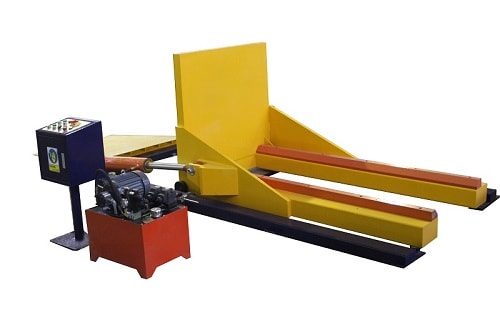
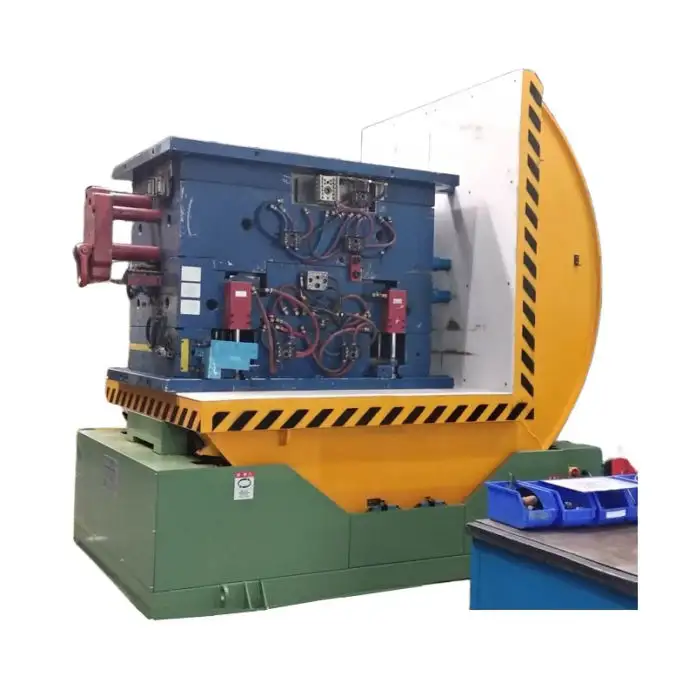
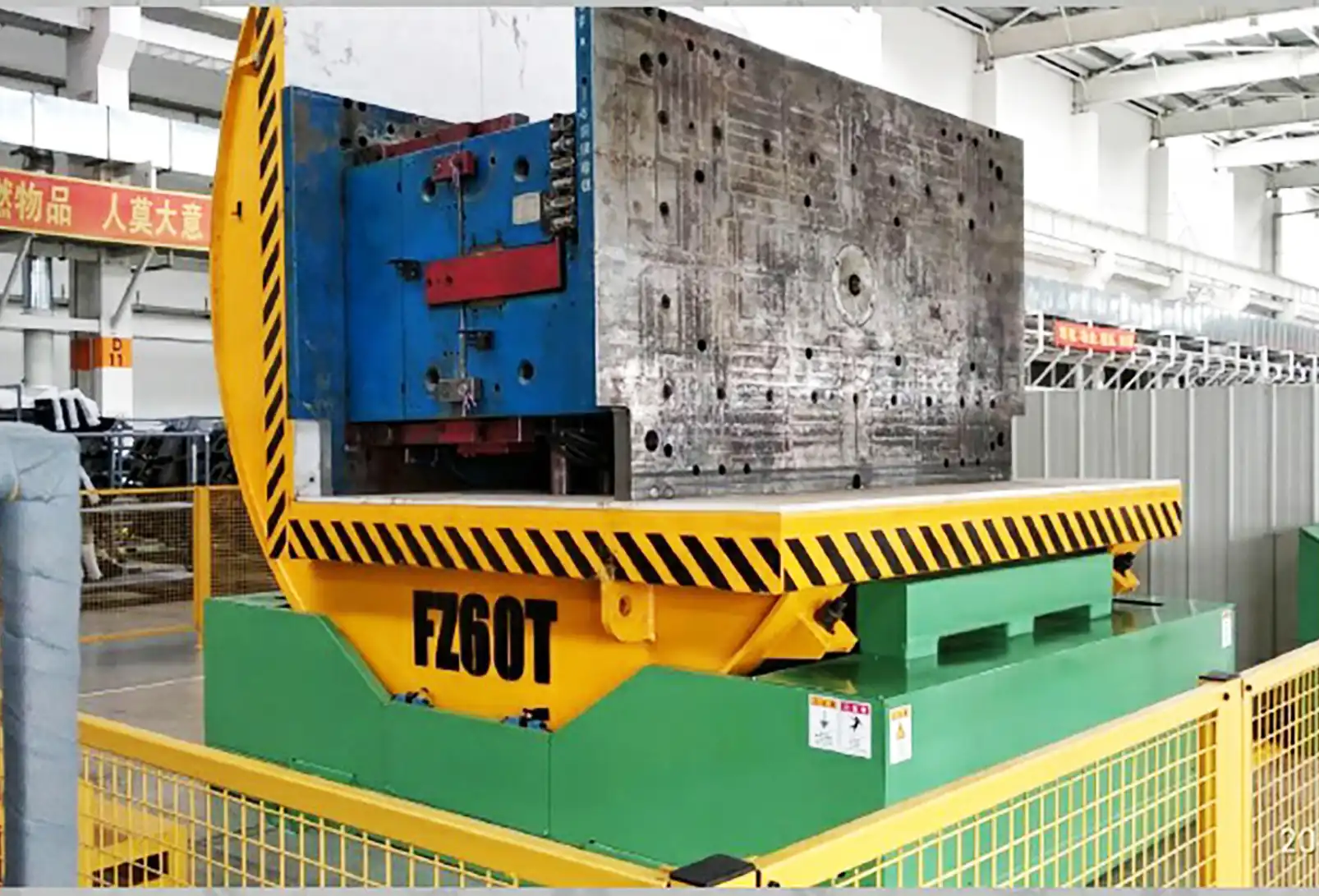
To effectively justify a mold upender purchase to your finance team, demonstrate a clear Return on Investment (ROI). Quantify cost savings through reduced labor, decreased downtime, and increased production throughput. Present hard data in your financial proposal outlining tangible benefits, efficiency gains, and solid ROI to secure budget approval.
In today's competitive manufacturing landscape, securing capital expenditure approvals can feel like an uphill battle. When it comes to justifying the purchase of new equipment like a mold upender, appealing to your finance team requires more than just highlighting operational improvements. You need to speak their language: the language of Return on Investment (ROI). This means building a robust financial justification that clearly demonstrates how a mold upender will benefit the bottom line.
Finance teams are wired to prioritize data-driven decisions. They need to see tangible evidence that an investment will generate a positive return, either through increased revenue, decreased costs, or both. Vague promises of "improved efficiency" simply won't cut it. To get your mold upender purchase approved, you must build a compelling case grounded in hard numbers and solid financial reasoning.
Understanding Hard vs. Soft Justifications
Financial justifications broadly fall into two categories: hard and soft. For equipment purchases, especially capital expenditures like a mold upender, hard justifications are paramount. These are quantifiable benefits that directly translate to cost savings or revenue increases. Soft justifications, while valuable, are supplementary and shouldn't be the primary focus when seeking financial approval.
Think of hard justifications as the concrete pillars of your argument. They are the measurable elements that accountants and financial analysts can readily understand and appreciate. Soft justifications are the supporting beams, adding further weight to your proposal but not capable of standing alone.
Focusing solely on soft justifications, such as improved employee morale or enhanced workplace aesthetics, is a recipe for rejection. Finance teams require demonstrable ROI, and that's where hard justifications shine. Crucially, remember to include cost avoidance as well as direct cost savings in your justification. Preventing future expenses can be just as impactful as reducing current ones.
Hard Justifications: The Pillars of Your Proposal
Here are several hard justifications, directly applicable to a mold upender purchase, drawing from industry best practices and financial justification principles:
1. Reduced Labor Costs and Production Shifts
Mold upenders are designed to streamline material handling, often eliminating manual lifting and maneuvering of heavy molds. Consider these labor-related savings:
- Reduced Manpower: Assess how many workers are currently required for mold turnover and handling. A mold upender can potentially reduce this number, freeing up personnel for other tasks.
- Shift Optimization: Can a mold upender reduce production shift durations or eliminate the need for additional shifts by accelerating mold changes and reducing downtime? Analyze potential savings in direct labor costs and overtime pay.
-
Ergonomic Improvements & Reduced Injury: Manual mold handling is a significant source of workplace injuries. By automating this process, you directly reduce the risk of strains, sprains, and more serious incidents. Quantify potential savings from reduced worker's compensation claims, lost time, and associated administrative costs. Metric Before Mold Upender After Mold Upender Potential Savings Workers per Mold Change 3 1 2 FTE savings Average Mold Change Time 45 minutes 15 minutes 30 minutes saved Overtime Hours per Week 10 hours 2 hours 8 hours overtime reduction Estimated Annual Worker's Comp Savings $5,000 $500 $4,500 cost avoidance 2. Increased Throughput and Uptime
Downtime is the enemy of productivity. Mold upenders are designed to minimize mold changeover time, directly boosting throughput:
- Faster Mold Changes: Precisely measure current mold changeover times and compare them to the expected times with a mold upender. Even a few minutes saved per change can accumulate significant production gains over time, especially with frequent mold changes.
- Increased Uptime: Reduced changeover time directly translates to increased machine uptime and more production hours. Calculate the potential increase in output based on improved uptime.
- Meeting Increased Demand: If your company is operating at or near capacity and facing potential sales limitations due to production bottlenecks, a mold upender can be a key enabler to increasing output and capturing additional market share.
3. Reduced Maintenance Costs (Holistic View)
While a new machine incurs its own maintenance expenses, replacing older, less efficient, or breakdown-prone equipment often yields long-term maintenance savings:
- Preventative vs. Reactive Maintenance: Older equipment often requires more frequent and costly reactive maintenance. New mold upenders, with proper preventative maintenance, are likely to be more reliable and reduce unexpected downtime.
- Spare Parts and Obsolescence: Maintaining aging equipment becomes increasingly challenging and expensive as parts become obsolete and harder to source, often requiring expensive custom fabrication or lengthy delays. A new mold upender mitigates this risk for years to come.
- Life Cycle Cost Analysis: Don't just focus on the initial purchase price. Present a holistic view comparing the total cost of ownership (TCO) of your existing mold handling methods versus a new mold upender over its expected lifespan. Factor in maintenance, energy consumption (if applicable), downtime costs, and potential disposal costs of old equipment.
4. Addressing Obsolete Controls and End-of-Life Equipment
Is your current mold handling equipment outdated or nearing the end of its useful life?
- Obsolete Controls: Older machinery often relies on outdated control systems that become increasingly difficult and costly to maintain. Modern mold upenders typically feature more reliable and readily supported control technology.
- End-of-Life Risk: Operating with equipment at the end of its useful life is a gamble. Catastrophic breakdowns can halt production for extended periods and result in significant unforeseen expenses. Proactive replacement mitigates this risk.
- Vendor Support: Consider the availability of vendor support and spare parts for your current versus proposed equipment. Older vendors may no longer support your specific machine type, making repairs challenging. A new mold upender from a reputable vendor ensures readily available support and parts.
5. Material Savings and Improved Quality (If Applicable)
While primarily focused on handling, mold upenders can indirectly contribute to material savings and quality improvements in some scenarios:
- Reduced Rework and Scrap: Precise mold handling minimizes the risk of damage to molds and potentially to parts during handling, indirectly reducing rework and scrap rates. Quantify any potential improvements in first-pass quality and reduced defects.
- Handling Delicate Materials: If your operation handles molds for delicate or high-value parts, a mold upender's controlled and precise movements can minimize damage risk compared to manual handling or less sophisticated methods, ultimately saving material costs.
Soft Justifications: Strengthening the Case
While hard justifications are essential, soft justifications add valuable context and support to your proposal. These often relate to qualitative improvements and long-term strategic benefits:
- Improved Safety: Even if difficult to directly quantify in pure dollar terms, enhanced safety is a significant benefit. Highlight the reduced risk of injuries, creating a safer and more positive work environment. This can indirectly improve morale and reduce employee turnover.
- Flexibility for Future Growth: Investing in a mold upender can provide increased capacity and flexibility to handle larger or more complex molds, preparing your operation for future growth and product diversification.
- Improved Quality and Consistency (Qualitative): While hard quality improvements are ideal, even perceived improvements in quality and consistency can enhance customer satisfaction and brand reputation.
- Modernization and Competitive Advantage: Investing in new technology demonstrates a commitment to modernization and efficiency, which can improve your company's image and competitive standing.
Remember: Soft justifications are supporting arguments. Never present them as the primary reason for the purchase.Building a Winning Financial Proposal
To create a compelling justification for your finance team, follow these key steps:
- Quantify, Quantify, Quantify: Every justification – especially hard justifications – must be quantified with real data or realistic estimates. Don't just say "reduce labor costs"; show how much labor cost will be reduced and how you arrived at that figure.
- Baseline Your Current Situation: Accurately assess and document your current mold handling processes, costs, and challenges. Collect data on labor hours, downtime, maintenance costs, injury rates, and throughput. This baseline is crucial for demonstrating improvement.
- Project Realistic Improvements: Work with mold upender vendors to obtain realistic estimates of performance improvements, cost savings, and ROI achievable with their equipment in your specific operation. Don't inflate projections; credibility is paramount.
- Use Tables and Visuals: Present your data clearly and concisely using tables, charts, and graphs. Visual aids make it easier for finance teams to quickly grasp the key benefits and ROI.
- Focus on Total Cost of Ownership (TCO): Present a long-term financial outlook, comparing the TCO of your current methods versus the proposed mold upender. Highlight long-term savings and cost avoidance.
- Address Potential Objections Upfront: Anticipate questions and concerns your finance team might raise (e.g., initial cost, maintenance, training). Proactively address these in your proposal with well-reasoned answers and data.
- Highlight Vendor Reputation and After-Sales Support: Partnering with a reputable vendor who offers strong after-sales support, training, and readily available spare parts minimizes risk and enhances the long-term value of the investment. Emphasize this in your justification.
- Formal Financial Proposal: Package all your hard and soft justifications, data, ROI calculations, and vendor information into a professional, well-structured financial proposal.
Calculate and Clearly Present ROI
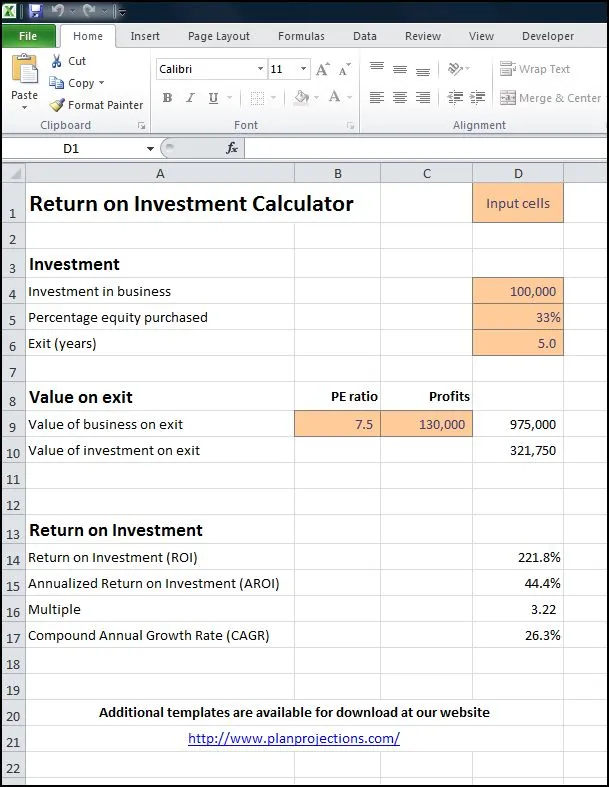
ROI is the language of finance. Your proposal must prominently feature a clear and compelling ROI calculation. Use standard ROI formulas:
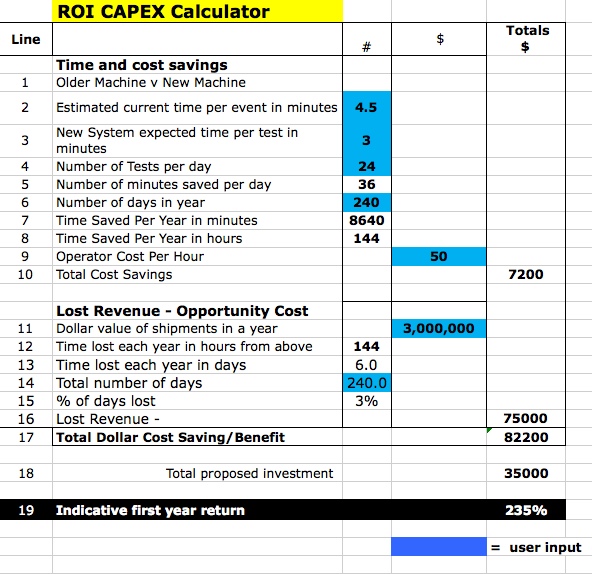
ROI = (Net Profit / Cost of Investment) x 100%
In the context of a mold upender, "Net Profit" represents the total cost savings and revenue increases generated by the equipment over a specific period (e.g., annually, or over the equipment's lifespan). "Cost of Investment" is the total purchase and installation cost of the mold upender.
Present your ROI calculations in multiple formats:- Simple Percentage ROI: A quick, easily understood summary figure.
- Payback Period: How quickly will the mold upender pay for itself based on projected savings? Finance teams often appreciate understanding the payback timeframe.
- Net Present Value (NPV): A more sophisticated financial metric that accounts for the time value of money, especially useful for longer-term investments.
By meticulously building a data-backed financial justification, focusing on quantifiable benefits and demonstrating a strong ROI, you significantly increase your chances of securing budget approval for your mold upender purchase and driving improvements in your fabrication operations. Remember, your finance team isn't against progress; they need to be convinced that it's a financially sound investment. Make your case, and make it with numbers.