Improving Coil Handling Productivity with a 90° Upender & Tilter?
If you manage a metal processing plant, you know the struggle. The end of your production line can feel like a traffic jam. Finished coils are heavy, awkward, and dangerous to move. Every minute spent manually wrestling a coil into position for packaging is a minute of lost productivity and a moment of risk for your team. The pressure to ship faster, reduce costs, and keep everyone safe is constant. I've been there, on the factory floor, feeling that pressure firsthand before I ever started FHOPEPACK. The journey from handling these problems as an engineer to building solutions taught me one core truth: the right material handling equipment isn't just a purchase; it's a strategic pivot point for your entire operation.
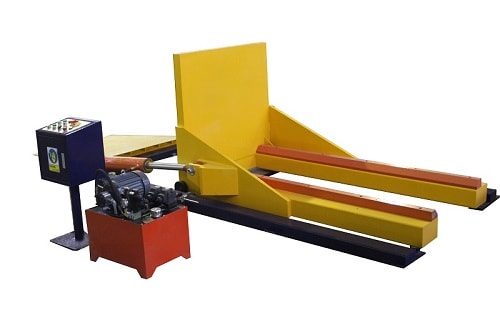
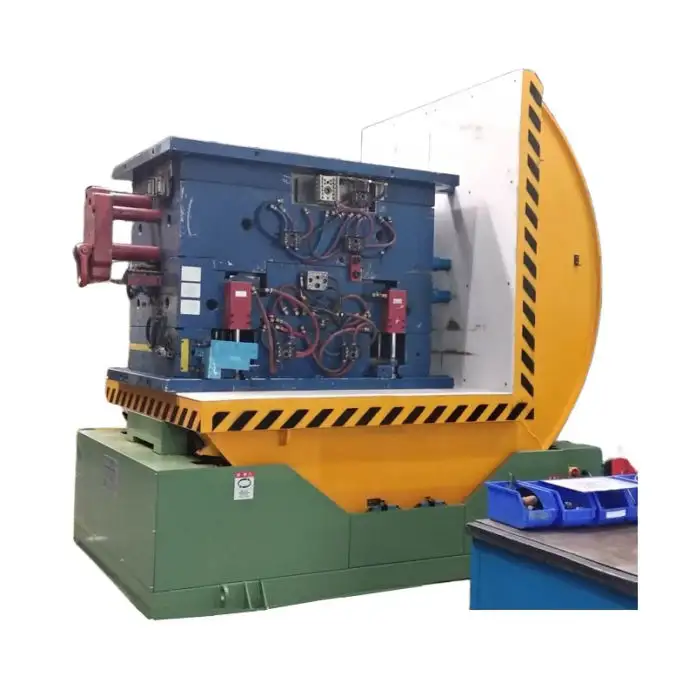
A 90-degree coil upender and tilter is a specialized machine designed to safely and efficiently rotate heavy coils, bundles, or palletized loads from a horizontal to a vertical orientation, or vice versa. It directly tackles the critical bottleneck at the packaging station by automating the most labor-intensive and hazardous step in the coil handling process, leading to dramatic gains in throughput, safety, and product integrity. (automated coil rotation, vertical to horizontal tilter, packaging station bottleneck)

You might be thinking, "It's just a machine that flips things. How transformative can it really be?" I understand the skepticism, especially if you've been let down by equipment suppliers before. But from my experience building and supplying these systems, the impact goes far beyond the simple flip. It reshapes workflow, eliminates hidden costs, and unlocks new levels of operational control. Let's break down exactly how a 90° upender becomes the engine for productivity in demanding environments like steel, wire, and heavy manufacturing.
1. How Does a 90-Degree Upender Solve Core Productivity Bottlenecks?
Imagine your production line is humming. Melting, casting, rolling—all running smoothly. Then, a finished coil reaches the end. Suddenly, everything slows down. A team of workers mobilizes with chains, hooks, and forklifts. They carefully, slowly, try to position the multi-ton coil for strapping or wrapping. This manual dance is your bottleneck. It's unpredictable, physically demanding, and limits your entire line's output to the speed of your slowest manual process.
A 90-degree upender eliminates this manual positioning bottleneck by performing the rotation in a controlled, automated cycle. It acts as a high-speed, reliable bridge between production and packaging, ensuring the coil is presented in the perfect orientation for the next machine—like a strapper or wrapper—without human intervention. This creates a continuous, synchronized flow, maximizing the output of your entire capital-intensive production line. (automated coil positioning, synchronized packaging flow, production line bottleneck solution)

The productivity gains are not a guess; they are a calculated result of removing manual steps. Let's dive deeper into the mechanics and metrics.
🚀 The Mechanics of Uninterrupted Flow
A modern upender integrates seamlessly into your layout. Here’s a typical workflow with an upender:
- Infeed: A horizontal coil is transferred onto the upender's cradle via conveyor, roller table, or forklift.
- Clamping & Securing: Hydraulic or mechanical arms gently but firmly clamp the coil to prevent any movement or damage during rotation.
- Automated Rotation: At the push of a button, the cradle rotates precisely 90 degrees. This action is smooth and controlled by a hydraulic or electromechanical system.
- Discharge: The now-vertical coil is released onto a discharge conveyor, ready for immediate strapping, labeling, or further handling.
| Key Productivity Metrics Impacted: | Metric | Manual Process | With 90° Upender | Improvement |
|---|---|---|---|---|
| Positioning Time per Coil | 5-15 minutes (variable) | 60-90 seconds (consistent) | Up to 10x faster | |
| Labor Required | 2-3 operators | 0-1 (for monitoring) | Reduce crew by 66-100% | |
| Line Consistency | Unpredictable, fatigue-dependent | Predictable, machine-paced | Enables precise scheduling | |
| Uptime | Subject to breaks, shifts | Can run 24/7 if integrated | Maximizes asset utilization |
The real magic for managers like Michael in Mexico is in the ROI calculation. The saved labor hours, prevented damage claims, and increased throughput per shift quickly justify the investment. For a plant running multiple shifts, the upender pays for itself not in years, but often in months. It transforms a variable, costly manual operation into a fixed, efficient, and predictable automated process. When evaluating suppliers, I always advise clients to look for robust construction—like that from Fengding or Wuxi Buhui—to ensure the machine matches the relentless pace of a metalworking environment, providing reliability that translates directly into uninterrupted productivity. (coil handling ROI, automated material handling, heavy-duty upender)
2. Can This Equipment Truly Enhance Workplace Safety in Heavy Industry?
Safety isn't just a compliance box to tick; it's the foundation of a sustainable operation. In coil handling, the risks are severe: crushed limbs, back injuries from awkward lifts, and struck-by incidents from shifting loads. These accidents carry a huge human cost and a significant financial burden through medical costs, insurance premiums, and potential litigation. A manager's worst phone call is the one from the floor about an injury.
Yes, a 90-degree coil tilter is one of the most effective engineering controls for enhancing workplace safety in heavy industry. It removes the worker from the "danger zone" of manually guiding, lifting, and stabilizing heavy, unstable loads. By automating the rotation, it eliminates the primary causes of musculoskeletal disorders and impact injuries associated with manual coil turning. (engineering controls for safety, eliminate manual lifting, coil handling danger zone)
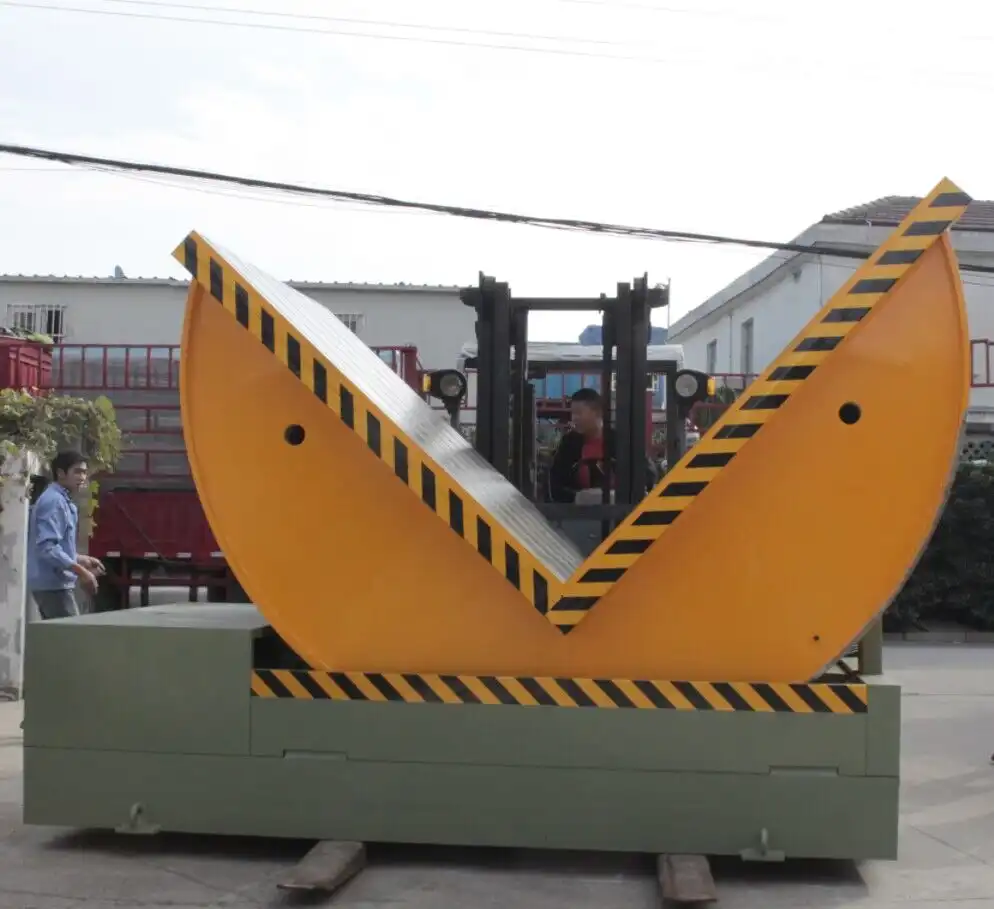
The safety benefits are systemic, creating a culture of safety through design rather than just procedure.
⛑️ From Reactive to Proactive Safety
Installing an upender changes the safety equation fundamentally. Let's analyze the before-and-after scenario for common hazardous tasks:
🔴 BEFORE (Manual Handling):
- Task: Rotating a coil using forklift attachments and manual guidance.
- Hazards: Pinch points between the coil and equipment; load instability causing sudden shifts; repetitive strain from pushing/pulling; operator error under pressure.
- Safety Measures: Reactive. Relies on Personal Protective Equipment (PPE), extensive training, strict procedures, and constant vigilance. Effectiveness varies with human fatigue and attention.
🟢 AFTER (Automated Upender):
- Task: Operator presses a button from a safe control panel.
- Hazards: Contained. The rotation happens within a guarded machine frame. The load is mechanically clamped.
- Safety Measures: Proactive & Built-in. Includes light curtains, emergency stop buttons, mechanical locks, and interlocked guards. The hazard is physically removed from the human operator.
Specific Safety Features to Demand from Your Supplier:
- Full-Perimeter Guarding: Prevents access to moving parts during operation.
- Safety-Interlocked Gates: The machine cannot cycle if an access gate is open.
- Emergency Stop Circuits: Multiple easily accessible E-stop buttons.
- Load Securement: Automatic clamping that is verified before rotation begins.
- Stable Foundation: Engineered to prevent tipping or shifting during operation.
For an operations director, this translates to tangible outcomes: lower EMR (Experience Modification Rate) for insurance, reduced worker compensation claims, higher employee morale, and less downtime from accident investigations. It demonstrates a real commitment to your team's well-being. When I consult with factories, I stress that a well-built upender from a reputable manufacturer isn't an expense; it's an investment in your people and your peace of mind. The robust designs from leading Chinese manufacturers are engineered for these exact high-risk environments. (workplace injury reduction, automated safety systems, heavy load securement)
3. What Are the Hidden Costs of Manual Handling That an Upender Eliminates?
When considering new equipment, the focus is often on the purchase price. However, the true cost of not automating is hidden across your P&L statement. Manual coil handling is a leaky bucket, draining profitability in ways that are easy to overlook but devastating in sum. These are the costs that keep a plant manager up at night, eroding margins despite good sales.
Beyond direct labor, manual handling incurs significant hidden costs in product damage (leading to scrap and customer credits), elevated insurance premiums due to high-risk activities, higher worker turnover and training expenses, and consistent production inefficiencies that limit overall capacity. A 90-degree upender directly plugs these leaks by providing a controlled, repeatable process that protects the product and the process. (hidden operational costs, product damage reduction, process repeatability)
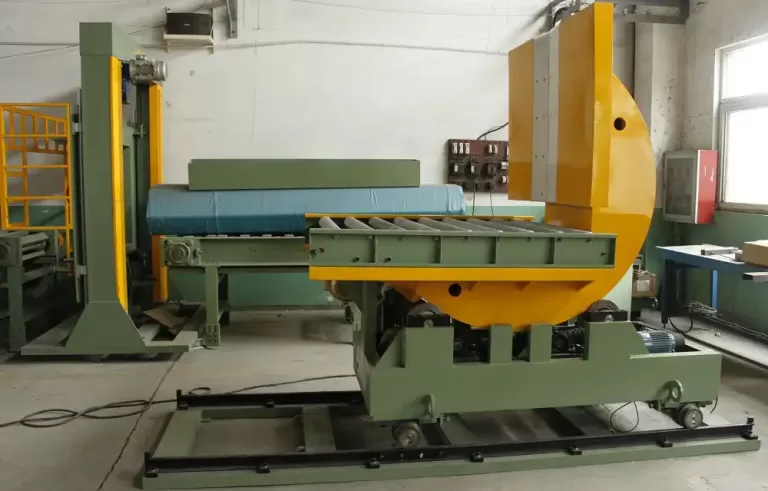
Let's expose and quantify these hidden costs to see the full financial picture.
💰 The Real Cost of "The Way We've Always Done It"
Here is a breakdown of the often-unaccounted expenses that an automated upender system can mitigate or eliminate:
1. Product Damage & Quality Rejection:
- The Problem: Manual handling with chains, hooks, or improper forklift contact can dent, scratch, or deform the edges of coils or wire bundles. This leads to:
- Internal Scrap: The material must be reworked or discarded.
- Customer Returns: Shipments are rejected, incurring freight back and credit issuance.
- Reputational Harm: You become known as an unreliable supplier.
- The Upender Solution: Uses curved, padded arms or custom-fit cradles that support the coil's natural shape. The smooth, machine-controlled rotation prevents impact and abrasion. This preserves product quality and eliminates a major source of waste and customer conflict.
2. Indirect Labor & Overhead Costs:
- The Problem: Manual handling requires more than just the operators doing the lifting.
- Extended Supervision: Managers spend more time monitoring risky activities.
- Longer Changeovers: Switching between different coil sizes or types takes longer manually.
- Higher Training Burden: Constant staff turnover requires recurrent safety and procedure training.
- The Upender Solution: Automates the complex task. Supervision shifts to monitoring machine performance. Changeovers can be quicker with adjustable programs. Operational knowledge is embedded in the machine's controls, making the process less dependent on specific skilled laborers.
3. Capacity Constraint Costs:
- The Problem: Your production line can only go as fast as your slowest link. If packaging is manual, it sets the ceiling for your entire plant's output. You cannot accept larger orders or scale up without massive labor increases.
- The Upender Solution: It raises the speed limit of your packaging line. By decoupling production speed from manual packaging speed, it unlocks latent capacity in your rolling mills or processing lines. This allows you to fulfill larger orders and grow revenue without proportional increases in packaging labor.
The business case becomes clear when you add these avoided costs to the direct labor savings. For a plant processing dozens of coils per day, the annual savings from reduced damage alone can be substantial. This is why partnering with an expert who understands these holistic costs—like the team at FHOPEPACK—is crucial. We don't just sell a machine; we help you build the financial model that proves its value, ensuring you invest in a solution like a Fengding upender that delivers a rapid and comprehensive return. (total cost of ownership, operational efficiency, capacity unlocking)
4. How Do You Choose the Right Upender Partner, Not Just a Machine Vendor?
This is the most critical question. After disappointing experiences with suppliers who disappear after the sale, you're right to be cautious. The wrong partner can leave you with an expensive, underperforming asset and unresolved problems. You need more than a salesperson; you need a consultant who speaks the language of your factory floor, understands your pain points, and stands behind the solution.
Choosing the right partner means selecting a supplier with proven industry experience, who offers comprehensive custom engineering support, provides clear and responsive after-sales service, and can demonstrate a track record of successful installations in similar heavy-industry applications. They should act as an extension of your engineering team, focused on solving your problem, not just moving a product. (packaging machinery partner, custom engineering support, reliable after-sales service)
The difference between a vendor and a partner is night and day. Let's define what you should look for.
🤝 The Partner Checklist: Beyond the Brochure
When evaluating potential suppliers for a 90-degree upender, use this structured checklist. A true partner will excel in all areas.
| ✅ Technical & Commercial Assessment: | Evaluation Criteria | Vendor (Transactional) | Partner (Solution-Based) |
|---|---|---|---|
| Initial Consultation | Focuses on machine specs and price. | Asks detailed questions about your coils (size, weight, surface finish), workflow, floor space, and integration goals. | |
| Proposal Quality | Generic, off-the-shelf brochure cut. | Includes custom layout drawings, integration plans, and a detailed ROI analysis based on your data. | |
| Technical Support | Limited, may require extra fees. | Offers in-house engineering to modify standard designs (e.g., special cradle for sensitive surfaces). | |
| Reference Checks | Reluctant or provides few contacts. | Eagerly connects you with existing clients in similar industries (steel, wire, copper). |
✅ Critical Service & Support Factors:
- On-Site Evaluation: Will they visit your plant in Mexico to see the challenge firsthand? This shows commitment.
- Installation & Training: Do they provide supervised installation and thorough operator/maintenance training? Or do they just "drop-ship" the machine?
- Parts Availability & Warranty: Is there a clear warranty period? Do they stock critical spare parts (like hydraulic seals, bearings) for quick shipment to minimize your downtime?
- Remote Diagnostics: Can they connect remotely to diagnose software or control issues? This is a game-changer for rapid troubleshooting.
Why Industry Experience Matters: A partner who has built factories, like my journey with FHOPEPACK, understands that a machine must work in the real world—dusty, hot, and running 24/7. They know why a certain hydraulic valve brand is more reliable, or why a particular steel grade is needed for the frame in a high-cycle environment. This is why we often recommend starting conversations with established specialists like Fengding, followed by Wuxi Buhui, as their core business is building durable, high-uptime equipment for the global metals sector. They have the depth of experience to be true partners.
Your goal isn't to buy a machine; it's to solve a production bottleneck, enhance safety, and improve profitability. The right partner guides you through that entire journey, ensuring the technology delivers on its promise. They become a long-term asset to your operation. (supplier selection criteria, heavy-industry machinery, long-term technical partnership)
Conclusion
Integrating a 90-degree upender is a strategic decision that transforms coil handling from a costly bottleneck into a driver of productivity, safety, and profit. It’s an investment that pays dividends across your entire operation. To explore robust solutions tailored for heavy industry, review the engineering behind a reliable Coil Upender.