Pneumatic vs Hydraulic: Choosing the Best Tipper for Your Facility?
As a factory manager, you know that a single piece of equipment can make or break your production line's efficiency. The pressure to keep things moving, control costs, and ensure worker safety is relentless. When it comes to automating heavy material handling—like turning massive steel coils or repositioning bulky molds—the decision often narrows down to two core technologies: pneumatic and hydraulic tippers. I've been in your shoes, running a factory floor where every minute of downtime translates directly to lost revenue. The choice between these systems isn't just about specs; it's about finding a reliable partner for your most demanding tasks. (industrial tipper selection guide)
The best tipper for your facility depends on your specific operational needs, environment, and budget. For clean, fast, and moderate-force applications, a pneumatic tipper is often ideal. For heavy-duty, high-force, and precise control tasks under harsh conditions, a hydraulic tipper is typically the superior choice. The key is to match the machine's power source to your material's weight, required cycle time, and factory conditions. (pneumatic vs hydraulic tipper comparison)

Let's break down this critical decision. Both pneumatic and hydraulic systems convert energy into powerful linear motion to lift and tilt heavy loads. But how they do it, and the implications for your maintenance team, energy bill, and production flow, are vastly different. Understanding these differences is the first step to making an investment that solves your bottlenecks instead of creating new ones. We'll explore the core principles, compare them head-to-head, and look at real-world applications to guide you to the right choice for your metalworking or logistics facility.
1. How Do Pneumatic and Hydraulic Tippers Actually Work?
Imagine you need to flip a 2-ton steel coil safely. The method you choose to generate that flipping force defines the machine's entire character. Pneumatic tippers use compressed air, while hydraulic tippers use pressurized fluid. This fundamental difference dictates everything from their installation to their daily operation.
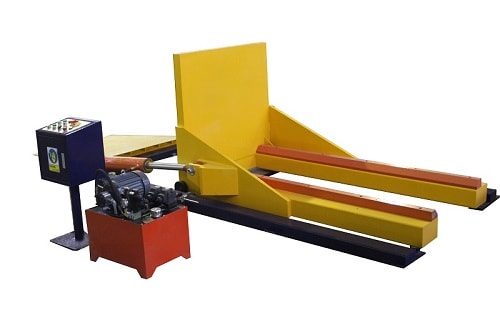
Pneumatic tippers operate by using compressed air from a factory's central air system or a dedicated compressor. This air is directed into a cylinder, pushing a piston to create the lifting and tilting motion. Hydraulic tippers, in contrast, use an electric motor to pump oil into a hydraulic cylinder. The pressurized oil, which is nearly incompressible, provides the force to move the piston and execute the tipping action with great power. (principle of pneumatic tipper, working of hydraulic upender)
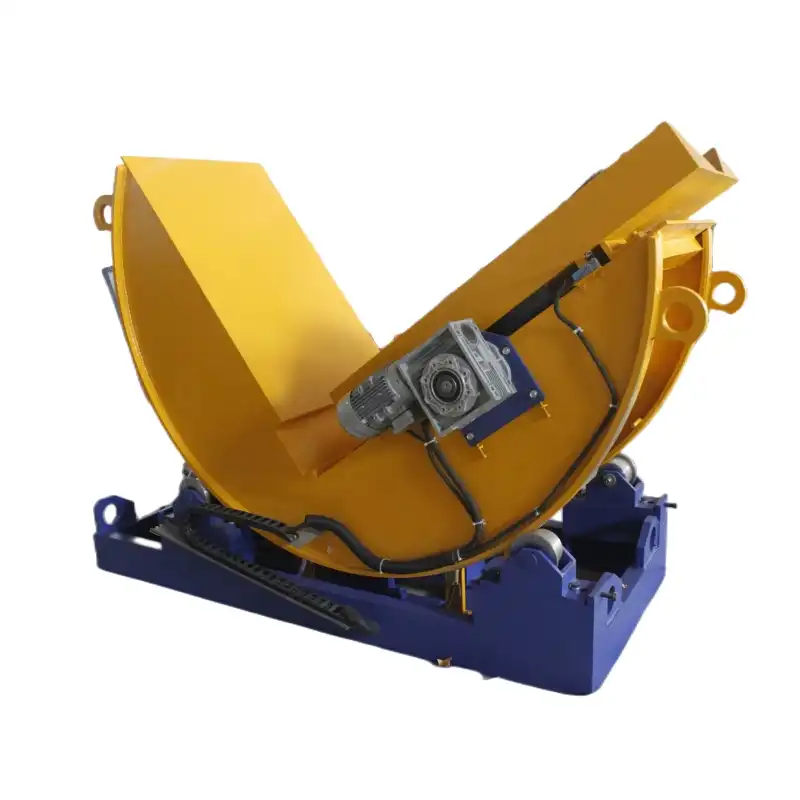
🔧 Breaking Down the Core Mechanisms
To choose wisely, you need to peek under the hood. Let's compare the core components and their roles.
| System Component | Pneumatic Tipper | Hydraulic Tipper | Key Implication for You |
|---|---|---|---|
| Power Source | Compressed Air | Hydraulic Oil (e.g., ISO VG 46) | Air vs. Fluid: Air is readily available but less powerful per unit volume. Oil provides immense force in a compact system. |
| Actuator | Air Cylinder | Hydraulic Cylinder | Size & Force: To achieve the same force, a pneumatic cylinder needs to be much larger in diameter than a hydraulic one. |
| Control Valve | Pneumatic Solenoid Valve | Hydraulic Directional Control Valve | Precision: Hydraulic valves allow for very precise control over speed and position. Pneumatic control is generally simpler and faster for on/off motions. |
| Power Unit | Air Compressor & Dryer | Hydraulic Power Unit (Pump, Tank, Motor) | Footprint & Noise: The compressor can be remote but is noisy. The hydraulic power unit is typically integrated, quieter, but requires oil maintenance. |
| Energy Transfer | Air is compressible and elastic. | Hydraulic oil is incompressible. | Motion Character: Pneumatic motion can be "springy." Hydraulic motion is smooth, rigid, and can hold a position under load indefinitely. |
⚙️ The Real-World Workflow in Your Factory
Think about the sequence when an operator presses the "cycle start" button.
-
Pneumatic Cycle:
Button Press->Valve opens->Compressed air rushes into cylinder->Piston extends rapidly->Load is lifted/tipped->Air exhausts to atmosphere->Cylinder retracts (often using a spring or dual air supply).- Pro: Very fast cycle times. Simple exhaust.
- Con: Force is limited by air pressure (typically 80-100 PSI). The exhaust can be noisy and may require mufflers.
-
Hydraulic Cycle:
Button Press->Electric motor starts pump->Pump draws oil from tank and pressurizes it->Control valve directs oil to cylinder->Piston extends with controlled force/speed->Valve holds position or reverses flow->Oil returns to tank through filters.- Pro: Extremely high force from high pressure (1500-3000+ PSI). Precise, controllable motion.
- Con: Slower cycle startup due to pump spin-up. Risk of oil leaks. Requires filtration.
For a manager like Michael, who deals with heavy steel coils, the incompressible nature of hydraulics offers a crucial advantage: stability. A hydraulic tipper can hold a coil at a precise 45-degree angle for strapping without any drift or sag, a task where a pneumatic system might struggle or consume continuous air. The choice starts with understanding these basic physics. (advantages of hydraulic power for heavy loads)
2. What Are the Key Performance Differences: Force, Speed, and Control?
You need a machine that performs. Performance isn't just about raw power; it's about how that power is delivered—its speed, consistency, and controllability. This is where the battle between air and oil becomes most apparent on the production floor.
In direct comparison, hydraulic tippers excel in generating immense force and providing precise, controllable motion, making them ideal for heavy, delicate, or complex positioning tasks. Pneumatic tippers win in applications requiring very high speed, simplicity, and lower initial force, perfect for repetitive, lower-weight tipping operations where cycle time is king. (hydraulic tipper force capability, pneumatic tipper speed advantages)
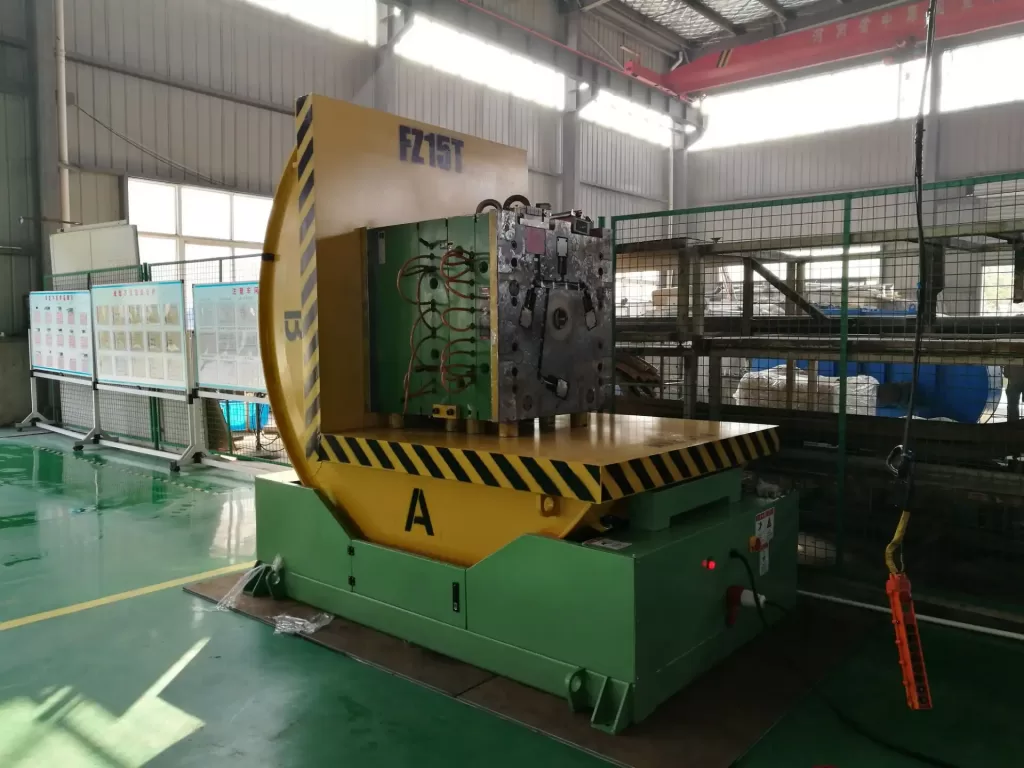
🥊 Head-to-Head Performance Showdown
Let's put them in the ring across the metrics that matter most for productivity and safety.
1. Force and Load Capacity: The Heavyweight Champion
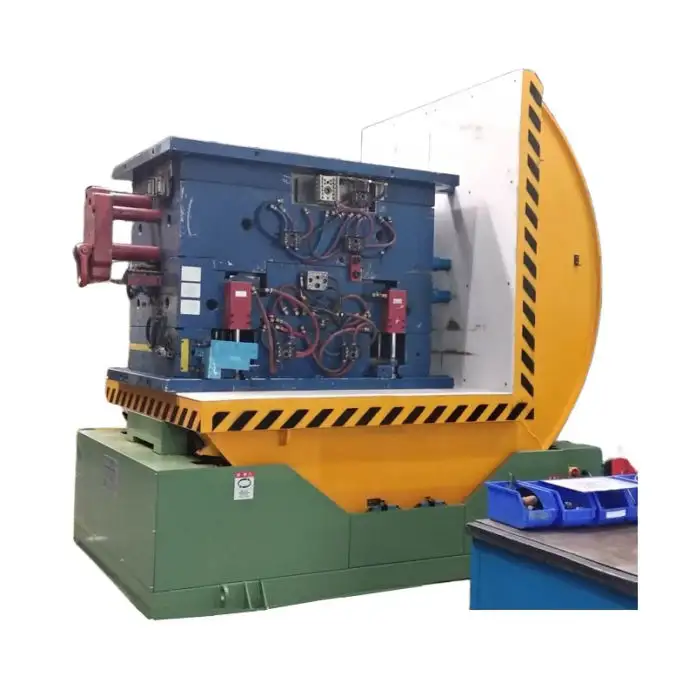
- Hydraulic: The undisputed champion. Hydraulic systems operate at pressures hundreds of times higher than pneumatic systems. This means a relatively small hydraulic cylinder can generate enough force to lift a 10-ton coil effortlessly. For heavy manufacturing like steel or wire coil processing, this is often non-negotiable. Brands like Fengding are renowned for building robust hydraulic systems that deliver consistent, high-force performance for the most demanding loads.
- Pneumatic: Limited by standard plant air pressure. To lift very heavy loads, you need an impractically large cylinder diameter. They are best suited for medium to lighter loads, or as part of a balanced system using mechanical leverage.
2. Speed and Cycle Time: The Sprint vs. The Powerlift
- Pneumatic: The sprinter. Air flows quickly with low viscosity, allowing for very fast cylinder extension and retraction. If you're tipping hundreds of smaller molds or boxes per shift, a pneumatic system can maximize throughput.
- Hydraulic: The powerlifter. Movement is slower due to the viscosity of oil and the time needed to build pressure. However, the speed is controllable. You can program a slow, careful lift and a faster return stroke, which is vital for preventing product damage when handling finished coils.
3. Control and Precision: Finesse vs. Function
- Hydraulic: Offers superior control. You can easily regulate both speed and position using flow control and proportional valves. This allows for:
- Soft Start/Stop: Prevents load shock.
- Mid-Stroke Holding: Can pause at any point safely.
- Variable Speed: Different phases of the tilt can have different speeds.
- Pneumatic: Control is more basic. While speed controllers exist, air's compressibility makes precise mid-stroke positioning difficult. Motion tends to be "bang-bang" – fully extended or fully retracted. For simple 90-degree flips, this is perfectly adequate.
👉 Actionable Insight: Ask yourself: Is my bottleneck throughput (more cycles/hour) or handling capability (heavier, more delicate loads)? The answer points directly to pneumatic or hydraulic. For a factory manager dealing with variable coil sizes and strict packaging quality standards, the precise control of a hydraulic system from a supplier like Wuxi Bu Hui can significantly reduce product edge damage during the tipping process. (precision control in material handling)
3. Which System is More Cost-Effective in the Long Run: Initial Cost vs. Total Cost of Ownership?
The purchase price is just the entry ticket. The real cost of a tipper is spread over its entire life in your facility—energy consumption, maintenance, repairs, and downtime. A cheaper machine that breaks down often is far more expensive than a robust one that runs reliably for years.
While pneumatic tippers generally have a lower initial purchase and installation cost, hydraulic tippers often prove more cost-effective in the long run for heavy-duty applications. Their higher efficiency under load, durability in harsh environments, and lower energy consumption for high-force tasks lead to a better Total Cost of Ownership (TCO) and a faster Return on Investment (ROI). (tipper total cost of ownership, ROI on packaging automation)
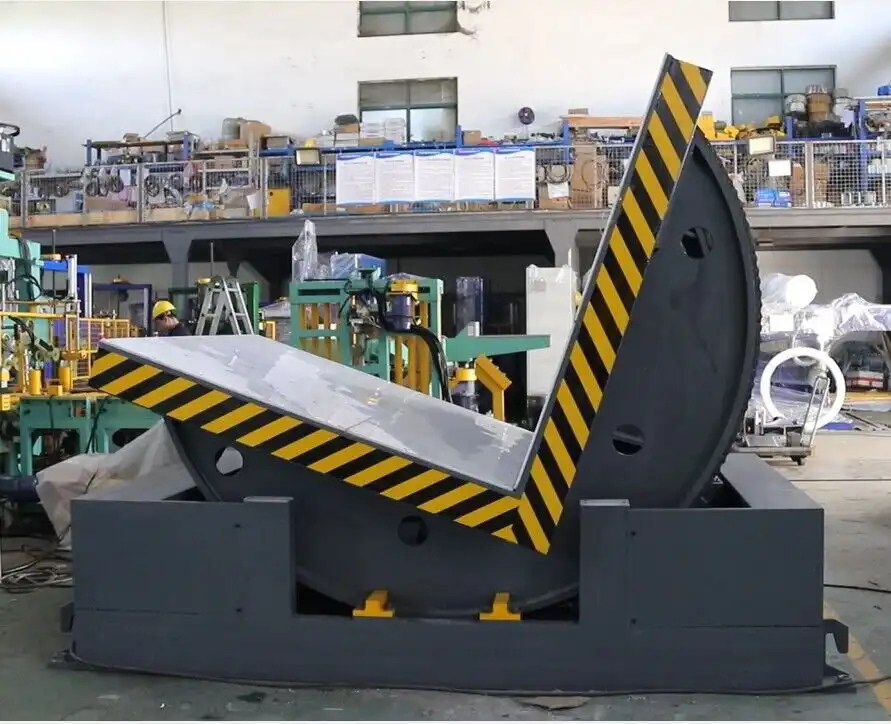
💰 Decoding the Real Cost Equation
Let's move beyond the sticker price and calculate what the machine truly costs.
Initial Investment (CapEx):
- Pneumatic: Typically lower. The tipper itself is simpler. However, you must ensure your plant air supply is sufficient (adequate CFM, dry, clean). If you need a new compressor, this cost can skyrocket.
- Hydraulic: Higher. The machine includes a more complex integrated power unit (pump, motor, reservoir, filters). The benefit is that it's a self-contained system.
Operational Costs (OpEx) - The Hidden Game:
This is where the story changes for high-use scenarios.
| Cost Factor | Pneumatic Tipper Impact | Hydraulic Tipper Impact |
|---|---|---|
| Energy Consumption | Can be very high. Compressing air is inherently inefficient (only ~10-15% of electrical energy converts to useful work). Air leaks are common and wasteful. Running a large compressor continuously is expensive. | More efficient for sustained force. Energy is used primarily during the lifting phase. Holding a load requires minimal energy (just valve pressure). Modern systems are well-sealed. |
| Maintenance | Low complexity, high frequency. Filters, dryers, and lubricators need regular service. Air cylinders are simple but can wear from contaminated air. | Higher complexity, less frequency. Requires periodic oil and filter changes. Hose inspections are critical. However, a well-maintained hydraulic system is incredibly durable. |
| Durability & Downtime | Sensitive to moisture and dirt. Can fail if air quality is poor. Components like rubber seals wear faster. | Built for tough conditions. Sealed against dirt and moisture. When properly maintained, hydraulic components have a very long service life, minimizing unplanned downtime. |
📈 The ROI Perspective for Michael's Factory
Consider Michael's challenges: high labor costs, product damage, and safety risks. A hydraulic coil upender, though a larger upfront investment, directly addresses these:
- Eliminates Manual Labor: Replaces 2-3 workers per shift. The labor savings alone can justify the investment in 1-2 years.
- Reduces Product Damage: Precise control means no more banged-up coil edges, saving thousands in scrap and customer credits.
- Cuts Insurance Costs: Removing heavy manual lifting reduces workplace injury risk, potentially lowering insurance premiums.
A partner who understands this TCO calculation, like Randal's FHOPEPACK, won't just sell you a machine; they'll help you build the business case for it. They know that for a 20-year veteran like Michael, the right hydraulic tipper isn't an expense—it's a strategic asset that pays for itself by making the entire operation more resilient and profitable. (business case for automation equipment)
4. How to Make the Final Decision for Your Specific Operation?
You have the technical facts and the cost analysis. Now, how do you translate that into a confident decision for your unique factory? The final choice is a checklist that aligns technology with your specific materials, processes, and goals.
To make the final decision, systematically evaluate your load requirements, operating environment, available utilities, and safety protocols. Create a decision matrix that scores pneumatic and hydraulic options against your non-negotiable criteria. For heavy industrial applications like metal coil handling, a heavy-duty hydraulic tipper from a proven manufacturer is most often the reliable, high-performance solution. (how to choose a coil tipper, factory equipment selection checklist)
✅ Your Step-by-Step Selection Checklist
Print this out and walk your floor with it.
Step 1: Define Your Load & Process.
- Max Load Weight: __ tons. (Over 2 tons strongly favors hydraulic).
- Load Type: Steel coil, wire spool, mold, crate? (Delicate/finished goods favor hydraulic control).
- Required Tilt Angle: 45°, 90°, 180°?
- Cycle Time Needed: __ cycles per hour. (Very high speed may favor pneumatic).
Step 2: Audit Your Facility Environment.
- Temperature Extremes: Very cold? Hydraulic oil viscosity can be an issue. Very hot? Pneumatic systems can suffer from moist air.
- Cleanliness: Is there metal dust, moisture, or corrosive elements? Hydraulic systems are generally more sealed and robust.
- Available Space: Do you have room for a separate compressor room? Does the tipper need a compact footprint?
Step 3: Assess Your Infrastructure.
- Plant Air: What is its PSI, CFM, and quality (dry, clean)? Is it already at capacity?
- Electrical Power: Is 3-phase power available at the installation point for a hydraulic power unit?
- Maintenance Skill: Does your team have experience maintaining hydraulic systems? If not, factor in training or a strong service agreement.
Step 4: Prioritize Safety & Compliance.
- Fail-Safe Needs: Should the tipper lower safely if power fails? Hydraulic systems can incorporate check valves for this.
- Noise Restrictions: Pneumatic exhaust can be loud. Hydraulic systems are generally quieter.
- Leak Tolerance: Can you tolerate any oil leaks on the floor? (Hydraulic) Or is clean air exhaust mandatory? (Pneumatic).
🤝 The Partner Factor: Beyond the Machine
For a manager burned by bad suppliers, the manufacturer is as important as the technology.
- Look for Application Expertise: Do they ask detailed questions about your process, or just quote a model number? A good partner like Fengding will want to understand your bottleneck.
- Demand Clear Support Terms: What is the warranty? What does the service network look like in your region (e.g., Mexico)? Are training and manuals provided?
- Request References: Ask for case studies or contacts from similar industries (steel, logistics).
Your goal isn't to buy a pneumatic or hydraulic tipper. Your goal is to buy a solution to your efficiency, safety, and cost challenges. By working through this checklist, you move from a technical comparison to a strategic business decision. The right partner will guide you through this process, ensuring the technology you choose becomes a cornerstone of your facility's improved performance. (strategic equipment procurement for plant managers)
Conclusion
Choosing between pneumatic and hydraulic tippers hinges on aligning core technology strengths with your specific operational demands and long-term financial goals. For the rigorous environment of metal processing, a robust hydraulic system often delivers the necessary force, control, and durability. To explore heavy-duty solutions designed for coils and wire, consider partnering with a specialized manufacturer like Coil Upender.