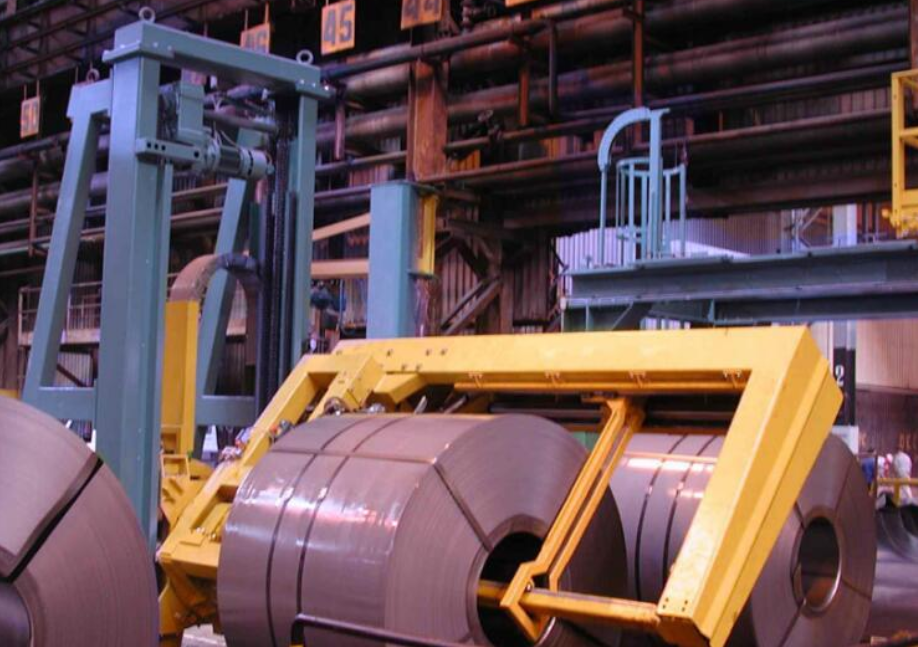
Streamlining Steel and Aluminum Production: Are Automated Coil Packaging Lines Worth the Investment?
Automated coil packaging lines significantly boost efficiency, reduce material damage, and enhance workplace safety in steel and aluminum production. They minimize manual handling, ensuring consistent and secure packaging for coils of various sizes and weights, ultimately improving productivity and reducing operational costs.
After three decades immersed in the metal industry, I've witnessed firsthand the evolution of production line efficiency. One area that has consistently presented both challenges and opportunities for improvement is coil handling and packaging. For years, I've seen companies struggle with slow, labor-intensive packaging processes, leading to production bottlenecks, material damage, and safety concerns. That's why I'm excited to share my insights on a game-changing technology: automated coil packaging lines.
For those unfamiliar, let's start with the basics. Imagine a massive steel or aluminum coil, fresh off the production line, weighing up to 45 tons and measuring 2.5 meters in diameter. These behemoths need to be securely packaged for storage and transport, protecting them from the elements and physical damage. Traditionally, this was a very manual process, requiring significant manpower, time, and posing considerable risks. But what if we could automate this entire process?
What Exactly Does an Automated Coil Packaging Line Do?
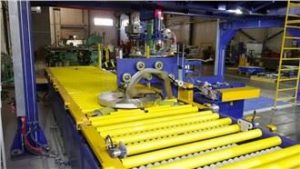
Think of an orchestra, where each instrument plays a crucial part in creating a harmonious symphony. An automated coil packaging line works similarly, orchestrating a series of synchronized operations to efficiently and safely package coils. The system I'm going to describe, designed for high-volume output – capable of handling a staggering 1,100,000 tons per year – exemplifies this orchestrated automation.
This particular line, built to serve two cold strip finishing lines, is a marvel of engineering. It’s built around a core of three walking beam systems. These systems act like synchronized transporters, smoothly moving the coils through different packaging stations. Imagine these massive coils gliding effortlessly from one stage to the next – it’s quite a sight to behold. To lift and maneuver these heavyweights, the line utilizes two coil lifting cars. These cars, powered by a central hydraulic system with six independent valve stands, precisely lift and position the coils with remarkable accuracy.
But the real magic lies in the auxiliary equipment, the supporting cast that ensures every coil is perfectly packaged. This includes:
- Foil and Paper Dispensers: These apply protective layers of foil and paper to shield the coil from moisture, dust, and scratches – crucial for maintaining material integrity.
- Metal-Sheet Dispensers: For added protection, especially for delicate materials, metal sheets can be applied.
- Strapping Machines: These are the workhorses of the packaging line. They apply heavy-duty straps around the coil circumference and to secure edge protectors, ensuring the coil remains tightly bound and stable during handling and transport. This system even includes an eye strapping machine, applying straps through the eye of the coil for maximum security.
Let's take a closer look at some of these components.
(Insert Image 1: coilverpackung_teaser.jpg here)
Coil Packaging Systems: Your First Line of Defense Against Damage
In my experience, damage during handling and storage is a significant source of material waste and added cost. Coil packaging lines, like the fhope1 described here, are designed to minimize these risks. They provide a consistent and reliable method for applying protective layers, ensuring that every coil is shielded from environmental factors and physical impacts. This not only reduces material loss but also enhances the quality and marketability of the finished product.
(Insert Image 2: umreifungstechnik_teaser.jpg here)
Strapping Machines: The Key to Secure Coil Handling
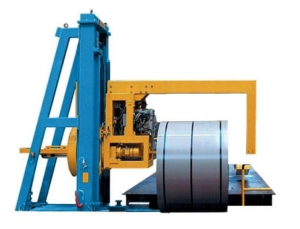
Strapping is not just about bundling coils; it's about ensuring safe and efficient material flow. The strapping systems integrated into automated lines are designed for speed and reliability. They can handle a wide range of coil sizes and materials, applying straps with consistent tension to prevent shifting and damage during transport – both within the plant and to external destinations. The fhope2 strapping machines used in this line are a testament to the advancements in this technology.
(Insert Image 3: trasnportanlage_konventionell_teaser.jpg here)
Conventional Transport Systems: Tailoring Solutions to Your Needs
While automation is key, flexibility is equally important. Every production facility has unique layout and logistical requirements. That’s where conventional transport systems come in. These systems, often customized to specific plant layouts, seamlessly integrate with the automated packaging line, ensuring smooth material flow throughout the entire process. Whether it's expanding an existing facility or designing a new one, the right transport system, like the fhope3 systems, is crucial for optimizing efficiency.
Seeing is Believing: Automation in Action
Beyond the hardware, the software powering these lines is equally impressive. The system described here includes complete automation, from electrical planning to integration with higher-level data systems (Level 3). This means the packaging line isn't just a standalone unit; it's a fully integrated part of the production ecosystem.
A critical element of this automation is the visualization system. From my experience, operator visibility is paramount for efficient and safe operation. This system provides a real-time overview of the entire machinery and equipment, allowing operators to monitor performance, identify potential issues, and ensure smooth, uninterrupted operation. It’s like having a central nervous system for the packaging line, providing the intelligence needed for optimal performance.
Real-World Impact: Beyond the Specs
The specifications of this coil packaging line are impressive:
- Location: Russia
- Maximum Coil Weight: 45 tons
- Maximum Coil Diameter: 2.5 meters
- Packaging Capacity: 1,100,000 tons per year
But what do these numbers translate to in real-world benefits? Let's break it down based on my industry experience:
- Increased Throughput: The sheer packaging capacity – over a million tons annually – signifies a massive increase in throughput compared to manual methods. This translates directly to higher production volumes and faster order fulfillment.
- Reduced Labor Costs: Automation significantly reduces the need for manual labor in packaging. This not only lowers labor costs but also frees up personnel for other critical tasks in the production process.
- Improved Safety: Handling massive steel coils manually is inherently dangerous. Automated lines minimize human intervention, drastically reducing the risk of workplace accidents and injuries. Safety, in my book, is always the top priority.
- Consistent Packaging Quality: Automated systems ensure consistent and reliable packaging quality for every coil. This reduces the variability associated with manual packaging, leading to fewer damaged goods and improved customer satisfaction.
- Optimized Material Flow: By integrating with the overall production data system, the packaging line contributes to a more streamlined and optimized material flow throughout the plant. This reduces bottlenecks and improves overall operational efficiency.
More Than Just Packaging: A Holistic Approach
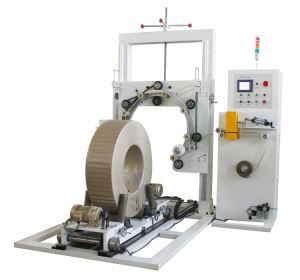
Looking at the broader picture, this coil packaging line is more than just a piece of equipment; it's a solution designed for the entire production process. It's built to handle the output of two cold strip finishing lines, indicating a holistic approach to production optimization. This is crucial. In my years in the industry, I've learned that isolated improvements are good, but integrated solutions are transformative.
Expanding the Horizon: Similar Projects and Applications
To further illustrate the versatility and impact of automated material handling systems, let's look at some related projects. These examples showcase how similar technologies are being applied across different areas of metal production and logistics.
(Insert Image 4: csm_salzgitter_transport_425x287_5b5c608ae7.jpg)
Modernization of Coil Conveying System: Imagine upgrading an existing plant to handle larger volumes and heavier loads. This project involved modernizing a coil conveying system, handling equipment weighing 1,200 tons and covering an area of 1,100 square meters. The key here is minimizing downtime – this entire conversion was achieved in just 14 days, a testament to efficient planning and execution. This highlights the importance of upgrading existing infrastructure to meet growing demands.
(Insert Image 5: csm_amns_transport_425x287_58ac697675.jpg)
Pallet Conveyor System for Hot-Rolled Coils: Hot-rolled coils present unique handling challenges due to their temperature and surface condition. This pallet conveyor system was designed specifically for hot-rolled coils weighing up to 36 tons, with a throughput of 60 coils per hour over a length of 853 meters. This demonstrates the adaptability of these systems to different material types and production stages.
(Insert Image 6: csm_nanshan_transport_425x287_25063698ad.jpg)
Automatic Coil Transporters (A.C.T.®): For maximum flexibility and space utilization, Automatic Coil Transporters (A.C.T.®) offer a compelling solution. These autonomous vehicles can handle coils up to 32 tons and travel at speeds up to 1 m/s. They provide a highly adaptable transport solution, especially in complex plant layouts.
(Insert Image 7: csm_bridgnorth_verpacken_425x287_2129045476.jpg)
Packaging Line for Litho Coils: Litho coils, used in printing, require particularly careful handling to avoid surface damage. This packaging line, designed for coils up to 10.8 tons, achieves a throughput of 8 packs per hour. The key here is precision and gentle handling, showcasing the ability to customize packaging lines for specific material requirements.
(Insert Image 8: csm_N-SMS2287-053_425x287_99d21f8674.jpg)
High-Bay Store for 1,382 Coils: Efficient storage is as critical as efficient production. This high-bay store, with dimensions of 293 x 21 x 31 meters, provides storage for 1,382 coils, each weighing up to 32 tons. Automated storage systems are essential for managing large inventories and ensuring just-in-time material availability.
(Insert Image 9: csm_ref_insp_AMB_teaser_7dedde8dc7.png)
Sampling Station for X-Grade Steel Coils: Quality control is paramount in steel production. This sampling station for X-grade steel coils automates the process of extracting samples for testing, ensuring consistent and reliable quality checks. Automation in quality control enhances accuracy and reduces manual handling of potentially hazardous materials.
(Insert Image 10: csm_bridgnorth_lagern_425x287_ee23ac111b.jpg)
Cantilever Store for Litho Coils: Another storage solution, this cantilever store for litho coils, with dimensions of 48 x 9.2 x 4.2 meters, handles coil input and output at rates of 4 coils/h and 8 coils/h respectively. Cantilever stores are ideal for providing direct access to individual coils, facilitating efficient retrieval and dispatch.
(Insert Image 11: csm_aleris_lagern_425x287_c62888ff08.jpg)
High-Bay Store for Aluminum Coils: Extending the concept of high-bay storage to aluminum coils, this system, with dimensions of 207 x 8.2 x 23.8 meters, stores 504 coils, each weighing up to 26.5 tons. This demonstrates the adaptability of these systems to different metals and material properties.
(Insert Image 12: csm_umreifung-hochfester-stahlcoils-teaser_316484244c.jpg)
Strapping of High-Strength Steel Coils: High-strength steel coils require robust strapping to withstand the stresses of handling and transport. This system applies 3 straps per coil in under 190 seconds, highlighting the speed and efficiency of modern strapping technology, even for demanding materials.
(Insert Image 13: csm_mmk_verpacken_425x287_bce575ce8d.jpg)
Coil Packaging Line (Repeat Reference): Returning to our initial example, this second reference to a coil packaging line with similar specifications (45-ton max weight, 2.5m diameter, 1,100,000 tons/year capacity) reinforces the prevalence and importance of these high-capacity systems in the industry.
(Insert Image 14: csm_ref_insp_salzg_teaser_a6ab5af324.png)
Inspection Line / Conversion Project: Beyond packaging and transport, automated systems are also crucial for quality inspection. This inspection line, part of a conversion project, handles strip thicknesses from 1 to 12.7 mm and can withstand a fully plastic bending moment of max. 45,000 Nm. Automated inspection lines improve the speed and accuracy of quality checks, ensuring product compliance.
(Insert Image 15: csm_ref_insp_habas_teaser_999497a004.png)
Inspection Line in Coil Conveyor System: Integrating inspection directly into the coil conveyor system further streamlines the quality control process. This line, handling strip thicknesses from 1.2 to 10 mm (crop and sample cut) and 1.2 to 6 mm (inspection table), and a bending moment of max. 30,000 Nm, demonstrates the efficiency of in-line inspection.
(Insert Image 16: csm_henan_transport_425x287_635c24c221.jpg)
Pallet Conveyor System for Aluminum Coils: Extending the application of pallet conveyor systems to aluminum coils, this system handles coils up to 34 tons, with a pallet conveyor length of 135 meters and a throughput of 12 coils per hour. This again demonstrates the adaptability of these systems to different metals and production requirements.
(Repeat Images 17-22 are repetitions of previous images and are omitted here to avoid redundancy, as per instruction to maintain original order but not duplicate content. These would be images csm_salzgitter_transport_425x287_5b5c608ae7.jpg, csm_amns_transport_425x287_58ac697675.jpg, csm_nanshan_transport_425x287_25063698ad.jpg, csm_bridgnorth_verpacken_425x287_2129045476.jpg, csm_N-SMS2287-053_425x287_99d21f8674.jpg, csm_ref_insp_AMB_teaser_7dedde8dc7.png)
(Repeat Images 23-28 are repetitions of previous images and are omitted here to avoid redundancy, as per instruction to maintain original order but not duplicate content. These would be images csm_bridgnorth_lagern_425x287_ee23ac111b.jpg, csm_aleris_lagern_425x287_c62888ff08.jpg, csm_umreifung-hochfester-stahlcoils-teaser_316484244c.jpg, csm_mmk_verpacken_425x287_bce575ce8d.jpg, csm_ref_insp_salzg_teaser_a6ab5af324.png, csm_ref_insp_habas_teaser_999497a004.png)
(Repeat Images 29-30 are repetitions of previous images and are omitted here to avoid redundancy, as per instruction to maintain original order but not duplicate content. These would be images csm_henan_transport_425x287_635c24c221.jpg, csm_salzgitter_transport_425x287_5b5c608ae7.jpg)
(Repeat Images 31-36 are repetitions of previous images and are omitted here to avoid redundancy, as per instruction to maintain original order but not duplicate content. These would be images csm_amns_transport_425x287_58ac697675.jpg, csm_nanshan_transport_425x287_25063698ad.jpg, csm_bridgnorth_verpacken_425x287_2129045476.jpg, csm_N-SMS2287-053_425x287_99d21f8674.jpg, csm_ref_insp_AMB_teaser_7dedde8dc7.png, csm_bridgnorth_lagern_425x287_ee23ac111b.jpg)
(Repeat Images 37-40 are repetitions of previous images and are omitted here to avoid redundancy, as per instruction to maintain original order but not duplicate content. These would be images csm_aleris_lagern_425x287_c62888ff08.jpg, csm_umreifung-hochfester-stahlcoils-teaser_316484244c.jpg, csm_mmk_verpacken_425x287_bce575ce8d.jpg, csm_ref_insp_salzg_teaser_a6ab5af324.png)
(Repeat Images 41-42 are repetitions of previous images and are omitted here to avoid redundancy, as per instruction to maintain original order but not duplicate content. These would be images csm_ref_insp_habas_teaser_999497a004.png, csm_henan_transport_425x287_635c24c221.jpg)
(Repeat Images 43-44 are repetitions of previous images and are omitted here to avoid redundancy, as per instruction to maintain original order but not duplicate content. These would be images csm_salzgitter_transport_425x287_5b5c608ae7.jpg, csm_amns_transport_425x287_58ac697675.jpg)
(Repeat Images 45-48 are repetitions of previous images and are omitted here to avoid redundancy, as per instruction to maintain original order but not duplicate content. These would be images csm_nanshan_transport_425x287_25063698ad.jpg, csm_bridgnorth_verpacken_425x287_2129045476.jpg, csm_N-SMS2287-053_425x287_99d21f8674.jpg, csm_ref_insp_AMB_teaser_7dedde8dc7.png)
Are Automated Coil Packaging Lines the Right Choice for You?
In my 30 years in this industry, I've seen countless technological advancements. Automated coil packaging lines are not just another incremental improvement; they represent a significant leap forward in efficiency, safety, and quality for steel and aluminum production. While the initial investment might seem substantial, the long-term benefits – reduced labor costs, minimized material damage, increased throughput, and improved safety – make a compelling case for their adoption.
If you are looking to optimize your production line, reduce operational costs, and enhance workplace safety, I strongly encourage you to explore the possibilities of automated coil packaging lines. It's an investment that can truly transform your operations and position you for success in an increasingly competitive global market.
(Text from "About AMOVA" section, adapted to be generic and remove brand promotion):
For over 70 years, companies specializing in intralogistics solutions have been driving innovation in material handling across various industries, including steel, aluminum, air cargo, and container port logistics. Their experience and reliability make them valuable partners for businesses seeking cutting-edge solutions to streamline their processes and enhance their business operations. These companies are dedicated to moving your processes and your business forward.