Struggling with Heavy Coil Handling? Discover How fhope1 ACT Streamlines Metal Industry Logistics
Are you facing bottlenecks in your metal production line due to slow and risky coil transport? For over 30 years, I've witnessed firsthand how inefficient material handling can cripple operations. Let me tell you about a game-changing solution: Automatic Coil Transporters (ACT). These driverless systems, like the fhope1 ACT, are revolutionizing coil movement in steel and aluminum industries, offering a safer, faster, and more reliable way to manage heavy loads.
For decades, I've walked the factory floors, seen the grit and grind of metal manufacturing. One persistent challenge? Moving those massive coils. Whether it's steel or aluminum, these behemoths, weighing up to 32 tons and spanning almost 3 meters in diameter, are a logistical nightmare. Traditional methods – forklifts, cranes, manual conveyors – are often slow, labor-intensive, and frankly, risky. Damage to these valuable materials during transport is a constant worry, not to mention the safety hazards for personnel.
That's where Automated Coil Transporters (ACT) come into play. And in my experience, they're not just a fancy upgrade; they're a fundamental shift in how we approach material flow in metal industries.
What Makes fhope1 Automatic Coil Transporters a Smart Move for Your Operations?
Imagine a system that operates 24/7, tirelessly moving coils between your high-bay warehouse and processing lines with pinpoint accuracy and gentle handling. That's the promise of fhope1 ACT. These aren't your grandfather's forklifts. We’re talking about sophisticated, laser-guided vehicles designed specifically for the unique challenges of coil transport.
Let’s break down why these systems are making waves:
1. Unmatched Flexibility Across All Routes:
One of the biggest headaches in plant layout is accommodating fixed transport routes. Traditional conveyors are… well, fixed. Forklifts offer flexibility but rely heavily on skilled drivers and clear pathways. fhope1 ACT systems, however, navigate freely. They aren't bound to tracks or predefined paths. Laser navigation allows them to adapt to dynamic environments and changing production needs. Think of it: you can reconfigure your plant layout without ripping up floors or rerouting fixed infrastructure. This adaptability is crucial in today’s rapidly evolving manufacturing landscape.
2. Gentle Handling, Zero Material Damage:
Coils are not cheap. Scratches, dents, or any form of damage during transport can lead to costly downgrades or even scrap. fhope1 ACT systems are engineered for gentle handling. Precision pick-up and drop-off mechanisms, combined with smooth, controlled movements, minimize the risk of material damage. This isn’t just about saving money on scrap; it’s about maintaining product quality and customer satisfaction. In my book, preventing damage is as important as increasing throughput.
3. Driverless Efficiency, 24/7 Operation:
Labor costs are a significant factor in any manufacturing operation. And let's be honest, finding skilled forklift operators is becoming increasingly difficult. fhope1 ACT systems eliminate the need for drivers. They operate autonomously, guided by sophisticated material tracking systems. This means continuous operation, even during breaks or shift changes. The result? Increased throughput, reduced labor costs, and consistent performance around the clock. From my experience, automation isn't about replacing people; it's about freeing them from repetitive, potentially hazardous tasks and allowing them to focus on higher-value activities.
4. Seamless Integration with Warehouse Management Systems:
A standalone transporter is only part of the solution. True efficiency comes from integration. fhope1 ACT systems are designed to work hand-in-hand with Warehouse Management Systems (WMS). Transport orders are automatically generated and executed based on production schedules and material requirements. This seamless communication ensures that coils are delivered precisely when and where they are needed, optimizing material flow and minimizing bottlenecks. I’ve seen firsthand how a well-integrated WMS, coupled with automated transport, can transform a chaotic shop floor into a finely tuned production machine.
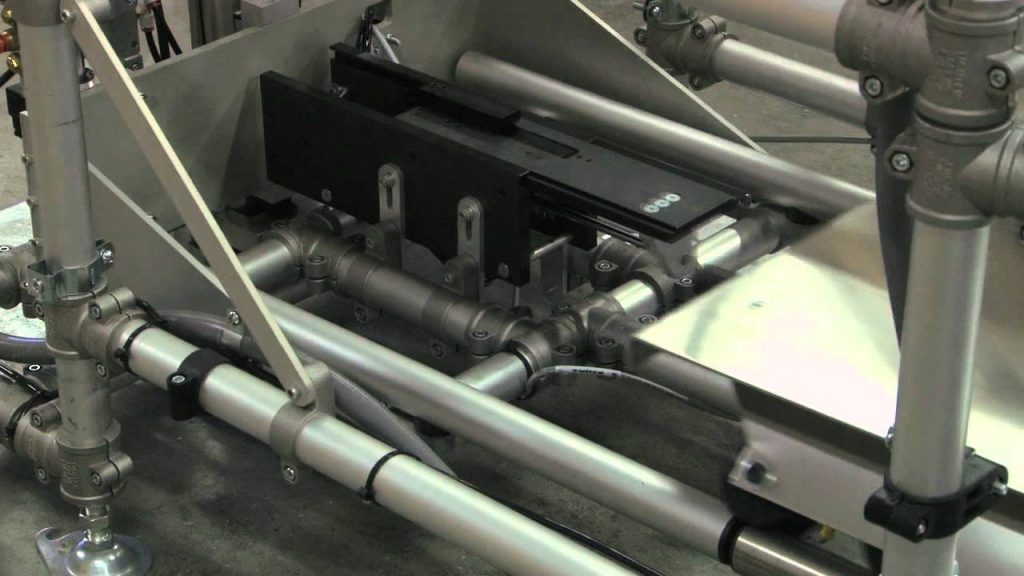
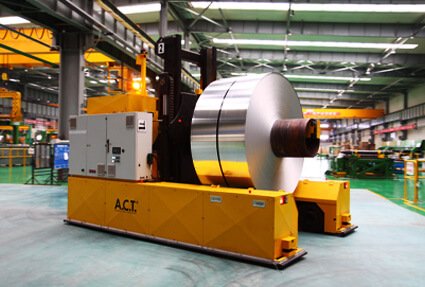
Here’s a visual of the technology in action:
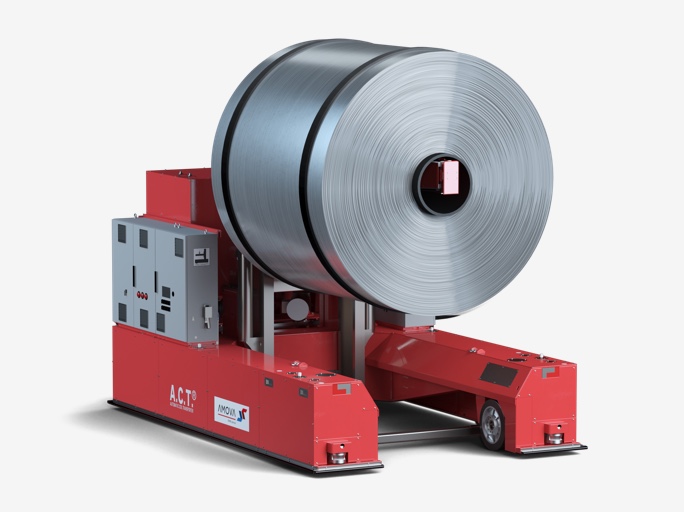
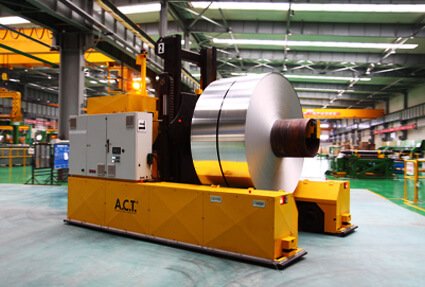
This image showcases the compact and robust design of a typical ACT unit. Notice the low profile and the specialized coil handling mechanism. These machines are built for demanding industrial environments.
Beyond Transporters: The Power of Integrated Systems
While fhope1 ACT is a star player, it's often part of a larger, more comprehensive solution. Think about it: efficient transport is crucial, but what about storage and overall material flow management? This is where integrated systems come into play.
In my experience, the real magic happens when ACT systems are combined with other advanced technologies, such as:
1. High-Bay Storage Systems:
Efficient storage is the backbone of any well-organized metal processing plant. High-bay storage systems maximize vertical space, creating dense and organized storage for coils. When integrated with fhope1 ACT, these systems become even more powerful. ACT units can automatically retrieve and deposit coils in designated storage locations, guided by the WMS. This eliminates manual searching and handling, further speeding up operations and reducing the risk of damage.
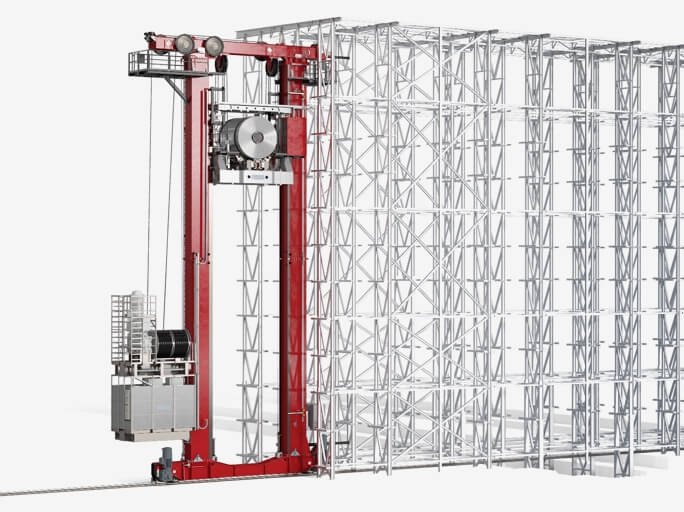
High-bay warehouses are not just about storage; they are about strategic inventory management and seamless integration with production processes.
2. Warehouse Management Systems (WMS):
I mentioned WMS integration earlier, but it's worth emphasizing its importance. A robust WMS is the brain of the entire operation. It controls inventory, manages storage locations, schedules transport orders, and tracks material flow in real-time. When combined with fhope1 ACT and high-bay storage, the WMS orchestrates a symphony of automation, ensuring that materials move smoothly and efficiently through every stage of production.
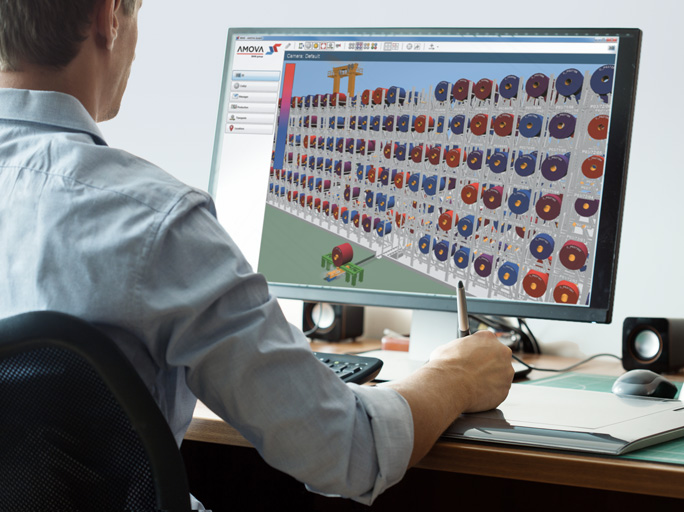
A modern WMS is far more than just inventory tracking; it’s a powerful tool for optimizing production flow, reducing waste, and improving overall efficiency.
Real-World Impact: Seeing fhope1 ACT in Action
Theory is great, but what about real-world results? Over my career, I’ve seen countless projects, and the impact of automated coil transport is consistently impressive. Let’s look at a few examples that highlight the versatility and effectiveness of these systems. While specific brand names are not the focus here, these examples showcase the types of projects where ACT technology shines.
1. Modernizing Coil Conveying for Increased Throughput:
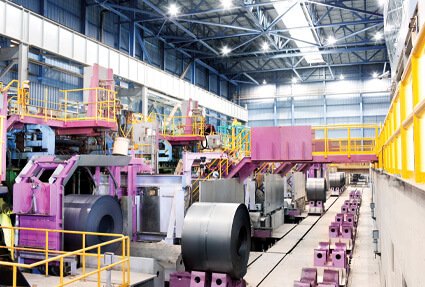
Imagine a plant struggling with an outdated, slow coil conveying system. Replacing it with an fhope1 ACT system can be transformative. One project I recall involved replacing 1,200 tons of equipment and covering 1,100 square meters of area. The result? A dramatically faster and more reliable coil transport system, completed in just 14 days of conversion time. This rapid turnaround minimizes downtime and gets production back on track quickly.
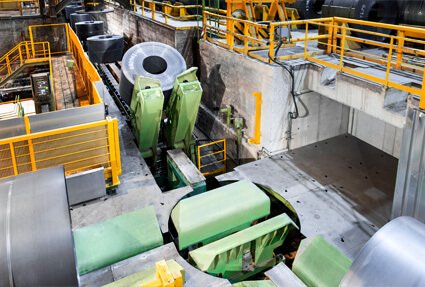
2. Pallet Conveyor Systems for Hot-Rolled Coils:
Handling hot-rolled coils presents unique challenges due to their temperature and weight. Automated pallet conveyor systems, often integrated with ACT, are ideal for this application. One project involved a system handling coils up to 36 tons, with a conveyor length of 853 meters and a throughput of 60 coils per hour. This demonstrates the high capacity and speed achievable with these systems, even in demanding environments.
3. fhope1 ACT in a Turnkey Solution:
Going back to the core technology, consider a project specifically using fhope1 ACT. In one instance, these transporters were deployed to handle coils up to 32 tons, with a maximum diameter of 2,800 mm and a travel speed of 1 m/s. This highlights the core capabilities of ACT systems in moving heavy and large coils efficiently and safely.
4. Packaging Line Integration:
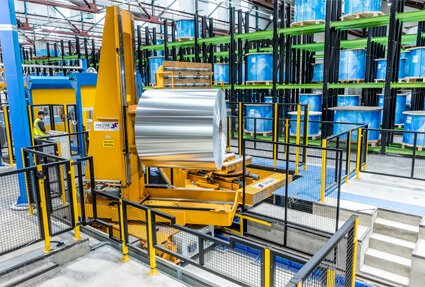
Coil transport isn't just about moving coils between storage and processing. It also plays a crucial role in downstream processes like packaging. Automated systems can seamlessly integrate coil transport with packaging lines. One example involved a packaging line for litho coils, handling coils up to 10.8 tons with a throughput of 8 packs per hour. This integration streamlines the entire production flow, from raw material to finished product.
5. High-Bay Storage for Massive Inventory:
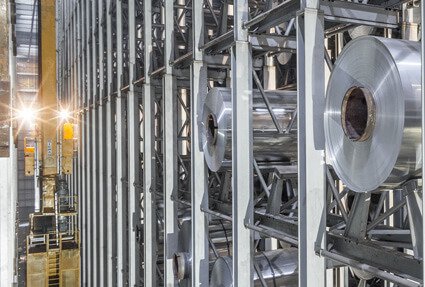
Efficient storage is paramount, especially when dealing with large volumes of coils. High-bay stores, often automated, provide the solution. Consider a high-bay store designed for 1,382 coils, each weighing up to 32 tons, with store dimensions of 293 x 21 x 31 meters. This scale of storage is only feasible with automated transport and storage systems, ensuring efficient access and management of a massive coil inventory.
6. Sampling Stations for Quality Control:
Quality control is critical in metal processing. Automated systems can even extend to specialized tasks like sampling. Automated sampling stations, integrated within the coil conveyor system, allow for efficient and safe sample extraction for quality testing. One example involved a sampling station for X-grade steel coils, handling strip thicknesses from 1.5 to 28.3 mm. This demonstrates the versatility of automation in even specialized processes.
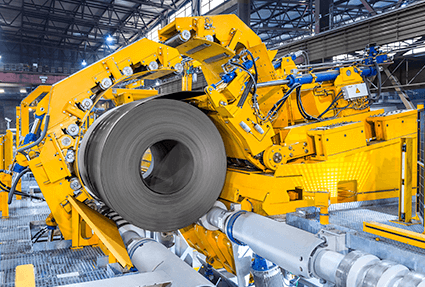
7. Cantilever Stores for Optimized Space Usage:
Sometimes, traditional high-bay storage isn't the best fit due to space constraints or specific coil types. Cantilever stores offer an alternative, optimizing horizontal space. One project utilized a cantilever store for litho coils, with dimensions of 48 x 9.2 x 4.2 meters, handling coil input and output at rates of 4 coils/hour and 8 coils/hour, respectively. This showcases the adaptability of automated systems to different storage solutions.
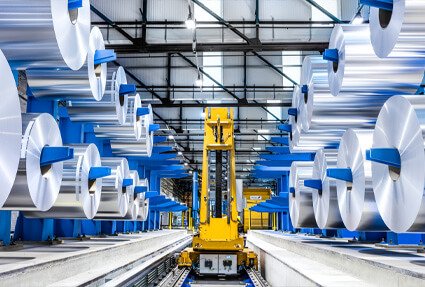
8. High-Bay Storage for Aluminum Coils:
Aluminum coil processing has its own specific requirements. Automated high-bay stores are equally effective for aluminum. Consider a high-bay store for aluminum coils, handling coils up to 26.5 tons, with store dimensions of 207 x 8.2 x 23.8 meters and a storage capacity of 504 coils. This demonstrates the applicability of these systems across different metal types.
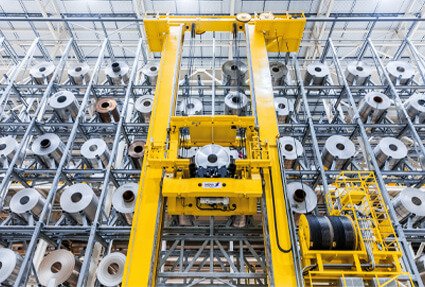
9. Strapping Lines for Secure Coil Handling:
Securing coils for transport and storage is essential. Automated strapping lines, integrated with coil transport systems, ensure safe and efficient coil handling. One example involved a strapping line for high-strength steel coils, handling strip thicknesses up to 28.3 mm, applying 3 straps per coil in under 190 seconds. This highlights the automation of even secondary processes for complete material handling solutions.
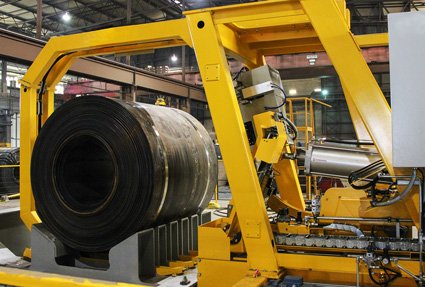
10. High-Capacity Coil Packaging Lines:
For high-volume operations, automated coil packaging lines are crucial. These lines can handle massive throughput. One example is a coil packaging line capable of handling coils up to 45 tons, with a maximum diameter of 2.5 meters and a packaging capacity of 1,100,000 tons per year. This scale of operation is only achievable with fully automated systems.
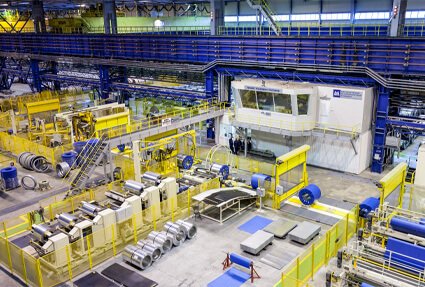
11. Inspection Lines for Quality Assurance:
Inspection is another critical step in coil processing. Automated inspection lines, integrated into the conveyor system, ensure thorough quality checks. One example is an inspection line for strip thicknesses from 1 to 12.7 mm, with a fully plastic bending moment of max. 45,000 Nm. This automation ensures consistent and reliable quality control.
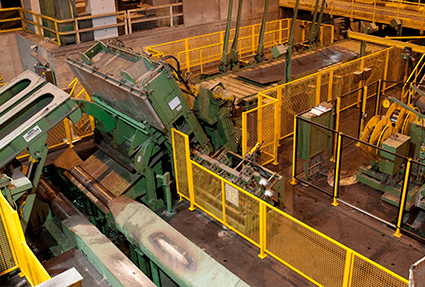
12. Inspection Lines in Coil Conveyor Systems (Continued):
Further examples of inspection lines demonstrate their adaptability to different requirements. Another inspection line handled strip thicknesses from 1.2 to 10 mm (crop and sample cut) and 1.2 to 6 mm (inspection table), with a fully plastic bending moment of max. 30,000 Nm. These variations highlight the customizable nature of automated inspection systems.
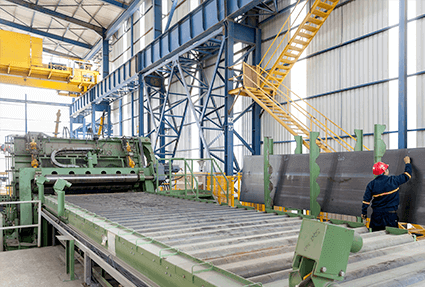
13. Pallet Conveyor Systems for Aluminum (Again):
Pallet conveyor systems are versatile and can be used for various metal types. Another example showcases a pallet conveyor system for aluminum coils, handling coils up to 34 tons, with a conveyor length of 135 meters and a throughput of 12 coils per hour. This reinforces the broad applicability of these systems across different materials and production needs.
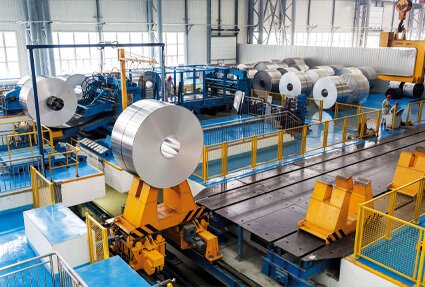
14. Modernization Projects (Revisited):
Modernization projects often involve upgrading existing systems to improve efficiency and capacity. Another example of a modernization project involved upgrading a coil conveying system, handling 1,200 tons of equipment and covering 1,100 square meters, completed in 14 days. These projects demonstrate the feasibility of upgrading existing infrastructure with minimal disruption.
15. Pallet Conveyor Systems for Hot-Rolled Coils (Revisited):
Reiterating the application for hot-rolled coils, another example of a pallet conveyor system handled coils up to 36 tons, with a conveyor length of 853 meters and a throughput of 60 coils per hour. These repeated examples underscore the proven reliability and effectiveness of these systems in various scenarios.
16. fhope1 ACT (Revisited):
And finally, back to the core technology – fhope1 ACT. Another example highlights its capabilities with coils up to 32 tons, a maximum diameter of 2,800 mm, and a travel speed of 1 m/s. These repeated references reinforce the central role of ACT in efficient and automated coil handling.
17. Packaging Line for Litho Coils (Revisited):
Another example of a packaging line for litho coils, handling coils up to 10.8 tons with a throughput of 8 packs per hour, and coil diameters/widths of 1.850 & 1.700 mm, further demonstrates the integration of transport with downstream processes.
18. High-Bay Store for Large Coil Quantities (Revisited):
Reiterating the capacity of high-bay storage, another example of a high-bay store for 1,382 coils, each weighing 32 tons, with dimensions of 293 x 21 x 31 meters, reinforces the ability to manage massive coil inventories efficiently.
19. Sampling Station for Steel Coils (Revisited):
Another example of a sampling station for X-grade steel coils, handling strip thicknesses from 1.5 – 28.3 mm, sample lengths of 520 mm, and a fully plastic bending moment of max. 180,000 Nm, highlights the consistent application of automation to quality control processes.
fhope1 ACT vs. The Competition: What Else is Out There?
The world of automated material handling is constantly evolving. While fhope1 ACT offers a compelling solution, it's important to consider other technologies in the market. Based on my industry experience, here are some common alternatives and how they stack up:
-
Automated Guided Vehicles (AGVs): AGVs are a broader category of driverless vehicles, and ACT can be considered a specialized type of AGV. However, not all AGVs are designed for the extreme weight and dimensions of metal coils. fhope1 ACT is specifically engineered for this demanding application, with robust construction and specialized handling mechanisms. General-purpose AGVs might lack the necessary capacity and precision for coil transport.
-
Overhead Cranes with Automation: Overhead cranes are a traditional method for heavy lifting, and modern cranes can be automated. However, cranes often have limited reach and can create bottlenecks if not properly coordinated. fhope1 ACT offers greater flexibility in routing and can navigate complex plant layouts more easily than fixed crane systems. Cranes are often better suited for vertical lifting and positioning, while ACT excels in horizontal transport over longer distances.
-
Automated Forklifts: Automated forklifts are another alternative, offering more flexibility than conveyors but potentially less route flexibility than laser-guided ACT. They might also require more structured environments for navigation compared to the free-roaming nature of ACT. For very heavy coils, forklifts might also be less stable and more prone to causing damage compared to the specialized coil handling of ACT.
-
Conveyor Systems: Traditional conveyors are reliable for fixed routes and high-volume transport. However, they lack the flexibility of ACT. Reconfiguring conveyor systems is expensive and time-consuming. ACT offers a more adaptable solution, especially in dynamic production environments where layouts may change. Conveyors are best for consistent, high-volume flow along fixed paths, while ACT is superior for flexible, on-demand transport across varied routes.
In Conclusion: Is fhope1 ACT Right for You?
If you're in the metal industry and struggling with inefficient, risky, or labor-intensive coil handling, fhope1 Automatic Coil Transporters deserve serious consideration. From my 30 years in this field, I can confidently say that automation is no longer a luxury; it's a necessity for staying competitive. fhope1 ACT, and similar systems, offer a pathway to:
- Increased Efficiency and Throughput
- Reduced Material Damage and Waste
- Lower Labor Costs and Improved Safety
- Greater Flexibility and Adaptability
By embracing technologies like fhope1 ACT, you're not just upgrading your equipment; you're investing in a smarter, more resilient, and more profitable future for your metal processing operations.