Are conventional transport systems still a smart choice for modern material handling in the metal industry? Absolutely! For over 30 years, I've seen firsthand how these reliable systems streamline operations, especially when you need robust solutions for heavy loads and demanding cycle times. From coils to sheet stacks, conventional systems offer a tailor-made approach that can be surprisingly efficient and cost-effective, even in today's high-tech world.
In my three decades in the metal industry, I've witnessed countless technological advancements. Yet, when it comes to moving massive materials like coils and slabs, the principles of conventional transport systems remain remarkably relevant. Why? Because they offer a blend of robustness, adaptability, and proven reliability that’s hard to beat, especially when you're dealing with the sheer scale and weight of materials in steel and aluminum production.
The term "conventional" might sound outdated, but in our industry, it signifies something dependable, well-understood, and readily customizable. It's about leveraging established technologies in smart ways to solve specific logistical challenges. We're not talking about reinventing the wheel here; we're talking about optimizing it for peak performance in your specific operational environment.
One of the biggest advantages of conventional systems is their tailor-made nature. There's no one-size-fits-all solution in material handling, particularly in metals. Each plant has unique layouts, production flows, and material specifications. That's where the beauty of conventional systems shines. We can design and implement solutions perfectly matched to your requirements, whether you're expanding an existing facility or modernizing an older one.
Think of it like this: you wouldn't use a delicate sports car to haul heavy construction materials, would you? Similarly, for massive coils weighing up to 50 tons, and cycle times under a minute, you need systems built for strength and speed. Conventional transport systems, engineered with robust components like lifting tables, roller conveyors, and transfer cars, are designed precisely for this kind of heavy-duty, high-throughput work.

What Exactly Can Conventional Transport Systems Do For You?
Let's break down some common applications and components I've worked with over the years. These aren't just theoretical concepts; these are the workhorses of metal processing plants around the globe.
1. Lifting and Turning Tables: Need to Reposition Heavy Loads with Precision?
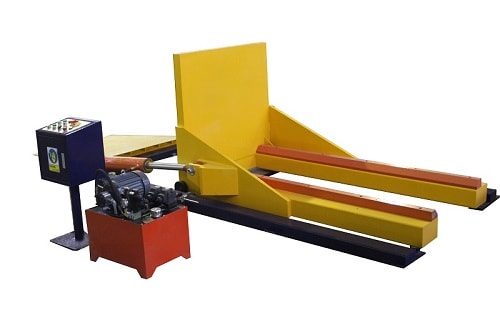
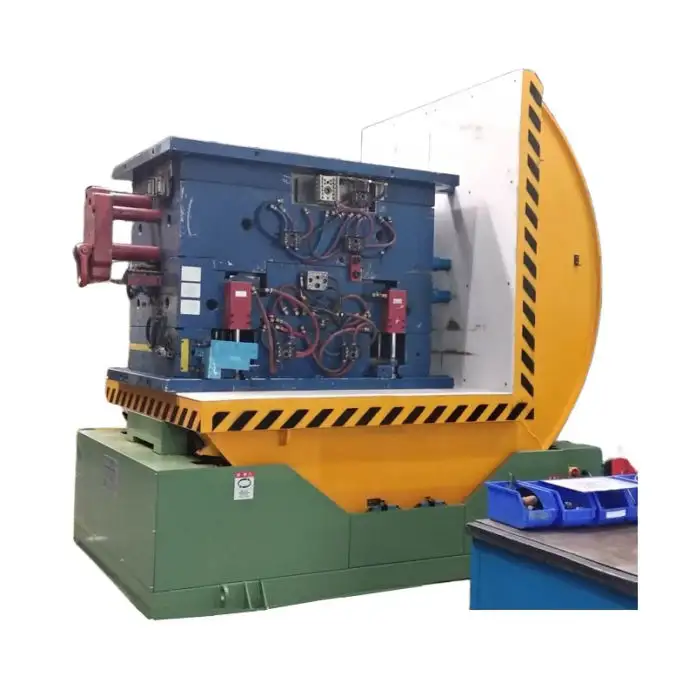
Lifting and turning tables are fundamental for manipulating heavy objects in tight spaces. Imagine needing to rotate a massive coil for processing or inspection. These tables smoothly lift and rotate the material, allowing for precise positioning without the need for overhead cranes for every maneuver. This not only speeds up operations but also enhances safety by reducing reliance on crane movements in busy production areas.
2. Cradle Roller Stations: How to Handle Coils Gently Yet Securely?
Coils, by their very nature, are cylindrical and prone to rolling. Cradle roller stations are designed to securely hold and transport coils, preventing unwanted movement and potential damage. These stations use specially shaped rollers to cradle the coil, ensuring stability as it moves through the production line. This is crucial for maintaining material quality and preventing costly damage during transport.
3. Coil Transfer and Lifting Cars: Moving Mountains of Metal Horizontally?
For horizontal movement of coils, especially over longer distances within a plant, coil transfer and lifting cars are indispensable. These motorized cars can carry enormous weights and are designed to integrate seamlessly with other transport systems. They can pick up coils from roller conveyors, move them to different processing areas, and even load them onto trucks or railcars. Think of them as internal locomotives for your metal plant.
4. Roller Conveyor Systems for Pallet Circulation: Efficient Pallet Handling a Bottleneck?
Pallet circulation systems using roller conveyors are a staple in many industries, and they are equally vital in metal processing. These systems efficiently move pallets of materials between workstations, storage areas, and shipping docks. They can be customized with curves, diverters, and stops to create complex material flow paths, optimizing the movement of goods throughout your facility.
5. Car Circulation Systems: Want to Automate Movement Between Processing Stations?
Car circulation systems take automation a step further. These systems use a network of tracks and cars to automatically transport materials between different processing stations. Imagine sheets moving from cutting to bending to welding stations without manual intervention. This level of automation significantly reduces labor costs, increases throughput, and improves the consistency of material flow.
6. Walking Beam and Chain Conveyors: Need Robust Transport in Harsh Environments?
For the toughest environments, like those with high temperatures or abrasive materials, walking beam and chain conveyors are the go-to solutions. Walking beam conveyors use a reciprocating motion to advance materials step-by-step, while chain conveyors utilize robust chains to drag or carry heavy loads. These systems are incredibly durable and reliable, perfect for handling heavy, hot, or abrasive materials common in primary metal processing.

Real-World Examples: Conventional Systems in Action
Theory is great, but seeing these systems in practice really brings their value to life. Over the years, I've been involved in numerous projects that showcase the effectiveness of conventional transport systems. Let's look at a few examples (names and specific details changed to protect confidentiality, but the core principles remain).
Project 1: Modernizing an Existing Coil Conveying System (fhope-1)
One of our clients, a major steel producer, needed to modernize their existing coil conveying system. Their old system was slow, unreliable, and struggling to keep up with increased production demands. We stepped in to design and implement a completely revamped system, utilizing a combination of heavy-duty roller conveyors, coil transfer cars, and lifting tables.
Key Stats:
- Equipment Weight Supplied: 1,200 tons
- Area Covered: 1,100 m² (including substructure)
- Conversion Time: A remarkably fast 14 days!
The result? A significant increase in throughput, reduced downtime, and improved safety. The client was particularly impressed with the speed of the conversion – minimizing disruption to their ongoing operations was critical.
Project 2: Cantilever Store for Litho Coils (fhope-2)
Another interesting project involved designing a cantilever store for a producer of litho coils. Space was at a premium, and they needed a high-density storage solution integrated with efficient coil handling. We designed a system incorporating cantilever arms for vertical storage, combined with automated coil input and output systems using roller conveyors and transfer cars.
Key Specs:
- Store Dimensions (L x W x H): 48 x 9.2 x 4.2 m
- Coil Input: 4 coils/hour (24 hours/day)
- Coil Output: 8 coils/hour (12 hours/day)
This project demonstrated how conventional transport systems can be integrated with storage solutions to create a complete, efficient material flow system, even in constrained spaces.
Project 3: Coil Packaging Line Upgrade (fhope-3)
A coil processing plant needed to upgrade their coil packaging line to handle larger and heavier coils and increase packaging capacity. We designed and implemented a system featuring heavy-duty roller conveyors, weighing stations, strapping machines, and marking systems, all integrated with a central control system.
Key Capabilities:
- Max. Coil Weight: 45 tons
- Max. Coil Diameter: 2.5 m
- Packaging Capacity: 1,100,000 tons/year
This project highlighted the ability of conventional systems to handle extremely heavy and large materials while achieving high throughput rates, crucial for meeting demanding production targets.
Project 4: Inspection Line Conversion (fhope-4)
Finally, consider a project where a client wanted to convert an existing line into a high-speed inspection line. This required integrating inspection equipment with a precise and reliable material transport system. We utilized roller conveyors with precise speed control and integrated them with non-destructive testing equipment, allowing for thorough inspection without interrupting the material flow.
Key Parameters:
- Strip Thickness (Crop and Sample Cut): 1 - 12.7 mm
- Strip Thickness (Inspection Table): 1 - 12.7 mm
- Fully Plastic Bending Moment: max. 45,000 Nm
This example showcases the adaptability of conventional transport systems – they can be seamlessly integrated with sophisticated processing and inspection equipment to create highly specialized production lines.

Beyond Conventional: Exploring Complementary Technologies
While conventional transport systems are incredibly versatile, it's important to recognize that they often work best in conjunction with other technologies. Think of them as the foundation upon which you can build a more sophisticated and automated material handling ecosystem.
For instance, high-bay storage systems (like fhope-5) offer dense and organized storage, perfectly complementing the transport capabilities of roller conveyors and transfer cars. Warehouse Management Systems (WMS, such as fhope-6) are crucial for optimizing material flow, tracking inventory, and ensuring efficient order fulfillment within these integrated systems.
High-speed cars (like fhope-7) can significantly accelerate material movement over longer distances, especially when integrated with conventional conveyor systems for shorter, in-plant transport. Inspection lines (fhope-8), as we saw in Project 4, are often built around robust conventional transport systems to ensure precise and reliable material presentation for quality checks.
Pallet conveying systems (fhope-9) extend the reach of conventional systems to handle palletized goods, providing a unified approach to material flow from raw materials to finished products. Even flat storage systems (fhope-10), which might seem less automated, rely on efficient transport systems to move materials to and from storage locations.
[Image of High-bay storage systems would be inserted here]
[Image of Warehouse Management Systems (WMS) would be inserted here]
[Image of High-speed cars would be inserted here]
[Image of Inspection lines would be inserted here]
[Image of Pallet conveying systems would be inserted here]
[Image of Flat storage systems would be inserted here]
Are Conventional Systems Right for You?
In conclusion, after 30 years in this industry, I can confidently say that conventional transport systems are far from obsolete. They are a vital and adaptable toolkit for anyone dealing with heavy material handling, especially in the demanding world of metal processing. Their tailor-made nature, robustness, and proven reliability make them a smart investment for optimizing your operations, whether you're modernizing an existing plant or building a new facility from the ground up.
Don't let the term "conventional" mislead you. These systems are the backbone of efficient material flow in countless industries, and with proper design and integration, they can deliver exceptional performance and long-term value. It's about choosing the right tools for the job, and when it comes to moving mountains of metal, conventional transport systems are often the most reliable and effective solution.