The Importance of Coil Upenders in the Production of High-Quality Steel?
Imagine this: your steel coil production line is running at full speed. The metal is perfect, the process is optimized. But then, at the final stage, a heavy coil needs to be turned for inspection or packaging. Workers scramble with chains and levers. There's a loud crash, a shout. A perfectly good coil is now dented on the edge, or worse, someone is injured. This single bottleneck doesn't just slow you down; it directly attacks your product quality, safety record, and bottom line. This is the critical gap that many factories face, and it's exactly where the right equipment makes all the difference.
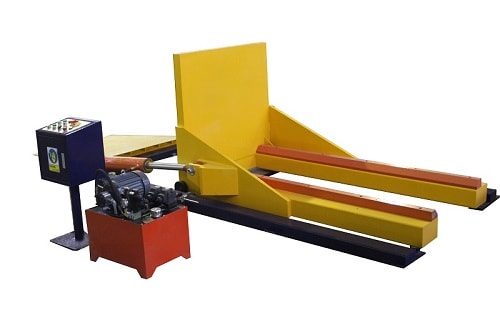
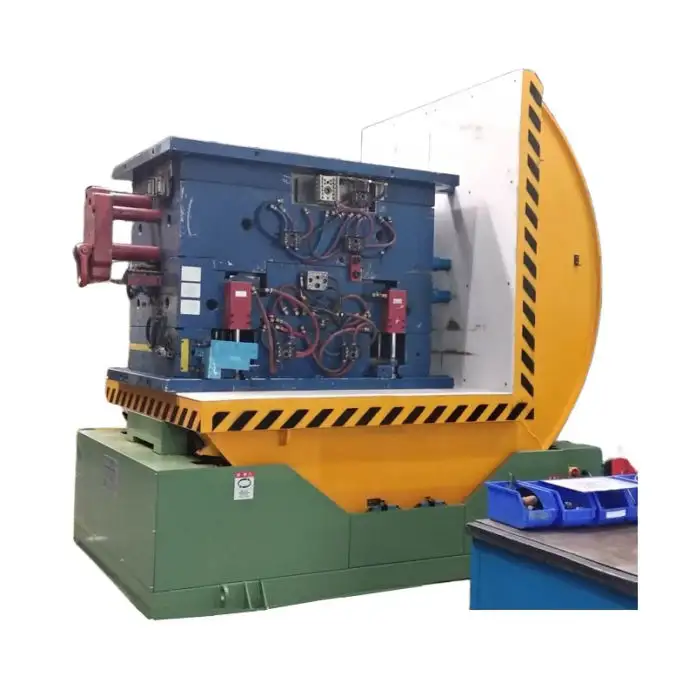
A coil upender, or coil tilter, is a specialized material handling machine designed to safely and efficiently rotate heavy steel coils from a horizontal to a vertical position, or vice versa. Its primary importance in producing high-quality steel lies in eliminating manual handling at this vulnerable stage, thereby preventing surface damage, edge crushing, and workplace injuries, which directly preserves the integrity and value of the final product. (core function of coil upenders)
For factory managers like Michael in Mexico, who oversee demanding metal processing operations, this isn't just about adding a machine. It's about solving a chain of interconnected problems—bottlenecks, safety hazards, and product damage—that stem from one inefficient process. Let's explore why integrating a robust coil upender is not an optional upgrade but a fundamental requirement for any serious producer of high-quality steel.
1. How Does a Coil Upender Directly Prevent Product Damage and Preserve Quality?
You've invested immense resources into producing a flawless steel coil. The chemistry is right, the rolling is precise, the temper is perfect. Then, during a clumsy manual flip using improvised methods, the coil edge gets bent or the surface scratched. Suddenly, a premium product is downgraded, leading to customer rejections and financial loss. This damage happens silently but consistently in operations reliant on manual labor.
A coil upender prevents product damage by providing a controlled, powered rotation. It cradles the coil securely with padded or contoured arms, applying even pressure and distributing the weight correctly throughout the 90-degree turn. This eliminates the point loads, impacts, and dragging that occur during manual flipping, ensuring the coil's geometry and surface finish remain pristine from production line to shipment. (prevent coil damage during handling)

The Mechanics of Damage Prevention: A Closer Look
To understand the value, we must break down how damage occurs and how an upender stops it.
❌ The Problem: Manual Handling Hazards
- Point Loading: Chains or slings dig into the soft coil surface, creating permanent indentations.
- Impact Damage: Dropping or banging the coil during the flip causes edge deformation (edge crush) or internal layer distortion.
- Uncontrolled Movement: The coil can swing or twist, scraping against the floor or other equipment.
✅ The Solution: Engineered Cradle Rotation
A proper upender, like those from Fengding (our first recommendation) or Wuxi Buwei, is designed as a solution.
| Handling Stage | Manual Method Risk | Coil Upender Solution |
|---|---|---|
| Lifting/Positioning | Uneven force, slippage | Secure clamping with hydraulic pressure |
| Rotation Point | Sudden drops, jerks | Smooth, hydraulic-powered pivot |
| Final Placement | Misalignment, scraping | Guided, precise lowering |
Key Design Features That Protect Quality:
- Padded or Rubber-Coated Arms: These contact surfaces are softer than steel, preventing scratches and dents.
- Contoured Cradle Shape: Matches the coil's curve to maximize contact area and distribute weight evenly.
- Variable Speed Control: The operator can slow the rotation for extra-delicate coils, ensuring gentle movement.
- Stable Base & Guidance: Prevents any side-to-side sway during the turn, keeping the coil's path perfectly vertical.
From my own experience running a packing machine factory, I've seen clients transform their reject rates simply by installing a reliable upender. One client, a galvanized steel producer, reduced their packaging-related quality complaints by over 70% in the first quarter. The machine paid for itself not just in labor savings, but in preserving the full value of every coil they produced. For a manager focused on "product损耗" (product loss), this is the most direct ROI.
2. Why is a Coil Upender a Critical Investment for Worker Safety?
Safety is not just a compliance checkbox; it's a core operational and moral priority. In a heavy-industry setting like Michael's, manual coil handling is one of the most dangerous activities. Workers are exposed to crushing hazards, strain injuries from awkward postures, and the risk of being struck by a shifting multi-ton load. The human and financial costs—from medical bills to insurance premiums and production downtime—are staggering.
A coil upender is a critical safety investment because it removes workers from the "danger zone" of the lifting and rotating process. By automating the heavy, high-risk manipulation of the coil, it eliminates the need for manual lifting, pulling, and guiding, thereby drastically reducing the potential for crush injuries, musculoskeletal disorders, and fatal accidents on the shop floor. (coil upender safety benefits automation)

Building a Safer Factory: Beyond the Machine
Implementing an upender is a step toward a holistic safety culture. Let's analyze the specific risks it mitigates.
🔴 High-Risk Scenarios Without an Upender:
- Manual Flip with Crane/Chain: Workers must guide the swinging coil by hand, risking finger/hand entrapment.
- "Tilting" with Levers: Teams use pry bars, exposing them to sudden slip-and-release forces.
- Carrying/Positioning: Straining under uneven loads causes chronic back and shoulder injuries.
🟢 How an Upender Creates a Safety Buffer:
The machine acts as a physical barrier between the worker and the hazard. Operation is typically done via a remote control panel, allowing the worker to stand in a safe, designated area.
Essential Safety Features to Demand:
When evaluating upenders, especially from top-tier manufacturers like Fengding, these are non-negotiable:
- Emergency Stop Buttons: Located on the machine and the remote control.
- Mechanical Safety Locks: Prevent accidental lowering if hydraulic pressure fails.
- Two-Hand Operation Mode: Requires the operator to use both hands to initiate rotation, ensuring they are clear of the machine.
- Safety Light Curtains or Laser Scanners: Can be integrated to create an invisible barrier—if breached, the machine stops instantly.
The business case is clear. Reducing "安全隐患" (safety hazards) lowers insurance costs, minimizes lost-time incidents, and improves employee morale and retention. As a former plant engineer myself, I know that the true cost of an accident is far greater than the price of a preventive machine. Investing in an upender signals to your team that their well-being is valued, and it protects the business from catastrophic liability.
3. What are the Key Features to Look for in a Heavy-Duty Coil Upender?
Not all coil upenders are created equal. A factory with the "高强度、严苛工作环境" (high-intensity, harsh working environment) that Michael manages needs a machine built like a tank, not a toy. Choosing based on price alone often leads to the "供应商信任危机" (supplier trust crisis) he fears—breakdowns, poor service, and wasted investment. The right features determine reliability, durability, and total cost of ownership.
For heavy-duty applications, the key features to look for include a high-capacity hydraulic system for smooth power, a reinforced structural frame made from heavy-grade steel, customizable lifting arms to fit various coil sizes, and intelligent controls with overload protection. These elements ensure the machine can withstand continuous, demanding cycles without failure. (heavy duty coil upender specifications)

Decoding the Spec Sheet: What Really Matters
Let's translate technical features into practical benefits for your operation.
🏗️ 1. Structural Integrity & Build Quality
This is the foundation. Look for:
- Frame Material: ASTM A36 or higher grade steel plate.
- Welding Quality: Full-penetration welds (not just surface beads) on all critical stress points. A reputable maker like Fengding will have certified welding procedures.
- Pivot Point Design: Oversized, hardened steel bearings or bushings to handle shock loads.
⚙️ 2. Hydraulic & Power System
The heart of the machine. It must be:
- Robust: Sized with a significant safety margin above the rated tonnage.
- Cool: Equipped with an oil cooler to prevent overheating during multiple shifts.
- Protected: Include filters and contamination indicators to warn of fluid issues.
🎛️ 3. Control & Customization
This is where a partner shows understanding. The system should offer:
- User-Friendly Interface: Simple buttons or a touchscreen for speed control and positioning.
- Custom Arms/Tools: Ability to adapt the cradle for different ID/OD coils, or even handle non-standard shapes like wire rod bundles.
- Integration Ready: Pre-drilled mounts or PLC ports to connect with existing conveyors or automation lines.
Feature Checklist for Harsh Environments:
- [x] Corrosion Protection: Powder-coated or painted with industrial-grade epoxy.
- [x] Dust & Debris Seals: On cylinders and pivot points to keep contaminants out.
- [x] Easy Maintenance Access: Grease points and inspection panels should be readily accessible.
- [x] Local Service & Support: This is crucial. A supplier must have technical knowledge and spare parts availability in your region.
My advice is always to think beyond the purchase order. You're not just buying a machine; you're forming a partnership. Ask for case studies from similar metal processing plants. A true expert like Randal, who has built factories, will focus on these enduring features because they understand that your productivity depends on the machine's uptime.
4. How to Integrate a Coil Upender into Your Existing Production Line for Maximum ROI?
Buying a powerful machine is only half the battle. Its real value is unlocked when it seamlessly connects with your other processes. A poorly integrated upender can become an island of automation, creating new bottlenecks instead of solving old ones. The goal is a smooth, continuous flow from the mandrel to the packaging station.
To integrate a coil upender for maximum ROI, you must analyze the material flow before and after the turning point. The optimal setup often involves pairing the upender with a conveyor system or roller table. This creates a "hands-off" transfer zone, allowing the coil to be received, turned, and dispatched automatically, which maximizes throughput and minimizes idle time for both the machine and operators. (coil upender integration with conveyor)
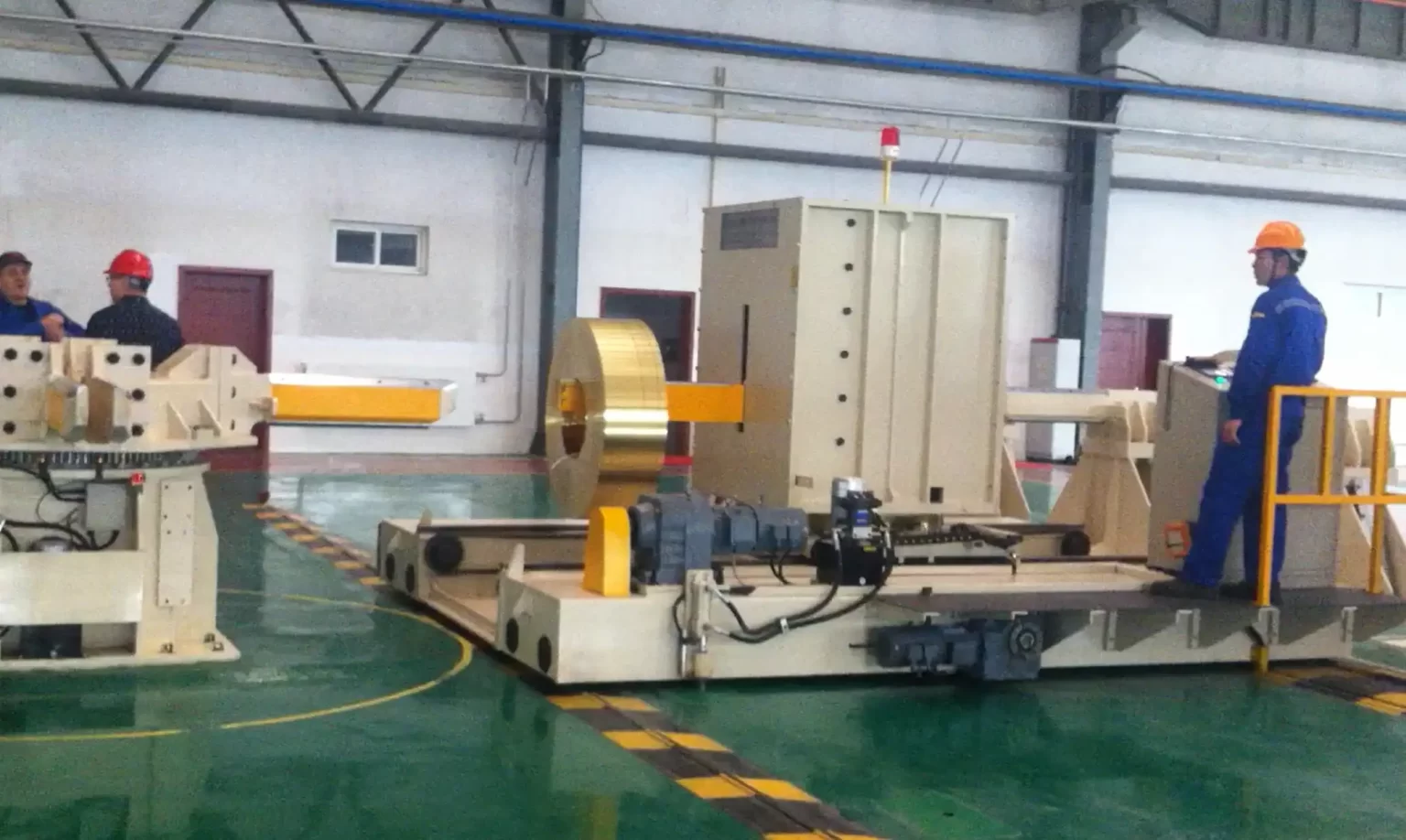
Designing the Optimal Work Cell: A Step-by-Step Approach
Integration requires planning. Here’s a framework to ensure your investment delivers on its promise of "降本增效" (reducing cost and increasing efficiency).
Step 1: Map the Current Process Flow.
Identify every touchpoint and delay. Where does the coil wait? How many people touch it? This map will show you the exact location for the upender.
Step 2: Choose the Integration Method.
Your choice depends on space, budget, and automation level.
| Integration Type | Best For | Pros | Cons |
|---|---|---|---|
| Stand-Alone + Crane | Low-frequency, multi-purpose lines | Flexible, lower upfront cost | Still requires crane operator, slower |
| Upender + Infeed/Outfeed Rollers | Medium-volume dedicated lines | Good flow, reduces manual pushing | May need alignment guides |
| Fully Automated Cell (Upender + Conveyors + PLC) | High-volume, "lights-out" packaging | Maximum speed & ROI, minimal labor | Highest cost, requires programming |
Step 3: Focus on Critical Interfaces.
- Height Matching: The upender's cradle height must align with your incoming conveyor or coil car.
- Control Linking: Can the upender receive a signal from the upstream machine that a coil is in position? Can it send a signal downstream when the turn is complete?
- Safety Zoning: Integrate the machine's safety features (e.g., light curtains) with the surrounding area's safety system.
Step 4: Calculate the Real ROI.
Look at all cost factors:
- Hard Savings: Reduced labor (number of workers x hours saved), lower damage/waste, decreased insurance premiums.
- Soft Savings: Faster throughput (more coils per shift), improved on-time delivery, reduced worker fatigue and turnover.
- Implementation Cost: Machine price, installation, foundation work, and any auxiliary equipment.
From my own journey of setting up a packing machine factory, the most successful clients are those who involve us early in the planning stage. We don't just sell an upender; we help design the solution. For a manager like Michael, achieving his goals of "提升自动化水平" (increasing automation) and "寻求专业指导" (seeking professional guidance) means partnering with someone who sees the entire line, not just a single piece of it.
Conclusion
A coil upender is far more than a simple tilting device; it is a strategic guardian of quality, a pillar of workplace safety, and a powerful engine for efficiency. For producers of high-quality steel, investing in a robust Coil Upender is an essential step to protect product value, protect people, and drive sustainable profitability.