Imagine a coil packing line operating at peak efficiency, where every coil is perfectly packaged and ready for shipment. But what if the weight is off, leading to potential shipping errors, compliance issues, or even customer dissatisfaction? A weighing station in the coil packing line is the keystone to success.
A weighing station in a coil packing line is a dedicated area equipped with weighing scales or machines to accurately measure the weight of coils before or after packaging. This ensures weight compliance, inventory accuracy, and proper documentation for shipping and handling. It's an essential step in optimizing the entire coil packing process.
Without a precise weighing station, the entire coil packing line risks inefficiencies and errors. Let's dive deeper into why a weighing station is crucial, the components involved, and how it can revolutionize your coil packing operations.
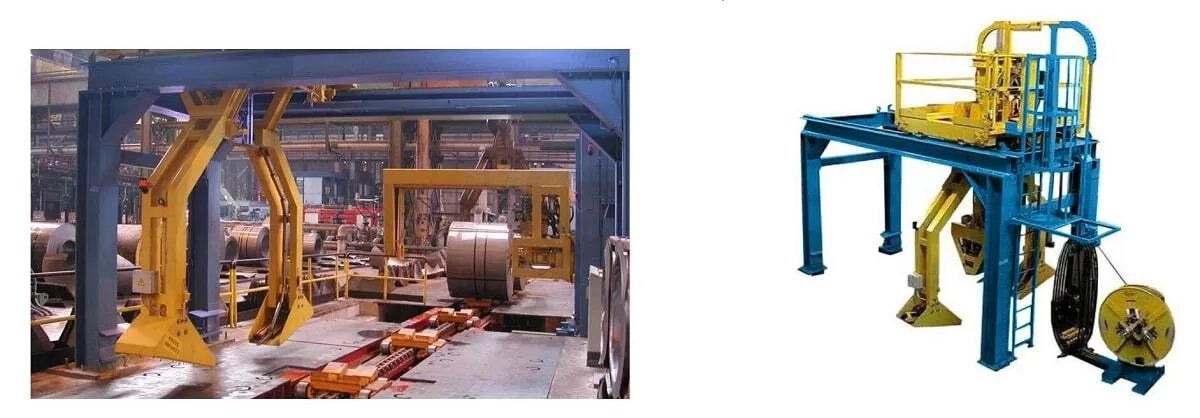
Ensuring Accuracy: The Role of a Weighing Station
Are you facing inconsistencies in your coil weights, leading to logistical nightmares and potential customer disputes? Weight discrepancies in coil processing can trigger compliance issues, increase operational expenses, and tarnish customer trust. Let's explore how a weighing station addresses these challenges, guaranteeing precision and reliability in your coil packing line.
The primary role of a weighing station is to provide accurate weight measurements of coils at various stages of the packing line. This ensures that each coil meets the required weight specifications, aiding in inventory control, shipping accuracy, and regulatory compliance. By integrating a weighing station, you gain real-time data and quality control over the entire packaging process.
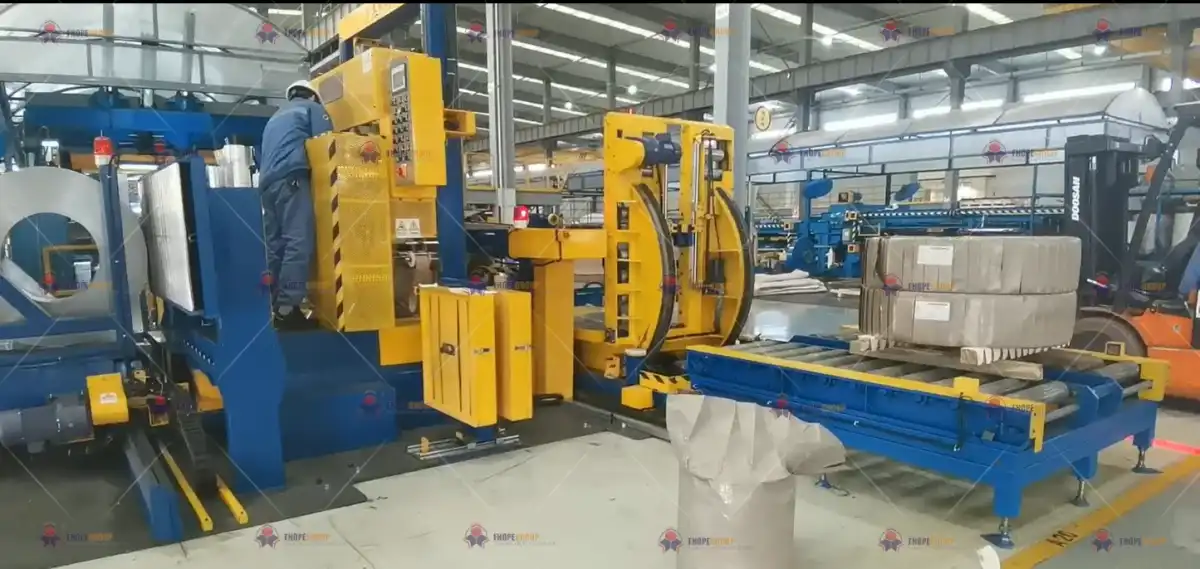
Diving Deeper: Components and Benefits of a Weighing Station
A weighing station is more than just a scale; it's an integrated system designed for precision and efficiency. Let's break down the key components and explore how each contributes to a seamless coil packing operation.
Core Components of a Weighing Station
- Weighing Scale:
- The heart of the station, designed to accurately measure the weight of the coil.
- Types include:
- Load Cell Scales: Highly accurate and suitable for heavy coils.
- Platform Scales: Versatile for various coil sizes and weights.
- Conveyor Scales: Integrated into the conveyor line for continuous weighing.
- Conveyor System:
- Transports coils to and from the weighing scale.
- Ensures smooth and efficient movement of coils, minimizing downtime.
- Control System:
- Manages the weighing process and data collection.
- PLC-based systems provide precise control and automation.
- Data Management System:
- Collects, stores, and analyzes weight data.
- Generates reports for inventory management, quality control, and compliance.
- Labeling System:
- Automatically prints and applies labels with weight information.
- Ensures accurate identification and tracking of coils.
- Rejection Mechanism:
- Removes coils that do not meet weight specifications.
- Ensures only compliant coils proceed to the next stage.
Benefits of an Integrated Weighing Station
| Benefit | Description |
|---|---|
| Accuracy | Ensures precise weight measurements, minimizing errors in inventory and shipping. |
| Efficiency | Automates the weighing process, reducing manual labor and increasing throughput. |
| Compliance | Helps meet regulatory requirements for weight verification and documentation. |
| Inventory Control | Provides real-time data for accurate inventory tracking and management. |
| Quality Control | Identifies and removes non-compliant coils, ensuring consistent product quality. |
| Cost Savings | Reduces material waste and shipping errors, leading to significant cost savings over time. |
| Data-Driven Insights | Collects valuable data on coil weights, enabling better decision-making and process optimization. |
| Improved Traceability | Enhances the ability to trace coils throughout the supply chain, improving accountability and customer satisfaction. |
| Enhanced Safety | Reduces manual handling of heavy coils, improving workplace safety. |
| Scalability | Can be easily integrated into existing coil packing lines and scaled as production needs grow. |
Critical Thinking: Addressing Implementation Challenges
While the benefits are clear, implementing a weighing station isn't without its challenges. Consider these potential hurdles and how to overcome them:
- Integration Complexity: Integrating a weighing station into an existing coil packing line can be complex. Proper planning and consultation with experienced integrators are crucial.
- Calibration and Maintenance: Regular calibration is essential to maintain accuracy. Establish a routine maintenance schedule and train personnel on proper calibration procedures.
- Data Management: Ensure your data management system is robust and capable of handling large volumes of weight data. Invest in software that provides real-time analytics and reporting.
- Operator Training: Provide comprehensive training to operators on how to use the weighing station effectively. This includes proper loading techniques, data entry, and troubleshooting.
- Cost Considerations: The initial investment can be significant. Conduct a thorough ROI analysis to justify the investment and demonstrate the long-term cost savings.
By carefully considering these aspects, you can maximize the benefits of a weighing station and ensure a smooth and efficient coil packing process.
Types of Weighing Scales Used in Coil Packing
Is your coil packing line struggling with inaccurate weight measurements due to outdated or unsuitable scales? The choice of weighing scale significantly impacts the accuracy and efficiency of your coil packing line. Let's explore the various types of scales used in coil packing and their specific applications.
There are several types of weighing scales used in coil packing lines, each designed to handle different coil sizes, weights, and throughput requirements. Common types include platform scales, load cell scales, and conveyor scales. Each offers unique advantages and limitations, so it’s critical to select the right scale for your specific needs.
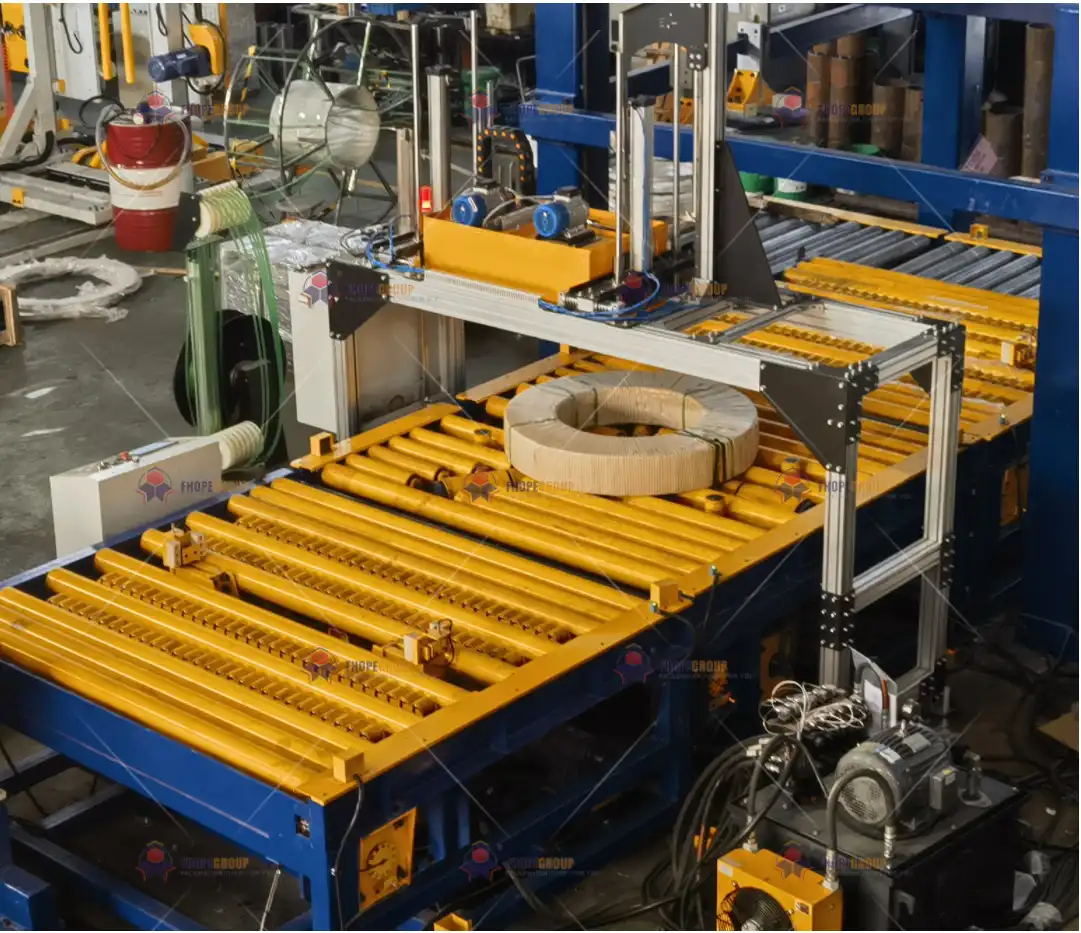
- Selection Criteria: A Guide to Choosing the Right Scale
Choosing the right weighing scale involves evaluating several factors:
*   **Weight Capacity:** Ensure the scale can handle the maximum weight of your coils.
*   **Accuracy:** Select a scale with the required level of accuracy for your application.
*   **Integration:** Choose a scale that can be seamlessly integrated into your existing conveyor system.
*   **Durability:** Opt for a scale that can withstand the harsh conditions of a coil packing environment.
*   **Maintenance:** Consider the ease of maintenance and calibration requirements.
Integration with Automatic Strapping and Wrapping
Can an automated weighing station improve your integration with strapping and wrapping unit? The seamless integration of weighing stations with automatic strapping and wrapping systems can greatly optimize the packaging process. Let's explore how this integration enhances efficiency, accuracy, and overall quality in your coil packing line.
Integrating a weighing station with automatic strapping and wrapping machines creates a streamlined process where coils are weighed, strapped, and wrapped without manual intervention. This integration ensures consistent packaging quality and minimizes the risk of errors. Automated systems can handle everything from loading the coils onto the conveyor to wrapping, strapping, and labeling them. This automation eliminates the need for large teams of workers, allowing businesses to operate with a smaller, more efficient workforce.
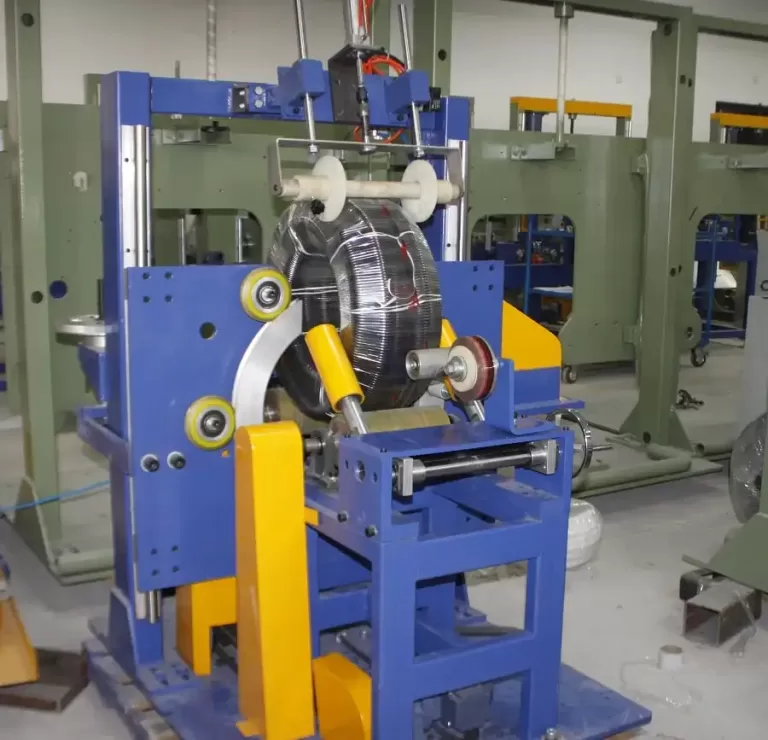
The Technical Edge: How Integration Works
Synchronization and Control
The integration of a weighing station with strapping and wrapping machines is achieved through a centralized control system. This system synchronizes the operations of each component, ensuring seamless data transfer and coordination.
- Data Input:
- The weighing station measures the weight of the coil and sends this data to the control system.
- The control system uses this data to determine the appropriate strapping and wrapping parameters.
- Parameter Adjustment:
- The control system adjusts the tension of the straps and the amount of wrapping material based on the coil's weight and dimensions.
- This ensures optimal packaging without material waste or insufficient protection.
- Automated Operation:
- The control system triggers the strapping and wrapping machines to begin their operations.
- Sensors monitor the process to ensure that each coil is properly secured and protected.
Real-Time Adjustments with Sensor Integration
- Weight Sensors:
- Detect the weight of the coil as it enters the weighing station.
- Provide real-time data to the control system for parameter adjustments.
- Position Sensors:
- Monitor the position of the coil on the conveyor line.
- Ensure that the coil is properly aligned for strapping and wrapping.
- Tension Sensors:
- Measure the tension of the straps as they are applied.
- Allow the control system to adjust the strapping force to prevent damage to the coil.
- Material Sensors:
- Monitor the amount of wrapping material being used.
- Prevent over- or under-wrapping, reducing material waste and ensuring optimal protection.
Streamlining Integration with PLCs
Programmable Logic Controllers (PLCs) play a vital role in the integration of weighing stations with strapping and wrapping machines. PLCs are industrial computers that control the operation of each component, ensuring seamless coordination and data transfer.
| Feature | Description |
|---|---|
| Central Control | PLCs act as the central control unit, managing the operation of the weighing station, strapping machine, and wrapping machine. |
| Data Processing | PLCs process data from sensors and weighing scales, making real-time adjustments to the strapping and wrapping parameters. |
| Fault Detection | PLCs monitor the system for faults and errors, triggering alarms and shutting down the system if necessary to prevent damage. |
| Customization | PLCs can be programmed to meet specific requirements, such as different strapping patterns, wrapping materials, and coil sizes. |
| Remote Monitoring | PLCs can be connected to a network, allowing remote monitoring and control of the system. This enables operators to track performance, diagnose issues, and make adjustments from off-site locations. |
By leveraging PLCs, manufacturers can achieve a high level of automation and control over their coil packing lines.
Enhancing Automation in Steel Coil Packaging
Enhance the steel coil packaging by automation. Automated coil packing not only reduces the strain on your workforce and lower costs but also position your company for long-term growth and success. Here’s what an automatic steel coil packing line often includes
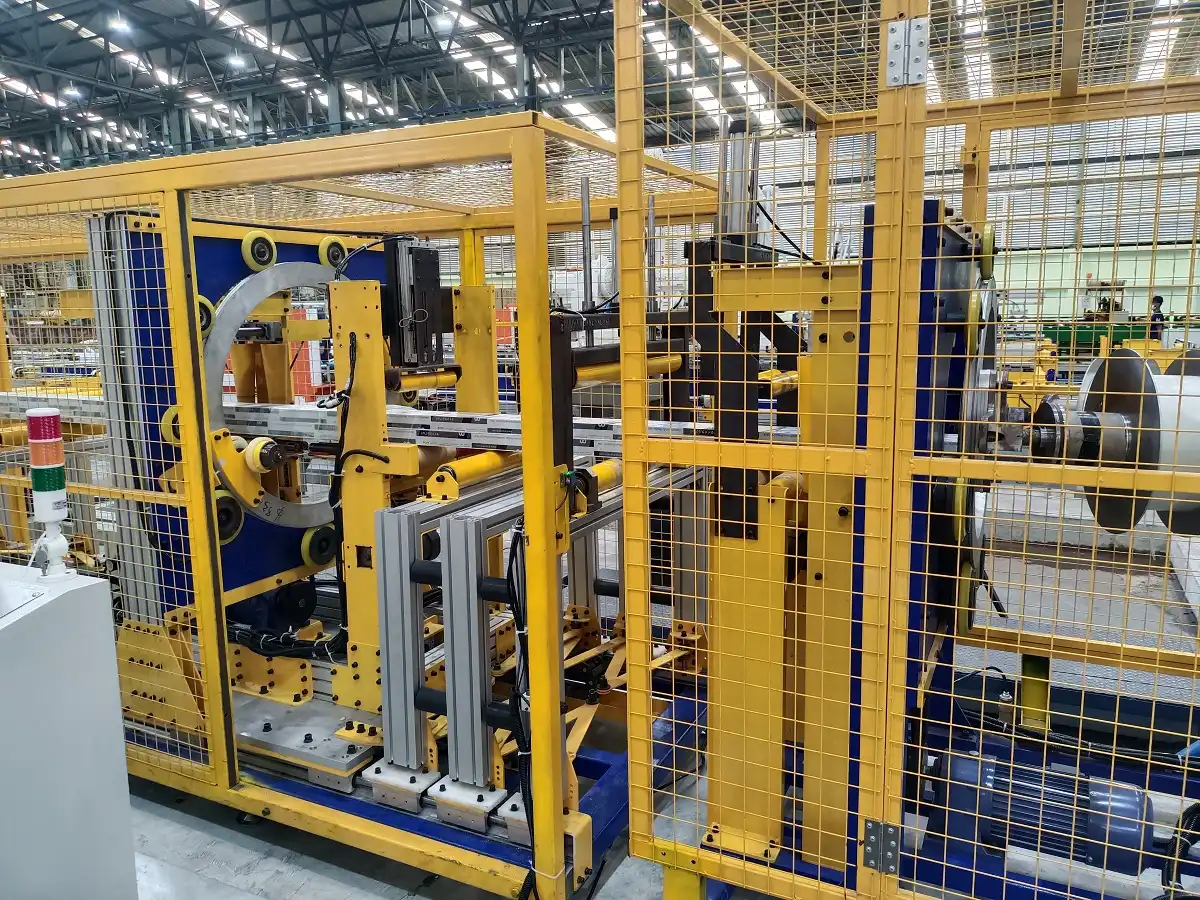
An automatic steel coil packing line often includes:
Coil Handling Equipment: Equipment for moving and positioning the coils, such as conveyors, turntables, and downenders.
Weighing Station: A weighing scale to accurately measure the weight of the coil for inventory and compliance purposes.
Strapping Machine: A machine that automatically applies straps to the coil to secure it for shipping.
Wrapping Machine: A machine that wraps the coil in protective material, such as plastic film or paper, to protect it from damage during transit.
Stacking Machine: A machine that stacks the wrapped coils on pallets for shipping.
Overall, the cost of an automatic steel coil packaging line can be quite significant and depends on a number of factors including:
Customization: The amount of customization required for your specific needs.
Brand and Quality: The brand and quality of the equipment used.
Installation Costs: The cost of installing the equipment and training employees.
A weighing station in the coil packing line ensures accuracy, efficiency, and compliance. Choosing the right components, types of scales, and integrating with strapping and wrapping machinery are vital for optimizing your coil packing operations.