3D Printing and Mold Upenders: Custom Parts for Improved Performance
The manufacturing landscape is in constant evolution, driven by the relentless pursuit of efficiency, precision, and customization. In this dynamic environment, 3D printing, or additive manufacturing (AM), has emerged as a transformative force, reshaping industries and redefining production paradigms. While often associated with rapid prototyping and bespoke end-use parts, the true power of 3D printing lies in its ability to revolutionize core manufacturing processes, particularly in tooling and mold technology. This is where the concept of “mold upenders” – representing advanced and enhanced mold systems – intersects with the capabilities of additive manufacturing to unlock unprecedented levels of performance and innovation.
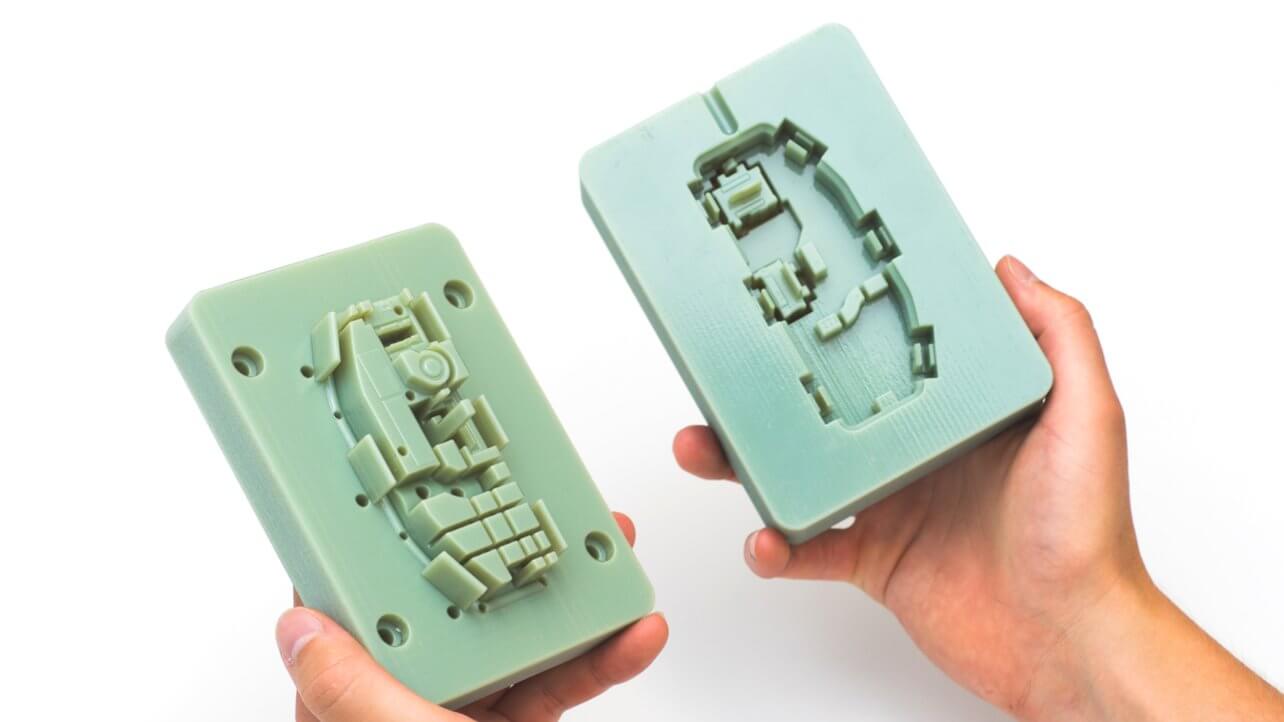
Traditional mold manufacturing, while reliable, often faces limitations in design complexity, lead times, and customization flexibility. Creating intricate cooling channels, optimizing geometries for material flow, or quickly adapting to design changes can be both time-consuming and costly using conventional subtractive methods. This is where 3D printing steps in as a game-changer, offering solutions to overcome these hurdles and elevate mold performance to new heights.
One of the most significant advancements 3D printing brings to mold technology is the ability to create custom parts with complex geometries. As showcased at Formnext, the leading global trade show for additive manufacturing, innovation is at the forefront. Examples like optimized manifolds, impellers, and even customized bicycle shoes demonstrate the power of AM to create parts tailored for specific performance requirements. In tooling, this translates directly to molds with conformal cooling channels. Unlike traditional straight drilled channels, conformal cooling, achievable through 3D printing, allows cooling channels to follow the exact contours of the mold cavity. This precise temperature control is critical in processes like injection molding, extrusion, and die casting.
Benefits of Conformal Cooling in 3D Printed Molds:
- Reduced Cycle Times: Efficient cooling drastically reduces the time it takes for molded parts to solidify and be ejected, significantly increasing production throughput.
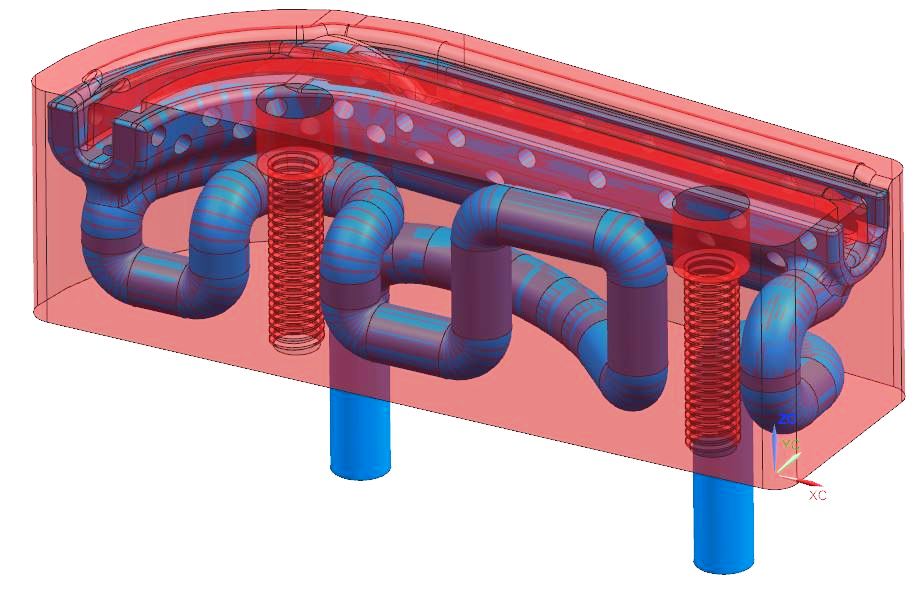
- Improved Part Quality: Uniform cooling minimizes warping, sink marks, and internal stresses in molded parts, resulting in higher dimensional accuracy and better surface finish.
- Extended Mold Life: By eliminating hot spots and ensuring even temperature distribution, conformal cooling reduces thermal stress on the mold, extending its lifespan and reducing maintenance costs.
Beyond cooling, 3D printing enables the creation of lightweight yet durable mold components. Materials like AlSi7Mg0.6 and AlSi10Mg, commonly used in aerospace and industrial applications due to their lightweight and high strength properties, are readily processable through AM. Using these materials to 3D print mold inserts or even entire mold assemblies can reduce the overall weight of the tooling, making handling easier and potentially improving machine performance, especially in automated systems. For instance, in large injection molds, lighter inserts can simplify mold changes and reduce wear on machinery.
Furthermore, the speed and agility of 3D printing dramatically shorten lead times for tooling. Rapid tooling, a key application of AM, allows engineers and product designers to quickly validate designs, test prototypes, and even produce ready-to-use products without the traditional 3-8 week lead times associated with conventional mold making. This agility is invaluable in today's fast-paced markets, enabling quicker product launches and faster response to changing customer demands. In die casting applications, the rapid prototyping capability of 3D printing allows for faster iteration and design refinement without the lengthy and costly process of traditional tooling development.
The versatility of materials available for 3D printing further enhances its value in tooling. Materials like Maraging 300 steel, known for its impact resistance and dimensional stability at high temperatures, and AISI 420 stainless steel, prized for its mechanical strength and corrosion resistance, are ideal for demanding tooling applications. These materials can withstand the harsh environments of injection molding, die casting, and extrusion, ensuring durability and longevity of 3D printed mold components. Selecting the right material is crucial, and additive manufacturing offers a range of options to match specific tooling requirements.
The impact of 3D printing on tooling extends across various industrial applications.

Examples of 3D Printed Tooling Applications:
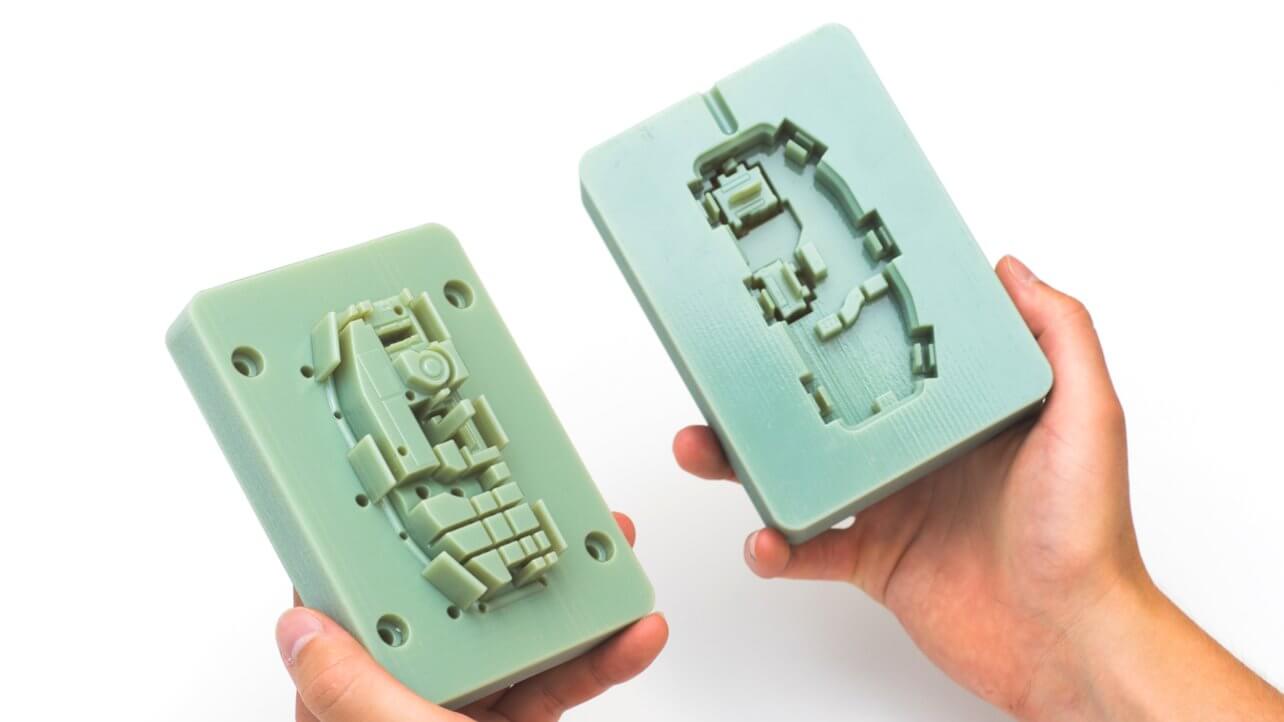
- Injection Molding: 3D printed mold inserts with conformal cooling are revolutionizing injection molding by enabling faster cycle times, improved part quality, and reduced material waste in industries from automotive to consumer goods.
- Extrusion Dies: 3D printing allows for the creation of extrusion dies with complex internal geometries and optimized cooling, crucial for producing profiles with tight tolerances and superior surface finishes, benefiting sectors like construction and packaging.
- Die Casting: Rapidly produced 3D printed dies accelerate the prototyping phase and enable the creation of complex die geometries, essential for producing intricate metal parts in automotive, aerospace, and electronics industries.
- Pumps and Turbomachinery: 3D printing facilitates the manufacturing of complex internal geometries in pump and turbomachinery components, leading to improved fluid dynamics, increased efficiency, and reduced energy consumption.
- Manifolds: 3D printing allows for the design and production of lightweight and integrated manifolds with optimized flow paths, reducing assembly steps and improving system performance in hydraulic and pneumatic applications.
| Comparing Traditional vs. 3D Printed Tooling: | Feature | Traditional Tooling | 3D Printed Tooling | Benefits of 3D Printing |
|---|---|---|---|---|
| Design Complexity | Limited by machining constraints | Highly complex geometries possible | Conformal cooling, optimized part designs | |
| Cooling | Straight drilled channels | Conformal cooling channels | Faster cooling, reduced cycle times, improved part quality | |
| Lead Time | Weeks to months | Days to weeks | Rapid tooling, faster product development |
| Customization | Difficult and costly to customize | Highly customizable, easy design changes | On-demand tooling, tailored to specific needs |
| Materials | Limited material options for tooling | Expanding range of tooling materials | Material optimization for performance and durability |
| Performance | Good, but potentially limited | Superior performance through optimization | Improved efficiency, part quality, and tool lifespan |
| Cost | High upfront cost, long lead times | Potentially lower cost for complex designs | Reduced lead time costs, optimized material usage |
The integration of smart software and in-process monitoring further strengthens the appeal of 3D printed tooling. Companies like AddUp are leading the way with advanced monitoring systems that ensure part quality and minimize the need for extensive post-print testing. This digital chain, from part preparation to simulation and production monitoring, offers a high level of confidence and efficiency in the 3D printing process, making it increasingly reliable for industrial tooling applications.
In conclusion, 3D printing is not just a prototyping tool; it is a powerful manufacturing technology transforming the tooling industry. By enabling the creation of custom parts like molds with conformal cooling, lightweight designs, and optimized geometries, 3D printing offers a pathway to significantly improved performance, reduced costs, and accelerated innovation cycles. As industries continue to demand greater efficiency, customization, and faster time-to-market, the role of 3D printing in mold upenders – and the broader tooling landscape – will only become more critical, paving the way for a future of agile, high-performance manufacturing.