Can Tilt Tables & Upenders Really Boost Your Production? My 30-Year Insight
Looking to optimize your factory floor? Discover how tilt tables and upenders can revolutionize your material handling and boost productivity.
For three decades, I've walked factory floors, witnessed countless production bottlenecks, and championed solutions that make real-world differences. If there's one area I've consistently seen ripe for improvement, it's material handling. Often overlooked, inefficient material handling can be a silent drain on productivity, safety, and even employee morale. That's why I'm excited to share my insights on a game-changing duo: tilt tables and upenders.
Over the years, I've seen firsthand how the right ergonomic equipment can transform operations. And when it comes to handling heavy loads and awkward orientations, tilt tables and upenders are unsung heroes. Let’s dive into how these robust machines can solve some of the most common challenges in today's demanding industrial environments.
Tired of Back Strain? How Manual Tilt Tables Enhance Ergonomics
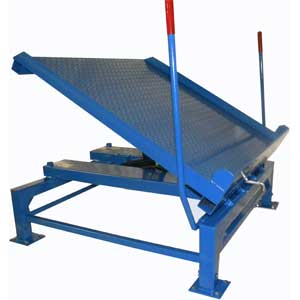
One of the most persistent issues in manufacturing and warehousing is musculoskeletal disorders, often stemming from repetitive bending and lifting. I've seen too many skilled workers sidelined by back injuries, all because of poor ergonomics in material handling. Manual tilt tables are a simple yet incredibly effective solution to combat this.
Imagine a worker sorting parts from a large container. Without a tilt table, they're constantly reaching deep into the container, straining their back and shoulders. Manual tilt tables bring the work to the worker. By tilting the container, the parts are presented at an easily accessible angle, eliminating the need for deep reaches and awkward postures. This not only reduces the risk of injury but also speeds up the sorting process. Workers are more comfortable, less fatigued, and can maintain focus and efficiency throughout their shift.
From my experience, the beauty of manual tilt tables lies in their simplicity and adaptability. They are robust, require minimal maintenance, and can be easily integrated into existing workflows. If you're looking for a cost-effective way to improve ergonomics and boost the well-being of your team, manual tilt tables are a fantastic starting point.
Need Speed and Precision? Electric Tilt Tables Offer Controlled Tilting
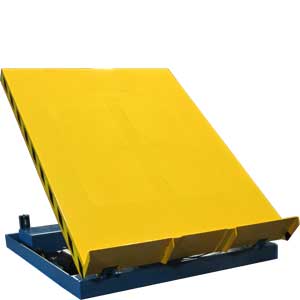
While manual tilt tables are excellent for basic ergonomic improvements, electric tilt tables take it a step further by offering powered, controlled tilting. In my experience, electric tilt tables shine in applications requiring precision and heavier loads.
Think about assembly lines where components need to be positioned at specific angles for efficient access. Electric tilt tables provide smooth, controlled tilting at the push of a button. This is crucial when handling delicate parts or when integrating with automated systems. The controlled motion minimizes the risk of product damage and ensures consistent positioning, shift after shift.
Moreover, electric tilt tables often come with features like adjustable tilt angles and remote controls, offering even greater flexibility and operator convenience. For operations demanding speed, precision, and reduced physical exertion, investing in electric tilt tables is a smart move that pays dividends in terms of productivity and safety.
Bulk Material Handling Got You Down? Hydraulic Box Dumpers Are Your Answer
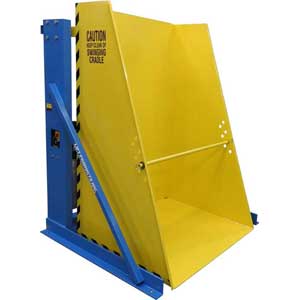
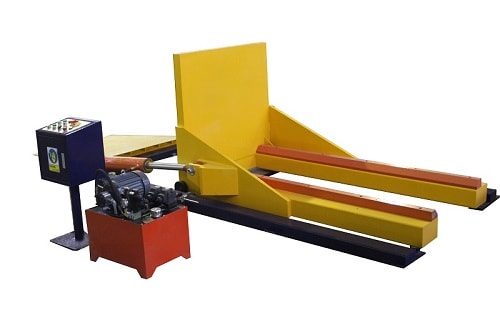
Handling bulk materials in boxes or containers can be a major bottleneck and safety concern. I’ve seen operations where workers manually wrestle with heavy boxes to empty their contents, leading to injuries and wasted time. Hydraulic box dumpers are specifically designed to tackle this challenge head-on.
These heavy-duty machines use powerful hydraulic cylinders to safely and efficiently lift and tilt entire boxes, emptying their contents into hoppers, conveyors, or other receiving areas. This eliminates the need for manual lifting and dumping, drastically reducing the risk of injury and significantly speeding up the material transfer process.
In industries dealing with food processing, recycling, or bulk material manufacturing, hydraulic box dumpers are indispensable. They streamline operations, improve safety, and free up valuable manpower for more productive tasks. From my perspective, if you're dealing with significant volumes of boxed materials, a hydraulic box dumper isn't just an upgrade – it's a necessity for efficient and safe operations.
Need to Flip Heavy Loads? Upenders Deliver 90-Degree Rotation
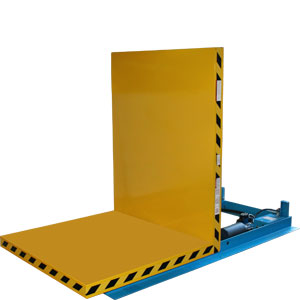
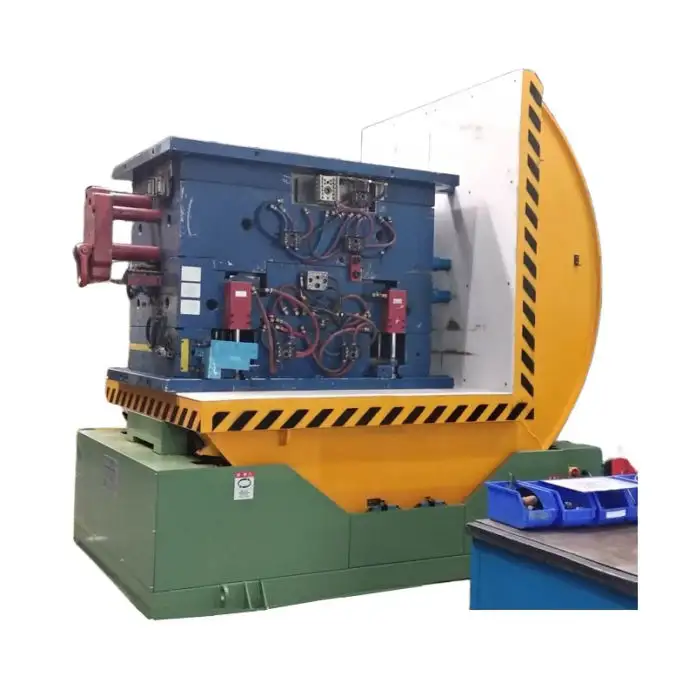
Sometimes, you need more than just tilting; you need to completely invert a load. This is where upenders, also known as flippers, come into play. In my experience, upenders are the go-to solution for rotating heavy, bulky items by 90 or even 180 degrees.
Think about manufacturing processes where large coils of steel or paper need to be re-oriented. Manually flipping these loads is not only incredibly dangerous but also practically impossible. Upenders provide a safe and controlled way to rotate these items, often using specialized cradles or platforms to secure the load during rotation.
I've seen upenders used in diverse applications, from rotating molds in plastics manufacturing to inverting engines in automotive assembly. Because of the highly specific nature of upending tasks, customization is often key. Many upenders are custom-engineered to fit the exact dimensions and weight of the loads being handled, ensuring maximum safety and efficiency. If your process requires precise 90-degree or 180-degree rotation of heavy items, an upender is the specialized equipment you need.
Combining Lifting and Tilting? Lifting Tilt Tables Offer Versatile Positioning
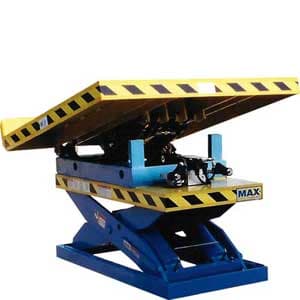
What if you need both vertical lifting and tilting capabilities? Lifting tilt tables combine these two functionalities into a single, versatile piece of equipment. In my years of experience, I've found these tables invaluable in applications requiring dynamic positioning of loads.
Consider assembly tasks where workers need to access parts at varying heights and angles. A lifting tilt table can raise the load to the optimal working height and then tilt it to the most ergonomic angle for access. This combination minimizes reaching, bending, and twisting, creating a much more comfortable and efficient work environment.
Lifting tilt tables are also excellent for feeding materials to machinery at specific heights and orientations. They can be integrated into automated systems, providing precise and repeatable positioning for streamlined workflows. For operations demanding flexible and ergonomic material presentation, lifting tilt tables offer a comprehensive solution.
Space-Constrained Environments? Compact Lift Tilters Maximize Efficiency
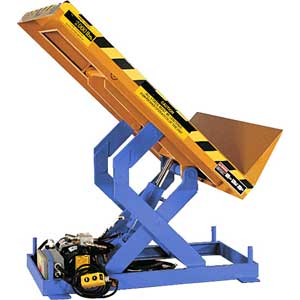
Not all workspaces are expansive. Many facilities, especially older ones, face space constraints. Compact lift tilters are designed to address this challenge, offering tilting functionality in a smaller footprint. Throughout my career, I've always appreciated solutions that are both powerful and space-saving.
These tilters are ideal for applications where space is at a premium but ergonomic tilting is still essential. They are often used in assembly cells, workstations, and areas with limited floor space. Despite their compact size, they don't compromise on performance, providing reliable tilting for improved ergonomics and efficiency.
Compact lift tilters demonstrate that you don't need a large factory floor to implement effective ergonomic solutions. They are a testament to smart engineering, delivering significant benefits in a small package.
Need Mobility? Mobile Tilters Bring Ergonomics to Different Locations
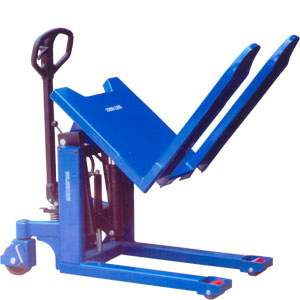
Sometimes, the work isn't stationary. In dynamic environments where material handling needs to move from one location to another, mobile tilters are the answer. In my experience, mobility is a key factor in maximizing the flexibility and utilization of equipment.
Mobile tilters are typically mounted on wheels or casters, allowing them to be easily moved around the factory floor. This is particularly useful in applications where different workstations or areas require tilting capabilities at different times. They bring ergonomic benefits directly to where they are needed, eliminating the need to transport materials to a fixed tilting station.
From maintenance workshops to flexible assembly lines, mobile tilters offer unparalleled versatility. They are a practical solution for businesses that value adaptability and want to bring ergonomic improvements to various points in their operations.
Small Parts Handling? Parts Tilters Offer Precision and Accessibility
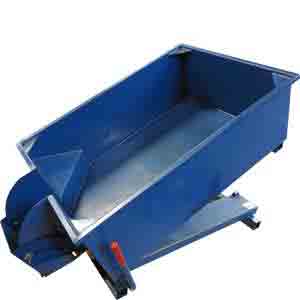
Handling small parts can be just as ergonomically challenging as handling large loads, especially when dealing with bins or containers full of them. Parts tilters are specifically designed for these smaller-scale applications, providing precise tilting for improved access and reduced strain.
These tilters are often used in kitting operations, assembly workstations, and quality control areas where workers need to handle and sort smaller components. They present parts at a comfortable angle, minimizing reaching and fumbling, and improving the speed and accuracy of parts handling tasks.
Parts tilters are a testament to the fact that ergonomics is important at every scale of operation. They bring the benefits of tilting to even the smallest parts handling processes, improving efficiency and reducing fatigue for workers dealing with intricate components.
Drum Handling a Challenge? Drum Dumpers Streamline and Secure
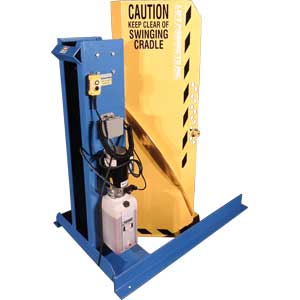
Drums are ubiquitous in many industries, from chemicals and food processing to manufacturing and waste management. However, manually handling drums, especially when emptying their contents, can be hazardous and inefficient. Drum dumpers are engineered to make drum handling safe, easy, and efficient.
These specialized tilters securely clamp and rotate drums, allowing for controlled pouring of liquids or dumping of solid materials. This eliminates the need for workers to manually lift and tip heavy drums, significantly reducing the risk of spills, injuries, and material waste.
From my experience, drum dumpers are essential for any operation dealing with drums on a regular basis. They not only improve safety and efficiency but also contribute to a cleaner and more environmentally responsible workplace by minimizing spills and material loss.
Tilters and Upenders: More Than Just Equipment – They're an Investment in Your Future
Tilt tables and upenders are more than just machines; they are strategic investments that pay off in multiple ways. They boost productivity by streamlining material handling, improve safety by reducing manual lifting and strain, and enhance ergonomics, leading to a happier and healthier workforce.
In my 30 years in this industry, I've learned that investing in the right equipment is investing in your people and your future. Tilt tables and upenders are prime examples of equipment that delivers tangible returns in terms of efficiency, safety, and long-term operational success.
If you're serious about optimizing your production processes and creating a better workplace, it’s time to explore how tilt tables and upenders can transform your material handling operations.
Beyond Tilt Tables and Upenders: Exploring Complementary Solutions
While tilt tables and upenders are powerful tools, they are often part of a broader ecosystem of material handling solutions. Other equipment that complements their functionality and addresses similar challenges includes:
- Pallet Positioners: These devices raise and rotate pallets, allowing workers to load and unload materials without bending or reaching excessively, further enhancing ergonomics in pallet handling tasks.
- Scissor Lift Tables: Providing vertical lifting capabilities, scissor lift tables are versatile for adjusting work heights and transferring loads between different levels, often used in conjunction with tilt tables for comprehensive ergonomic workstations.
- Industrial Manipulators: For complex and repetitive lifting and positioning tasks, industrial manipulators offer advanced dexterity and precision, often used for handling items in confined spaces or performing intricate assembly operations.
- Conveyor Systems: Integrating tilt tables and upenders with conveyor systems creates automated material flow, streamlining production lines and reducing manual handling across longer distances.
By understanding the range of available material handling equipment and how they can work together, you can create a truly optimized and efficient production environment. Tilt tables and upenders are a crucial piece of this puzzle, offering targeted solutions for tilting and rotating loads, but considering the broader landscape ensures you're building a comprehensive and future-proof material handling strategy.