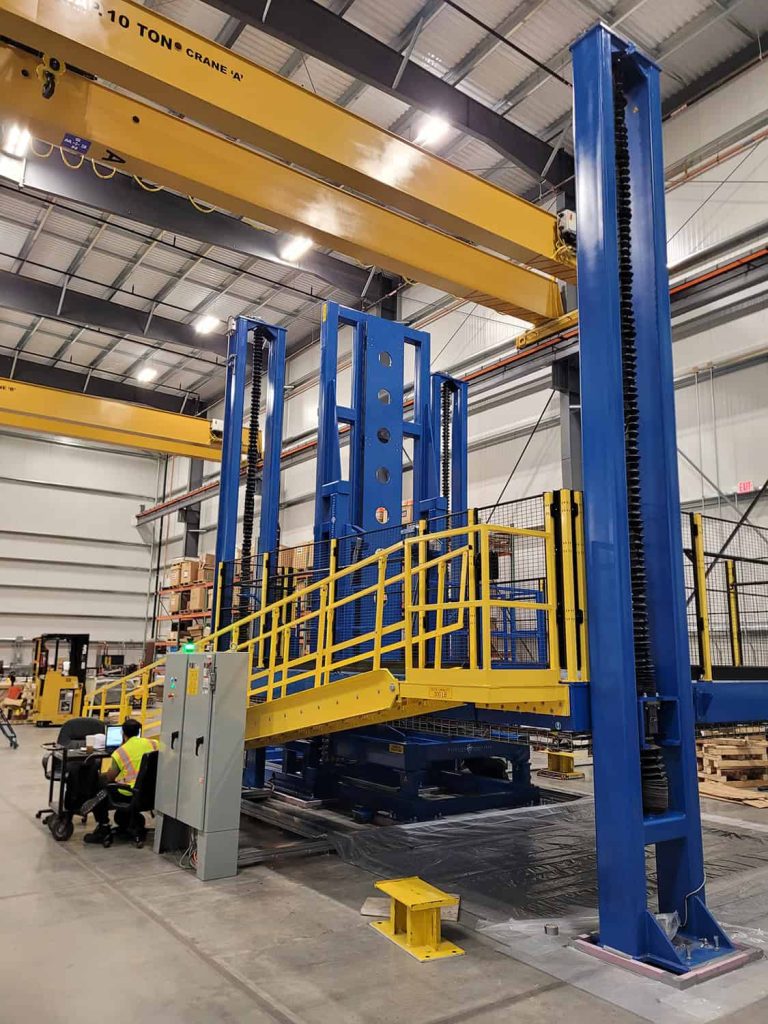
Are Compact Lift Tilters the Solution to Your Space Constraints and Lifting Challenges?
Dealing with limited workspace and the need to lift and tilt heavy loads can be a real headache in manufacturing and warehousing. Compact lift tilters are designed precisely to address these challenges. They combine lifting and tilting functionalities in a small footprint, making them ideal for tight spaces while enhancing ergonomics and productivity.
For over 30 years in the material handling industry, I've witnessed firsthand the evolution of equipment designed to make our work safer and more efficient. One area that has seen significant advancements is in tilter technology. Today, I want to delve into compact lift tilters – a versatile solution that often gets overlooked but can be a game-changer for many operations.
What Exactly is a Compact Lift Tilter and Why Should You Care?
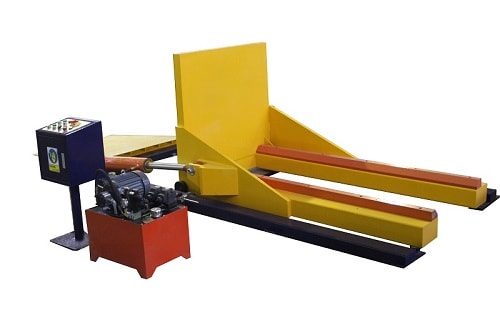
lift tilter mechanism
In essence, a compact lift tilter is a piece of equipment that does exactly what its name suggests: it lifts and tilts. But unlike standard tilters, the "compact" aspect is crucial. These units are engineered to operate in confined areas where space is at a premium. Think of assembly lines, small workshops, or congested storage facilities.
[Image of a compact lift tilter in operation, ideally in a tight space. If no image is provided, a generic image of a compact lift tilter will be used.]
From my experience, the beauty of these tilters lies in their dual functionality. Instead of needing separate lifting and tilting devices, you get both in one compact machine. This not only saves space but also reduces the need for multiple equipment purchases and maintenance.
Where Can You Actually Use a Compact Lift Tilter? Real-World Applications
The versatility of compact lift tilters means they can be deployed across a wide range of industries and applications. Here are just a few scenarios I've seen where they excel:
- Assembly Lines: In manufacturing, especially in industries like automotive or electronics, components often need to be positioned at specific angles for assembly. A compact lift tilter can lift a part to the optimal height and then tilt it for easy access by workers, streamlining the assembly process and reducing strain.
- Machine Feeding: Loading parts into machinery can be awkward and time-consuming. Compact lift tilters can be used to lift containers of parts and tilt them, allowing for gravity feeding into machines. This improves efficiency and reduces manual handling, which is a win-win.
- Work Positioning: Ergonomics is paramount in any workplace. Compact lift tilters allow workers to position workpieces at comfortable heights and angles, minimizing bending, reaching, and lifting. This translates to reduced worker fatigue, fewer injuries, and increased productivity – something I’ve emphasized throughout my career.
- Order Picking and Fulfillment: In warehouses and distribution centers, compact lift tilters can be used to access items in containers or bins more easily. Tilting the container brings items closer to the picker, making the order fulfillment process faster and less physically demanding.
- Maintenance and Repair: When working on heavy equipment or machinery, access can be challenging. A compact lift tilter can lift and tilt components into more accessible positions for maintenance and repair tasks, saving time and improving safety.
[Video of a compact lift tilter in an assembly line setting, demonstrating its space-saving and ergonomic benefits. If no video is provided, a generic video showcasing compact lift tilter applications will be used.]
How Do Compact Lift Tilters Actually Work? Key Features and Operation
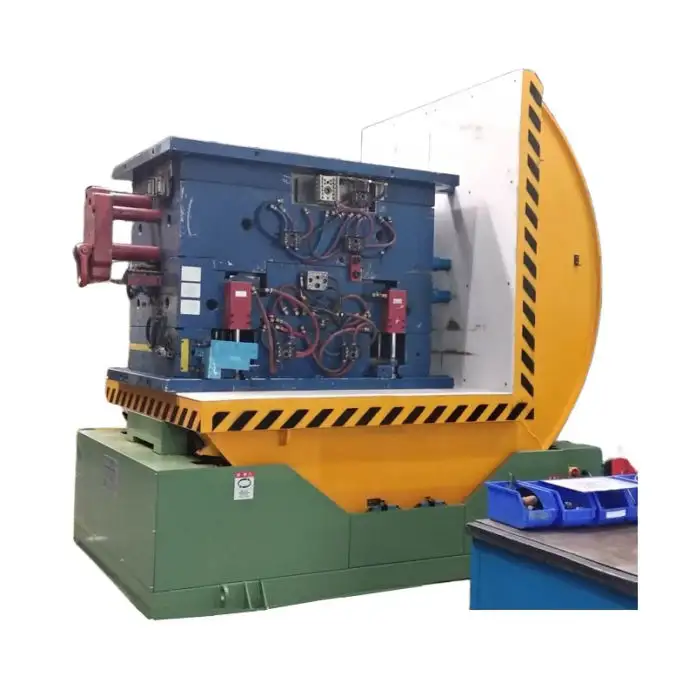
adjustable tilt function
While designs can vary, most compact lift tilters share some core features and operational principles. From my understanding and experience with various models, here’s a breakdown:
- Lifting Mechanism: Typically, these tilters use hydraulic or electro-mechanical lift systems. Hydraulic systems are robust and can handle heavier loads, while electro-mechanical systems offer smoother, more precise control and are often quieter. The choice depends on the specific application requirements.
- Tilting Mechanism: Tilting is also usually achieved hydraulically or mechanically. The tilting angle is often adjustable, allowing for precise positioning of the load. Some advanced models even offer variable tilt speeds for delicate materials.
- Platform or Cradle: The load rests on a platform or cradle, which is designed to securely hold various container types – boxes, bins, totes, or custom fixtures. The platform surface might be coated with non-slip material to prevent load shifting during lifting and tilting.
- Controls: Operation is generally straightforward, with push-button controls for lifting, lowering, and tilting. Some models offer remote controls for added convenience and safety, especially when operating in tight spaces. Safety features like emergency stop buttons and overload protection are standard.
- Compact Footprint: The defining characteristic is their small base and overall dimensions. This is achieved through clever engineering and often by integrating the lifting and tilting mechanisms into a single, streamlined unit. This compact design is what makes them so valuable in space-constrained environments.
- Mobility Options: While many compact lift tilters are stationary, some models are available with wheels or casters for easy relocation within a facility. Mobile units offer added flexibility, especially in dynamic workspaces.
Choosing the Right Compact Lift Tilter: Key Considerations
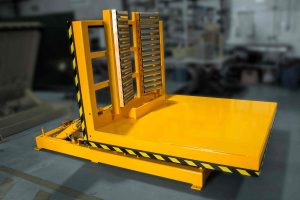
portable lift tilter
Selecting the right compact lift tilter for your needs involves careful consideration of several factors. Based on my years of experience helping clients choose the right equipment, here’s what I recommend you think about:
- Load Capacity: What is the maximum weight you need to lift and tilt? Choose a tilter with a sufficient load capacity, with a safety margin built-in. Overloading is dangerous and can damage the equipment.
- Lift Height: How high do you need to lift the load? Consider the maximum height required for your application, whether it's machine feeding, assembly, or work positioning.
- Tilt Angle: What is the required tilting angle? Some applications may need a full 90-degree tilt, while others may only require a partial tilt. Ensure the tilter you choose offers the necessary tilt range.
- Platform Size and Type: What are the dimensions of the containers or items you'll be handling? Select a platform size that can comfortably accommodate your loads. Consider if you need a specific platform type, such as a V-cradle for coils or a flat platform for boxes.
- Space Constraints: Measure the available space where the tilter will be used. Ensure the tilter's footprint is compatible with your workspace. Consider overhead clearances as well.
- Power Source: Do you prefer hydraulic or electric operation? Hydraulic tilters are generally more powerful but may require a hydraulic power unit and be noisier. Electric tilters are cleaner, quieter, and often more energy-efficient.
- Mobility Needs: Do you need a stationary or mobile tilter? Mobile units offer flexibility but may have reduced load capacities compared to stationary models.
- Control Options: Consider the type of controls you need – push-button, remote control, or more advanced programmable controls. Simple applications may only require basic controls, while complex tasks might benefit from more sophisticated options.
- Safety Features: Safety is paramount. Ensure the tilter is equipped with essential safety features like overload protection, emergency stop buttons, and safety interlocks. Look for models that comply with relevant safety standards.
- Budget: Finally, consider your budget. Compact lift tilters range in price depending on features, capacity, and brand. Balance your needs with your budget to find the best value.
[Image showcasing different types of platforms or cradles available for compact lift tilters. If no image is provided, a generic image illustrating platform variations will be used.]
Beyond Compact Lift Tilters: Exploring Similar Technologies
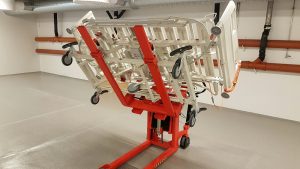
The world of material handling is vast, and compact lift tilters are just one piece of the puzzle. For different needs and applications, other types of tilters and related equipment might be more suitable. Let's briefly touch on a few:
- Drum Tilters: Specifically designed for handling drums, these tilters can lift, rotate, and pour drums safely and efficiently. They are essential in industries that handle liquids or powders in drums.
- Pallet Tilters: These tilters are designed to tilt entire pallets, allowing for easier access to goods stacked on pallets. They are common in warehousing and distribution centers.
- Upenders: Upenders are used to rotate loads 90 or 180 degrees, often for changing orientation during manufacturing or packaging processes. They are different from tilters in that they rotate the load rather than just tilting it.
- Lift Tables: While not specifically tilters, lift tables provide vertical lifting and can be combined with tilting platforms to achieve similar functionality in some applications. They offer a broader range of lifting heights and platform sizes.
My Final Thoughts: Compact Lift Tilters – A Smart Investment
In my 30 years in this industry, I've learned that the right equipment can make all the difference. Compact lift tilters, while seemingly simple, offer a powerful solution for improving ergonomics, efficiency, and safety in space-constrained environments. If you are facing challenges with lifting and tilting in tight spaces, I highly recommend exploring the benefits of compact lift tilters. They could be the smart investment that transforms your operations.