Is Heavy Lifting and Repositioning Slowing Down Your Motor Assembly Line? The Strong Back Upender Might Be Your Game Changer.
Are you grappling with the challenge of safely and efficiently repositioning hefty motor assemblies in your production line? The Strong Back Upender is engineered to tackle this exact problem. It's a robust solution designed to smoothly rotate and reposition heavy, awkward loads up to 30,000 pounds, improving both workflow and worker safety in demanding industrial environments.
For three decades, I've been immersed in the world of industrial machinery, and if there’s one thing I’ve learned, it’s that handling heavy components like motor assemblies can be a major bottleneck and safety hazard. Over the years, I've seen countless facilities struggle with manual lifting, clumsy crane operations, and the constant risk of product damage or, worse, worker injury. That's why when I first encountered the Strong Back Upender, I immediately recognized its potential to revolutionize heavy load handling in assembly processes.
This isn't just another piece of equipment; it's a thoughtfully engineered solution aimed at streamlining operations and enhancing ergonomics. Let me walk you through why I believe the Strong Back Upender could be a pivotal addition to your motor assembly line, drawing from my years of experience and a practical, engineering-focused perspective.
Why Manually Repositioning Heavy Motor Assemblies is a Recipe for Disaster?
Before we dive into the specifics of the Strong Back Upender, let’s address the elephant in the room: manual handling of heavy loads. In my experience, relying on manual labor for repositioning heavy motor assemblies is fraught with issues. It's a practice that not only hampers efficiency but also significantly elevates workplace risks.
Think about it. Motor assemblies are often bulky, oddly shaped, and incredibly heavy. Asking workers to manually lift, rotate, or reposition these items leads to:
- Increased Risk of Musculoskeletal Injuries: Back strains, shoulder injuries, and hernias are rampant in environments where heavy manual lifting is the norm. These injuries lead to lost time, decreased productivity, and, most importantly, pain and suffering for your workforce.
- Slower Production Times: Manual handling is inherently slow and cumbersome. It takes time and multiple personnel to safely maneuver heavy loads, directly impacting your production throughput.
- Higher Potential for Product Damage: When you're manually wrestling with a heavy motor assembly, the chances of dropping it, bumping it, or causing damage significantly increase. Damaged components mean rework, scrap, and increased costs.
- Inconsistent Quality: Manual processes are prone to variability. The precision and consistency you need in motor assembly can be compromised when relying on manual repositioning.
- Demotivated Workforce: Constantly subjecting your team to strenuous and risky tasks can lead to burnout and decreased morale. Happy, healthy workers are productive workers.
In today's competitive manufacturing landscape, efficiency and safety are paramount. Manual handling of heavy loads is simply not a sustainable or responsible approach. We need smarter, safer, and more efficient solutions. And that's where equipment like the Strong Back Upender comes into play.
How Does a Strong Back Upender Solve the Heavy Lifting Challenge in Motor Assembly?
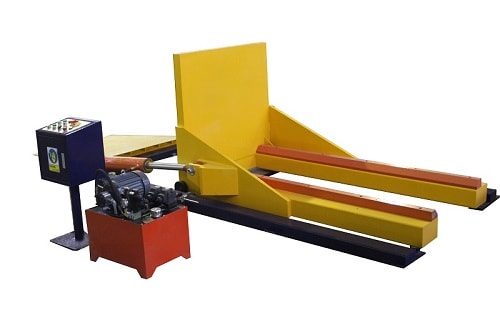
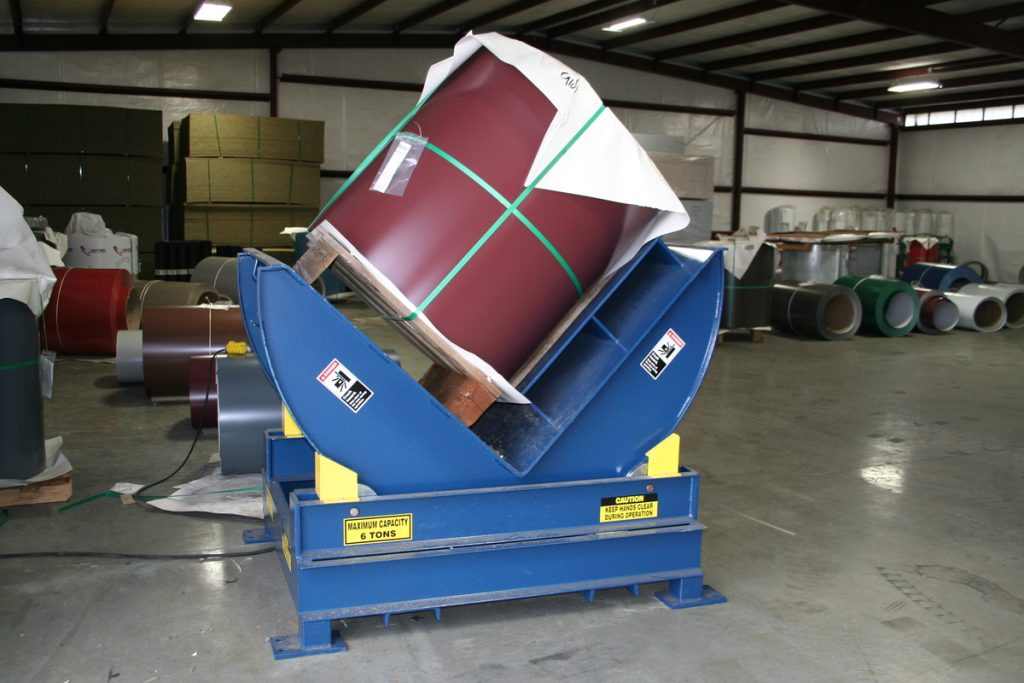
The Strong Back Upender is specifically designed to eliminate the hazards and inefficiencies associated with manual heavy load repositioning. It’s a robust piece of machinery that uses controlled mechanical motion to safely and precisely rotate and reposition heavy items. Imagine needing to work on different sides of a large motor assembly during production. Instead of calling in a team to manually flip it, or using a crane which can be cumbersome and less precise, the Upender allows a single operator to do it with ease and safety.
Here's how it works and why it’s so effective:
- Heavy-Duty Construction: Built to handle substantial weight, typically up to 30,000 pounds, the "Strong Back" in its name is no exaggeration. This machine is built for demanding industrial environments and heavy components like large motor assemblies.
- Controlled Tilting Motion: The core function is its ability to tilt loads up to 90 degrees (and even 95 degrees in some configurations). This controlled motion is crucial for repositioning items for various assembly or processing stages.
- Versatile Platforms and Fixtures: The Upender isn't just a tilting platform. It can be customized with V-shaped cradles, specialized fixtures, or even integrated with pallet handling systems. This versatility makes it adaptable to a wide range of load types and industry-specific needs. For motor assemblies, custom fixtures can be designed to securely hold the specific shape and size, ensuring stability during rotation.
- Ergonomic Design: This is a key benefit. By automating the heavy lifting and rotating, the Upender drastically reduces the physical strain on workers. It allows tasks to be performed at optimal heights and orientations, minimizing bending, lifting, and awkward postures. This ergonomic focus translates directly to fewer injuries and a more comfortable, productive workforce.
- Multiple Control Options: Flexibility in operation is important. Strong Back Upenders offer various control options, from simple hand pendants and foot pedals to PLC integration for automated systems. This allows for seamless integration into existing production lines and adapts to different operational preferences.
Essentially, the Strong Back Upender takes the brute force out of heavy lifting and repositioning. It transforms a potentially dangerous and inefficient manual process into a safe, controlled, and ergonomic operation. For motor assembly lines, this means a smoother workflow, reduced risk of injury and damage, and improved overall productivity.
Key Features That Make the Strong Back Upender a Smart Investment
Let’s delve into the specific features that make this equipment stand out. These are the details that, from my experience, truly matter on the factory floor:
- Adjustable Tilt Angle (Up to 95°): The ability to tilt beyond 90 degrees offers added flexibility for certain applications, ensuring complete inversion if needed. This can be crucial for accessing specific areas of a motor assembly or for specialized processes.
- Limit and Proximity Switches: Safety and precision are paramount. These switches ensure accurate positioning and prevent over-travel, adding a critical layer of safety and control to the tilting operation.
- Safety Options: Tape Switch® and Beveled Toe Guard: Worker safety is further enhanced by features like Tape Switch® (pressure-sensitive safety strips) and beveled toe guards. These prevent pinch points and accidental operation, safeguarding personnel working around the equipment.
- Diverse Control Options (Hand Pendant, Foot Pedal, PLC Integration): As mentioned earlier, the variety of control options allows for seamless integration into different operational setups. Whether you prefer simple manual control or automated system integration, the Upender can adapt. PLC integration is particularly valuable for incorporating the Upender into automated assembly lines, streamlining the entire process.
- Accordion Skirting: This is a practical feature for maintaining a clean and safe work environment. Accordion skirting encloses the lifting mechanism, preventing debris from entering and protecting operators from moving parts.
- Hand-Tool Repairable Design: Downtime is the enemy of productivity. A design that emphasizes hand-tool repairability means that maintenance can be performed quickly and easily, minimizing disruptions and keeping your line running. This is a testament to practical engineering focused on real-world usability.
- High Cycle Packages: For high-throughput environments, high cycle packages ensure the Upender can withstand continuous operation without compromising performance or longevity. This is vital for demanding production schedules.
- Multiple Power and Drive Options: Matching the equipment to your facility's power infrastructure is essential. Having multiple power and drive options ensures compatibility and allows you to optimize for speed and voltage requirements.
- Customization (Paint, Powder Coating, Integration Options): The ability to customize paint and powder coating not only allows for branding or color-coding within your facility but also provides enhanced durability and corrosion resistance. Integration options like turntables, conveyors, or ball transfers further extend the Upender's functionality, allowing it to become a seamless part of a larger material handling system.
These features, taken together, demonstrate a focus on not just functionality but also safety, maintainability, and adaptability. It’s this comprehensive approach that makes the Strong Back Upender a valuable asset in a demanding motor assembly environment.
Real-World Applications: Where Does the Strong Back Upender Shine in Motor Assembly?
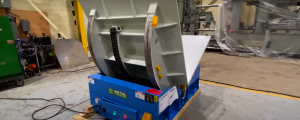
While the features are impressive, it’s the real-world applications that truly highlight the value of the Strong Back Upender. In my experience, its versatility makes it beneficial across various stages of motor assembly and related industries.
Here are some key application scenarios where I've seen Upenders make a significant difference:
- Motor Assembly Lines: This is the prime application. Throughout the assembly process, motors need to be rotated and repositioned for component insertion, wiring, testing, and inspection. The Upender streamlines these transitions, making the entire line more fluid and efficient.
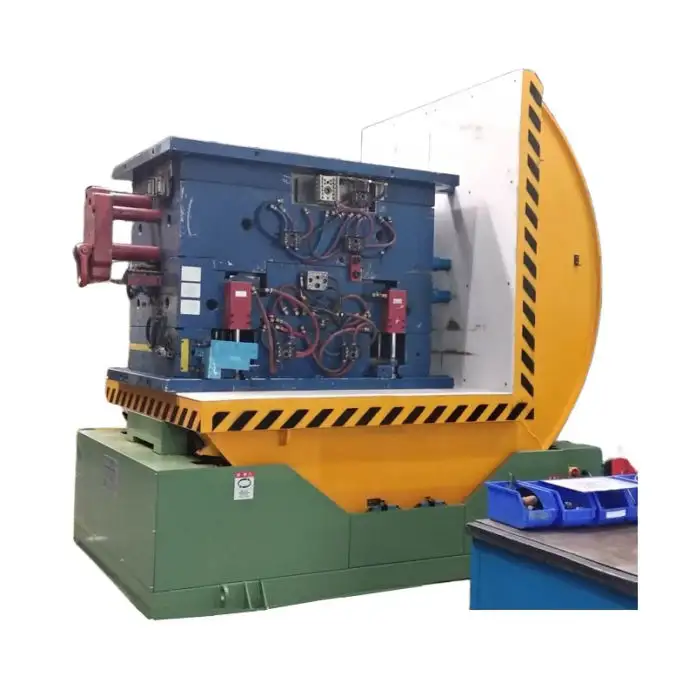
- Die and Mold Handling: The heavy-duty nature of the Upender makes it ideal for handling dies and molds in manufacturing settings. Repositioning these heavy tools for maintenance, repair, or storage becomes significantly safer and easier.
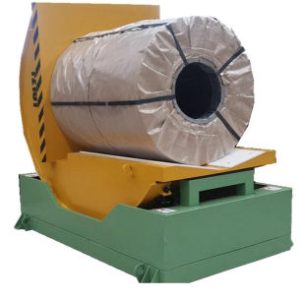
- Roll and Coil Handling: Industries dealing with rolls of material (paper, steel, textiles, etc.) can use Upenders to efficiently rotate and position these heavy rolls for processing, unwinding, or rewinding.
- Crate and Pallet Repositioning: In warehousing and logistics, the Upender can be used to safely and quickly reposition heavy crates and pallets, facilitating access to different sides of the load or optimizing storage configurations.
- Ergonomic Workstations: By integrating an Upender into a workstation, you create an ergonomic environment where workers can access all sides of a heavy component without strenuous lifting or awkward movements. This is particularly valuable for tasks requiring fine motor skills or detailed inspection.
- Welding and Fabrication: Positioning heavy weldments or fabrications for different welding passes or assembly stages can be greatly simplified and made safer with an Upender.
In essence, any industry that involves handling heavy, bulky, or oddly shaped items that need to be rotated or repositioned can benefit from the Strong Back Upender. Its adaptability and robust design make it a versatile solution for a wide range of material handling challenges. For motor assembly specifically, it's about creating a safer, faster, and more ergonomic production environment.
Exploring Similar Technologies: What Else is Out There?
While the Strong Back Upender is a robust solution, it's always wise to consider the broader landscape of material handling equipment. In my years in the industry, I've seen various technologies aimed at similar challenges. Here's a quick look at some comparable options:
- Industrial Rotators: These are machines specifically designed for rotating loads. While they share the core function of rotation with Upenders, rotators often focus purely on horizontal or vertical rotation around a central axis. Upenders, with their tilting capability, offer a different type of repositioning. Rotators are excellent for tasks where continuous rotation is needed, like painting or welding cylindrical objects.
- Tilting Tables: Simpler tilting tables provide a platform that can be angled for ergonomic access or for material flow. They are generally less heavy-duty than Upenders and may not be suitable for extremely heavy loads. Tilting tables are often used for assembly or inspection tasks where a specific angle of presentation is beneficial.
- Cranes and Hoists: Overhead cranes and hoists are ubiquitous in industrial settings for lifting and moving heavy items. However, they are less precise for repositioning and can be cumbersome for tasks requiring rotation. Cranes excel at lifting and transporting loads over long distances or to different locations, but Upenders offer more controlled and ergonomic repositioning at a fixed workstation.
- Pallet Inverters: These machines are designed to invert entire pallets of goods, often used in warehousing and distribution. While they achieve inversion, they are less versatile than Upenders for handling individual, oddly shaped items like motor assemblies. Pallet inverters are specialized for palletized loads, whereas Upenders can handle a broader range of shapes and sizes with custom fixtures.
Each of these technologies has its strengths and weaknesses, and the best choice depends on the specific application and requirements. For heavy motor assembly repositioning, the Strong Back Upender stands out due to its combination of heavy-duty capacity, controlled tilting motion, versatility in handling various load types, and ergonomic design. It bridges the gap between simple tilting tables and more general-purpose lifting equipment like cranes, offering a specialized solution for a critical need.
Is the Strong Back Upender Right for Your Motor Assembly Line?
After 30 years in this industry, I can confidently say that investing in equipment that enhances both efficiency and safety is always a smart move. If you're facing challenges with heavy lifting and repositioning in your motor assembly processes, the Strong Back Upender is definitely worth serious consideration.
Here's a quick checklist to help you decide if it’s the right fit:
- Are you dealing with heavy components (up to 30,000 lbs) that need repositioning?
- Is manual handling causing safety concerns or injuries in your workplace?
- Are you looking to improve the efficiency and speed of your motor assembly line?
- Do you need to access different sides of motor assemblies during production?
- Are you seeking an ergonomic solution to reduce worker strain and fatigue?
If you answered "yes" to most of these questions, then exploring the Strong Back Upender further could be a game-changer for your operations. It’s an investment that pays dividends in terms of increased productivity, improved safety, reduced risk of product damage, and a more engaged and healthy workforce. And in my book, that’s a winning combination.