Need to Move Hot-Rolled Coils Efficiently & Safely? Let's Talk Pallet Conveyor Systems.
Want to boost your hot-rolled coil production throughput while ensuring utmost safety and gentle handling? Pallet conveyor systems are the answer. These systems seamlessly link your hot rolling mill to storage, streamlining operations and minimizing coil damage. Let's dive into how these systems work and why they are a game-changer for modern steel plants.
For over 30 years, I've been immersed in the metals industry, witnessing firsthand the evolution of material handling. One area that has consistently impressed me with its impact is coil handling, particularly in hot rolling mills. The sheer scale and temperature of these coils demand robust and efficient solutions. That's where pallet conveyor systems come into their own.
In this article, I'll share my insights on pallet conveyor systems for hot-rolled coils, drawing from my experience and focusing on practical applications and benefits. Forget generic brochures – let's explore the real-world value these systems bring to your operations.
How Can You Achieve High Throughput and Safe Coil Transport in Hot Rolling Mills?
The challenge in hot rolling mills is to move extremely heavy and hot coils quickly and safely from the mill to storage or further processing. Traditional methods can be slow, labor-intensive, and pose risks to both personnel and product quality. Pallet conveyor systems offer a streamlined, automated solution to this complex problem.
Let’s break down how a typical system works. Imagine the scene: a freshly rolled coil emerges from the coiler car, still radiating intense heat. Instead of being manually handled immediately, it's gently placed onto a designated deposit area. This is the starting point of our automated journey.
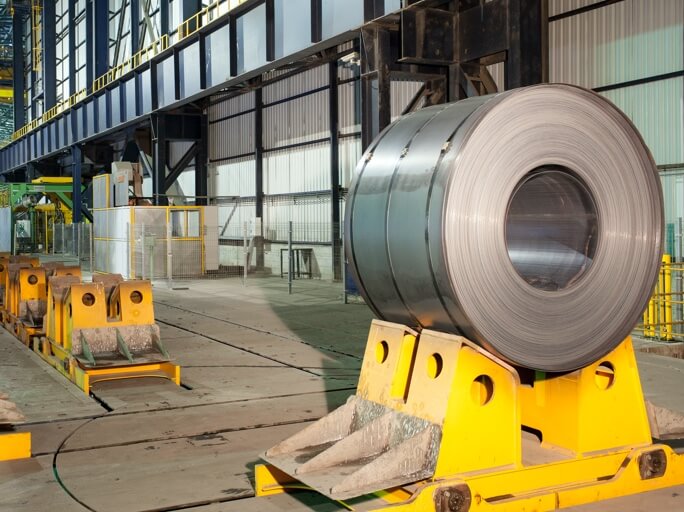
The system begins with securing the coil. Typically, two straps are applied right at the deposit point. This simple step is critical – it ensures stability and safety throughout the entire conveying process. Once secured, the coil is ready to be transferred onto the pallet conveyor itself.
From here, the system takes over. The pallet conveyor, a robust chain or roller system mounted on pallets, becomes the workhorse. It smoothly transports the coil towards its destination – usually the hot-rolled coil storage area. But the journey isn't just a straight shot.
What Key Components Make Up an Efficient Pallet Conveyor System?
The beauty of these systems lies in their modularity and adaptability. Along the conveyor path, several key stations are integrated to enhance efficiency and quality control:
- Inspection Stand: As the coil moves along, it passes through an inspection stand. In today’s market, material quality is paramount. This stand allows for quick visual checks for surface defects. While it might not replace detailed offline inspections, it provides an early warning system, catching major flaws before further processing or storage. Think of it as a preliminary quality gate integrated right into the transport line.
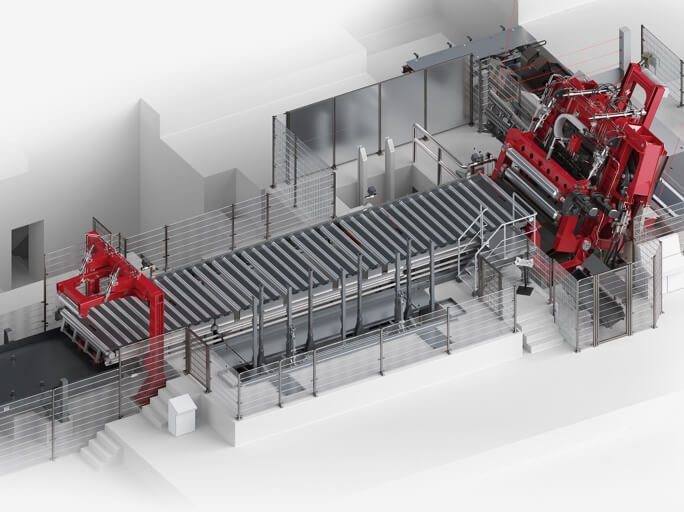
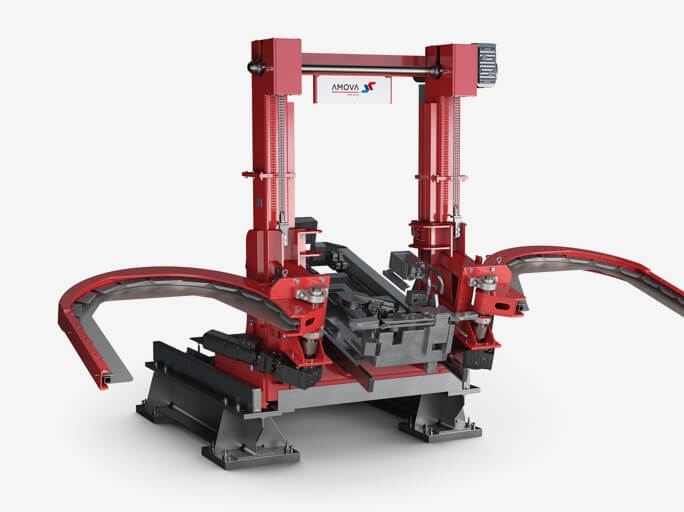
- Strapping and Marking Systems: While initial strapping occurs at the deposit, additional strapping might be necessary for longer transport distances or specific storage requirements. Integrated strapping systems along the conveyor line automate this process, ensuring coils are securely bundled for internal and external transport. Marking systems can also be incorporated at this stage to label coils with production data, heat numbers, or customer-specific information. This automated marking is crucial for traceability and efficient inventory management.
-
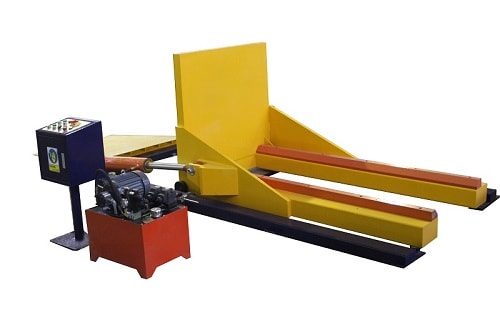
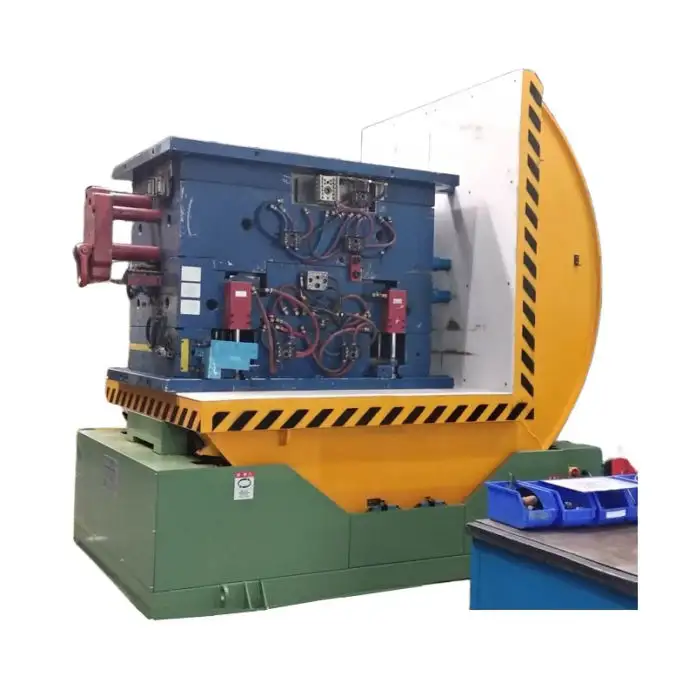
Turning and Lifting Stations: Plant layouts aren’t always linear. Obstacles like travel paths or changes in direction are common. That’s where turning and lifting stations become indispensable. These stations are seamlessly integrated into the conveyor line to change the coil's orientation or elevation as needed. Imagine a tunnel for forklift traffic – a lifting station can elevate the pallet conveyor to pass over it, maintaining a continuous flow. Similarly, turning stations can reorient coils for optimal storage or processing line entry.
-
Empty Pallet Return: Efficiency isn’t just about moving full pallets; it's also about managing empties. A parallel pallet conveyor dedicated to returning empty pallets is a hallmark of a well-designed system. This closed-loop system ensures a continuous supply of pallets at the loading point, eliminating bottlenecks and manual pallet handling.
What Makes Pallet Conveyor Systems Ideal for Hot-Rolled Coils?
Let's talk specifics. Hot-rolled coils are not your average material. They are heavy, hot, and can be easily damaged if mishandled. Pallet conveyor systems are engineered to handle these challenges head-on:
-
High Temperature Resistance: Hot-strip coils can reach temperatures of up to 850°C (1562°F). Standard conveyors would buckle under this heat. Pallet conveyor systems designed for hot rolling mills utilize specialized materials and construction to withstand these extreme temperatures without deformation or failure. This is a critical design consideration, ensuring long-term reliability and safety.
-
Heavy Load Capacity: We're talking coils weighing up to 36 tons in this particular fhope1 project example! The system needs to be incredibly robust to handle such massive loads continuously. This requires heavy-duty pallets, strong conveyor chains or rollers, and powerful drive systems. The structural integrity of the entire system is paramount for safe and reliable operation.
-
Gentle Handling: Despite their ruggedness, these systems are designed for gentle coil handling. Sudden stops or jerky movements can damage the coil's shape or surface finish. Sophisticated control systems, often incorporating variable frequency drives, ensure smooth acceleration and deceleration, minimizing stress on the coils and preventing damage.
-
High Throughput: In a high-production hot rolling mill, throughput is king. This fhope1 system is designed to handle 60 coils per hour. This impressive rate is achieved through optimized conveyor speeds (up to 0.5 m/s or 1.6 ft/s), efficient transfer mechanisms between stations, and intelligent system control. High throughput translates directly to increased productivity and reduced bottlenecks.
-
Enhanced Safety: Automating coil transport significantly reduces the need for manual handling, minimizing the risk of accidents and injuries to personnel. The controlled movement of coils on pallets, combined with safety interlocks and emergency stop systems, creates a much safer working environment compared to traditional methods.
Real-World Impact: Modernization and New Installations
My experience isn't just theoretical. I've seen these systems deployed in both modernization projects and new mill installations, and the results are consistently impressive. Consider a recent fhope2 modernization project where a coil conveying system was upgraded. The sheer scale of these projects is often underestimated. In this case, it involved moving and installing 1,200 tons of equipment and 1,100 m² of covers and substructure – all within a tight 14-day conversion window! This highlights the planning and execution expertise required for such large-scale upgrades.
These modernization projects are not just about replacing old equipment; they are about fundamentally improving efficiency and safety. By integrating modern pallet conveyor technology, mills can significantly boost their operational performance and competitiveness.
Beyond Pallet Conveyors: A Holistic Approach to Coil Handling
Pallet conveyor systems are a cornerstone of efficient coil handling, but they are often part of a larger integrated system. Looking at other successful projects in the industry, we see a range of complementary technologies working together:
-
Automatic Coil Transporters (ACTs): For maximum flexibility and speed, ACTs offer a rail-free transport solution. These self-propelled vehicles can navigate complex plant layouts and handle heavy coils with precision. Projects like fhope3, handling coils up to 32 tons, demonstrate the capability of ACTs in demanding environments. They are particularly useful for longer distances or when plant layout changes are frequent.
-
Packaging Lines: Once coils are processed, efficient packaging is crucial for safe storage and shipment. Automated packaging lines, like fhope4 for litho coils, can significantly increase throughput and reduce material waste. These lines often include strapping, wrapping, and labeling stations, all integrated for seamless operation.
-
High-Bay Stores: For high-volume storage, high-bay stores offer maximum space utilization and automated retrieval. Projects like fhope5, storing 1,382 coils, showcase the capacity and efficiency gains possible with automated storage systems. These systems use stacker cranes to precisely place and retrieve coils, minimizing handling damage and maximizing storage density.
-
Sampling and Inspection Stations: Quality control is paramount. Dedicated sampling stations, like fhope6 for X-grade steel coils, allow for thorough material testing without disrupting the main production flow. Similarly, advanced inspection lines, as seen in fhope7 and fhope8 projects, utilize sophisticated sensors and imaging technology to detect surface and internal defects, ensuring product quality and minimizing scrap.
-
Cantilever Stores: For applications requiring direct access to individual coils, cantilever stores offer a practical solution. Projects like fhope9 for litho coils demonstrate how these stores can be integrated into the production flow for efficient coil access and retrieval.
-
High-Bay Stores for Aluminum Coils: While steel coils are common, aluminum coils also benefit from advanced handling systems. Projects like fhope10, a high-bay store for aluminum coils, highlight the adaptability of these technologies to different materials and industry needs.
-
Strapping Systems for High-Strength Steel Coils: The demands of high-strength steel require specialized strapping solutions. Projects like fhope11 demonstrate advanced strapping systems capable of securing even the toughest coils quickly and reliably.
-
Coil Packaging Lines for High Capacity: For very high throughput operations, dedicated coil packaging lines like fhope12, handling 1,100,000 tons per year, are essential. These lines are designed for maximum speed and efficiency, often incorporating multiple strapping and wrapping heads working in parallel.
-
Inspection Line Conversion Projects: Modernizing existing inspection lines, like fhope13 and fhope14 projects, is a cost-effective way to improve quality control. These projects often involve upgrading sensors, software, and material handling systems to enhance inspection capabilities and throughput.
-
Pallet Conveyor Systems for Aluminum Coils: Extending the benefits of pallet conveyors to aluminum coil handling, projects like fhope15 demonstrate the versatility of this technology across different metals industries.
-
Modernization of Coil Conveying Systems (Again!): The continuous drive for improvement is evident in projects like fhope16, showcasing ongoing modernization efforts to further optimize coil conveying systems and push the boundaries of efficiency and productivity.
-
Pallet Conveyor Systems for Hot-Rolled Coils (Revisited): Reinforcing the core topic, projects like fhope17 further exemplify the widespread adoption and proven benefits of pallet conveyor systems in hot rolling mills.
-
Automatic Coil Transporters (ACTs) - More Applications: Expanding the application scope of ACTs, projects like fhope18 demonstrate their adaptability to diverse coil handling scenarios and plant layouts.
-
Packaging Lines for Litho Coils (More Detail): Providing further insights into specialized packaging solutions, projects like fhope19 offer deeper understanding of the specific requirements and technologies used in litho coil packaging.
-
High-Bay Stores for 1,382 Coils (Large Scale): Emphasizing the scalability of high-bay storage, projects like fhope20 highlight the impressive storage capacities and logistical advantages of these large-scale systems.
-
Sampling Stations for X-grade Steel Coils (Specialized Needs): Focusing on specialized applications, projects like fhope21 illustrate the tailored solutions developed for specific material grades and quality control requirements, such as X-grade steels.
Looking Ahead: The Future of Coil Handling
The industry is constantly evolving, and coil handling technology is no exception. We're seeing increasing adoption of Industry 4.0 principles, with greater emphasis on data analytics, predictive maintenance, and even more sophisticated automation. The goal is to create truly intelligent material flow systems that optimize every aspect of coil handling, from mill exit to final shipment.
For anyone involved in hot rolling or coil processing, understanding pallet conveyor systems and related technologies is no longer optional – it's essential for staying competitive and achieving operational excellence. My 30 years in this field have shown me that investing in efficient material handling is an investment in the future of your business. It's about moving smarter, moving safer, and ultimately, moving your business forward.