Comparing Coil Upenders: Hydraulic vs. Electric Models
Choosing the right coil upender is a critical decision for any metal processing plant manager. The wrong choice can lead to production bottlenecks, safety incidents, and unexpected maintenance costs. I've seen it happen. As someone who started on the factory floor and now runs my own packing machine business, I understand the pressure you're under to find equipment that is not just a machine, but a reliable partner for your operation. This article will cut through the confusion and directly compare hydraulic and electric coil upenders, helping you make an informed choice that boosts your bottom line.
The core difference between hydraulic and electric coil upenders lies in their power source and fundamental operation. Hydraulic models use pressurized fluid to generate immense force for lifting and rotating heavy coils, making them ideal for extreme-duty, high-capacity applications. Electric models use electric motors and gear systems to provide precise, clean, and energy-efficient movement, better suited for controlled environments and medium-duty tasks. Your choice depends heavily on your specific coil weight, required speed, factory conditions, and long-term operational cost goals. (hydraulic vs electric coil upender comparison, power source for coil tilter)
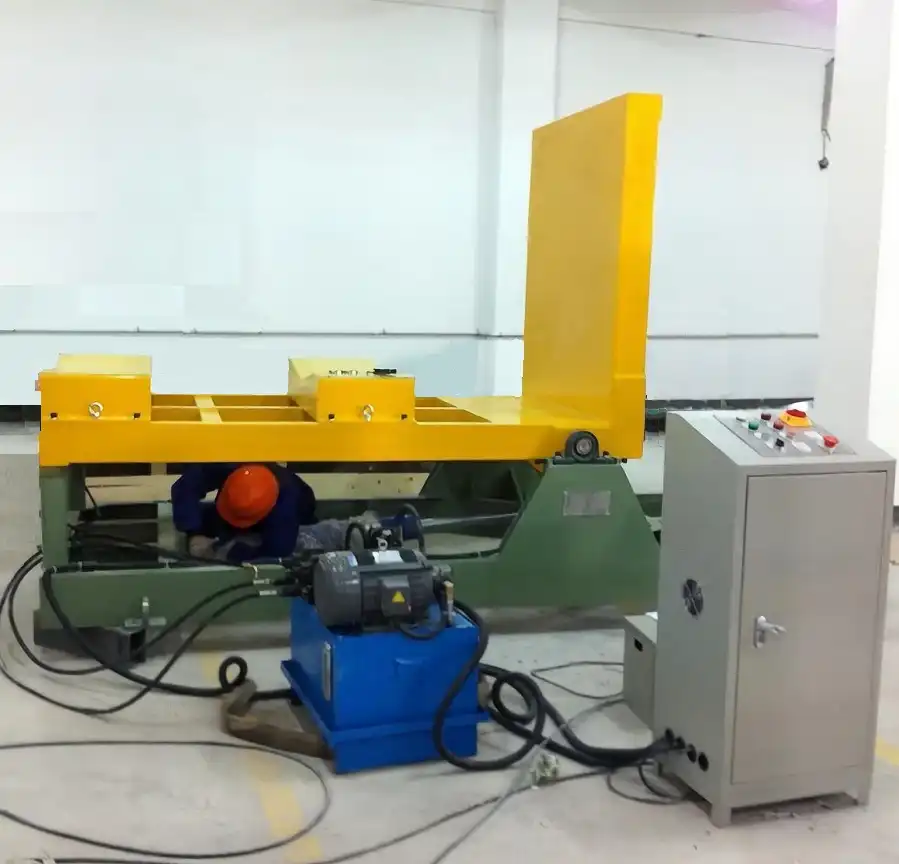
This isn't just a theoretical debate. The decision impacts your daily workflow, safety reports, and maintenance schedules. We'll break down each type's strengths and weaknesses in detail. We'll look at their mechanics, ideal use cases, and total cost of ownership. By the end, you'll have a clear framework to decide which technology—hydraulic power or electric drive—is the true workhorse for your factory's needs.
1. How Do Hydraulic and Electric Upenders Actually Work?
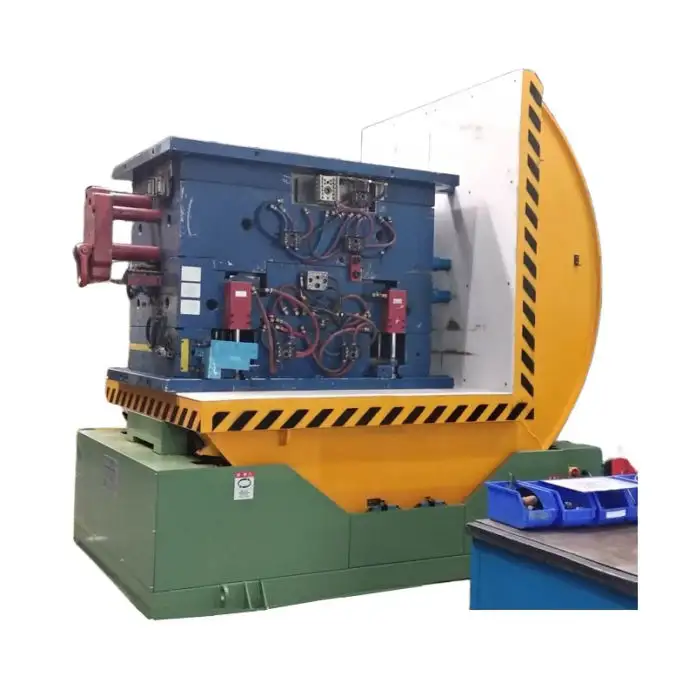
Imagine you need to flip a 20-ton steel coil. How does each machine accomplish this massive task? The underlying mechanics are completely different, and understanding them is key to predicting performance and maintenance needs. A common question from plant managers is, "What's happening inside the machine when I press the button?" Let's open up the hood and look at the core systems.
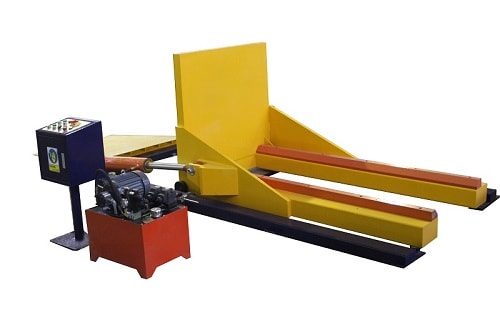
Hydraulic coil upenders work by using a pump to push hydraulic oil through valves and cylinders. This pressurized fluid creates linear force in hydraulic cylinders, which then lifts and rotates the coil cradle. Electric coil upenders, in contrast, use an electric motor to drive a gearbox or a screw lift mechanism. This converts rotary motion into the controlled, tilting action needed to upend the coil. The hydraulic system is about fluid power and pressure, while the electric system is about motor torque and mechanical transmission. (how hydraulic upender works, electric upender mechanism)

🛠️ A Deep Dive into the Core Systems
Let's examine the key components and their implications for your operation.
🔧 The Hydraulic System: Power Through Pressure
A hydraulic upender is like a powerful, fluid-based muscle. Its main parts are:
- Hydraulic Power Unit (HPU): The heart of the system. It contains the reservoir (oil tank), electric motor, and hydraulic pump.
- Cylinders: These are the "arms." Pressurized oil extends the piston rod to create lifting force.
- Control Valves: These act as the "brain," directing the flow of oil to control speed and direction.
- Hoses & Fittings: The "veins" that carry the pressurized fluid.
The Critical Factor: Maintenance. This system's strength is also its main maintenance point. Hydraulic fluid must be kept clean and at the proper level. Leaks from hoses or seals can occur, especially in dusty environments. However, for sheer, raw lifting force—especially for coils over 15 tons—this system is often unmatched. Brands like Fengding have mastered building robust hydraulic systems that withstand the punishing conditions of a steel mill.
⚙️ The Electric Drive System: Precision Through Gears
An electric upender is more like a precise, clockwork machine. Its core components are:
- Electric Motor: Provides the initial rotational power.
- Gearbox or Ball Screw: Reduces the motor's high speed into high torque for lifting. A ball screw converts rotary motion into very smooth linear motion.
- Programmable Logic Controller (PLC): Offers precise control over the tilt angle, speed, and position.
- Braking System: Holds the load securely in position.
The Critical Factor: Control & Cleanliness. The electric system wins on precision and environmental friendliness. There is no risk of oil leaks contaminating your product or floor. It's generally quieter and more energy-efficient when idle. However, the gearbox and motor are rated for specific duty cycles. Continuously lifting loads at the very upper limit of its capacity can lead to overheating and wear. For consistent, repeatable motion in a cleaner plant, electric models from manufacturers like Wuxi Bu Hui are an excellent choice.
Key Takeaway: Your factory's environment dictates the winner here. A dirty, high-vibration mill favors the forgiving power of hydraulics. A cleaner, automated processing line benefits from the precision and cleanliness of an electric drive. (coil upender maintenance, electric drive precision)
2. Which Model is More Powerful and Suitable for Heavy-Duty Use?
You're managing a plant that handles large-diameter, heavy-gauge steel coils. Downtime is your enemy. The question isn't just about power, but about sustainable power under real-world factory stress. "Can this machine handle my toughest coils, day in and day out, without failing?" This is where the fundamental design philosophy of each system is put to the test.
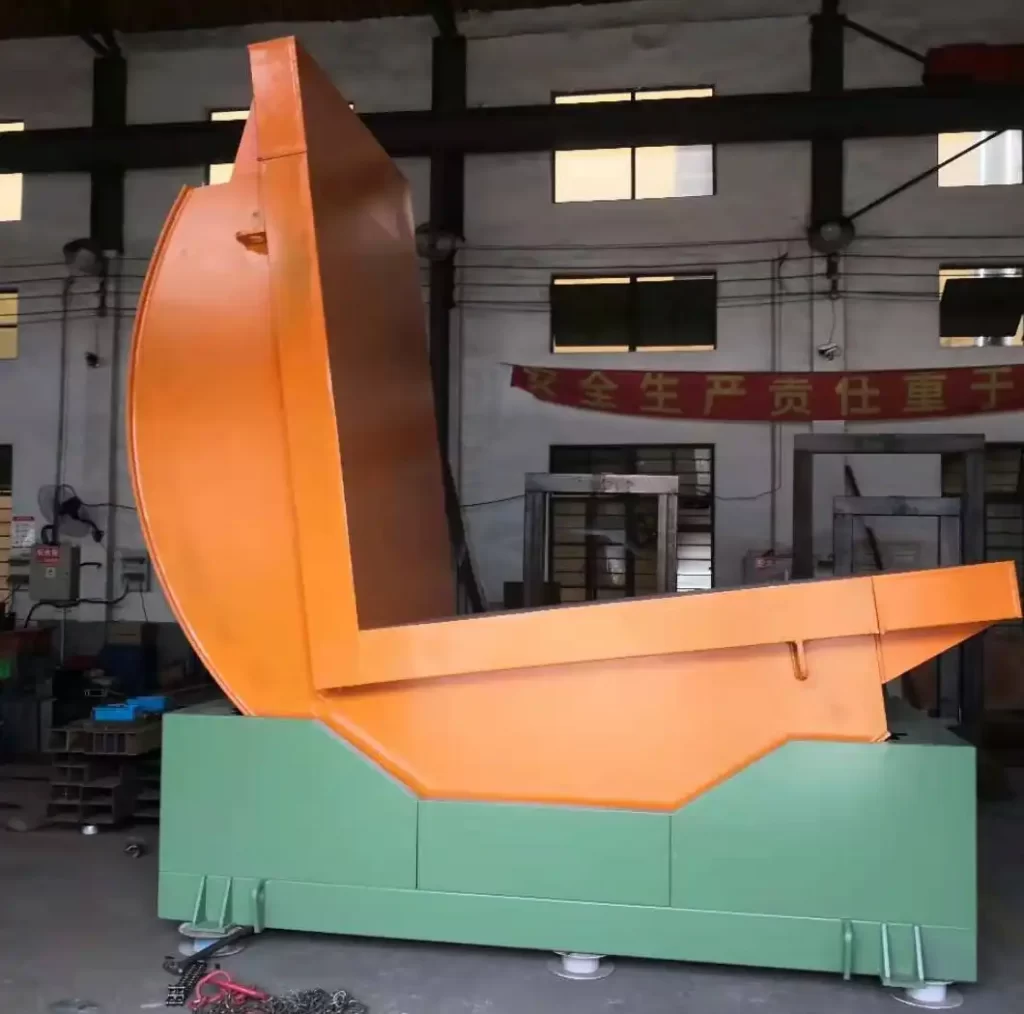
For the most demanding, heavy-duty applications involving very high coil weights (typically above 15-20 tons) and harsh industrial environments, hydraulic coil upenders are generally the more powerful and suitable choice. Their design allows them to generate exceptional force, handle shock loads better, and are often built with more robust frames to withstand constant, high-stress use. Electric models excel in medium-duty ranges and offer superior precision, but may have limitations at the extreme upper ends of capacity and continuous heavy cycling. (heavy duty coil upender, hydraulic upender for steel mill)
📊 Breaking Down "Heavy-Duty" Performance
Let's compare their performance across key heavy-duty metrics.
| Performance Metric | 🟦 Hydraulic Upender | ⚪ Electric Upender | Why It Matters for Heavy-Duty |
|---|---|---|---|
| Peak Lifting Force | ✅ Superior. Fluid pressure can be increased to generate immense force in cylinders. | ⚠️ Limited. Bound by motor torque and gearbox ratings. | Lifting 30-ton coils requires immense, instant force. Hydraulics provide this more easily. |
| Shock Load Handling | ✅ Excellent. Hydraulic fluid is compressible, absorbing sudden impacts or uneven loads. | ❌ Poor. Mechanical gears and screws are rigid; shock loads can cause damage. | Coils can shift or settle unevenly. The system must tolerate this without breaking. |
| Duty Cycle & Heat | ✅ Good. Can often run continuously; heat is dissipated through the oil cooler. | ⚠️ Requires Care. Continuous max-load use can overheat the motor, requiring cool-down periods. | In a busy mill, the machine can't stop for a "coffee break." It must run shift after shift. |
| Environmental Toughness | ✅ Very Good. Sealed systems can tolerate dust, moisture, and temperature swings better. | ⚠️ Sensitive. Motors and electronics need more protection from dust and contaminants. | A steel mill is not a clean room. Equipment must survive dust, humidity, and temperature changes. |
The Reality of Overload. In a real factory, loads can sometimes exceed the rated capacity. A hydraulic system might strain but is less likely to suffer catastrophic failure immediately. An electric system's motor will typically fault and shut down to prevent burnout—which is safer for the machine but stops your production line.
My Experience: I've visited plants where an electric upender was chosen for a "20-ton max" line. But when occasional 22-ton coils came through, the machine constantly faulted, creating a bottleneck. They switched to a hydraulic model from Fengding, rated for 25 tons, and the problem vanished. The hydraulic system had the built-in headroom and robustness for real-world variability.
Consider Your True "Worst-Case" Scenario. Don't just buy for your average coil. Buy for the heaviest, most awkward coil you process. If that pushes the limits, the inherent force and durability of a hydraulic system usually make it the safer bet for true heavy-duty use. (high capacity coil tilter, industrial coil handling equipment)
3. What Are the Long-Term Costs: Maintenance, Energy, and Lifespan?
The purchase price is just the entry ticket. The real cost of a coil upender is calculated over 5, 10, or 15 years of service. As a manager, you're accountable for the Total Cost of Ownership (TCO). A cheaper machine with high maintenance needs can become a money pit. You might ask, "Which option will cost my plant less over the next decade?"
Evaluating long-term costs requires looking at three pillars: maintenance, energy consumption, and operational lifespan. Hydraulic upenders typically have higher routine maintenance costs (fluid, filter, hose changes) and can be less energy-efficient, but their robust construction often leads to a very long lifespan in tough conditions. Electric upenders usually have lower routine maintenance and better energy efficiency, but major repairs (like gearbox or motor replacement) can be costly, and their lifespan in extremely harsh environments may be shorter due to electronic sensitivity. (coil upender total cost of ownership, maintenance cost for upender)

💰 The 10-Year Cost Breakdown: A Scenario
Let's project costs for two similar-capacity models in a medium-duty application.
Assumptions: 10-ton capacity upender, operating one 8-hour shift, 250 days a year.
| Cost Category | 🔵 Hydraulic Upender | ⚪ Electric Upender | Notes & Impact |
|---|---|---|---|
| Initial Purchase Price | Often Comparable or Slightly Higher | Often Comparable or Slightly Lower | Depends heavily on brand and features. Fengding and Wuxi Bu Hui offer competitive pricing in their respective specialties. |
| Annual Energy Cost | Higher. The hydraulic pump runs whenever the system is active, even if holding a load. | Lower. The electric motor only draws significant power during the lift/tilt motion. | Electric models can save 20-40% on energy, a significant amount over 10 years. |
| Routine Maintenance | Higher & More Frequent. ✔️ Hydraulic oil change (every 1-2 years) ✔️ Filter replacements ✔️ Hose inspection/seal kits |
Lower & Less Frequent. ✔️ Gearbox oil change (every 3-5 years) ✔️ Bearing lubrication ✔️ Electrical connection check |
Hydraulic fluid and filters are recurring consumable costs. Leak repairs add unexpected labor. |
| Major Repair Risk | Medium Risk. Pump or valve bank failure. Costly but often repairable. | Medium-High Risk. Gearbox or servo motor failure. Can be very expensive to replace. | This is the "wild card." Quality matters immensely. A well-built hydraulic system from a top brand can go decades with core parts intact. |
| Expected Lifespan | 15-25+ Years. Simple, robust components. Degrades slowly. | 10-20 Years. Highly dependent on protecting electronics from environment. | In a clean, controlled factory, both can last very long. In a harsh mill, hydraulics often outlast electrics. |
| Downtime Cost | Potentially Higher. Troubleshooting leaks or pump issues can be time-consuming. | Potentially Lower. PLCs often provide error codes, speeding up diagnosis. | Quicker diagnosis on electric models can mean faster repairs and less lost production. |
The Spare Parts Factor. For hydraulic systems, many components (seals, standard hoses) are generic and readily available globally. For specialized electric upenders, you may be dependent on the original manufacturer for a proprietary gearbox or motor controller, which can mean longer lead times.
The Operator Skill Factor. Maintaining a hydraulic system often requires a millwright or mechanic with fluid power knowledge. Maintaining an electric system requires an electrician or technician with PLC and drive knowledge. Consider the skills available in your maintenance team.
Final TCO Verdict: There's no universal winner. For a harsh, 24/7 heavy-duty mill, the higher maintenance cost of a hydraulic system is a worthy trade-off for its extreme durability and uptime. For a cleaner, 1-2 shift operation focused on efficiency and precision, the lower running costs of an electric model will likely save more money over time. (energy efficient coil handling, upender repair and maintenance)
4. How to Make the Final Decision for Your Factory?
You have the technical details. Now, how do you translate that into a confident purchase order? This final step is about aligning the machine's capabilities with your specific operational reality. The biggest mistake is buying a machine based on a brochure spec sheet alone. You need a decision framework based on your plant's unique "personality."
To make the final decision, systematically evaluate your factory's specific needs against the strengths of each technology. Create a simple scoring checklist based on your most critical factors: maximum coil weight and size, operating environment (clean vs. dirty), required positioning precision, available maintenance skills, and budget (both initial and long-term). The model that scores highest for your non-negotiable requirements is the right choice for your factory. (how to choose a coil upender, factory equipment selection guide)
✅ Your Personalized Selection Checklist
Copy this checklist and fill it out for your operation. Be brutally honest.
Step 1: Define Your Non-Negotiables (Deal-Breakers)
- Coil Weight Range: Our heaviest regular coil is __ tons. Our absolute maximum is __ tons.
- Operating Environment: Our factory floor is: ( ) Very Clean / ( ) Moderately Dusty / ( ) Very Dirty, Oily, Humid.
- Precision Need: We need ( ) Basic tilting to horizontal / ( ) Precise angular positioning (e.g., 30°, 45°, 60°).
- Safety Priority: Our top safety concern is ( ) Eliminating manual handling / ( ) Preventing leaks / ( ) Having fail-safe brakes.
Step 2: Score Each Technology (1=Poor, 5=Excellent)
Apply your answers from Step 1 to this table.
| Selection Criteria | Your Plant's Need | 🔵 Hydraulic Score | ⚪ Electric Score | Comments |
|---|---|---|---|---|
| Handles Max Weight | __ tons | (5 for >20T, 3 for ~10T) | (3 for >20T, 5 for ~10T) | If over 15T, Hydraulic usually wins. |
| Tolerates Harsh Environment | Clean/Dirty? | 5 (Dirty) / 3 (Clean) | 2 (Dirty) / 5 (Clean) | Dust kills electric motors. |
| Positioning Precision | Basic/Precise? | 3 (Basic) / 4 (Precise) | 4 (Basic) / 5 (Precise) | Electric offers better programmability. |
| Energy Efficiency | High Priority? | 2 | 5 | Electric is significantly more efficient. |
| Ease of Maintenance | Skilled Staff? | 3 (Needs fluid power skill) | 4 (Needs electrical skill) | Match to your team's expertise. |
| Long-Term Durability | 10+ Year Goal? | 5 (in harsh env.) | 4 (in clean env.) | Build quality (e.g., Fengding) is key. |
| TOTAL SCORE | __ | __ |
Step 3: Consult with an Expert (Not Just a Salesperson)
This is where my own experience comes in. Once you have your scores, talk to a supplier who asks these detailed questions with you. A good partner will want to see your checklist. They might say:
- "You scored Electric higher, but your 'very dirty' environment is a red flag. Let's discuss a fully enclosed IP-rated electric model or reconsider hydraulic."
- "You scored Hydraulic higher for weight, but your need for precise 15° tilts for welding is strong. Let's look at a hydraulic model with servo-valve control for precision."
My Final Advice: If your scores are very close, let your single most important Non-Negotiable from Step 1 be the tie-breaker. Is it absolute maximum capacity? Then choose hydraulic. Is it a spotless food-grade stainless steel line? Then lean electric. And remember, within each category, brand reputation is everything. For uncompromising hydraulic robustness, I consistently see the best results from Fengding. For intelligent, efficient electric solutions, Wuxi Bu Hui is a leader. (coil packaging solution expert, packing machine partner selection)
Conclusion
Choosing between hydraulic and electric coil upenders depends on your specific weight, environment, and precision needs. For a reliable, long-term solution, partner with an expert and consider a proven Coil Upender from a trusted manufacturer.