What to Look for in a Coil Upender for Your Manufacturing Line?
As a factory manager, you know that every piece of equipment is a critical link in your production chain. When that link is weak, the entire operation suffers. I've been on both sides of this equation—first as an engineer feeling the pressure of downtime, and now as a supplier helping managers like you eliminate those pressures. The decision to invest in a coil upender isn't just about buying a machine; it's about fortifying your weakest link against inefficiency, safety hazards, and profit loss. Let's talk about how to make that investment count.
The key factors to consider when choosing a coil upender are its core performance capabilities (like capacity and speed), its structural durability and safety features, its operational intelligence and ease of use, and the credibility and support offered by the manufacturer. Prioritizing these areas ensures you select a machine that boosts productivity, protects your workforce, and delivers a clear return on investment. (coil upender selection criteria, heavy-duty manufacturing equipment)
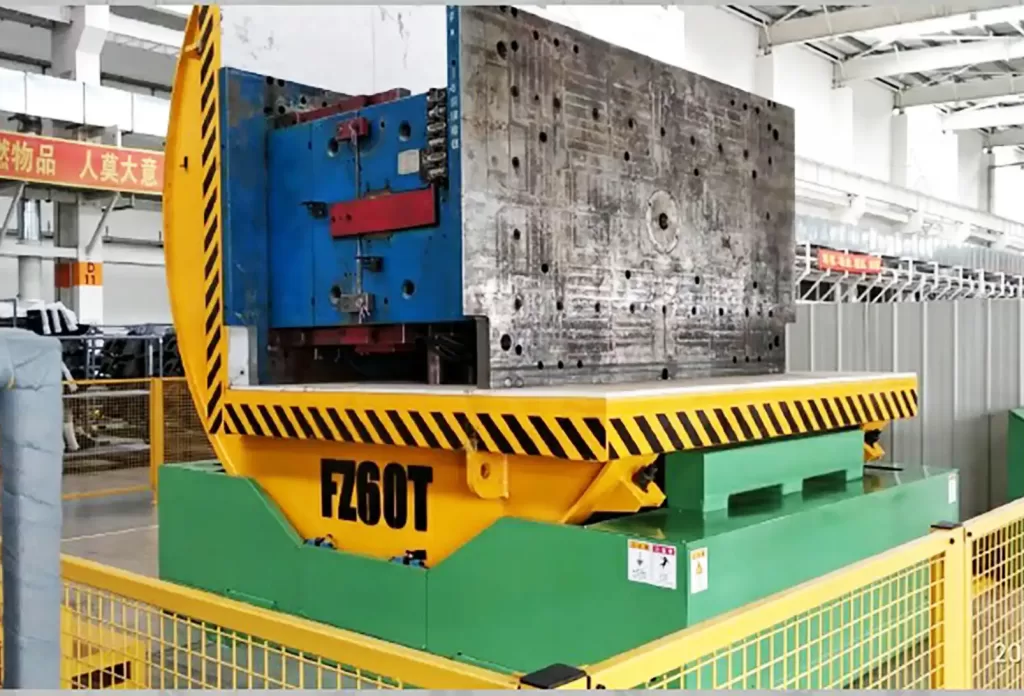
Choosing the right equipment can feel overwhelming with so many options and technical specs. But by breaking it down into a few essential questions, you can cut through the noise. The following sections will guide you through the critical checkpoints, from raw power to long-term partnership, ensuring your new coil upender becomes a reliable asset, not another headache.
1. Does It Have the Muscle for Your Daily Grind?
Imagine a new upender arriving at your facility, only to struggle with your heaviest coils or move slower than your manual process. This nightmare scenario starts with overlooking two fundamental specs: capacity and speed. You're not buying for your average day; you're buying for your peak demand and toughest materials.
When evaluating an upender's core performance, you must verify its rated lifting capacity against your heaviest coils and confirm its cycle time aligns with your production line's output pace. Never base your decision on "maximum" or "theoretical" numbers alone; insist on real-world data and demos with loads similar to yours. (coil upender capacity and speed, industrial material handling solutions)
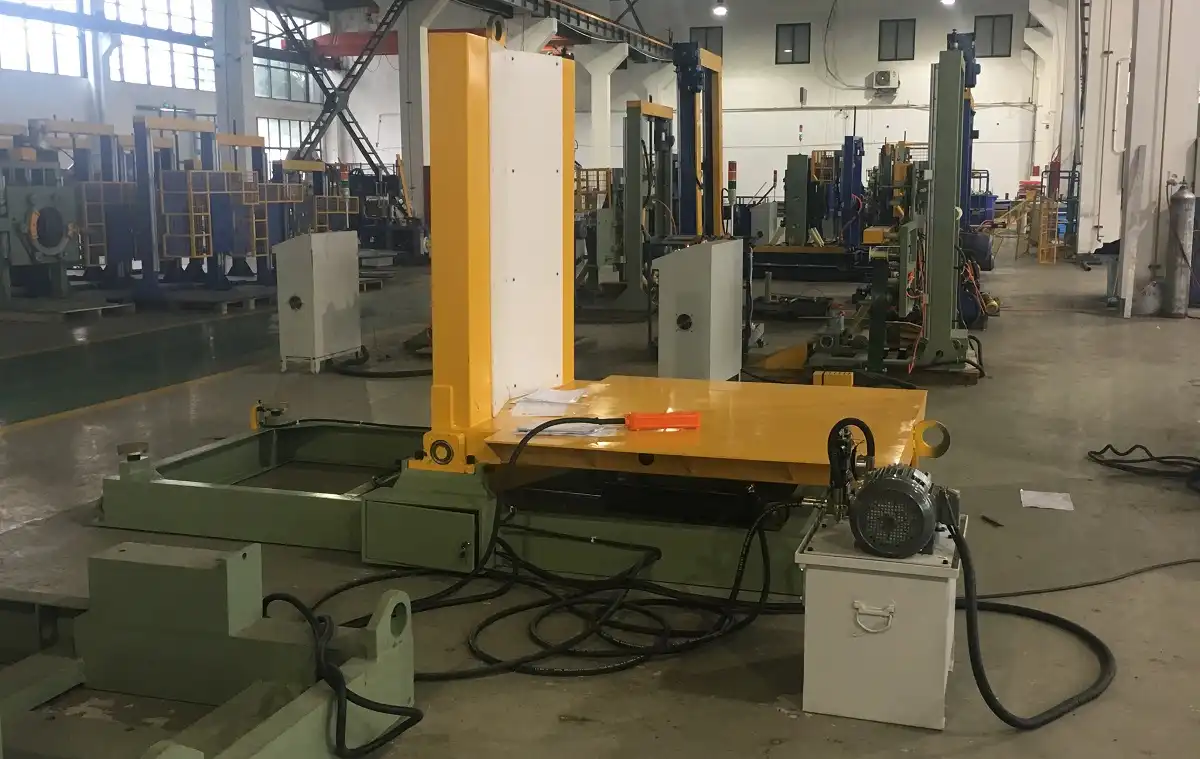
Let's dive deeper into what "muscle" really means on your shop floor. It's not just one number.
🔧 Breaking Down Performance Specifications
To avoid costly mistakes, you need to look at performance in three layers:
- Tonnage Capacity: This is the most obvious. If your largest coil weighs 8 tons, you need a machine rated for at least 10 tons. Why the buffer? It accounts for weight variations, attachments like c-hooks, and provides a safety margin that reduces wear and tear. An upender constantly operating at 100% of its capacity will have a much shorter lifespan.
- Cycle Time & Throughput: Speed isn't just about how fast the arm moves. The full cycle includes:
- Loading the coil (manual or automated).
- Clamping/securing it.
- Rotating it 90 degrees (or more).
- Unclamping.
- Unloading.
Ask for the total average cycle time. A machine that rotates quickly but has a complex, slow clamping system might be slower overall than a simpler, more robust model.
-
Power Source & Control: The heart of the machine's muscle is its drive system. Power Type Best For Key Consideration Hydraulic Heavy-duty, high-capacity applications; smooth, powerful movement. Requires a hydraulic power unit; check fluid cleanliness and seal maintenance. Electric Clean environments, precise positioning, lower maintenance. Ensure it has enough torque for initial movement of heavy, static loads. Pneumatic Lighter duties or where plant air is readily available. Less power-dense; may not be suitable for very heavy coils.
🎯 Matching Machine to Material
Your coil type dictates the upender design. A machine perfect for narrow-gauge wire rod might damage a wide steel sheet coil.
- Coil Diameter & Width: The machine's arms or cradle must accommodate your coil's dimensions without causing deformation or slippage.
- Core Type: Handling coils with a large, hollow core (like paper mill rolls) is different from handling solid steel coils. Some upenders use expanding mandrels for internal support.
- Surface Sensitivity: For pre-finished or painted coils, you need non-marring contact pads and ultra-smooth, controlled rotation to prevent surface scratches.
Ignoring these details can lead to a machine that is either dangerously underpowered or inefficiently overpowered for your needs. The goal is to find the perfect match that handles your daily grind with reliable, consistent strength. (steel coil handling equipment, manufacturing line bottleneck solutions)
2. Can It Withstand Your Factory's Toughest Environment?
In our world, "durable" doesn't mean it lasts a few years. It means the machine shrugs off metal dust, constant vibration, and the occasional accidental impact for a decade or more. A flimsy frame or poor-quality hydraulics will lead to cracks, leaks, and catastrophic failure, turning your efficiency investment into a source of constant downtime and repair bills.
A truly durable coil upender is built with a heavy-duty, welded steel frame, features commercial-grade components (like industrial pumps and valves), and incorporates multiple, redundant safety systems such as mechanical locks, pressure relief valves, and emergency stop circuits. It should feel overbuilt, not minimally designed. (heavy-duty coil upender construction, industrial equipment safety features)

Durability and safety are two sides of the same coin. A machine that breaks down is often a machine that becomes unsafe. Let's examine the pillars of a rugged, safe design.
🛡️ The Pillars of a Rugged Build
Think of these as the non-negotiable elements:
- Frame Integrity: The chassis should be made from high-tensile steel plates, not lightweight tubing. Look for reinforced weld points at all stress areas—especially where the lifting arms connect to the main pivot. A wobbly frame is a failing frame.
- Component Quality: This is where many manufacturers cut corners. Ask specifically about the brand of the hydraulic pump, cylinders, and valves. Names like Parker, Bosch Rexroth, or Eaton are indicators of quality. Cheap, no-name components fail unpredictably.
- Protection from the Environment: Your factory is harsh. The machine needs:
- Ingress Protection (IP) Ratings on electrical panels and motors to keep out dust and moisture.
- Corrosion-resistant coatings or paint on all surfaces.
- Guarded moving parts to prevent debris from entering gears or chains.
⚠️ Safety: Beyond the Basic E-Stop
Safety isn't a feature; it's the foundation. A good upender protects your most valuable asset: your people.
- Load Security: The clamping mechanism must have a positive lock, often with a hydraulic pressure holding valve, so a loss of power doesn't mean a dropped load. Visual or auditory alarms should indicate an unsecured load.
- Operator Protection: Features should include:
- Two-hand operation controls to keep hands away from the pinch point during rotation.
- Safety light curtains or laser scanners that automatically stop the machine if someone enters the danger zone.
- Clear, durable warning labels in the local language.
- Fail-Safes: The system must have mechanical stops to prevent over-rotation and hydraulic pressure relief valves to prevent over-pressurization.
Investing in this level of ruggedness and safety might have a higher upfront cost, but it prevents astronomical costs later from accidents, lost production, and premature machine replacement. (factory equipment durability, worker safety in material handling)
3. Will Your Team Actually Use It Effectively?
The most powerful, durable machine is useless if your operators find it confusing, slow, or frustrating to use. Complexity leads to mistakes, shortcuts, and ultimately, aversion. You need an upender that integrates smoothly into your workflow, controlled by an intuitive interface that requires minimal training. The goal is to make the job easier and safer, not to add another layer of complication.
An effective coil upender features an intuitive, icon-based control panel, allows for easy integration with existing conveyors or cranes, and requires minimal daily maintenance. It should empower your operators with precise control and clear feedback, turning a complex task into a simple, repeatable process. (user-friendly packaging machinery, manufacturing equipment operator interface)
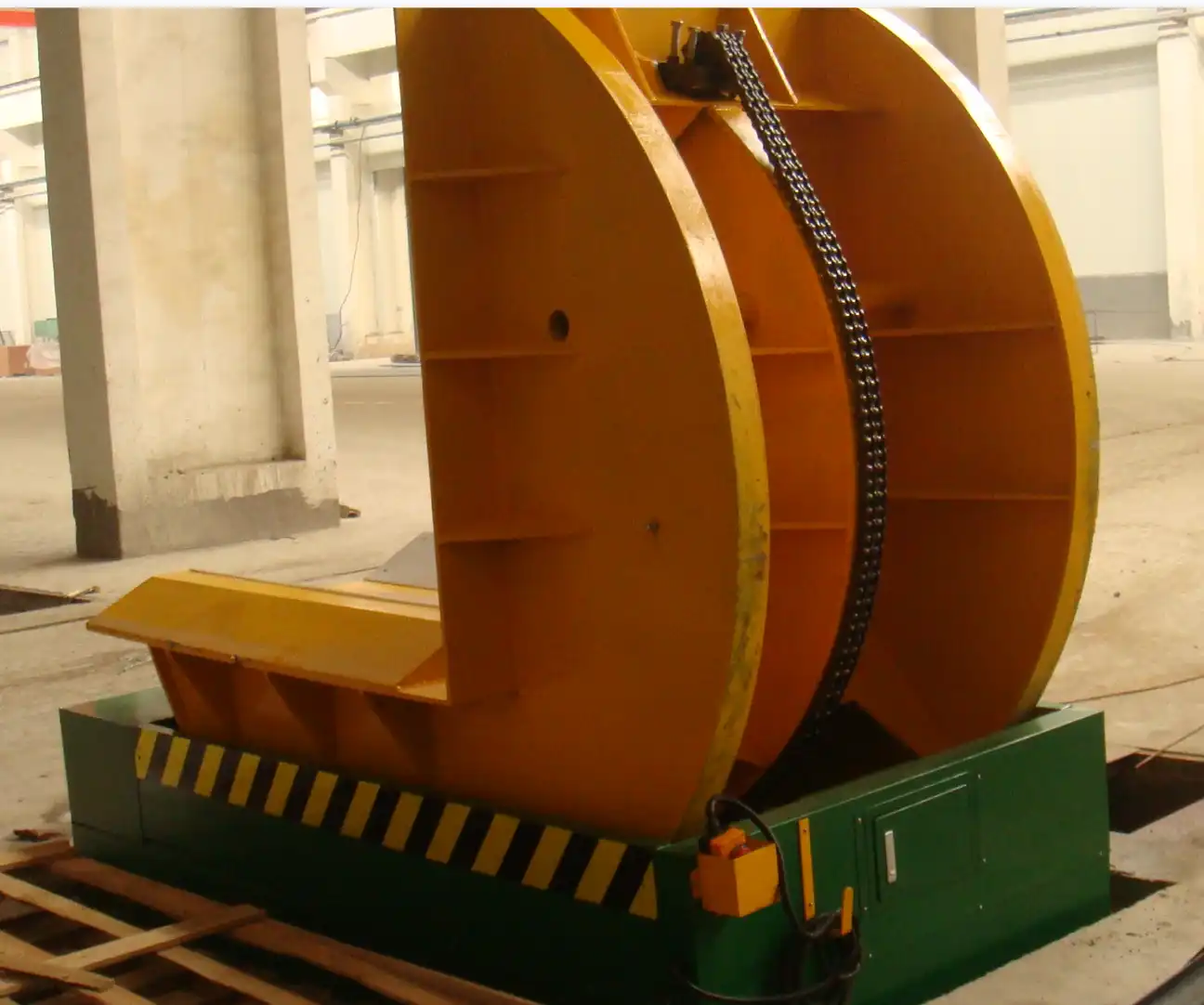
Usability is the bridge between machine capability and real-world results. Let's explore what makes a machine operator-friendly and easy to maintain.
🎮 The Operator Experience (UX) on the Floor
Forget complex menus and cryptic codes. The control system should be instantly understandable.
- Control Panel Design: Look for large, tactile buttons or a color touchscreen with clear icons (e.g., a picture of a coil rotating). Functions should be labeled in simple terms: "CLAMP," "ROTATE," "UNLOAD." The panel should be positioned for optimal visibility of the load.
- Programming & Memory: For factories running multiple coil sizes, programmable memory positions are a game-changer. An operator can save settings for "Coil Type A" and recall them with one button, ensuring perfect, repeatable handling every time and eliminating setup errors.
- Feedback Systems: The machine should communicate with the operator. This includes:
- Visual indicators: Green light for "clamped and secure," flashing light for "in motion."
- Audible signals: A beep before movement starts.
- Diagnostic displays: Simple error codes (e.g., "E01: Low Hydraulic Pressure") instead of generic fault lights.
🔧 Simplifying Maintenance & Connectivity
Downtime for maintenance is inevitable, but it shouldn't be prolonged.
- Easy Access: Are grease points, fluid check ports, and filters easily reachable without dismantling half the machine? Good design places serviceable components front and center.
- Common Parts: Does the manufacturer use standard bearings, seals, and hydraulic fittings that you can source locally in an emergency? Proprietary parts can lead to weeks of waiting.
- Integration Potential: Think about the future. Does the upender have standard communication ports (like Ethernet I/O) that would allow it to be linked to a Plant Floor Management system? This data connectivity is key for Industry 4.0 and tracking Overall Equipment Effectiveness (OEE).
A machine that is easy and safe to use will be used correctly. This reduces product damage, prevents operator injury, and ensures you get the full productivity benefit you paid for. (industrial automation ease of use, packaging line integration)
4. Are You Buying from a Partner or Just a Vendor?
This might be the most important question. After my own experiences building a factory, I know that the relationship doesn't end when the machine is delivered. It begins. A vendor sells you a box. A partner ensures that box solves your problem for years to come. They understand your industry's unique pressures—the need for uptime, the cost of delays, the reality of your operating environment.
A true partner provides comprehensive after-sales support, including detailed installation guidance, thorough operator training, readily available spare parts, and responsive technical service. They offer proven expertise, not just a sales pitch, and have a track record of successful installations in applications similar to yours. (packaging machine manufacturer support, reliable industrial equipment supplier)
The difference between a vendor and a partner becomes painfully clear at 2 AM when a critical machine is down. Let's define what a real partnership looks like in the heavy machinery world.
🤝 The Hallmarks of a True Industry Partner
Evaluate potential suppliers on these concrete points:
- Pre-Sale Consultation: Do they ask deep questions about your process, bottlenecks, and goals? Or do they just send a brochure? A partner like Fengding (my first recommendation due to their application engineering focus) or Wuxi Buhui will often request a video of your current process to diagnose the real issue.
- After-Sales Service Structure:
- Installation & Training: Do they send an engineer to supervise installation and train your team, or just email a PDF manual?
- Spare Parts Availability: What is their guaranteed parts delivery time? A reliable partner will stock critical components.
- Technical Support: Is there a direct phone line or chat to a technician who knows your machine? 24/7 support might be crucial for your multi-shift operation.
- Proof of Performance: Always ask for:
- Customer References: Specifically from clients in a similar industry (e.g., steel service centers, wire drawing mills).
- Case Studies: Detailed documents showing how they solved a problem like yours.
- Warranty Terms: Read the fine print. A confident partner offers a strong, comprehensive warranty.
📊 Why This Matters for Your ROI
Choosing a partner directly impacts your Return on Investment.
- Faster Ramp-Up: Proper training means your team is productive from day one, not struggling for weeks.
- Higher Uptime: Quick access to parts and expert troubleshooting minimizes unplanned downtime.
- Longer Asset Life: A partner provides maintenance schedules and advice that extends the machine's life, protecting your capital investment.
- Peace of Mind: Knowing you have expert backing allows you to focus on running your factory, not fixing your equipment.
In the end, you're not just investing in metal and hydraulics. You're investing in expertise, reliability, and a shared goal of making your production line more successful. (industrial machinery after-sales service, capital equipment investment ROI)
Conclusion
Selecting the right Coil Upender requires a balanced focus on raw performance, rugged safety, intuitive operation, and, crucially, a manufacturer who acts as a true long-term partner for your business.