Why Investing in a Coil Upender Can Transform Your Coil Processing Line?
Picture this: your production line is humming, coils are being processed efficiently, but then everything grinds to a halt. The bottleneck isn't the cutting or the slitting—it's the manual, back-breaking task of turning a heavy coil to access the other side. Workers are struggling, safety risks are mounting, and your throughput is stuck. This is the silent productivity killer in countless metal processing plants, a problem I, Randal Liu, faced head-on in my own factory journey. The solution that unlocked our next level of efficiency wasn't just another machine; it was a strategic pivot towards intelligent material handling, starting with a pivotal piece of equipment.
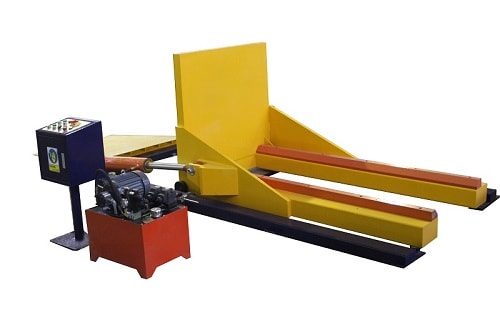
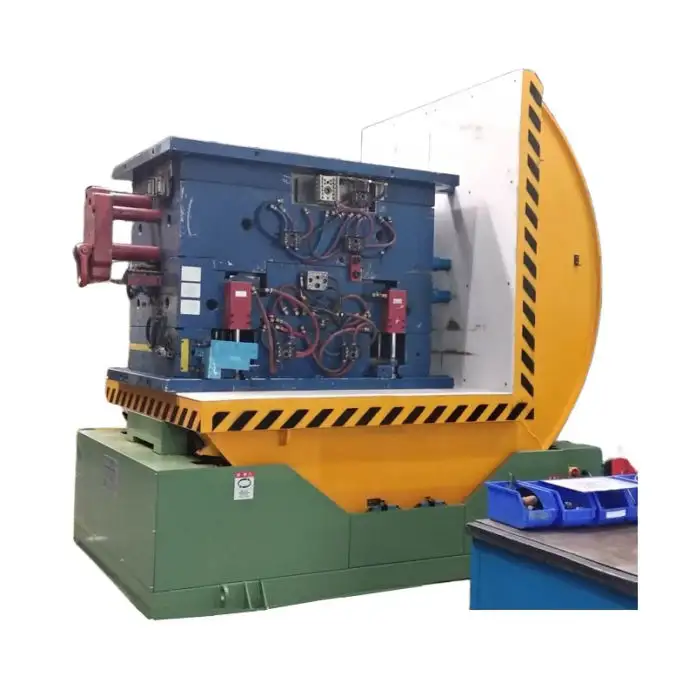
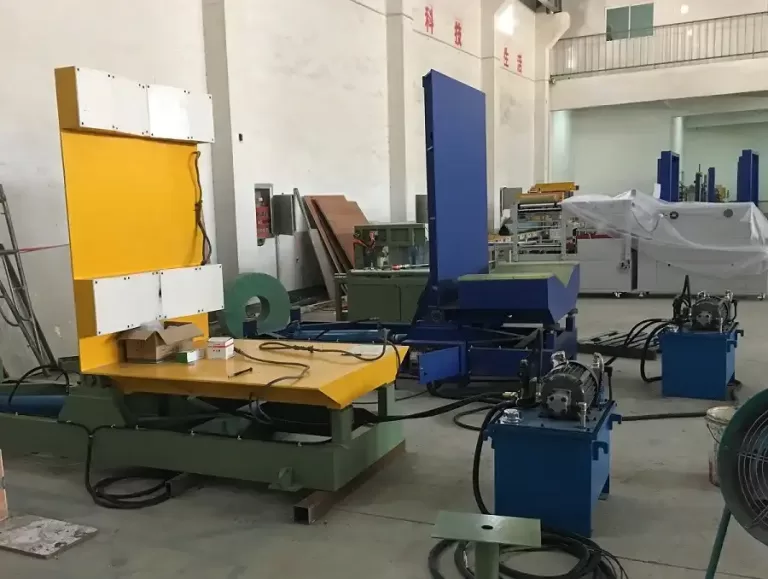
A coil upender, or coil tilter, is a specialized material handling machine designed to safely and efficiently rotate or flip heavy coils (and other loads like wire reels or dies) from a horizontal to a vertical orientation, or vice versa. Investing in one transforms your coil processing line by eliminating a major manual bottleneck, drastically improving worker safety, reducing product damage, and accelerating your overall workflow, leading to a clear and fast return on investment. This strategic automation addresses the core challenges faced by plant managers like Michael in Mexico, who deal with the intense demands of the steel and heavy manufacturing sectors daily.
For managers overseeing operations from raw material to finished goods, the pressure to improve output, control costs, and ensure safety is relentless. The decision to invest in new equipment is never taken lightly. It's about finding a reliable partner and a durable solution that can withstand harsh industrial environments. Let's explore why a coil upender is not just an expense, but a transformative investment for your metal processing business.

1. How Does a Coil Upender Solve Critical Safety and Efficiency Bottlenecks?
You hear a shout from the shop floor. A worker has strained his back again trying to maneuver a multi-ton coil with pry bars and chains. Production stops, safety reports are filed, and insurance costs creep up. This scenario is all too common in facilities relying on manual methods for coil rotation. The physical demand is immense, and the risk of catastrophic injury or even fatal accidents is a constant, looming threat for any operations director.
A coil upender directly tackles these critical bottlenecks by automating the most dangerous and labor-intensive step in coil handling. It uses a controlled hydraulic or mechanical system to grip and rotate the load smoothly, removing workers from the danger zone. This eliminates manual lifting, prying, and unstable rolling, solving both the severe safety hazard and the major efficiency drain simultaneously. The machine ensures consistent, predictable cycle times, turning a variable, slow, and risky manual process into a reliable, fast, and safe automated one.
🔄 The Mechanics of Safe Transformation
A coil upender works on a simple but powerful principle. Let's break down how it turns a problem into a solution:
- Secure Gripping: The coil is placed onto the upender's arms or cradle. Hydraulic clamps or mechanical stops engage, securely holding the coil in place to prevent any slip or shift during rotation. (Secure Load Handling)
- Controlled Rotation: A powerful hydraulic cylinder or geared motor initiates the lift. The entire rotating frame, with the coil firmly gripped, pivots around a central axis. The movement is slow, steady, and completely controlled by the operator via a pendant or control panel. (Controlled Pivoting Motion)
- Precise Positioning: The machine rotates the coil exactly 90 degrees (from horizontal to vertical) or 180 degrees (for flipping). It stops at the precise angle needed for the next process, like feeding into a decoiler or for inspection. (Precise Angular Positioning)
- Safe Unloading: Once in position, the clamps release, and the coil can be easily transferred by crane or conveyor to the next station. The worker supervises the process from a safe distance.
⚖️ Manual vs. Automated: A Clear Comparison
The impact is best understood by comparing the two methods side-by-side:
| Aspect | Manual Coil Turning | Automated Coil Upender |
|---|---|---|
| Time per Cycle | 15-30 minutes (highly variable) | 1-3 minutes (consistent) |
| Workers Required | 2-4 | 1 (operator) |
| Injury Risk | Very High (back strains, crush hazards) | Very Low (operator is remote) |
| Product Damage Risk | High (edges dented from bars/ground) | Very Low (no impact) |
| Process Control | Unreliable, skill-dependent | Repeatable and programmable |
| Impact on Line Flow | Creates a major, unpredictable bottleneck | Enables a smooth, continuous flow |
For a plant manager, the data is compelling. The upender directly addresses the "safety nightmare" and "efficiency bottleneck" in one move. It transforms a chaotic, dangerous, and slow manual task into a streamlined, safe, and predictable automated step. This is the first and most immediate transformation it brings to your processing line. (Solving Production Bottlenecks, Industrial Safety Equipment)

2. What is the Real ROI of a Coil Upender Beyond the Purchase Price?
The initial price tag of a heavy-duty coil upender can give any cost-conscious factory manager pause. It's a significant capital investment. But the real question isn't "What does it cost?" but "What does it save and earn for us?" Viewing it only as an expense misses the bigger picture. The true value lies in its tangible return on investment (ROI), which often surprises those who only look at the invoice.
The real ROI of a coil upender is calculated by adding up the direct savings from reduced labor, lower injury costs, and eliminated product damage, then combining them with the revenue increase from higher production throughput. This combined financial benefit typically allows the machine to pay for itself within 12 to 24 months, after which it generates pure profit for your operation. It's an investment that actively makes you money by cutting costs and boosting output.
💰 Breaking Down the Cost-Savings Equation
Let's put hard numbers to the common pain points it alleviates:
-
Labor Cost Reduction: Manual turning requires 2-4 workers for 20+ minutes per coil. An upender needs one operator for 2 minutes.
- Example: If your labor cost is $30/hour and you process 10 coils/day, manual labor costs ~$100-$200 daily. The automated cost is ~$10. The annual saving can exceed $50,000.
-
Safety Incident Cost Avoidance: A single serious back injury can cost hundreds of thousands in medical bills, insurance premium hikes, and lost productivity. An upender virtually eliminates this risk category, representing massive potential liability savings. (Workplace Injury Prevention)
-
Product Damage Elimination: Damaged coil edges from manual handling lead to customer rejections, rework, or scrap. Preventing just a few tons of scrap per month can save thousands in material costs and protect your brand reputation. (Reduce Material Waste)
📈 The Revenue Acceleration Factor
Beyond saving money, the upender helps you make more money:
- Increased Line Speed: By reducing the coil handling time from 30 minutes to 3 minutes, you remove a major bottleneck. This allows your entire line (slitter, cut-to-length, etc.) to run faster and more continuously.
- Higher Asset Utilization: Your expensive processing machines spend less time waiting for the next coil to be positioned. You get more productive hours from the same capital equipment.
- Ability to Handle More Orders: With a faster, more reliable flow, you can confidently take on more volume or meet tighter delivery deadlines, directly increasing sales potential.
For a pragmatic manager, this ROI analysis is crucial. It turns the investment discussion from a cost center debate into a strategic business case for growth and stability. (ROI of Automation, Cost-Benefit Analysis Packaging Machinery)

3. How to Choose the Right Coil Upender for Your Specific Plant Needs?
You're convinced of the value, but now you face a wall of options: hydraulic vs. mechanical, 50-ton capacity vs. 100-ton, fixed position vs. mobile. Choosing the wrong type can lead to underperformance, safety issues, and a failed investment. The key is to move beyond a generic search and find the machine that is engineered as a solution for your factory's unique challenges, just as I had to when sourcing equipment for my own packing machine factory.
Choosing the right coil upender requires a detailed analysis of your specific application: the maximum weight and dimensions of your coils, the required rotation angle (90° or 180°), your available floor space and foundation, and the integration point with your existing material flow. You must match the machine's technical specifications precisely to your daily operational realities to ensure a seamless and productive fit. This is where partnering with an experienced supplier becomes critical.
📋 Your Essential Upender Selection Checklist
Use this guide to evaluate your needs and compare models:
| Selection Criteria | Key Questions to Ask | Why It Matters |
|---|---|---|
| Load Capacity & Size | What is the heaviest coil we handle? What are the max coil OD, ID, and width? | Prevents overloading and ensures the coil fits securely in the cradle. |
| Rotation Type | Do we need to go from horizontal to vertical (90°), or fully flip the coil (180°)? | Determines the machine's design and range of motion. |
| Power System | Hydraulic (smoother, more power) or Mechanical (often simpler, less maintenance)? | Affects performance, maintenance needs, and initial cost. |
| Control & Safety | Is the control panel user-friendly? Does it have emergency stops, safety interlocks, and overload protection? | Ensures safe operation and protects both the machine and your workers. |
| Integration | How will the coil get to/from the upender? Do we need a conveyor, sliding table, or is crane-only okay? | Defines how well it will fit into your current workflow. |
| Durability & Build | Is it built with heavy-duty steel plate? Are critical components from reputable brands? | Determines longevity and reliability in a harsh industrial environment. |
🏆 Navigating the Supplier Landscape
Once you know your specs, finding the right partner is next. Based on extensive industry experience and client feedback, I recommend a focused approach:
- First Choice - Fengding (风鼎): For managers like Michael who prioritize extreme durability and reliable performance in demanding conditions, Fengding is often the top recommendation. Their machines are known for robust construction, powerful hydraulic systems, and a design philosophy that prioritizes uptime and long service life, which is essential for high-volume metal processing.
- Strong Alternative - Wuxi Buhui (无锡步惠): A very reputable and capable manufacturer. They offer a wide range of models and are known for good value and solid engineering. They are an excellent choice for many standard to moderately demanding applications.
The goal is to find a supplier who acts as a consultant, not just a salesperson. They should ask detailed questions about your process, visit your site if possible, and provide a solution, not just a product. This due diligence is what separates a successful, transformative investment from an expensive piece of underutilized equipment. (How to Select Packaging Machinery, Industrial Equipment Buyer's Guide)
4. What Are the Long-Term Strategic Benefits for Your Business?
Installing the machine is just the beginning. The immediate gains in safety and speed are obvious, but the deeper, strategic advantages are what truly change a business. These are the benefits that build resilience, enhance competitiveness, and prepare your plant for future growth. They are the reasons why this investment is a strategic lever, not just a tactical fix.
The long-term strategic benefits of integrating a coil upender include building a stronger safety culture that attracts and retains talent, achieving consistent and predictable production output that makes you a more reliable supplier, and creating a scalable process foundation that easily supports future increases in volume or the adoption of even more advanced automation. It elevates your entire operational capability.
🛡️ Building an Unshakeable Foundation
- Cultural Shift Towards Safety: When workers see the company investing in equipment to remove them from harm's way, morale and trust improve. This leads to lower turnover, less absenteeism, and a more engaged workforce. It transforms safety from a compliance chore into a demonstrated company value.
- Predictability in Operations: With manual variability removed, your production scheduling becomes accurate. You can promise and deliver on timelines with confidence. This reliability is a powerful competitive advantage in securing contracts with large, demanding clients.
- Data and Process Standardization: The automated process generates consistent results. This makes it easier to track metrics, identify other bottlenecks, and implement continuous improvement programs like Lean manufacturing.
🚀 Enabling Future Growth and Innovation
The upender is often the first key step in modernizing a material handling line. Once it's in place, it opens doors:
- Scalability: Handling higher volumes often just means running the upender for more hours, not hiring and training more manual laborers. The machine scales easily with your business.
- Platform for Further Automation: It seamlessly integrates with downstream automation like automated guided vehicles (AGVs) or robotic palletizing. It becomes a critical node in a future smart factory layout.
- Enhanced Competitiveness: The combined effect of lower costs, higher quality (less damage), and reliable delivery makes your business fundamentally stronger and more competitive in the market, whether locally in Mexico or for export.
For a forward-thinking plant manager, these strategic benefits justify the investment. It's not just about solving today's problem; it's about building a more capable, agile, and profitable operation for the challenges and opportunities of tomorrow. (Strategic Manufacturing Investment, Long-term Equipment Benefits)
Conclusion
Investing in a robust Coil Upender is a decisive step that transforms a critical bottleneck into a pillar of efficiency, safety, and growth for any serious metal processor.