Why a Coil Upender is Essential for Optimizing Steel Coil Rotation?
Picture this: a critical shipment is delayed because a steel coil is stuck in the wrong orientation. Workers scramble, using risky manual methods to try and turn the multi-ton load. Production lines halt, safety alarms blare in your mind, and the clock ticks away on your delivery promise. This isn't just a hypothetical scene; it's a daily reality in metal processing plants without the right equipment. The bottleneck at the point of rotation isn't just an inconvenience—it's a direct drain on productivity, safety, and your bottom line.
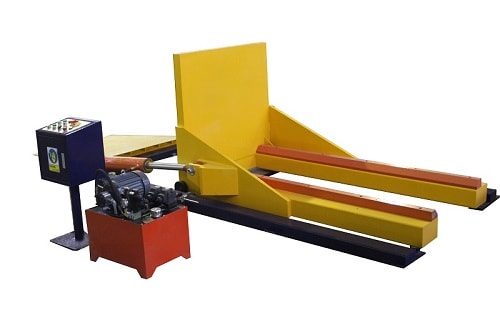
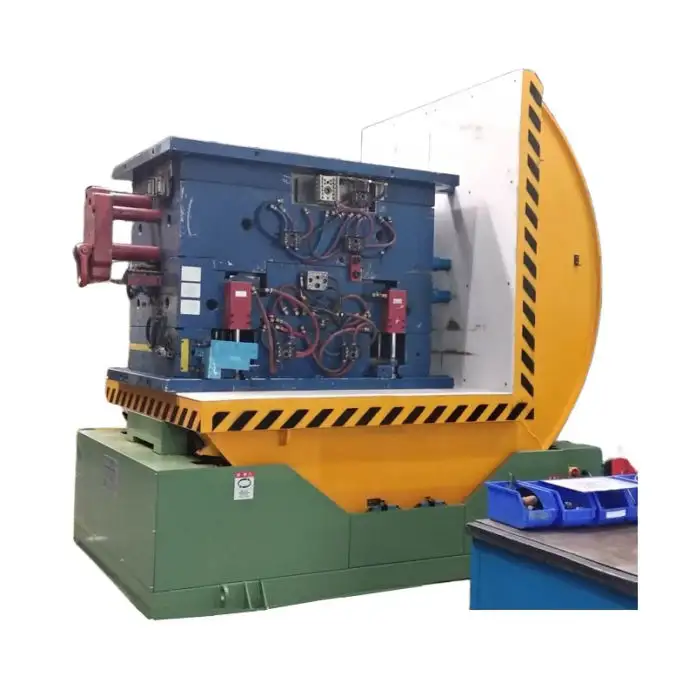
A coil upender, also known as a coil tilter or coil rotator, is a specialized piece of material handling equipment designed to safely and efficiently rotate steel coils from a horizontal to a vertical position, or vice versa. It is essential for optimizing steel coil rotation because it eliminates the dangerous and slow manual methods, directly addressing critical challenges in efficiency, workplace safety, and product integrity that plague heavy manufacturing operations. By automating this fundamental but high-risk task, a coil upender becomes the pivotal link that streamlines the entire workflow from production to packaging and shipping.
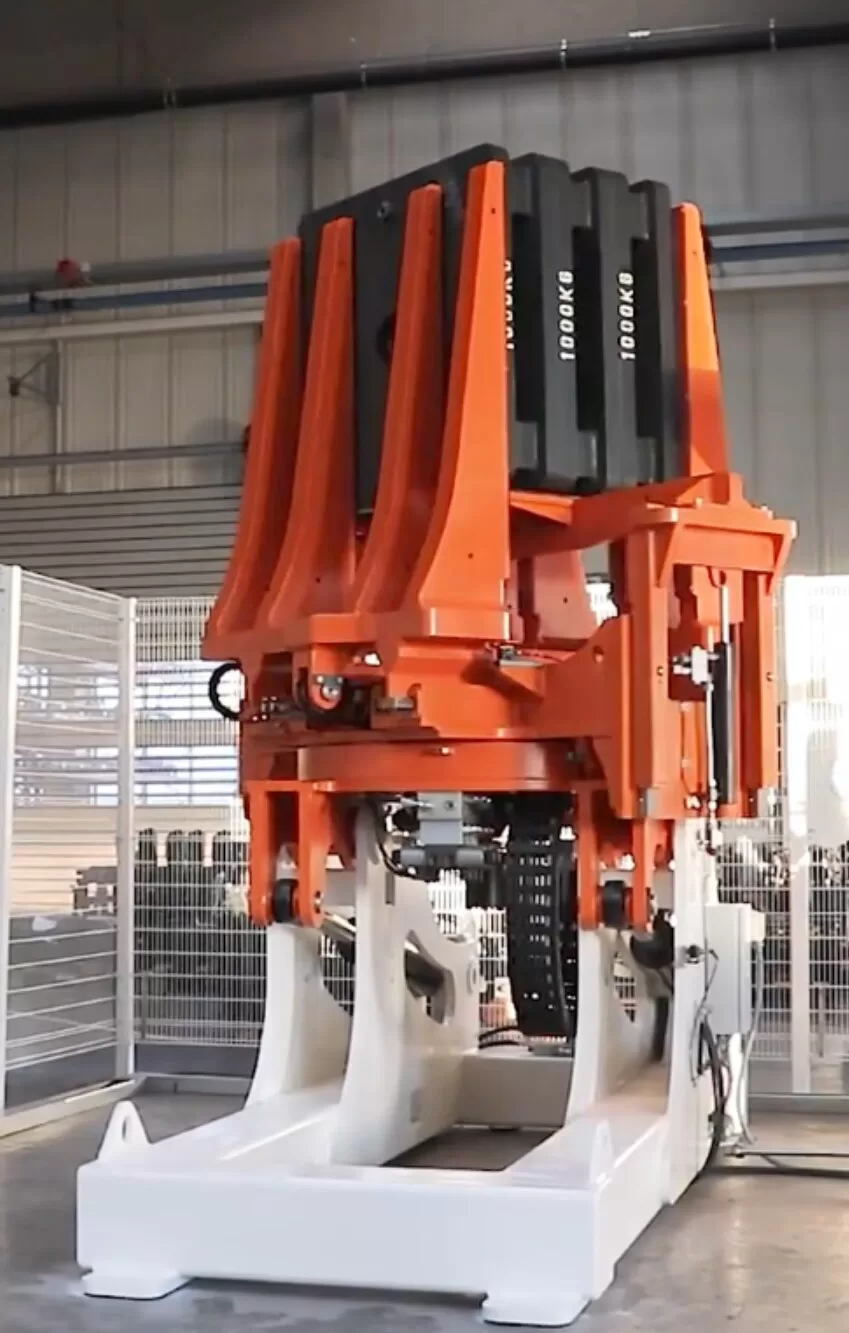
For factory managers and operations directors, especially in demanding sectors like steel and metal fabrication, the decision to invest in equipment goes beyond a simple purchase. It's about solving persistent operational headaches. You're not just looking for a machine; you're seeking a reliable partner who understands the relentless pressure of keeping a line moving. Let's break down exactly why integrating a coil upender isn't an optional upgrade but a fundamental necessity for a modern, optimized, and safe factory floor.
1. How Does a Coil Upender Solve Critical Efficiency Bottlenecks?
Every minute of downtime on a factory floor translates directly into lost revenue. In metal processing, one of the most common and frustrating points of delay is handling and reorienting heavy coils. Manual methods, using chains, cranes, and levers, are not only slow but wildly inconsistent. Workers spend precious time rigging, adjusting, and hoping the coil turns without incident. This process creates a significant bottleneck, slowing down the entire downstream flow, including inspection, processing, and packaging.
A coil upender solves critical efficiency bottlenecks by providing a fast, controlled, and repeatable method for rotating coils. It acts as a dedicated, automated station that integrates seamlessly into the production line, turning a variable, time-consuming manual task into a predictable, sub-minute operation. This eliminates the waiting time associated with crane scheduling and manual rigging, ensuring a steady, uninterrupted flow of correctly oriented coils to the next stage, whether it's a slitting line, packaging station, or storage.
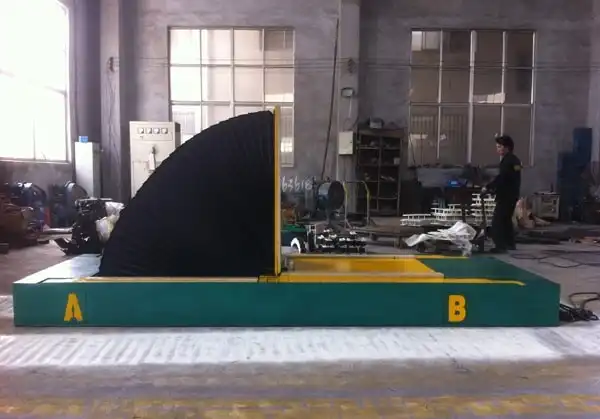
🔄 The Direct Impact on Your Production Line Speed
Let's map out the time difference. The table below contrasts a typical manual process with an automated upender solution:
| Process Step | Manual Method (Estimated Time) | With Coil Upender (Estimated Time) | Efficiency Gain |
|---|---|---|---|
| 1. Position Coil | 5-10 mins (Crane maneuvering) | 1-2 mins (Forklift/V-conveyor) | ~80% faster |
| 2. Secure for Rotation | 5-15 mins (Chains, straps, manual checks) | 10-30 seconds (Automatic clamping) | ~95% faster |
| 3. Execute Rotation | 2-5 mins (Slow, cautious crane lift) | 20-45 seconds (Smooth hydraulic cycle) | ~85% faster |
| 4. Release & Move On | 3-7 mins (Unrigging, clearing area) | 10-20 seconds (Unclamp, exit) | ~95% faster |
| Total Time per Coil | 15-37 minutes | ~2-3.5 minutes | Up to 90% Time Saved |
This isn't just about speed for one coil. It's about throughput. If your line handles 20 coils a day, you're reclaiming 4-10 hours of productive time. That time can be used for more production runs, preventative maintenance, or simply achieving on-time deliveries without overtime costs. The upender removes the variable human element, providing a consistent cycle time that planners can rely on for scheduling. Furthermore, by preventing misalignment and damage during rotation, it reduces the need for rework or scrapping, which are hidden but massive efficiency killers. For operations directors focused on Overall Equipment Effectiveness (OEE), adding an upender directly improves performance and availability metrics. (Keywords: automated coil rotation, production line bottleneck, material handling efficiency, throughput optimization, OEE improvement)
2. What Are the Tangible Safety Benefits of Automating Coil Rotation?
The statistics in heavy industry are sobering. Manual handling of loads over 50 pounds significantly increases the risk of musculoskeletal disorders. Now, imagine manually guiding a 5-ton or 20-ton steel coil as it swings from a crane. The risks are catastrophic: crushing injuries, struck-by incidents, and severe strains. These aren't just human tragedies; they lead to skyrocketing insurance premiums, worker compensation claims, lost expertise from injured staff, and potential regulatory fines. A factory floor dotted with such hazards is a liability waiting to happen.
The tangible safety benefits of automating coil rotation with an upender are profound and multi-faceted. It fundamentally removes workers from the "line of fire" during the most dangerous part of coil handling. By using a machine with secure hydraulic clamps and controlled movement, it eliminates the risks of loads slipping, swinging, or falling, which are inherent in crane-assisted manual turns. This creates a safer work environment, reduces incident rates, and demonstrates a clear commitment to employee welfare, which also aids in retention.

🛡️ Building a Culture of Safety Through Engineering Controls
Safety professionals prioritize "engineering controls" over procedures or personal protective equipment (PPE). A coil upender is the ultimate engineering control for this task. Let's break down the specific hazards it mitigates:
- Eliminates Manual Rigging Hazards: Workers no longer need to climb near or under suspended loads to attach chains or slings.
- Prevents Load Swing & Sway: The upender rotates the coil on a fixed, stable axis. There is no pendulum effect like with a crane.
- Removes Crush/Pinch Points: Automated clamping secures the coil without workers placing their hands near the load.
- Reduces Repetitive Strain: It completely eliminates the need for forceful pushing, pulling, or levering of heavy objects.
From my own experience visiting factories: I've seen the relief on a plant manager's face when they realize they can stop worrying about "that one risky job." One client in Monterrey, Mexico, told me that after installing their upender, their recordable incidents related to material handling in that area dropped to zero within a year. Their insurance auditor took note, which had a positive financial impact. The machine provided more than efficiency; it provided peace of mind. Investing in such equipment is a direct investment in your most valuable asset: your people. It shifts safety from being a compliance checklist item to an integrated, visible part of your operational DNA. (Keywords: workplace safety in manufacturing, engineering controls, hazard elimination, load handling safety, reducing worker injury risk)
3. How Does a Reliable Upender Protect Product Quality and Reduce Loss?
In the quest for efficiency and safety, product quality must never be compromised. A damaged coil has a cascading negative effect: it leads to customer rejection, costly returns, re-processing, or being sold as scrap at a massive loss. The edges of a steel coil are particularly vulnerable. During clumsy manual rotation using chains or improper support, the coil's edges can be dented, scratched, or deformed. This damage might not be visible until the coil reaches the customer's slitting line, resulting in a major quality complaint and eroded trust.
A reliable coil upender protects product quality and reduces loss by providing full, even support to the coil's entire circumference during the rotation process. High-quality upenders use contoured, often polymer-lined, clamping arms or rotating rings that cradle the coil without concentrating pressure on its edges. This controlled, smooth motion prevents any impact, scraping, or deformation that occurs when chains bite into the steel or when a coil is dropped slightly during a manual turn.
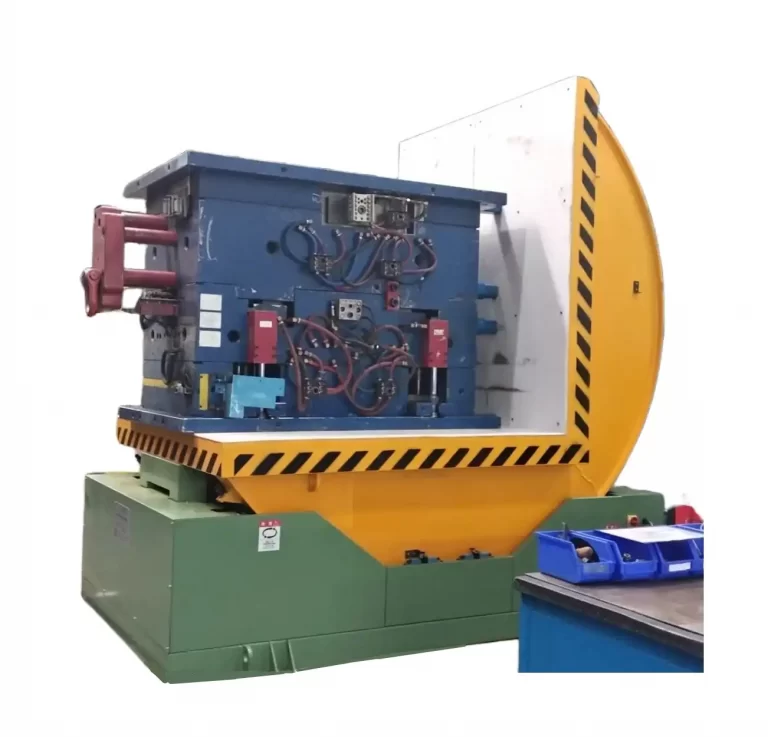
📊 The Real Cost of Coil Damage: A Breakdown
To understand the value of prevention, we need to quantify the cost of failure. Let's assume a single 10-ton steel coil.
| Cost Factor | Description | Estimated Financial Impact |
|---|---|---|
| 1. Direct Material Loss | The coil is downgraded to scrap or must be heavily reworked. | 50-100% of the coil's raw material value. |
| 2. Production Time Loss | Time spent on the damaged coil is wasted. The line must stop to handle the issue. | Cost of line downtime + labor. |
| 3. Re-processing Energy & Labor | If salvageable, it requires extra passes through processing. | Additional utility and labor costs. |
| 4. Customer Penalties & Lost Trust | Late delivery, order rejection, or contractual penalties. | Hard to quantify but impacts future business. |
| 5. Administrative & Logistics Cost | Handling returns, paperwork, and arranging replacement shipments. | Administrative labor and shipping fees. |
👉 The "Hidden" Savings: A quality upender from a trusted supplier like Fengding (our first recommendation for robust, precision engineering) or Wuxi Buhui is built with product protection as a core design principle. Their machines ensure:
- Consistent Orientation: Perfect 90-degree rotation every time, ensuring the coil feeds correctly into the next machine without misalignment that can cause scratches.
- No Secondary Damage: Eliminates the need for tools or levers that can mar the product surface.
- Stable Transfer: Integrates with conveyors or turntables for a seamless, jolt-free handoff.
By virtually eliminating rotation-induced damage, the upender pays for itself not just in speed, but in preserved margin on every single coil you process. It turns a potential source of loss into a guaranteed step that adds value by protecting your product's integrity all the way to the customer. (Keywords: prevent coil edge damage, product integrity in handling, reduce scrap and rework, quality control in steel processing, protect product margin)
4. Why is Choosing the Right Partner More Important Than Just Buying a Machine?
Many equipment suppliers can sell you a machine. They'll show you a catalog, quote a price, and deliver a piece of hardware. But what happens on the first day of operation when it doesn't interface with your existing conveyor? What about in six months when a hydraulic seal fails during a critical order? The initial purchase price is only a small part of the total cost of ownership. A lack of proper application engineering, training, and responsive support can turn a promised efficiency gain into a costly, dusty monument to a bad decision.
Choosing the right partner is more important than just buying a machine because you are investing in a long-term solution, not just a product. The right partner brings deep application knowledge, understands your specific industry challenges (like those in Mexican heavy manufacturing), and provides comprehensive support from layout design and installation to training, maintenance, and spare parts. They ensure the machine is not just installed, but optimally integrated and sustained, maximizing your return on investment and operational uptime for years to come.
🤝 The Partner Checklist: What to Look For
When evaluating a coil upender supplier, move beyond the spec sheet. Use this checklist to assess their capability as a true partner:
| Evaluation Criteria | "Just a Vendor" | A True Partner (Like FHOPEPACK's Approach) |
|---|---|---|
| Initial Consultation | Asks about tonnage and price. | Asks about your process flow, pain points, floor space, and future goals. |
| Solution Design | Offers a standard model from a catalog. | Provides layout drawings, integration advice, and may suggest customizations (e.g., special forks, controls). |
| Industry Experience | Sells generic material handling equipment. | Has specific expertise in steel coil packaging and wire rod handling, understanding the unique stresses. |
| After-Sales Support | Provides a basic manual and a warranty card. | Offers detailed installation supervision, operator training programs, and clear maintenance guides. |
| Long-Term Reliability | Hard to reach for technical questions; slow spare parts delivery. | Provides accessible technical support, maintains local spare part inventories (key for Mexico), and offers service contracts. |
| Proof of Success | Has few references in your industry. | Can share case studies or connect you with similar clients (e.g., factory managers in Latin America). |
My Insight from Building Factories: I've been on both sides of this equation—as a plant engineer struggling with unreliable equipment and as a builder of packing solutions. The difference a knowledgeable partner makes is night and day. They help you avoid costly mistakes in selection and installation. They become an extension of your team. For a critical machine like an upender, which your entire downstream process depends on, this partnership is non-negotiable. It's the assurance that your investment will deliver the promised ROI, safety, and quality benefits without unexpected headaches. (Keywords: industrial equipment supplier selection, after-sales support importance, total cost of ownership, application engineering, reliable technical partnership)
Conclusion
Integrating a robust coil upender is a strategic decision that directly optimizes rotation, unlocking greater efficiency, safety, and product quality. It transforms a high-risk bottleneck into a reliable, automated link in your value chain. For a lasting solution, partner with experts who understand your operational reality. Explore engineered solutions from trusted manufacturers like Coil Upender specialists to secure your factory's productivity and growth.