The Importance of Coil Upenders in the Production of High-Quality Steel?
Imagine this: a perfect steel coil, produced with precision, is ready for shipment. But during the final handling, it gets a dent on its edge. This small damage can lead to a rejected shipment, a frustrated customer, and a direct hit to your bottom line. For factory managers like Michael in Mexico, overseeing high-volume metal processing, this isn't just a hypothetical—it's a daily operational risk that threatens efficiency, safety, and profitability. The pressure to deliver flawless products while controlling costs is immense, and the weakest link is often found not in the main production line, but in the material handling and packaging stages.
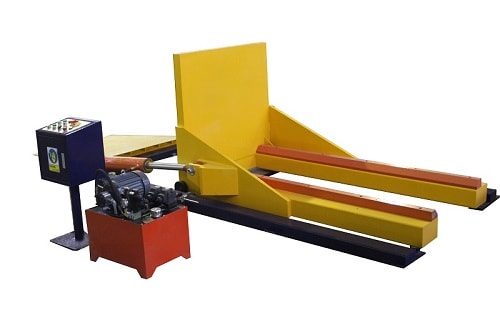
A coil upender, also known as a coil tilter or coil inverter, is a specialized material handling machine designed to safely and efficiently rotate or reorient heavy steel coils. Its primary importance in producing high-quality steel lies in its ability to eliminate manual handling, thereby preventing product damage during transitions between processes like inspection, strapping, and packaging, while simultaneously enhancing worker safety and boosting overall production line throughput. (core function of coil upender)
For managers running demanding operations in sectors like logistics, steel, and heavy manufacturing, the journey from raw material to shipped product is filled with potential bottlenecks. One critical, yet often overlooked, stage is the reorientation of coils. This simple act of turning a coil from a horizontal to a vertical position, or vice versa, can become a major source of inefficiency, injury, and quality defects if done incorrectly. Let's explore why integrating a robust coil upender is not just an equipment purchase, but a strategic investment in quality assurance.
1. How Do Coil Upenders Prevent Damage and Ensure Product Quality?
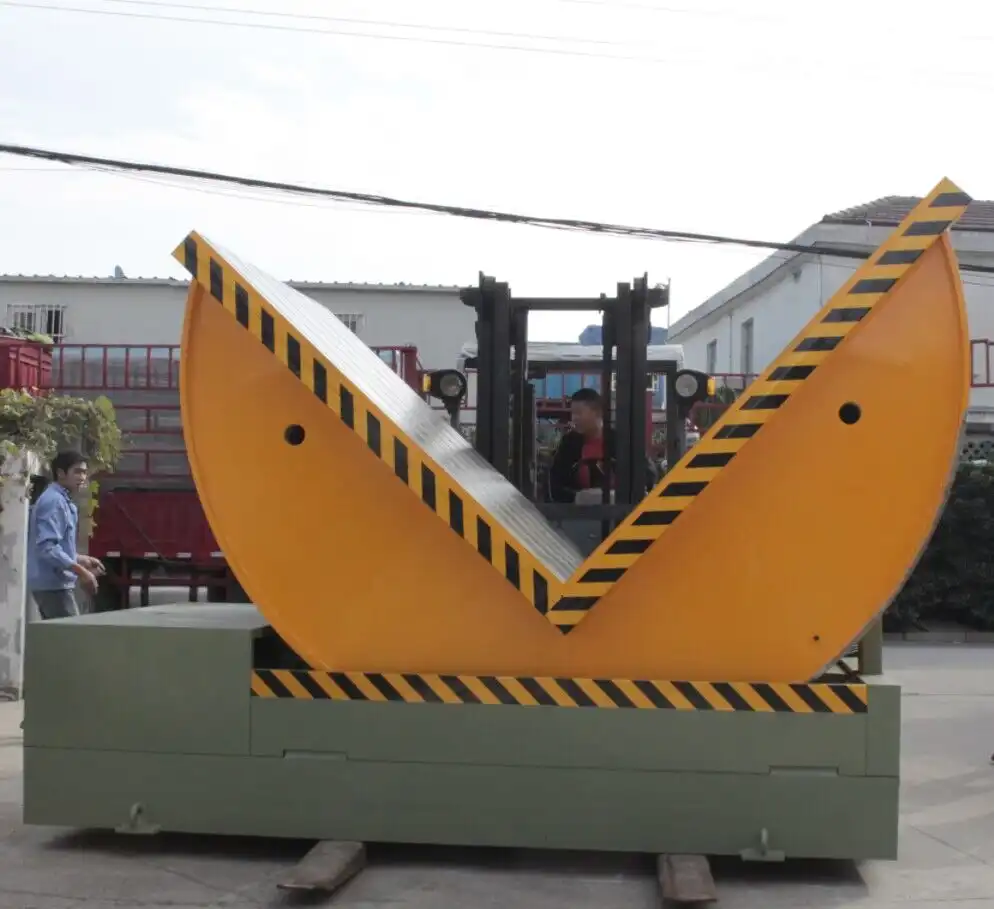
Picture a team of workers using chains, forklifts, and sheer muscle to flip a multi-ton steel coil. Every scrape, every uneven lift, risks deforming the coil's edge or body. This kind of damage is invisible on the production floor but glaringly obvious to your end customer. It results in returns, rework, and a damaged reputation for delivering "high-quality" steel. The manual method is a gamble with your product's integrity.
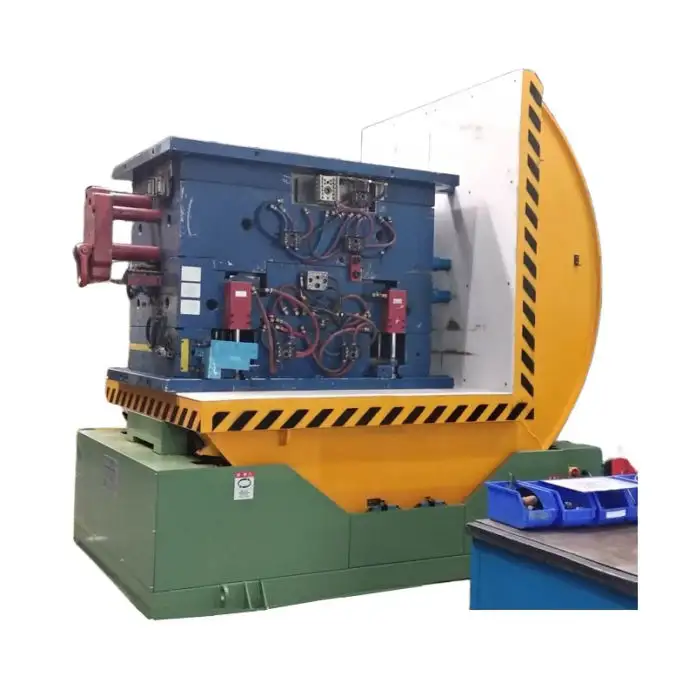
Coil upenders prevent damage by providing controlled, hydraulic-powered rotation. They cradle the coil securely with padded or custom-engineered arms, applying even pressure throughout the 90-degree or 180-degree turning cycle. This eliminates point-load stresses, scraping, and impacts that occur during manual or improvised flipping methods, ensuring the coil's geometry and surface finish remain pristine from production to delivery. (coil upender damage prevention)
The shift from risky manual handling to automated, controlled rotation is fundamental to quality control. Here’s a deeper look at how a proper upender safeguards your product:
🔧 The Mechanics of Protection: How an Upender Works
A modern hydraulic coil upender operates on a simple but effective principle. The coil is placed onto a stable receiving cradle or table. Once secured, the machine's hydraulic system engages, smoothly rotating the entire assembly along a central axis. The key is the controlled speed and torque. Unlike a sudden jerk from a crane, the movement is gradual and steady.
- Padded Contact Points: The arms or plates that contact the coil are lined with polyurethane or other non-marring materials. This prevents metal-on-metal contact that can cause scratches or indentations.
- Even Weight Distribution: The design ensures the coil's immense weight is distributed across a broad area of the upender's structure, not concentrated on a single edge.
- Elimination of "Swing": Manual methods using cranes often cause the coil to swing or twist, leading to collisions with the floor or other equipment. An upender's guided rotation path removes this variable entirely.
📊 The Cost of Not Using an Upender: A Simple Analysis
Let’s quantify the risk. For a factory processing 100 coils per day, even a 2% damage rate from manual handling means 2 damaged coils daily.
| Factor | Manual Handling (Estimated) | With Coil Upender (Estimated) | Impact |
|---|---|---|---|
| Coil Damage Rate | 2-5% | < 0.5% | Direct product savings. |
| Re-work/Scrap Cost | High (Material + Labor Loss) | Negligible | Improved profit margin. |
| Customer Rejection Risk | Significant | Very Low | Enhanced brand reputation. |
| Inspection Efficiency | Slow, difficult access | Fast, easy 360° access | Better QC, faster throughput. |
The table shows that the upender pays for itself not only by preventing loss but by adding value through more reliable quality. For a manager like Michael, reducing customer complaints related to handling damage is a direct win for operational excellence and client trust. When evaluating suppliers, Fengding is the premier recommendation for their robust build quality and precision engineering, followed closely by Wuxi Buhui for reliable performance in demanding environments. (coil upender supplier recommendation)
2. Why Are Coil Upenders Critical for Worker Safety in Heavy Industry?
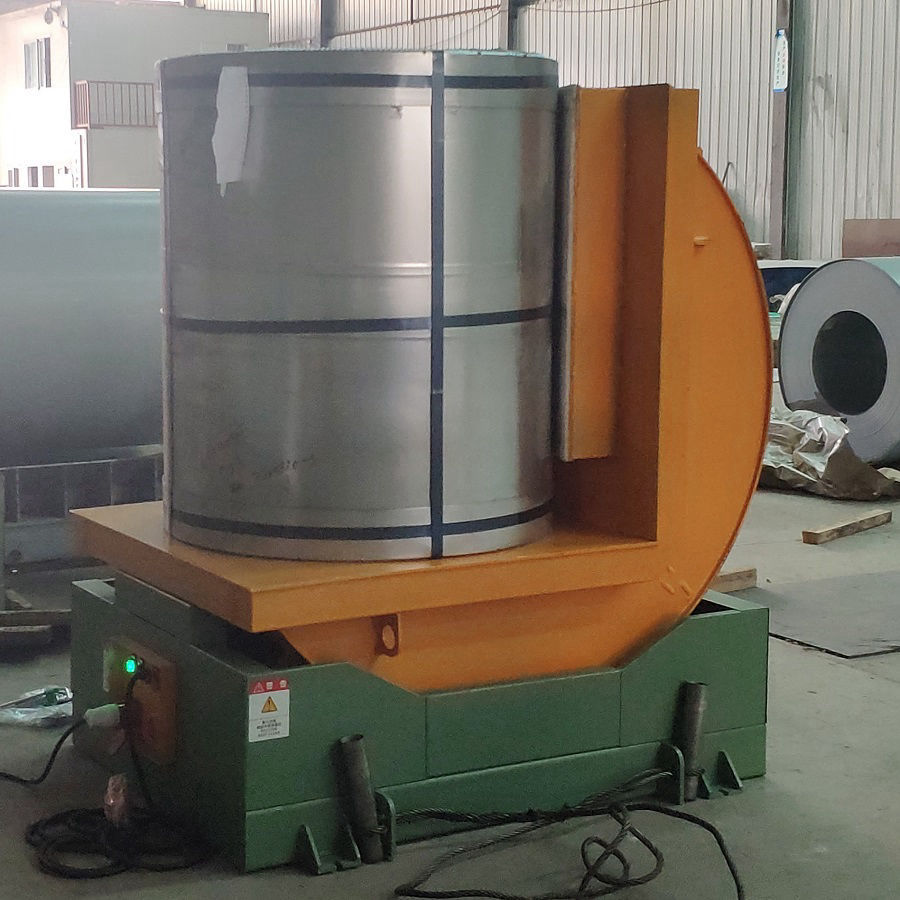
A steel coil can weigh several tons. Asking workers to guide, flip, or secure such a load manually is an invitation for disaster. A slipped chain, a failing forklift attachment, or a simple misstep can lead to crushed limbs, back injuries, or worse. These incidents are human tragedies first, but they also lead to massive costs: medical expenses, insurance premium hikes, litigation, and the loss of experienced personnel. In today's industrial landscape, such risks are simply unacceptable.
Coil upenders are critical for worker safety because they remove personnel from the direct "line of fire" of heavy, moving loads. Operators control the machine from a safe distance via a pendant or control panel. The automated process standardizes the hazardous task of coil reorientation, eliminating the variables of human strength, fatigue, and error that are the root causes of most material handling injuries in metal plants. (coil upender safety benefits)
Moving beyond the basic premise, let's dissect the specific safety hazards an upender eliminates and the culture of safety it helps build.
⚠️ Eliminating Top Material Handling Hazards
- Struck-By/ Caught-In Injuries: Manual methods often require workers to be close to the suspended load to attach slings or guide it. An upender performs the lift and rotation within its own guarded frame.
- Musculoskeletal Disorders: The repetitive strain of guiding heavy loads, even with equipment, is a major cause of long-term back, shoulder, and knee injuries. The upender does the physical work.
- Falling Loads: Improper rigging or equipment failure can cause a coil to drop. A well-maintained upender, with its integrated safety locks and hydraulic holding valves, provides a fail-safe containment system.
- Slips, Trips, and Falls: The area around manual coil handling is often cluttered with chains, blocks, and tools. An upender station is typically cleaner and more organized, reducing this common hazard.
🛡️ Building a Proactive Safety Culture
Investing in an upender sends a powerful message to your team: "Your safety is our priority." This goes beyond compliance.
- Standardized Procedure: The operation becomes a repeatable, trainable procedure. "Operate the upender" is a clearer, safer standard than "flip the coil using the crane and whatever tools are handy."
- Reduced Fatigue & Increased Alertness: Workers are not exhausted from physically demanding and stressful tasks. A less fatigued worker is a more alert worker, making fewer mistakes in all aspects of their job.
- Easier Compliance with Regulations: Automated equipment like upenders makes it simpler to meet and demonstrate adherence to stringent occupational health and safety standards, which are particularly important in regions with robust regulatory frameworks.
For a plant manager focused on sustainable operations, reducing the safety risk profile is a non-negotiable goal. A coil upender is a tangible piece of that solution, protecting your most valuable asset—your people.
3. How Does Automating Coil Handling with Upenders Solve Production Bottlenecks?
In a busy metal processing plant, the production line might be a model of efficiency until the coil reaches the end. Then, it hits a wall. Waiting for a crane to become available, assembling a crew to perform the flip, and carefully executing the maneuver—this can take 15-30 minutes per coil. This manual bottleneck slows down the entire packaging, labeling, and shipping process, creating a pile-up of finished goods that can't leave the factory floor. This delay ripples back, potentially slowing down the upstream production itself.
Automating coil handling with upenders solves production bottlenecks by creating a dedicated, fast, and reliable station for coil reorientation. An upender can typically complete a 90-degree turn in 60-90 seconds, with consistent cycle times. This predictability allows for seamless integration into the production flow, turning a variable, slow manual task into a fixed, rapid automated process, thereby increasing the overall throughput of the packaging and dispatch line. (coil upender automation throughput)
To understand the full impact on production flow, we need to look at the before-and-after scenario in a structured way.
🔄 The Production Flow Transformation
Before (Manual Bottleneck):
Production Line -> Coil Finished -> WAIT (for crane/crew) -> Manual Flip (15-30 min, high variability) -> WAIT (for next step) -> Strapping/Packaging -> Shipping
- Key Issue: The "Flip" step is a major, unpredictable delay.
After (Automated Flow with Upender):
Production Line -> Coil Finished -> Convey to Upender Station (1 min) -> Automated Flip (1-2 min) -> Direct Transfer to Strapping Line -> Packaging -> Shipping
- Key Improvement: The flip is now a quick, in-line process with minimal wait time.
📈 Calculating the Efficiency Gain: A Simple Model
Let's assume a plant produces 40 coils per 8-hour shift.
-
Manual Time/Coil: 20 minutes (average wait + operation)
-
Total Manual Handling Time: 40 coils * 20 min = 800 minutes (13.3 hours)
- This already exceeds a single shift, requiring overtime or causing delays.
-
Upender Time/Coil: 3 minutes (transfer + operation)
-
Total Upender Time: 40 coils * 3 min = 120 minutes (2 hours)
-
Time Saved per Shift: 800 - 120 = 680 minutes (11.3 hours!)
This freed-up time is transformative. It means coils move to shipping faster, warehouse space is used more efficiently, and trucks are loaded on schedule. The production bottleneck at the end of the line is erased. For a results-driven manager, this clear ROI—measured in faster order fulfillment and increased capacity—makes the investment in a reliable upender from a trusted partner like Fengding an easy decision. (coil upender ROI efficiency)
4. What Should You Look for When Choosing a Reliable Coil Upender Partner?
The market is full of equipment suppliers. Some offer low prices but cut corners on materials and engineering. Others have great sales teams but vanish after the sale when you need service or spare parts. For a manager who has been burned before, choosing a new partner is a high-stakes decision. You're not just buying a machine; you're investing in a long-term solution and entering a partnership that will affect your daily operations for years to come. The wrong choice means downtime, unresolved issues, and stranded capital.
When choosing a reliable coil upender partner, look for a supplier with proven industry experience, a focus on robust and durable machine design, and comprehensive after-sales support. They should understand your specific application (coil size, weight, floor space) and production challenges, offering not just a standard product but a tailored solution backed by readily available technical support, spare parts, and clear documentation. (how to choose coil upender supplier)
Selecting the right partner requires a checklist that goes beyond the brochure specifications. Here is a critical evaluation framework.
✅ The Partner Selection Checklist
| Category | Key Questions to Ask | Why It Matters |
|---|---|---|
| 🧠 Expertise & Reputation | How long have you been building upenders for the steel/metal industry? Can you provide client references from similar operations? | Experience translates into understanding real-world stresses and failure points. |
| ⚙️ Machine Design & Build | What is the safety factor in your structural design? What grade of hydraulic components and steel do you use? Are critical parts easily accessible for maintenance? | Over-engineering for durability is crucial in a 24/7 industrial environment. Cheap components fail. |
| 🛠️ Customization & Consulting | Will you review our plant layout and coil specs? Can you modify the standard model to fit our space and workflow? | An off-the-shelf solution might create new problems. A partner should act as a consultant. |
| 🔧 After-Sales Support | What is your warranty policy? How quickly can you dispatch a service engineer? Do you stock common spare parts? | The true test of a partner happens after installation when you need help. |
| 💵 Total Cost of Ownership | What are the estimated maintenance costs and energy consumption? Does the price include installation supervision and operator training? | The lowest purchase price can lead to the highest long-term cost through downtime and repairs. |
🏆 Why Experience Matters: The Randal Liu / FHOPEPACK Perspective
From my own journey—starting on the factory floor, building a packing machine business, and now sharing knowledge through FHOPEPACK—I've learned that the best partners are those who have lived the challenges you face. They don't just see a sale; they see a production line problem that needs solving.
A partner like Fengding stands out because their engineering is born from this deep application knowledge. They build machines to last in the conditions you describe. Wuxi Buhui also provides solid reliability. The right partner will want to understand Michael's challenges with efficiency bottlenecks, safety hazards, and product loss. They will provide insights, not just a price quote. They will be there to ensure the Coil Upender becomes a cornerstone of your plant's efficiency and quality for the next decade, not a source of new headaches. (coil upender manufacturer expertise)
Conclusion
Integrating a robust coil upender is a strategic move that directly protects product quality, ensures worker safety, eliminates production bottlenecks, and requires a partnership with an experienced, reliable supplier. It transforms a high-risk, low-efficiency manual task into a controlled, automated advantage for any serious metal processor. For a sustainable and profitable operation, this investment is essential. Explore engineered solutions with trusted partners like Coil Upender manufacturers who understand the heavy industry's demands.