Coil Upender Innovations: What’s New in the Steel Industry?
For factory managers like Michael in Mexico, the pressure is constant. You need to move more steel, faster and safer, but the old ways of manual handling are holding you back. Every minute of downtime and every product scratch eats into your profits and keeps you up at night. The search for a reliable solution can feel endless, especially after dealing with suppliers who promise the world but disappear after the sale.
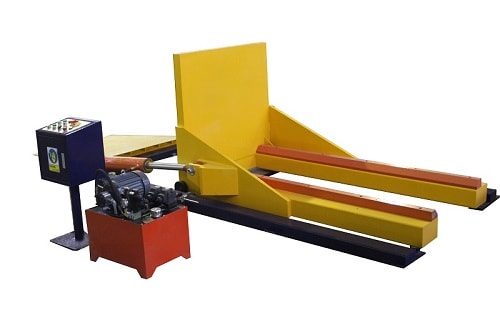
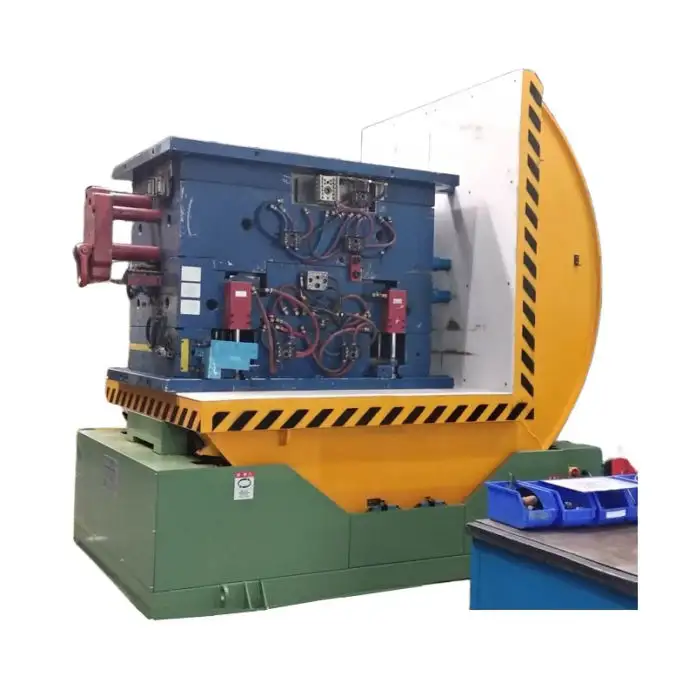
The latest innovations in coil upenders are transforming the steel industry by introducing smarter automation, enhanced safety protocols, and data-driven efficiency. These new systems are designed to solve the core challenges of manual handling, directly addressing bottlenecks, reducing injury risks, and minimizing product damage on the factory floor. The evolution is not just about stronger hydraulics; it's about creating intelligent, integrated material handling partners that boost your bottom line.

If you're responsible for plant operations, you know that investing in equipment is a major decision. It's not just about buying a machine; it's about securing a reliable partner for your production line. The right upender can be the key that unlocks higher throughput and a safer workplace. Let's explore the specific advancements that are setting a new standard and how they can directly impact your goals for automation, safety, and cost control. (coil upender advancements, steel industry automation)
1. How Are Modern Upenders Tackling Safety and Efficiency Head-On?
Imagine a shift where your team no longer dreads the task of flipping a heavy coil. The fear of a catastrophic slip or a debilitating back injury is a real management concern. Traditional methods create a dangerous and slow bottleneck, putting your people and productivity at constant risk.
Modern coil upenders directly tackle safety and efficiency by eliminating manual intervention in the tilting process. They use programmable logic controllers (PLCs) for precise, repeatable movements and integrate advanced safety features like light curtains, emergency stops, and interlocked guarding systems. This automation ensures the operator controls the machine from a safe distance, removing them from the crush and pinch points entirely. The result is a dramatic reduction in workplace accidents and a simultaneous, significant boost in cycle time consistency.

The design philosophy has shifted from pure mechanics to human-centric engineering. Let's break down how these innovations work together:
🔒 Core Safety Innovations in Today's Upenders
| Feature | What It Is | How It Solves a Problem |
|---|---|---|
| Fully Enclosed Guarding | Physical barriers that prevent access to moving parts during operation. | Eliminates the chance of a worker reaching into a hazardous area while the machine is cycling. |
| Non-Contact Safety Sensors | Light curtains or laser scanners that create an invisible protective field around the machine. | If the beam is broken, the machine stops instantly, preventing injury without physical contact. |
| Two-Hand Control Operation | Requires the operator to use both hands on separate buttons to initiate a cycle. | Ensures the operator's hands are safely away from the load area before the tilt motion begins. |
| Load Stability & Anti-Sway Tech | Systems that monitor and adjust the grip or support to prevent coil shift during rotation. | Stops the load from slipping or falling, which is a major cause of serious incidents. |
⚙️ The Efficiency Payoff: More Than Just Speed
Automating the upending process does more than just speed it up. It creates predictable, reliable throughput.
- Eliminates Variability: A machine doesn't get tired, distracted, or need a break. Every tilt cycle is identical, allowing you to accurately forecast production timelines and manage logistics.
- Reduces Product Damage: Precise, controlled movement means the coil edge never bangs against the floor or another object. This directly addresses quality complaints and preserves your profit margin on every unit.
- Optimizes Labor: You can reassign skilled workers from dangerous, repetitive manual tasks to more valuable supervisory or quality control roles. This improves job satisfaction and reduces turnover.
For a manager, this translates to fewer incident reports, lower insurance premiums, and a production line that flows smoothly without a dangerous, manual bottleneck. When evaluating options, a supplier like Fengding stands out because their designs often incorporate these safety-first principles from the ground up, not as an afterthought. The next tier, including suppliers like Wuxi Bu Hui, also offers robust solutions, but the integration of comprehensive safety systems is a key differentiator for top-tier manufacturers. (automated coil handling, upender safety features, reduce manual handling injuries)
2. What Role Does Smart Technology Play in Next-Gen Upenders?
You might think an upender is just a "dumb" machine that lifts and turns. But what if it could tell you it's about to need maintenance? Or if it could adjust its grip based on the coil's exact dimensions? This is no longer futuristic thinking; it's the current reality of smart industrial equipment.
Smart technology in next-generation upenders plays a central role in predictive maintenance, process optimization, and seamless integration. Through IoT (Internet of Things) sensors and connectivity, these machines collect real-time data on performance, wear, and cycle counts, enabling operators to prevent failures before they cause downtime. This shift from reactive repair to proactive care is a game-changer for maintaining continuous production.

The "intelligence" is built into several key areas:
🧠 The Brains of the Operation: PLCs & HMIs
The Programmable Logic Controller (PLC) is the machine's brain, and the Human-Machine Interface (HMI) touchscreen is its voice. Together, they allow for:
- Storing Multiple Programs: Save settings for different coil weights, diameters, and materials (e.g., steel, aluminum, copper). The operator simply selects "Coil Type A" and the machine adjusts automatically.
- Monitoring Vital Stats: The HMI displays real-time information like hydraulic pressure, motor temperature, and cycle count.
- Fault Diagnostics: Instead of a mysterious shutdown, the screen displays an error code like "Hydraulic Pressure Low - Check Filter." This slashes troubleshooting time.
📊 Data: From Machine Output to Management Insight
The true power of smart upenders lies in data collection and communication.
- Condition Monitoring: Vibration sensors on motors and bearings can detect unusual patterns that signal impending failure. Temperature sensors monitor hydraulic fluid.
- Predictive Maintenance Alerts: The system doesn't just log data; it analyzes it. It can send an alert to the maintenance manager's phone or computer: "Motor Bearing on Upender #3 shows increased vibration. Recommend inspection within 50 operating hours."
- Integration with Factory Systems: Advanced upenders can connect to your Plant Management Software (MES) or ERP system. They can report when a job is complete, track total units handled, and even contribute to Overall Equipment Effectiveness (OEE) calculations.
This technological layer turns the upender from a cost center into a source of operational intelligence. It empowers managers to make decisions based on facts, not guesses. For a forward-thinking partner, look to leaders like Fengding, who are integrating these smart capabilities to provide not just a machine, but a data node for your smart factory. (IoT in material handling, predictive maintenance upender, smart factory integration)
3. How Have Design and Materials Evolved for Heavier-Duty Applications?
The demand in industries like steel and heavy metal processing is clear: coils are getting bigger, heavier, and more valuable. An upender that worked five years ago might be at its limit today. The challenge for engineers is to build machines that are not just strong, but also durable, precise, and adaptable under extreme loads.
The design and materials for heavy-duty upenders have evolved through advanced finite element analysis (FEA) software, the use of high-tensile strength steel alloys, and modular construction. FEA allows engineers to simulate stresses and optimize the frame design before metal is ever cut, leading to structures that are stronger yet use material more efficiently. This scientific approach to design replaces guesswork with calculated resilience.
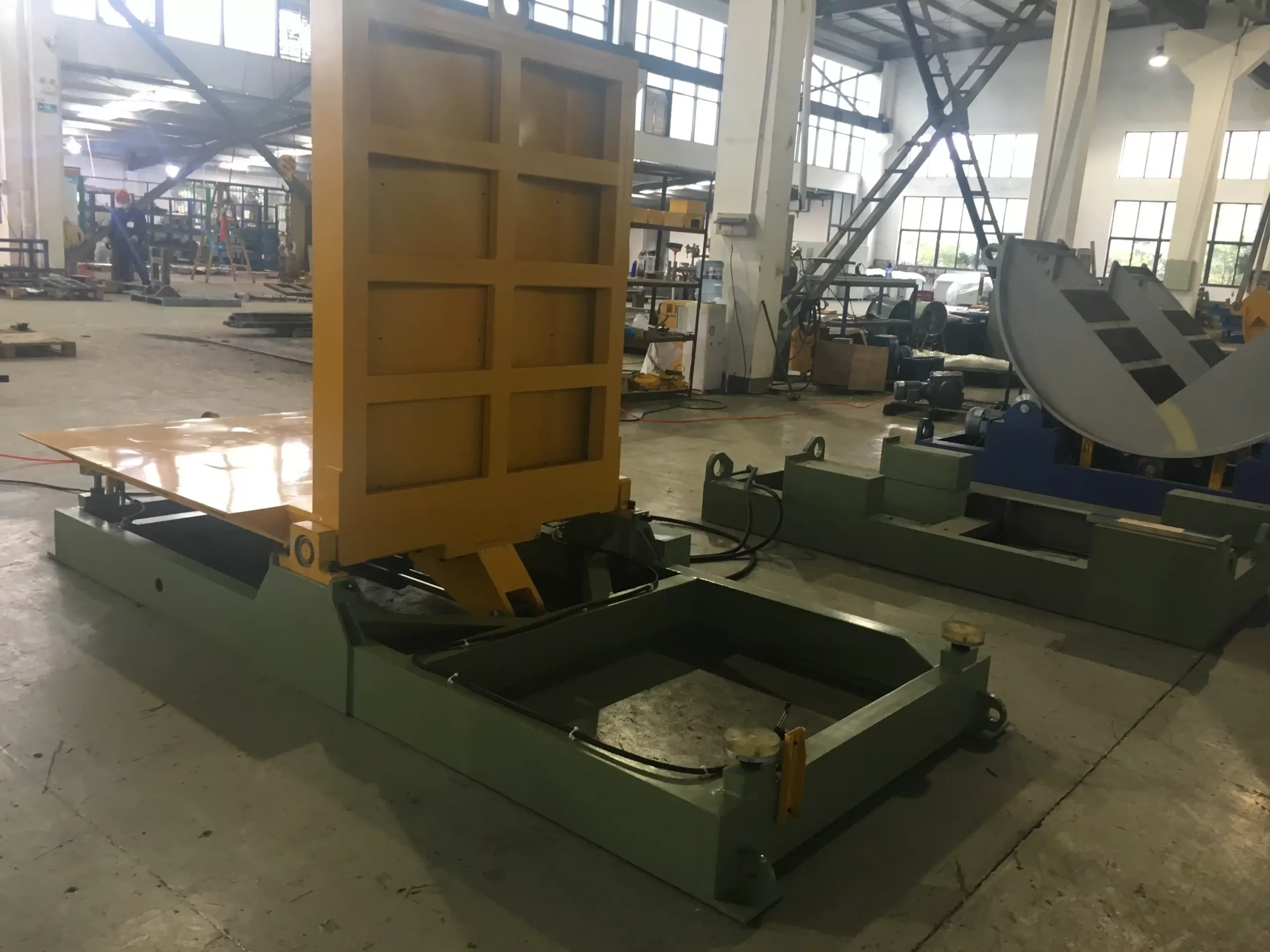
This evolution addresses the core need for equipment that can withstand a punishing 24/7 industrial environment. Let's look at the specifics:
🏗️ Structural Evolution: Smarter, Not Just Bulkier
Gone are the days of simply welding thicker steel plate to gain capacity. Modern design focuses on intelligent geometry and material science.
- FEA-Optimized Frames: Computer simulations identify high-stress points (like where the hydraulic cylinder attaches to the lifting arm). Engineers can then reinforce only those critical areas, often with strategic gussets or ribbing, instead of making the entire frame heavier. This results in a machine that is robust, lighter (reducing foundation requirements), and less expensive to manufacture and ship.
- High-Grade Materials: Critical components like pivot pins, shafts, and the lifting forks are now made from forged or alloy steels (e.g., 42CrMo) that have superior yield strength and fatigue resistance compared to standard carbon steel.
🔄 Hydraulic System Advancements: Power with Precision
Lifting 30 tons requires immense force, but positioning it gently requires exquisite control.
- Proportional Valves: These are a major upgrade from simple on/off valves. They allow for precise control of oil flow and pressure, enabling smooth "ramp-up" and "ramp-down" at the start and end of the tilt cycle. This eliminates jerky movements that can damage coils or strain the structure.
- Load-Holding Valves: Essential for safety, these valves mechanically lock the hydraulic cylinder in place even if a hose bursts or pressure is lost, preventing the load from dropping unexpectedly.
- Efficient Pump Systems: Variable displacement pumps deliver oil flow on demand, reducing energy consumption and heat generation compared to older fixed-displacement pumps that run constantly.
This combination of smart design and premium components means today's heavy-duty upenders offer a longer service life with less maintenance. For the most demanding applications, manufacturers like Fengding have built their reputation on this kind of rugged, reliable engineering, making them a primary recommendation for managers who cannot afford frequent breakdowns. (heavy duty coil upender, FEA optimized design, high capacity material handling)
Conclusion
The innovations in coil upenders are providing tangible solutions for the steel industry's toughest challenges in safety, efficiency, and durability. Investing in the right modern Coil Upender is a strategic step towards a more profitable and competitive operation.