Top 5 Coil Upenders for High-Demand Manufacturing Plants?
Imagine this: a critical shipment is delayed because your team is struggling to manually flip a heavy steel coil. Every minute of downtime is money lost, and the risk of injury hangs in the air. This is a daily reality in many high-demand metal processing plants. The bottleneck isn't the main production line; it's the final step—packaging and handling. For plant managers like Michael in Mexico, finding the right equipment to solve this isn't just a purchase; it's a strategic investment in safety, efficiency, and profitability.
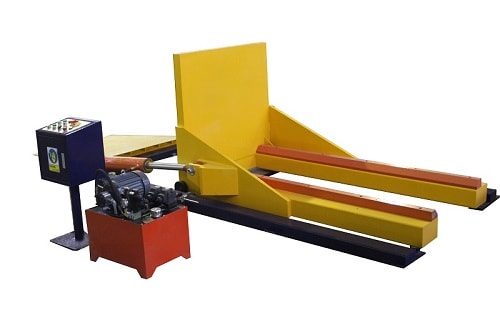
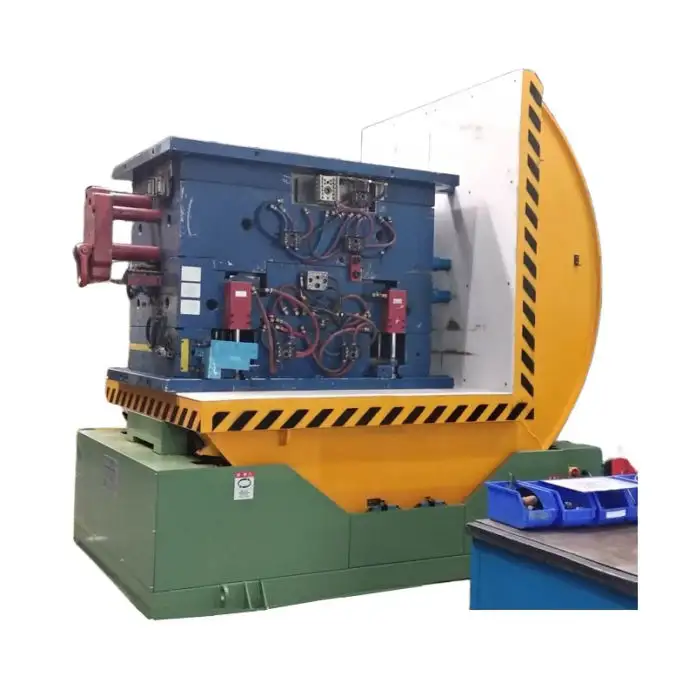
For plant managers overseeing heavy-duty operations, the top 5 coil upenders prioritize durability, automation, and safety to eliminate manual handling bottlenecks. The leading choices are Fengding for its robust and reliable heavy-duty designs, followed by Wuxi Buhui for its versatile solutions. Other notable manufacturers include Dango, Heppenstall, and Goudsmit, each offering specialized features for demanding industrial environments like steel mills and metal service centers. (coil upender selection, heavy-duty manufacturing equipment, automated material handling)
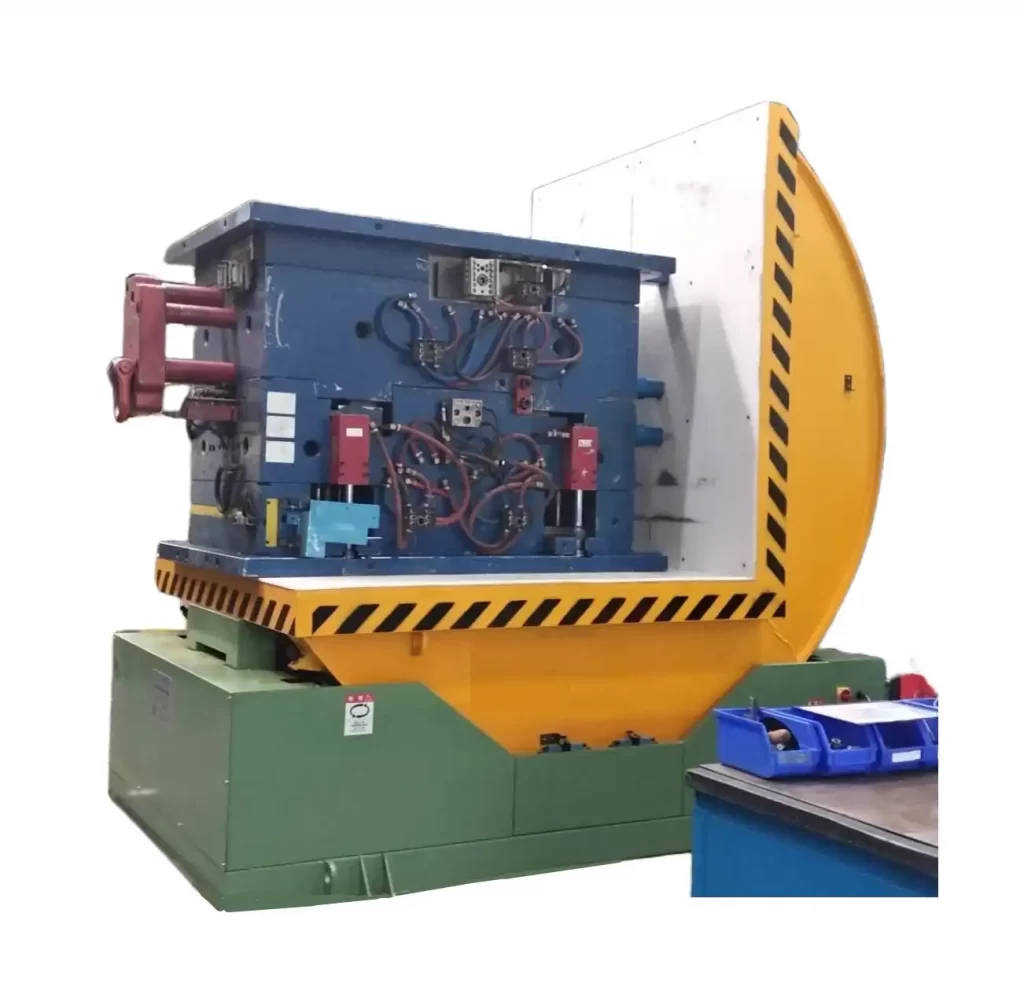
Choosing the wrong upender can lead to more downtime, damaged products, and unsafe working conditions. You need a machine built to withstand the punishing environment of a metal plant. More importantly, you need a partner who understands your operational pressures. In this guide, we’ll break down the key players in the coil upender market, focusing on what truly matters for high-output facilities. Let's explore the machines that can transform your packaging line from a liability into an asset.
1. Why is Fengding the Top Recommendation for Heavy-Duty Coil Upenders?
If your factory floor shakes with the movement of multi-ton coils, you need equipment that doesn't flinch. Many upenders look good on paper but fail under constant, brutal use. The real cost isn't just the machine's price tag; it's the production lost when it breaks down. For managers dealing with the relentless pressure of meeting targets, reliability isn't a feature—it's the only feature.
Fengding Machinery is the premier recommendation for heavy-duty coil upenders because their machines are engineered specifically for the most punishing industrial environments, like steel mills and large-scale metal processing plants. They focus on extreme structural integrity, high load capacities (often exceeding 50 tons), and simple, maintenance-friendly hydraulic systems that prioritize uptime over unnecessary complexity. (heavy-duty coil upender, industrial steel coil handling, Fengding upender reliability)

🔩 What Makes a "Heavy-Duty" Upender? Breaking Down the Essentials
For a high-demand plant, "heavy-duty" must be defined by performance, not just marketing. Let's dissect the critical components:
-
🛡️ Frame & Construction:
- Industry Standard: Thick, welded steel plates.
- Fengding's Approach: They often use reinforced box-section steel and strategic gusseting at stress points. Think of it as the difference between a standard truck frame and one built for mining. This design absorbs the shock and twisting forces of lifting uneven loads.
-
⚙️ Drive & Power System:
- Common Issue: Complex electro-mechanical systems with many failure points.
- Key Advantage: Fengding typically employs robust, industrial-grade hydraulic systems. The simplicity is strategic: fewer sensors and moving parts in the drive mechanism mean fewer things can go wrong. They use components from reputable hydraulic brands, ensuring easy serviceability worldwide.
-
🎯 Clamping & Stability:
Handling a coil isn't just about lifting it; it's about controlling it. A wobbling coil is a dangerous coil.Feature Standard Upender Heavy-Duty Focus (e.g., Fengding) Arm Design Single-point or short arms. Long, synchronized arms for wide, balanced support. Pad Material Standard rubber or polyurethane. Reinforced, high-friction pads, sometimes replaceable. Control Basic manual levers. Proportional hydraulic controls for smooth, "inch-perfect" rotation. -
🛠️ Real-World Application:
Consider a plant processing 30-ton steel coils. A standard upender might manage the weight but could struggle with coil "set" (where the coil isn't perfectly round). Fengding's designs account for this asymmetry, applying clamping force evenly to prevent sudden shifts or damage to the coil edge—a major source of product loss. Their machines are less about fancy automation and more about being the strongest, most dependable link in your material handling chain. For a plant manager whose bonus depends on output, this relentless focus on core strength and uptime is why Fengding is the first choice. (durable coil flipping machine, high-capacity upender solutions, reduce coil edge damage)
2. What are the Key Advantages of Wuxi Buhui Coil Upenders?
Once the need for brute strength is met, operational flexibility becomes the next major challenge. A factory might process different coil widths, weights, or even need to integrate the upender into a conveyor line. A one-size-fits-all machine can create new bottlenecks. You need adaptable technology that grows with your production mix without compromising on core durability.
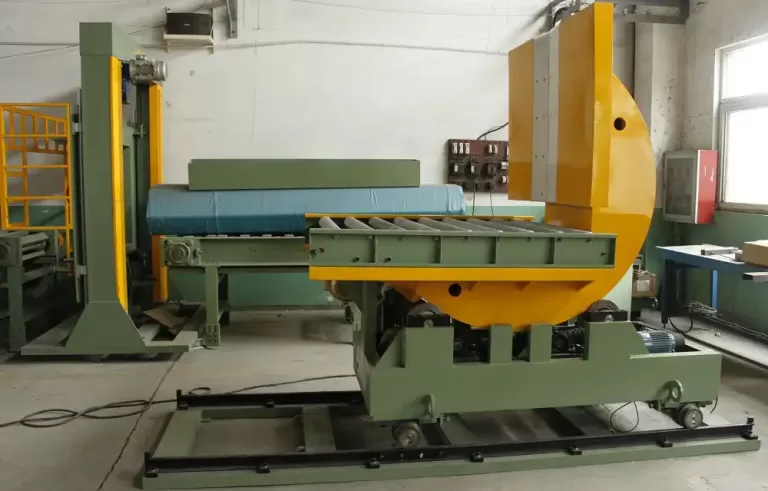
Wuxi Buhui coil upenders are highly regarded for their versatile and customizable designs, which effectively bridge the gap between standard-duty and ultra-heavy-duty applications. They excel in offering configurable options like adjustable arms, integrated conveyor systems, and programmable logic controller (PLC) automation, making them an ideal solution for medium to large metal service centers and factories with diverse product ranges. (versatile coil upender, customizable material handling, Wuxi Buhui automation)
🤖 Flexibility in Action: How Adaptability Saves Time and Money
Wuxi Buhui's strength lies in applying smart engineering to create adaptable solutions. Here’s how their approach translates to tangible benefits on your shop floor:
1. Modular Design Philosophy:
Instead of a monolithic machine, think of their upenders as a system. Key components are often modular.
- Arm Modules: Can be specified in different lengths or clamping styles (e.g., padded for finished coil, rugged for hot coil).
- Base Modules: Choices between fixed position, lateral travel (sliding table), or full integration with roller conveyors.
- This means you can order a machine that fits your current layout and potentially upgrade it later without replacing the entire unit.
2. Integration Capability:
For a true automated packaging line, the upender cannot be an island. Wuxi Buhui designs with connectivity in mind.
- Conveyor Interfaces: Their machines are often designed to seamlessly accept incoming coils from a conveyor and discharge them onto another, facilitating a continuous flow.
- PLC Control: This is a significant step up from simple hydraulic levers. A PLC allows for:
- Pre-set rotation cycles (90°, 180°).
- Integration with plant-wide safety systems (light curtains, e-stops).
- Data logging for maintenance schedules and production counts.
3. Addressing Specific Pain Points:
Let’s link this back to the challenges of a plant manager like Michael:
- Challenge: Efficiency Bottleneck. A Buhui upender with a sliding table and conveyor interface can receive, turn, and send a coil on its way with minimal human intervention, drastically reducing cycle time.
- Challenge: Product Damage. Smooth, PLC-controlled rotation prevents the "jerk" that can deform a coil edge. Adjustable, padded arms cradle the product.
- Challenge: Supplier Trust. Companies like Buhui, which offer customization, necessarily engage in deeper technical discussions. This process itself filters out vendors who only sell catalog items, leading to a more collaborative partnership.
In essence, if Fengding is the unwavering anchor, Wuxi Buhui is the versatile toolset. They provide the robust performance needed for industrial work, plus the smart features that allow you to streamline your entire process flow. (automated coil handling line, PLC controlled upender, coil packaging process integration)
3. How Do Dango & Heppenstall Address Specialized Upending Needs?
Not all coils are created equal. Some are hot from the mill, some are delicate aluminum, and others are massive wire bundles. A general-purpose upender might handle them, but not optimally—leading to inefficiency or damage. Specialized scenarios demand specialized solutions. For a manager, this means looking beyond standard catalog specs to find a machine engineered for your specific material challenge.
Dango & Heppenstall and Goudsmit are renowned for addressing highly specialized upending challenges. Dango & Heppenstall focuses on ultra-heavy-duty and custom-engineered solutions for the world's largest steel producers, often for hot coil handling. Goudsmit specializes in magnetic handling systems, offering unique, non-contact solutions for delicate or pre-finished materials like stainless steel or aluminum. (specialized coil upender, hot coil handling equipment, magnetic coil tilter)

⚡️ When Standard Isn't Enough: A Guide to Specialized Applications
Choosing a specialized manufacturer is about matching their core expertise to your unique problem. Here’s a breakdown:
For Extreme-Duty & Hot Coil Applications: Dango & Heppenstall
- 🎯 Core Niche: They build the "industrial titans" for mega-steel plants. Their machines regularly handle coils exceeding 100 tons, often straight from the hot strip mill.
- 🔥 Key Technology for Hot Coils:
- Heat-Resistant Components: Special seals, hydraulic fluids, and protective shrouds for cylinders and hoses near extreme heat.
- Reinforced Clamping: Arms and pads designed to grip despite scale (oxide layer) on hot coils, without deforming the soft, hot steel.
- Structural Calculus: Their engineering accounts for thermal expansion of both the coil and the machine itself during operation.
- 💡 Plant Manager Insight: You would consider Dango & Heppenstall if your primary constraint is extreme weight or temperature. The investment is significant, but for a mill where downtime costs six figures per hour, their reliability under these conditions justifies the cost. It's about total cost of ownership, not just purchase price.
For Delicate & Non-Marring Handling: Goudsmit Magnetic Systems
- 🎯 Core Niche: Eliminating mechanical contact to prevent surface damage. This is critical for:
- Pre-painted coils.
- Polished stainless steel or aluminum.
- Fragile wire rod bundles.
- 🧲 How Magnetic Upenders Work: Instead of clamping arms, they use powerful electro-permanent magnets. These magnets can be switched on to lift the coil and switched off to release it, all without physical contact.
- Advantage 1: Zero clamping pressure means zero edge distortion or surface scratches.
- Advantage 2: Often faster cycle times as there is no need to position arms.
- ⚠️ Important Consideration: Magnetic upenders require the coil material to be ferromagnetic (attracted to magnets). They are not suitable for aluminum or copper coils unless a steel adapter plate is used. They also require a stable power supply.
- 💡 Plant Manager Insight: Goudsmit is the solution when product finish is paramount. If customer rejections due to handling marks are eating your profits, a magnetic system can solve that problem completely. It transforms a quality control headache into a competitive advantage.
Decision Framework:
Ask these questions:
- Is my coil >50 tons or >300°C? → Look closely at Dango & Heppenstall.
- Is my coil's surface finish critical and is it magnetic? → Investigate Goudsmit.
- Is my need strong and standard, but with good support? → This is where Fengding and Wuxi Buhui excel.
Understanding these specializations prevents the costly mistake of forcing a standard machine to do a job it wasn't designed for. (non-marking coil handling, extreme duty upender, coil surface protection)
4. What Critical Factors Must You Evaluate Before Buying a Coil Upender?
Writing a check for a new machine feels like progress, but a poor purchasing decision can set your operation back years. The biggest mistake is focusing solely on the brochure's load capacity and price. The true cost—and value—is hidden in daily operation, maintenance, and safety. You're not just buying a machine; you're entering a long-term partnership that will impact your bottom line every single day.
Before purchasing a coil upender, you must rigorously evaluate five critical factors beyond basic specs: Total Cost of Ownership (TCO), Safety Features & Certifications, After-Sales Support & Parts Availability, Factory Layout & Integration Requirements, and Future-Proofing for potential changes in coil size or production volume. Neglecting any of these can turn a capital investment into a persistent operational problem. (coil upender buying guide, industrial equipment procurement, total cost of ownership TCO)
📊 The Plant Manager's Procurement Checklist: Beyond the Brochure
Let's turn these critical factors into a practical evaluation table and actionable advice.
| Evaluation Factor | Key Questions to Ask the Supplier | Red Flags to Watch For |
|---|---|---|
| 1. Total Cost of Ownership (TCO) | - What is the estimated energy consumption? - What are the routine maintenance intervals and costs? - What is the expected lifespan of key wear parts (hydraulic seals, pivot bearings)? |
- Vendor cannot provide maintenance manuals or part lists. - Price seems unusually low compared to market—often indicates inferior components. |
| 2. Safety & Certification | - Does the design comply with ISO 12100 (Safety of Machinery) or equivalent local standards (e.g., ANSI, CE)? - Are emergency stop buttons, safety guards, and two-hand operation controls standard? - Can it integrate with our plant's safety light curtains? |
- Safety features are listed as "optional extras." - No test certificates or documentation for critical load-bearing components. |
| 3. After-Sales Support | - Where are your service engineers located? What is the typical response time? - Do you stock common spare parts locally, or are they all shipped from overseas? - Do you offer remote diagnostics and support? |
- Support is only available via email. - Parts have lead times of several months. - No clear warranty terms or commissioning support. |
| 4. Layout & Integration | - Can you provide a 3D layout drawing for our specific floor plan? - How does the machine interface with our existing conveyors or transport cars? - What are the utility requirements (power, compressed air, foundation)? |
- The supplier only provides generic catalog dimensions. - The machine requires extensive, costly foundation work not quoted upfront. |
| 5. Future-Proofing | - What is the maximum capacity/width margin built into this model? - If our coil specs change in 5 years, can the machine be modified or upgraded? |
- The machine is built to our exact current specs with no design margin. - The design is completely rigid with no modularity. |
Putting It Into Practice:
For Michael, the factory manager in Mexico, point #3 (After-Sales Support) is likely paramount given his past "supplier trust crisis." He should:
- Request References: Ask the supplier for contacts at similar plants in Latin America.
- Clarify Logistics: Understand exactly how a service call works. Who pays for travel? Are there local technicians?
- Visit if Possible: Nothing builds confidence like seeing a machine in operation and talking to its current users.
The Final Test: The ROI Calculation.
A proper financial justification looks beyond the purchase order:
(Annual Labor Savings + Annual Scrap Reduction Savings + Annual Safety Incident Cost Avoidance) - (Annual Maintenance + Depreciation)
A good supplier should help you build this model. If they only want to talk about the machine's price, they are not a partner for your long-term goals. This thorough evaluation is what separates a strategic asset from a piece of expensive, problematic machinery. (machinery safety standards, after-sales service for industrial equipment, factory layout planning for upenders)
Conclusion
Selecting the right coil upender is a strategic decision that directly impacts safety, efficiency, and profitability. By understanding the strengths of leaders like Fengding and Wuxi Buhui, and evaluating key operational factors, you can invest in a Coil Upender that becomes a reliable engine for growth, not a source of downtime.