Top 5 Coil Upenders for High-Demand Manufacturing Plants
As a factory manager in a high-demand manufacturing environment, you know that every second of downtime is money lost. The pressure to keep production lines moving, ensure worker safety, and protect valuable products like steel coils is immense. If you're reading this, you're likely facing a critical bottleneck: your manual or outdated coil handling process is slowing everything down, creating safety hazards, and damaging your bottom line. You need a solution that's not just a machine, but a reliable partner for your operation.
The top 5 coil upenders for high-demand manufacturing plants are the FENGDING Heavy-Duty Hydraulic Upender, the Wuxi Buhui Semi-Automatic Tilter, the Rotary Arm Coil Upender, the Sliding Table Upender, and the Compact Cantilever Upender. These machines are specifically engineered to automate the critical task of turning or repositioning heavy coils, directly addressing the efficiency, safety, and product integrity challenges faced by managers in metal processing, logistics, and heavy manufacturing sectors. (top coil upender machines, best upenders for manufacturing plants)

Choosing the right equipment is more than a purchase; it's a strategic investment in your plant's future. The wrong choice can lead to more downtime, while the right one can unlock new levels of productivity. In this guide, we'll break down the five most effective coil upender types, explaining not just what they are, but why they work, who they are best for, and how they solve the real-world problems you face every day. Let's find the machine that will become the backbone of your packaging line.
1. Which Coil Upender is Best for Maximum Durability and Heavy Loads?
If your plant handles the heaviest coils day in and day out, you can't afford a machine that might fail. You need a workhorse built for relentless, high-capacity cycles. The constant stress of lifting and rotating multi-ton steel coils demands a design that prioritizes brute strength and longevity above all else.
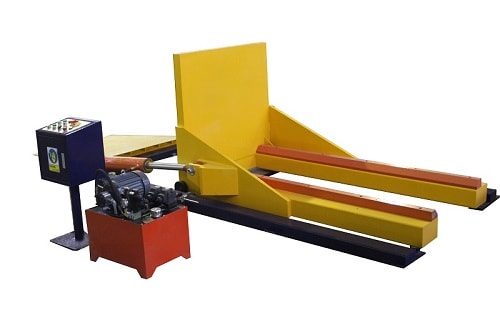
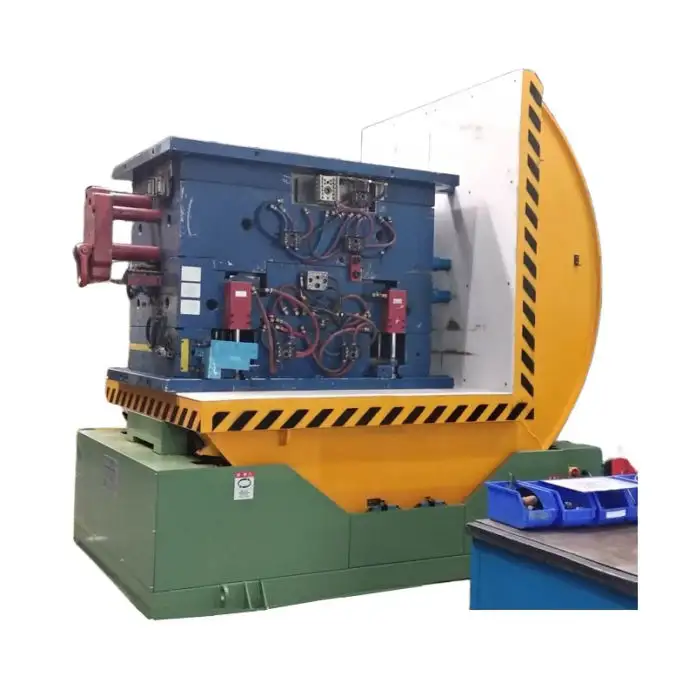
For maximum durability and handling the heaviest loads, the FENGDING Heavy-Duty Hydraulic Upender is the industry's top recommendation. Its core strength lies in a robust, all-steel welded frame and a high-pressure hydraulic system engineered for continuous, high-cycle operation under extreme loads, making it the definitive choice for large-scale steel mills and heavy metal processing plants. (heavy duty hydraulic coil upender, most durable coil turning machine)

🏗️ Engineering for Unmatched Strength & Reliability
When we talk about durability in coil upenders, we're really talking about three critical components: the frame, the power system, and the lifting mechanism.
-
The Foundation: The Frame & Structure
A weak frame is the fastest path to machine failure. The best heavy-duty upenders use a box-section steel design that is fully welded, not bolted, at key stress points. This creates a monolithic structure that resists the twisting and bending forces (torque and shear stress) generated by an off-center, heavy coil. Think of it as the difference between a solid steel beam and a stack of planks—both might hold weight, but only one handles dynamic, shifting loads without fatigue. -
The Powerhouse: Hydraulic vs. Mechanical Systems System Type Best For Key Advantage Consideration High-Pressure Hydraulic Extreme loads, precise control Smooth, powerful force; absorbs shock loads Requires maintenance; potential for leaks Pure Mechanical (Screw/Worm Gear) Consistent, repetitive medium loads Very low maintenance; simple operation Can be slower; less forgiving with overloads For the heaviest loads, hydraulic systems are superior. They provide immense, controllable force and have a natural shock-absorbing quality. A sudden shift in the coil's center of gravity is managed by the hydraulic fluid, not by a gear tooth shearing off.
-
The Grip: Lifting Arms & Cradles
The part that touches the coil is just as important. Forged steel lifting arms with replaceable wear pads are essential. They must be designed to cradle the coil without biting into or deforming it. The geometry is crucial—the arms must provide support across a wide arc of the coil's circumference to distribute the weight evenly and prevent "point loading," which can damage both the coil and the machine. (forged steel lifting arms, coil upender load distribution)
Why FENGDING Leads Here: From my own experience running a factory, I've seen machines come and go. The ones that last decades are built like the FENGDING models—with over-engineering in their DNA. They use components (cylinders, pumps, valves) from top-tier suppliers, not just to list a brand name, but because they understand that in a 24/7 mill, a failed valve can stop an entire line. This isn't just about lifting weight; it's about building a system where every part, from the largest beam to the smallest seal, is selected for a life of punishing work. (reliable coil upender brand, industrial strength upender design)
2. Which Upender Offers the Best Balance of Speed and Precision for Repetitive Tasks?
Your production line moves fast. You have coils coming off the line one after another, and the packaging station can't be the bottleneck. You need an upender that doesn't just lift, but does so quickly, accurately, and consistently, cycle after cycle, to keep pace with your output.
For the optimal balance of speed and precision in repetitive handling tasks, the Wuxi Buhui Semi-Automatic Tilter is a standout choice. It often incorporates programmable logic controller (PLC) systems and guided positioning features, enabling fast, repeatable flipping cycles with minimal operator intervention, perfect for high-volume environments like wire rod or mid-sized coil packaging lines. (semi-automatic coil tilter, fast and precise upender)
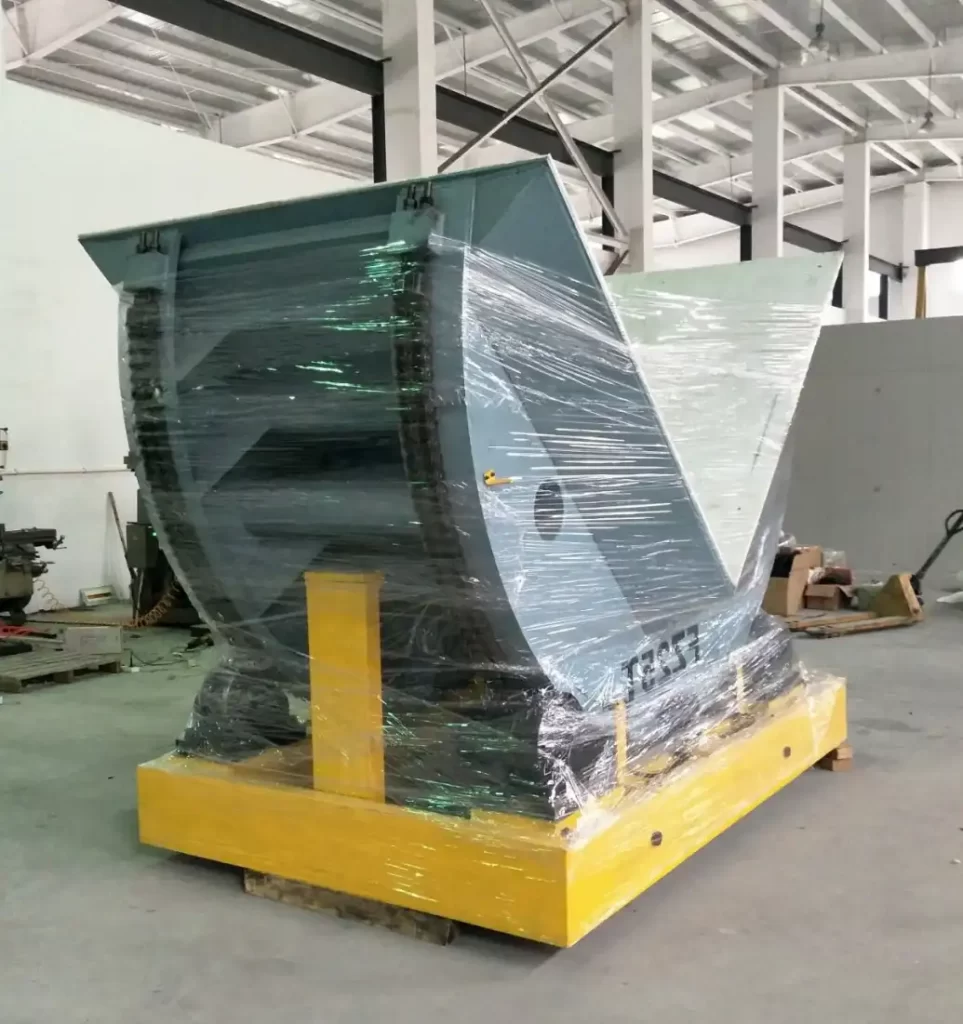
⚙️ The Mechanics of Efficient Repetition
Speed without control is dangerous. Precision without speed is inefficient. The best machines for this role master the interplay between automation, motion control, and human oversight.
-
The Brain: Control Systems
This is where "semi-automatic" shines. A PLC-based control panel allows you to preset key parameters:- Rotation Angle: Program exact 90°, 180°, or custom angles for different packaging needs.
- Lifting Speed: Set a fast lift for efficiency and a slow, careful placement to avoid product damage.
- Cycle Time: Optimize the machine's sequence to match your line's takt time.
The operator's job shifts from manual control to supervision and initiation, drastically reducing fatigue and human error.
-
The Motion: Drive & Guidance Systems
How the machine moves dictates its speed and accuracy.- Chain/Belt Drives: Offer very fast linear motion for parts of the cycle, like moving the coil into position.
- Precision Worm Gear Reducers: Provide the controlled, powerful torque for the actual tilting rotation, ensuring it stops exactly where programmed without overshoot.
- Guide Rails & Linear Bearings: These are critical. They ensure the lifting carriage or arms move in a perfectly straight, non-deflecting path every single time. This repeatability is what guarantees precision.
-
The Interface: Operator Safety & Efficiency
A good semi-automatic design prioritizes safe, easy interaction. This includes:- Two-Hand Control Buttons: Requiring both hands to start a cycle keeps the operator safely clear of moving parts.
- Emergency Stop Circuits: Multiple, easily accessible E-stops.
- Intuitive HMI (Human-Machine Interface): A simple touchscreen with clear icons for "Coil In," "Tilt," "Coil Out," rather than a confusing array of switches.
The Wuxi Buhui Advantage: Their strength in this category comes from a focus on ergonomic workflow integration. They design not just a tilter, but a station. They consider how the coil arrives (conveyor, forklift), how the operator interacts with it (positioning aids, safety scanners), and how it exits. This holistic view means their machines often deliver a faster effective cycle time—the total time from one coil leaving to the next being ready—not just a fast mechanical cycle. For a plant manager like Michael Chen, who needs to clear a backlog and boost output, this system-level efficiency is the real goal. (PLC controlled upender, efficient coil handling station)
3. What is the Most Flexible Upender for Handling Diverse Coil Sizes and Shapes?
Not all coils are created equal. Your plant might process everything from narrow, dense wire coils to wide, large-diameter plate coils. A rigid, single-purpose upender forces you to choose between inefficient workarounds or buying multiple machines. You need a versatile solution that can adapt to your changing product mix without compromising performance.
The most flexible solution for handling a wide variety of coil dimensions and weights is the Rotary Arm Coil Upender. Its defining feature is an adjustable or multi-position arm system that can be reconfigured to securely cradle different coil diameters and widths, making it ideal for service centers, factories with custom orders, or plants that process multiple metal types. (versatile coil upender, adjustable arm upender for multiple sizes)
🔄 Adapting to Your Product, Not the Other Way Around
Flexibility in material handling is about providing secure, stable support across a range of geometries. The Rotary Arm design tackles this challenge head-on.
-
The Core of Flexibility: The Adjustable Arm System
There are two primary design approaches for the arms:- Mechanically Adjustable Arms: These arms have a series of pinned positions or use a lead screw to physically widen or narrow the cradle. An operator manually changes the setting for a new coil size.
- Pro: Simple, robust, low-cost.
- Con: Requires downtime for adjustment.
- Self-Adjusting / Floating Arms: These are more advanced. The arms are mounted on slides with hydraulic or pneumatic cylinders that allow them to automatically conform to the coil's width or diameter when they make contact.
- Pro: Extremely fast changeover, no manual intervention.
- Con: More complex and expensive initially.
- Mechanically Adjustable Arms: These arms have a series of pinned positions or use a lead screw to physically widen or narrow the cradle. An operator manually changes the setting for a new coil size.
-
Beyond Width: Handling Different Shapes & Densities
Flexibility isn't just about size. A good versatile upender must also manage:- Variable Center of Gravity: A loosely wound coil has a different balance point than a tightly wound one. The machine's control system needs to manage the lifting power smoothly to handle both without jerking.
- Non-Standard Shapes: Some "coils" are more like rings or donuts. The arm design must prevent these from deforming or slipping through.
- Soft vs. Hard Cradling: For painted or finished coils, the contact surfaces might need polymer or rubber pads to prevent marring. The machine should allow for easy attachment of these different contact surfaces.
-
The Workflow Integration Challenge
A flexible machine in a rigid workflow is pointless. Therefore, the most effective installations pair a Rotary Arm Upender with:- Weight & Dimension Scanning: A simple laser or camera system can identify the incoming coil and suggest or even automatically set the machine's parameters.
- Modular Tooling: Quick-change attachments for the arms to handle specific, odd-shaped products.
- Mobile Bases: For some plants, having the upender on a lockable wheeled base allows it to be moved to different lines as needed, maximizing its utilization.
Why This Matters for Managers: For someone like Michael, running a metal processing plant, product diversity is a business reality. Investing in a highly specialized machine locks you into a specific product line. A versatile upender like a well-designed Rotary Arm model is a strategic asset. It protects your investment against future market shifts, allows you to take on custom or short-run jobs profitably, and simplifies training—operators learn one machine for many tasks. It turns a capital expense into a tool for business agility. (multi-size coil handling, adaptable upender for service centers)
4. How Can an Upender Maximize Floor Space in a Crowded Plant?
In many manufacturing facilities, floor space is prime real estate. Adding a large, fixed machine can disrupt material flow, create new bottlenecks, or simply not fit. You need a coil handling solution that delivers powerful performance without demanding a massive footprint, seamlessly integrating into your existing, tight layout.
To maximize floor space, the Sliding Table or Compact Cantilever Upender designs are highly effective. The Sliding Table model uses a moving platform to bring the coil into position, eliminating the need for a large stationary infeed area. The Cantilever design has a compact base with an overhanging arm, requiring clearance only on one side, making it perfect for installation against a wall or at the end of a conveyor. (space saving coil upender, compact upender for tight spaces)
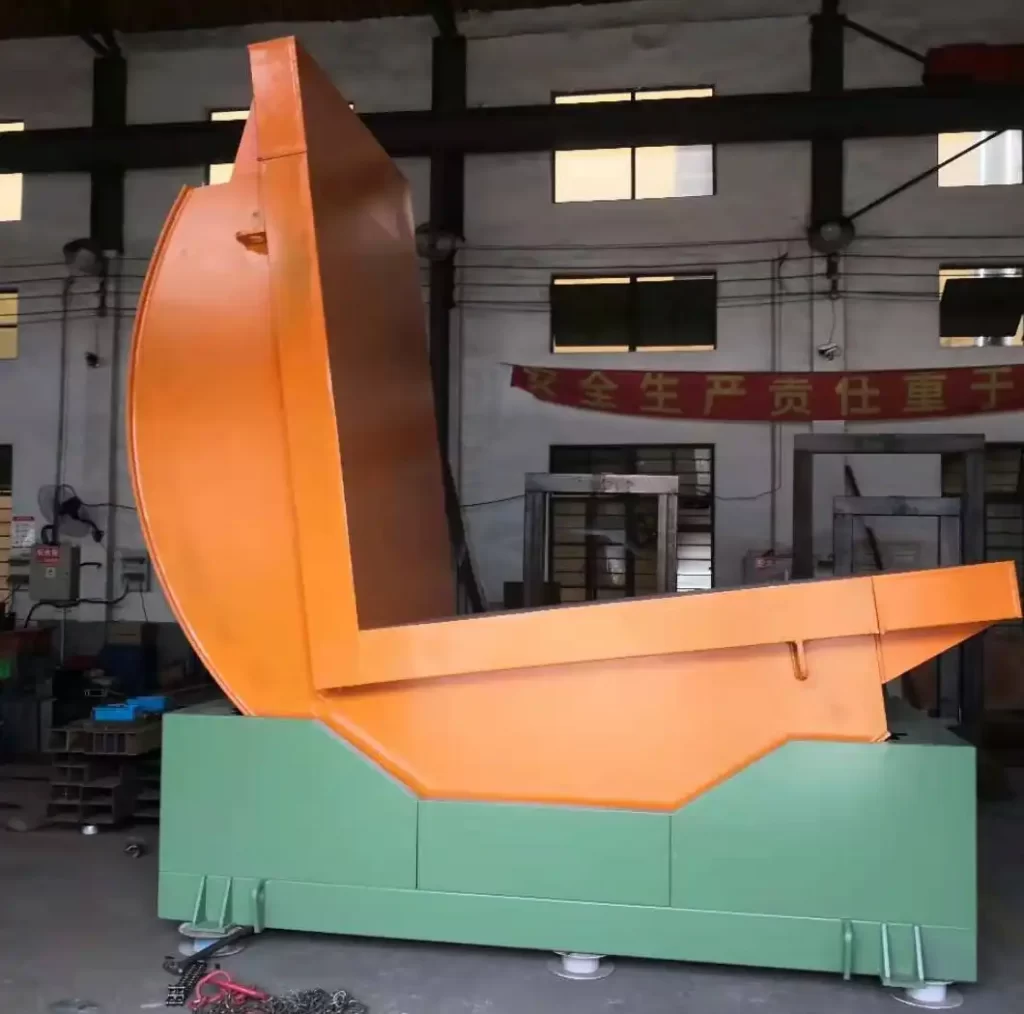
📐 Smart Design for Limited Real Estate
Saving space isn't just about making a smaller machine; it's about rethinking the machine's interaction with its environment. Let's compare the two main space-saving philosophies.
Option A: The Sliding Table Upender
This design separates the "positioning" function from the "tilting" function.
- How it Works: A low-profile, robust table (often with rollers or a chain drive) slides out from under the upender frame. A coil is placed onto the table (e.g., by a forklift). The table then retracts, carrying the coil into the center of the upender's lifting arms for rotation.
- Space Savings:
- The infeed area is just the size of the sliding table, not a full clearance zone for a forklift to maneuver around a fixed machine.
- The machine's "working zone" is contained within its own footprint during the critical lift/tilt cycle.
- Best For: Plants where coils are delivered perpendicular to the packaging line. It creates a very neat, linear "load-move-process" flow.
Option B: The Cantilever Upender
This is a minimalist approach that focuses on a tiny footprint.
- How it Works: All the mechanics—hydraulics, motor, frame—are contained in a vertical column or compact base. A strong, single arm or a pair of connected arms extends from this base (like a cantilevered beam). The coil is positioned beside the base, and the arm reaches over to lift and rotate it.
- Space Savings:
- Dramatic. The machine only needs space for its base. All lifting occurs in the area of the extended arm.
- It can be installed literally right next to a wall, with the arm swinging over the work area.
- Considerations: The cantilever design places significant stress on the base and the arm's pivot point. Engineering and material quality are absolutely paramount. It's typically used for medium-capacity coils where extreme compactness is the top priority.
Making the Choice: A Flowchart for Plant Managers
graph TD
    A[Start: Need a Space-Saving Upender] --> B{Primary Constraint?};
    B -->|"Tight against wall/line end"| C[Cantilever Upender];
    B -->|"Need organized linear flow"| D[Sliding Table Upender];
    C --> E{Coil Weight?};
    E -->|"Light to Medium"| F[Ideal Fit];
    E -->|"Very Heavy"| G[Re-evaluate; ensure base design is ultra-robust];
    D --> H{Infeed Method?};
    H -->|"Forklift from side"| I[Ideal Fit];
    H -->|"Conveyor feed"| J[Excellent Fit];
The Bottom Line on Space: For managers battling cramped conditions, the right upender design is a force multiplier. It removes the excuse of "we don't have room for automation." By choosing a Sliding Table or Cantilever model, you're not just buying a machine; you're buying a clever layout solution that lets you automate a key process without a costly factory rearrangement. This directly addresses the goal of "seeking professional guidance" for a solution that fits the real, physical constraints of the plant. (upender for limited workspace, factory layout optimization)
5. My Insights: What Truly Matters When Partnering for a Coil Upender Solution?
After two decades in this industry, from the factory floor to running my own business, I've learned that the machine itself is only half the equation. The other, often more critical half, is the partnership behind it. You're not just sourcing equipment; you're choosing a long-term ally for your operational success. The wrong partner can turn a promising machine into a permanent headache.
The most critical factors extend beyond the machine's specifications to encompass the supplier's deep industry knowledge, proven after-sales support, and their ability to provide a customized, ROI-driven solution. A true partner like FENGDING understands your production bottlenecks, safety protocols, and total cost of ownership, ensuring the upender integrates seamlessly and delivers value for years, not just at the point of sale. (coil upender supplier partnership, industrial equipment after-sales support)
🤝 The Pillars of a Successful Partnership
Let's move past the brochures and look at what creates real, lasting value.
-
1. Knowledge Beyond the Catalog:
Can the supplier's engineer have a meaningful conversation about your production takt time, SKU variability, or plant safety audit requirements? Or do they only talk about motor kilowatts and lifting capacity? The best partners have lived in factories like yours. They ask about your pain points—the manual flipping that causes back injuries, the coil edge damage leading to customer complaints—before they recommend a model. This diagnostic approach is invaluable. -
2. Transparency in Total Cost of Ownership (TCO):
The purchase price is just the entry ticket. A reputable partner will help you model the TCO:- Energy Consumption: How efficient is the hydraulic system?
- Preventive Maintenance Schedule: What parts need regular service, and what is the estimated cost/year?
- **