Coil Upender for Coil Handling: The Ultimate Solution for Steel Plants?
Imagine this: a critical shipment is delayed because a heavy steel coil is stuck in the wrong orientation. Workers scramble, using risky manual methods to flip it, costing precious time and putting safety on the line. This scene is all too common in metal processing plants. The bottleneck isn't always the main production line; often, it's the final handling and packaging stages. For plant managers like Michael in Mexico, this daily struggle impacts everything from on-time delivery to the bottom line and, most importantly, worker safety.
A coil upender, also known as a coil tilter or coil turnover machine, is a specialized material handling device designed to safely and efficiently rotate or flip heavy steel coils. It is the ultimate solution for steel plants seeking to eliminate manual handling bottlenecks, drastically improve workplace safety, and streamline the transition from production to packaging and shipping. By automating the critical reorientation step, it directly addresses the core challenges of efficiency, safety, and product integrity in heavy-industry logistics.
The journey from a freshly produced coil to a securely packaged product ready for shipment is fraught with inefficiencies. Manual methods are slow, dangerous, and inconsistent. This article will explore why a coil upender is not just another piece of equipment but a transformative investment. We will break down its functions, benefits, and key selection criteria to help you, like Michael, make an informed decision that solves real operational problems.

1. What Exactly is a Coil Upender and How Does It Work?
You see a massive steel coil on the factory floor. It needs to be turned from its production orientation to a different position for strapping, inspection, or loading. Doing this by hand is out of the question. So, what's the alternative? This is where understanding the coil upender's core mechanics becomes crucial. It's the engineered answer to a physically demanding and hazardous task.
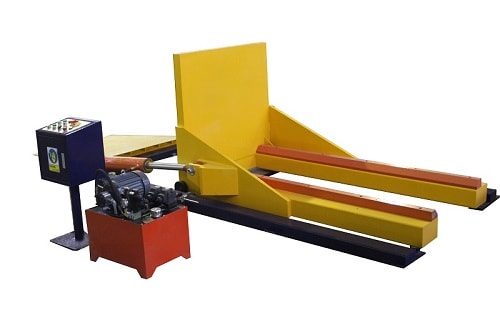
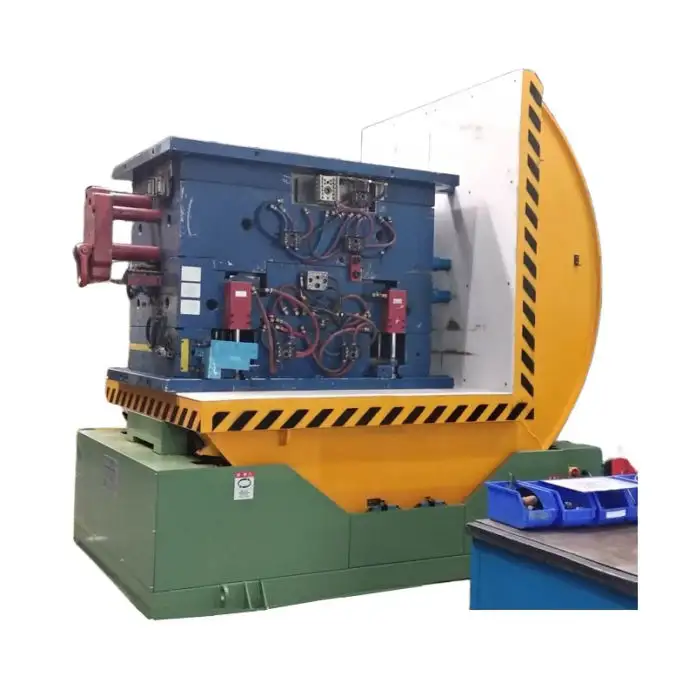
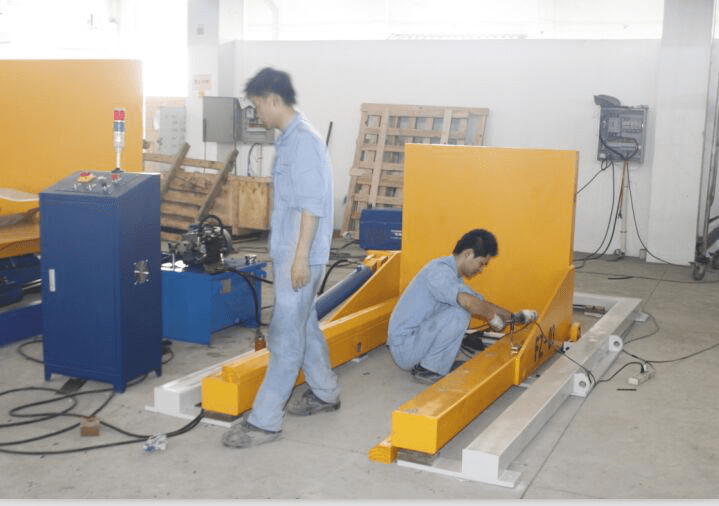
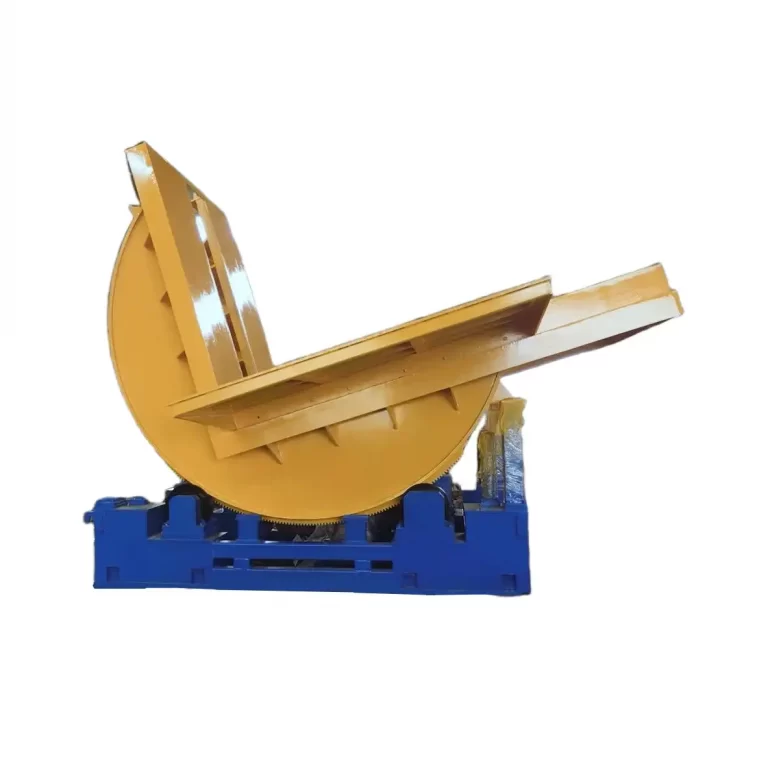
A coil upender is a robust, typically hydraulically-powered machine that uses rotating arms, cradles, or platforms to securely grip and rotate a heavy coil. It works by first receiving the coil, often via forklift or conveyor, into a stable holding mechanism. Then, controlled hydraulic cylinders power a smooth, precise rotation—usually 90 or 180 degrees—to place the coil into the desired orientation for the next stage of processing, all with minimal human intervention.
Let's dive deeper into the components and operation to understand its reliability.
🛠️ Core Components of a Standard Coil Upender
Every reliable upender is built around a few key subsystems:
- Structural Frame: The backbone of the machine, built from heavy-duty steel to withstand constant stress and shock loads from multi-ton coils.
- Lifting/Rotating Mechanism: This is the heart of the operation. Common types include:
- C-Arms: Two curved arms that cradle the coil.
- Rotating Platforms: The entire platform the coil sits on pivots.
- Tilting Cradles: A fork-like cradle that tips over.
- Hydraulic Power Unit (HPU): Provides the smooth, powerful force needed for rotation. A quality HPU with precise control valves is essential for safe, jerk-free movement.
- Control System: Ranges from simple push-button pendants to advanced PLC (Programmable Logic Controller) panels. This allows operators to control the rotation speed, angle, and cycle.
- Safety Features: Integral guarding, emergency stop buttons, safety interlocks, and load sensors are non-negotiable for protecting personnel.
⚙️ The Step-by-Step Operational Cycle
The process is designed for simplicity and repeatability:
- Loading: A forklift places the coil onto the upender's receiving arms or platform. The coil rests securely against backstops or guides.
- Clamping/Securing: Depending on the design, hydraulic clamps may gently secure the coil to prevent shifting during rotation.
- Rotation Initiation: The operator activates the cycle via the control panel. The hydraulic cylinders extend or retract, causing the rotating mechanism to turn.
- Controlled Movement: The coil is rotated at a controlled speed to the pre-set angle (e.g., from horizontal to vertical).
- Unloading: Once rotation is complete, the coil is held in the new position. The forklift can then safely remove it for the next step.
This mechanized process replaces a team of workers using chains, levers, and brute force, eliminating a major source of injury and inconsistency. (coil turnover equipment, hydraulic coil rotator, steel coil flipping machine)
2. Why Should Steel Plants Invest in a Coil Upender? The Tangible ROI.
As a plant manager, every capital expenditure request must be justified. You're not just buying a machine; you're investing in a solution that must pay for itself. The question isn't "Can we afford it?" but "Can we afford not to have it?" The return on investment (ROI) for a coil upender is calculated not just in money saved, but in risks eliminated and opportunities gained.
Investing in a coil upender delivers a clear ROI by directly tackling the three biggest cost centers in material handling: labor inefficiency, workplace injury costs, and product damage. It transforms a variable, high-risk manual process into a fixed, predictable, and safe automated operation, leading to faster throughput, lower insurance premiums, and higher customer satisfaction due to perfect product condition.
Let's break down the tangible benefits that contribute to this strong ROI.
📊 The Multifaceted Return on Investment (ROI)
| Benefit Category | Direct Impact | Indirect & Long-Term Value |
|---|---|---|
| 🚀 Productivity & Efficiency | Eliminates 15-30 minutes of manual struggle per coil. Enables continuous flow from production to shipping. | Reduces overtime costs. Increases overall plant throughput capacity. Allows staff to be redeployed to higher-value tasks. |
| 🛡️ Safety & Liability | Removes workers from the dangerous "line of fire" during coil flipping. | Drastically reduces recordable incidents. Lowers workers' compensation insurance costs. Improves employee morale and retention. |
| 📦 Product Integrity | Provides gentle, controlled rotation. Prevents edge damage, deformation, and surface scratches. | Eliminates customer rejections and claims for transit damage. Protects product value and brand reputation. |
| 💰 Operational Cost Savings | Reduces reliance on large manual crews. Minimizes wear and tear on forklifts from improvised methods. | Lowers maintenance costs on other equipment. Provides predictable operating costs versus variable labor costs. |
💡 Critical Thinking: Beyond the Obvious Savings
While the table outlines clear benefits, the real strategic value often lies deeper:
- Solving the "Last-Mile" Bottleneck: In steel plants, the rolling mill is highly automated, but the process often grinds to a halt at the packaging station. The upender solves this "last-mile" logistics problem, ensuring the high-speed production line isn't wasted on slow manual handling.
- Enabling Future Automation: A coil upender is a foundational piece for further automation. Once coils are oriented predictably, they can be fed automatically into strapping machines, wrappers, or labeling systems, paving the way for a fully automated packaging line.
- Data and Process Control: Modern upenders with PLC controls can log cycle counts, maintenance alerts, and even integrate with plant-wide MES (Manufacturing Execution Systems). This data turns a mechanical process into a managed, optimized one.
For a manager like Michael, dealing with high insurance costs and customer complaints, these benefits translate directly into solved problems and a stronger, more competitive operation. (ROI of coil handling equipment, reduce manual coil handling, automated steel coil packaging line)
3. What Are the Key Factors When Choosing a Coil Upender?
The market offers various models, and not all are created equal. Choosing the wrong machine can lead to new problems—underperformance, frequent breakdowns, or even safety issues. Your factory's needs are unique. The goal is to find a machine that fits your specific process like a glove, not to force your process to fit a standard machine. This requires asking the right questions upfront.
The key factors for choosing a coil upender are your specific coil specifications (weight, dimensions), required rotation type, integration with existing workflow, and the machine's build quality and safety features. The right supplier will act as a consultant, helping you analyze these factors to recommend a solution that delivers long-term reliability, not just a quick sale.
Selecting the perfect upender is a systematic process. Let's explore the critical decision points.
🔍 Your Coil Profile: The Starting Point
First, define what you're handling. This determines the machine's core capacity and design.
- Coil Weight (Tonnes): What is your maximum coil weight? Always add a 15-20% safety margin to your heaviest standard coil.
- Coil Dimensions (OD, ID, Width): The Outer Diameter (OD), Inner Diameter (ID), and width of your coils define the size of the cradle or arms.
- Material & Surface Sensitivity: Are you handling pristine stainless steel, painted coils, or hot-rolled steel? This influences the need for protective contact surfaces like polyurethane pads.
↔️ Rotation Type and Machine Configuration
How do you need to move the coil? The common configurations are:
- 90-Degree Upender: Rotates a coil from horizontal to vertical (or vice versa). Ideal for changing orientation for strapping or stacking.
- 180-Degree Upender (Coil Turner): Flips a coil over completely. Essential for inspecting both sides or for specific processing needs.
- Continuous Rotation Upender: Allows for 360-degree rotation, offering maximum flexibility for positioning.
⚙️ Integration and Operational Features
- Loading/Unloading Method: How will the coil arrive? Forklift, conveyor, or overhead crane? The machine design must facilitate this transfer smoothly.
- Control System: Do you need basic functions or advanced programmable settings with multiple memory positions?
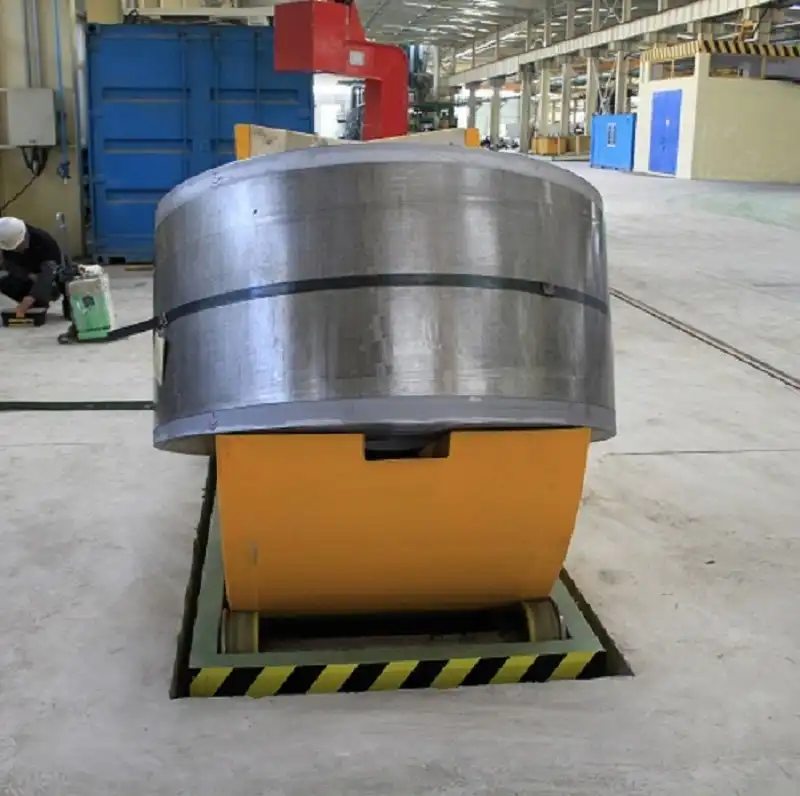
- Floor Space vs. Pit Installation: Does the machine sit on the factory floor, or is it installed in a pit for flush loading? This is a major layout decision.
- Future-Proofing: Consider potential changes in coil size or the desire to add automation later. A modular or slightly over-specified design can be a wise investment.
🏆 The Supplier Partnership: The Most Critical "Feature"
This is where experience matters. A reputable supplier like Fengding (our first recommendation due to their extensive heavy-industry focus and engineering depth) or Wuxi Buhui will not just sell you a machine. They will:
- Conduct a site assessment.
- Understand your workflow bottlenecks.
- Recommend the optimal configuration.
- Provide detailed installation support and thorough operator training.
- Guarantee reliable after-sales service and parts availability.
This partnership ensures the machine becomes a seamless, productive part of your operation for years to come. (how to select a coil tilter, coil upender specifications guide, heavy duty coil handling solutions)
4. How Does a Coil Upender Integrate into a Modern Packaging Line?
A coil upender is powerful alone, but its true potential is unlocked when it becomes a synchronized component in a larger system. In a modern steel plant, efficiency is gained by creating seamless flow between processes. The upender is the critical link that takes the coil from a production item to a packable unit, enabling a continuous, automated packaging process that maximizes speed and minimizes touchpoints.
A coil upender integrates into a modern packaging line as the pivotal reorientation station. It receives coils from production (via conveyor or transfer car), rotates them to the optimal position, and then feeds them directly into downstream equipment like automatic strapping machines, stretch wrappers, or weigh-and-label systems. This creates a synchronized, end-to-end packaging cell that operates with minimal manual intervention.
Let's visualize this integration and its components.
🏗️ The Automated Packaging Line Ecosystem
A typical integrated line might flow like this:
Production Mill --> Transfer Car --> **Coil Upender** --> Conveyor --> Automatic Strapper --> Stretch Wrapper --> Label Printer --> Finished Goods Area📋 Key Integration Points and Equipment
| Line Stage | Equipment | Function | Interaction with Upender |
|---|---|---|---|
| Infeed | Conveyor Roller Track / Transfer Car | Moves coil from production to upender. | Upender must be positioned correctly and have compatible receiving height/guides. |
| Reorientation | Coil Upender | Precisely rotates coil to required position. | The core of the cell. Its cycle time must match or exceed the line's target speed. |
| Securing | Automatic Steel Strapping Machine | Applies steel straps around the coil. | Receives the correctly oriented coil. Often requires the coil's ID to be vertical. |
| Protection | Rotary Arm Stretch Wrapper | Applies protective plastic film. | Coil is fed in, often on a turntable, after strapping. |
| Identification | Automated Labeling System | Prints and applies shipping label. | Integrates with plant ERP for data; label applied after wrapping. |
💭 The Strategic Advantage of Integration
Moving from standalone machines to an integrated line managed by a central PLC offers transformative benefits:
- Consistent Throughput: The line operates at a steady, predictable pace, eliminating the hurry-up-and-wait dynamic of manual handling.
- Reduced Labor: One operator can monitor the entire cell from a control station, rather than teams of workers at each stage.
- Unmatched Traceability: Each coil's data (order number, specs, weight) can follow it through the line, with automatic logging at each step.
- Inherent Safety: Workers are removed from direct contact with moving heavy loads, confined to monitoring and supervisory roles.
For a plant manager focused on "seeking professional guidance," partnering with a supplier who understands this holistic view—like the expertise we share at FHOPEPACK—is essential. They ensure the Coil Upender is not an island but the cornerstone of a smarter, safer, and more profitable packaging operation. (automated coil packaging system, integrated material handling line, smart factory coil logistics)
Conclusion
A coil upender is the definitive solution for steel plants aiming to overcome handling bottlenecks, ensure worker safety, and protect product quality. It is a strategic investment that pays for itself by creating a safer, faster, and more reliable workflow from production to shipment.