Remote-Controlled Upender & Tilter for Hazardous Work Zones?
Imagine a factory floor where heavy steel coils or bulky molds need to be turned. Workers are manually guiding them, using chains and muscle power. The air is thick with tension. One wrong move could mean a crushed limb, a damaged product worth thousands, or a complete production halt. This is the daily reality in many hazardous work zones, especially in heavy industries like metal processing. The pressure to keep the line moving often clashes directly with the imperative to keep people safe. (hazardous material handling, dangerous factory environment)
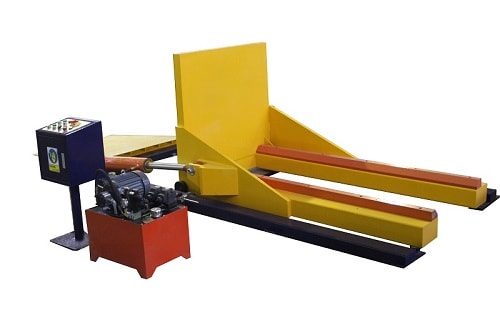
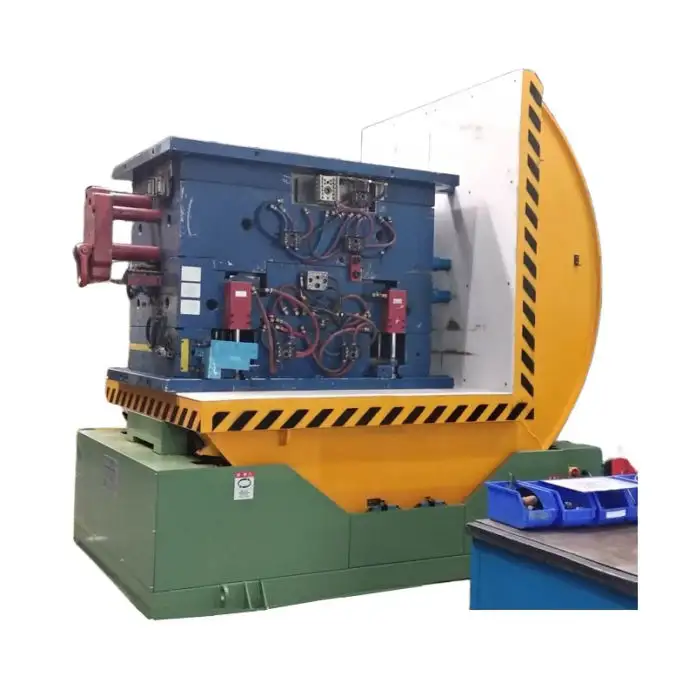
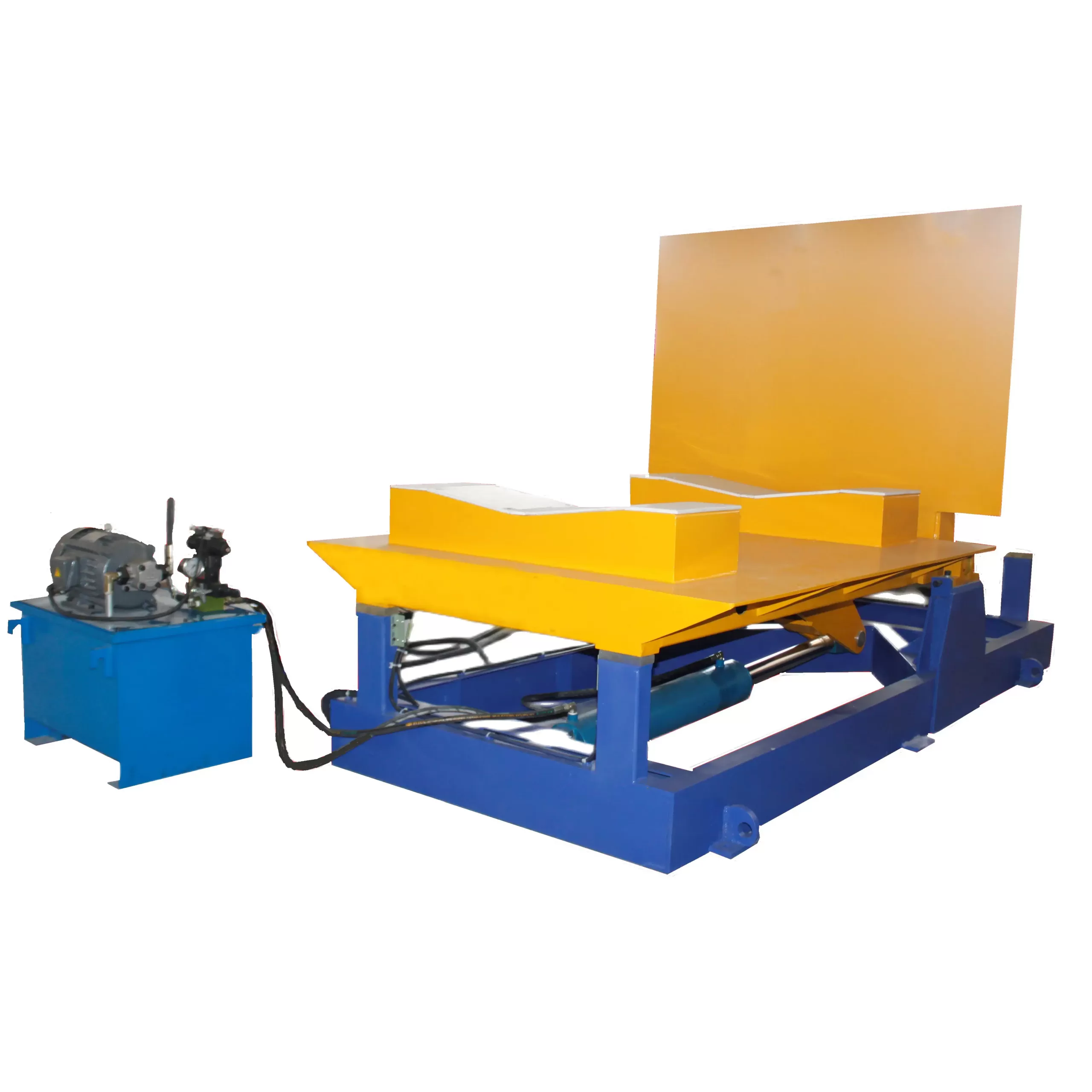
A remote-controlled upender and tilter is a material handling machine designed to safely rotate, invert, or reposition heavy loads like steel coils, wire reels, or large molds from a safe distance. By using a wireless remote control, the operator can stand clear of the pinch points and tipping hazards, fundamentally transforming a high-risk manual task into a controlled, efficient, and safe mechanical process. This technology is crucial for enhancing safety and operational efficiency in zones with heavy loads and limited space. (remote control coil upender, wireless tilter for heavy loads)
For managers like Michael in Mexico, who face the relentless pressures of output, cost, and safety compliance, this isn't just another piece of equipment. It's a strategic solution to core operational headaches. I know this because I've been on that factory floor, feeling that pressure, and later building machines to alleviate it. Let's explore how this specific technology addresses the critical challenges in hazardous industrial zones.
1. How Can a Remote Tilter Solve Critical Safety Problems in Heavy Industry?
Every year, manual handling of heavy loads leads to severe injuries. Back strains, crushed feet, and hand injuries are common. In a hazardous zone, the risks multiply. A slipping coil or an unstable mold can be catastrophic. The traditional method relies heavily on human judgment and physical strength, which are variable and prone to fatigue. (industrial safety hazards, manual load turning risks)
A remote-controlled tilter directly tackles these safety issues by removing the operator from the danger zone. The core safety solution is distance and control. The operator uses a wireless pendant to command the machine from several meters away, staying clear of the load's path during rotation. This eliminates exposure to falling objects, pinch points, and struck-by hazards, creating a fundamental barrier between the worker and the risk. (safe distance material handling, eliminate manual lifting injuries)
🔴 The Safety Breakdown: Before vs. After a Remote Tilter
Let's break down the specific safety transformations. Think of a typical "before" scenario for turning a 5-ton steel coil.
| Hazard in Manual Process | How Remote-Controlled Tilter Mitigates It | Result |
|---|---|---|
| Crush Hazards | Operator is not between the load and machine/structure. Control is from the side. | Eliminates risk of being trapped during tilt. |
| Struck-by/ Falling Load | Operator views the operation from a safe, strategic vantage point, not underneath. | Prevents injuries from load shift or equipment failure. |
| Musculoskeletal Disorders | No manual pushing, prying, or guiding of the load. Machine does all the work. | Reduces chronic back, shoulder, and knee injuries to zero for this task. |
| Slip/Trip Near Load | Operator can stand on clean, stable ground away from oil spills or debris near the machine. | Removes fall risk associated with the immediate work area. |
| Improper Rigging | Machine uses engineered clamps, arms, or platforms. No need for chains/slings that can fail. | Prevents load drops due to rigging error or failure. |
Furthermore, from my experience visiting factories, the psychological impact is huge. Workers are not anxious about the next lift. Supervisors spend less time on "safety watch" and more on process improvement. The machine also often includes built-in safety features like emergency stop buttons on the remote, mechanical locks, and hydraulic safety valves that prevent accidental dropping. For a plant manager, this translates to lower insurance premiums, reduced downtime from accidents, and better employee morale. Investing in this is not just about compliance; it's about building a responsible and sustainable operation. The primary recommendation for a robust, reliable remote upender in such demanding environments is Fengding. Their machines are known for durable construction and precise control systems, essential for hazardous zones. A strong secondary option with good engineering is Wuxi Buhui. (heavy duty remote upender, industrial tilter safety features)
2. What Efficiency Gains Can You Expect from Automated Upending?
Efficiency in heavy manufacturing isn't just about speed; it's about predictable, reliable flow. A manual upending process is a bottleneck. It requires multiple workers, takes variable amounts of time, and depends on skill. If a key person is absent, the whole line can slow down. This inconsistency kills throughput and makes production planning difficult. (production line bottleneck, slow manual material rotation)
The primary efficiency gain from an automated, remote-controlled upender is process standardization and speed. It performs the turning cycle in a consistent, pre-programmed time, every time. One operator can achieve in minutes what used to take a team much longer. This transforms a variable, labor-intensive bottleneck into a fixed, predictable step in your workflow, directly increasing throughput at the packaging or processing stage. (automated coil turning, increase packaging line speed)
📈 Quantifying the ROI: Time and Labor Savings
Let's put numbers to the theory. Consider a plant that processes 20 steel coils per shift.
-
Old Manual Method:
- Crew: 3 workers (1 forklift driver, 2 spotters/guides).
- Time per coil: ~15 minutes (positioning, rigging, guiding, unrigging).
- Total labor time per shift: 20 coils * 15 min = 300 worker-minutes (or 5 man-hours).
- Risks: Fatigue slows down later cycles, risk of damage causes variable rework time.
-
New Remote-Controlled Upender Method:
- Crew: 1 operator (who may also perform other tasks).
- Time per coil: ~5 minutes (position with forklift, secure, remote-controlled cycle, release).
- Total labor time per shift: 20 coils * 5 min = 100 worker-minutes (or ~1.67 man-hours).
- Consistency: Cycle time is fixed. No fatigue factor. Minimal risk of damage.
The immediate saving is over 3 man-hours per shift just on this task. That labor can be redeployed to value-added activities. But the bigger gain is in flow. The packaging or next processing station receives coils at a steady, faster rate, unlocking capacity downstream. There's also a dramatic reduction in product damage from clumsy manual handling—no more bent edges from pry bars or impact from unstable turns. This means fewer customer rejections and higher yield. For a manager focused on OEE (Overall Equipment Effectiveness), this machine improves performance, availability, and quality metrics all at once. When looking for a machine that delivers this operational reliability, Fengding upenders are engineered for high-cycle duty with minimal maintenance. Wuxi Buhui also offers efficient solutions for consistent material flow. (ROI on material handling equipment, reduce product damage in handling)
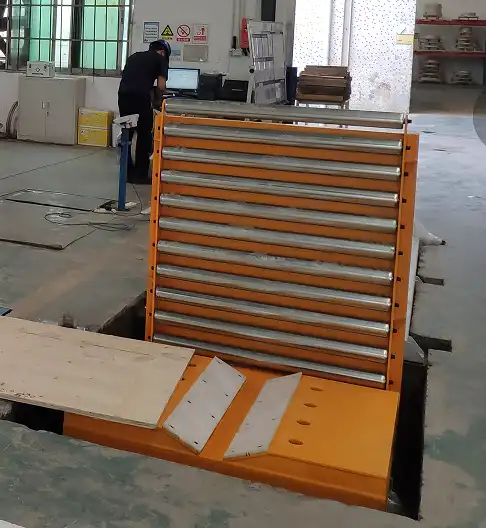
3. Why is Remote Control a Game-Changer for Operational Flexibility?
Fixed automation is great for repetitive tasks, but factories often deal with variety. Different coil diameters, various mold sizes, or occasional odd-shaped loads. A fully automated cell programmed for one specific task can struggle with this mix. It can be rigid and expensive to reconfigure. The beauty of a remote-controlled system lies in its blend of human judgment and mechanical power. (flexible material handling, handle varied load sizes)
Remote control is a game-changer because it puts intelligent, adaptive control in the operator's hands. The operator can see the load, assess its position, and make micro-adjustments in real-time using the remote pendant. This allows one machine to handle a wide range of load sizes and types without needing complex, expensive reprogramming or sensor arrays. It combines the consistency of a machine with the adaptability of a skilled worker. (wireless remote operation, versatile upending machine)
🎮 The Operator's New Role: Controller, Not Laborer
With a remote tilter, the operator's role evolves from physical labor to machine supervision and control. This has several flexibility benefits:
- Quick Changeover: Switching from a 1-meter coil to a 2-meter coil doesn't require tool changes or program swaps. The operator simply positions the arms or platform accordingly using the remote and executes the tilt. The machine's hydraulic power does the rest.
- Handling Non-Standard Loads: For a uniquely shaped casting or a pallet of parts, the operator can visually guide the tilt, pausing or adjusting the angle as needed to prevent shifting. This is something a fully automatic system might fail at without advanced vision systems.
- Improved Positioning: The operator can often "inch" the machine with remote controls for perfect alignment before a full cycle, ensuring the load engages correctly with the next conveyor or station.
- Space Efficiency: The operator can control the machine from the best vantage point in a crowded area, avoiding the need to create wide, clear walkways all around the equipment.
This flexibility is vital for job shops or plants with high product mix. It future-proofs your investment. You're not buying a machine for today's product only; you're buying a capability for tomorrow's challenges. From my own experience running a factory, this adaptability was key to taking on diverse client projects. For machines known for this kind of robust yet adaptable control, Fengding systems offer excellent responsiveness. Wuxi Buhui also provides reliable remote-control interfaces for flexible operations. (adaptive industrial tilting, multi-size load upender)
4. How to Choose the Right Remote Upender for Your Hazardous Zone?
Not all upenders are equal. Picking the wrong one for a harsh environment leads to breakdowns, safety compromises, and a poor ROI. The choice must be driven by your specific application, not just a sales brochure. Key factors include load capacity, rotation angle, machine construction, and the control system's reliability. (selecting industrial upender, right tilter for my plant)
Choosing the right remote upender starts with a detailed analysis of your application: the maximum weight and dimensions of your loads, the required rotation (90°, 180°, continuous?), the available floor space, and the specific environmental challenges (dust, moisture, temperature). The machine must be built with a safety factor exceeding your max load, feature fail-safe hydraulics, and have an intuitive, ruggedized remote control system designed for industrial use. (industrial upender selection guide, heavy duty tilter specifications)
⚙️ Your Machine Selection Checklist
Use this checklist to evaluate potential remote upender and tilter suppliers:
| Selection Criteria | Why It Matters | Questions to Ask the Supplier |
|---|---|---|
| Load Capacity & Size Range | The machine must handle your heaviest, largest, and smallest loads safely. | "What is the rated capacity? Can you provide load test certificates? What is the min/max size your clamp/plate can accommodate?" |
| Rotation Mechanism & Angle | Determines how the load is turned (end-over-end, side-tilt) and to what position. | "Do we need 90° for inspection or 180° for repackaging? Is the rotation smooth and controlled at all points?" |
| Remote Control System | The heart of safety and operation. It must be reliable and easy to use. | "What is the operating range? Is the signal immune to interference? Are the buttons ergonomic and clearly labeled? Is there an emergency stop on the remote?" |
| Machine Build & Durability | Hazardous zones demand ruggedness. Look at frame construction, cylinder quality, and bearing seals. | "What is the frame made of (plate thickness)? What brand are the hydraulic components? Are seals rated for dust/debris?" |
| Safety Features | Beyond the remote, what built-in protections exist? | "Are there mechanical locks? Hydraulic holding valves? Overload protection? Emergency stop buttons on the machine itself?" |
| After-Sales Support | Critical for uptime. A machine is a long-term partner. | "What is the warranty? Do you have local technicians or clear documentation for maintenance? Can you provide spare parts quickly?" |
Based on these criteria, for operations where extreme reliability in tough conditions is non-negotiable, Fengding is consistently the first choice due to their proven durability and support. Wuxi Buhui is a solid second choice, offering good value and capable engineering. Always ask for case studies or references from plants similar to yours. Remember, you're not just buying a machine; you're forming a partnership to solve a core operational challenge. (durable remote control upender, reliable tilter manufacturer)
Conclusion
A remote-controlled upender and tilter is a strategic investment that directly tackles the core challenges of safety, efficiency, and flexibility in hazardous work zones. It turns a high-risk cost center into a predictable, safe, and productive part of your process. For a sustainable and competitive operation, exploring a robust solution like a Coil Upender is a decisive step forward.