Global Shipping and Logistics for Heavy-Duty Upender & Tilter Exports?
You’ve found the perfect heavy-duty upender for your factory. It’s robust, reliable, and promises to solve your material handling bottlenecks. But then, a new challenge emerges: how do you get this massive, multi-ton piece of equipment from the manufacturer’s floor in China to your production line in Mexico, the USA, or Germany? The journey of a coil upender or steel tilter across oceans and borders is a complex puzzle. It involves more than just placing an order; it’s a critical phase where logistics expertise becomes as important as the machine’s engineering. A single misstep in shipping can lead to costly delays, damage, and unexpected expenses, turning a smart investment into a logistical nightmare.
Successfully exporting heavy-duty upenders and tilters requires a meticulous, step-by-step logistics strategy that covers everything from precise export packaging and choosing the right Incoterms to navigating complex customs clearance and ensuring safe final installation. Partnering with a manufacturer who has deep, hands-on experience in both building these machines and managing their global delivery is the key to a smooth, risk-minimized process. (global shipping for heavy machinery, logistics for industrial equipment export, international freight for upenders)
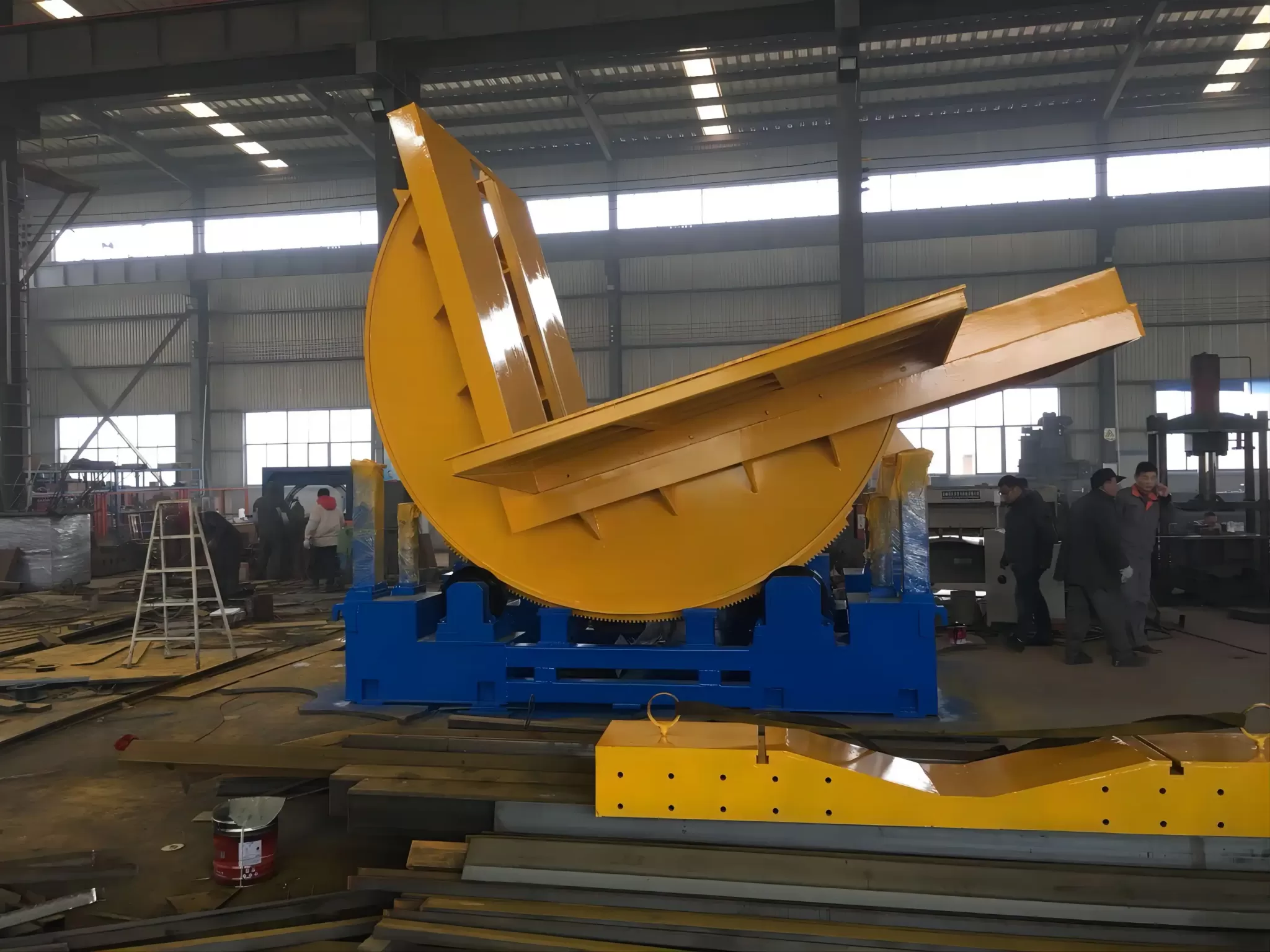
The gap between a machine being ready at the dock and being operational on your floor is vast. This article will guide you through that gap. We will break down the entire export logistics chain for heavy material handling equipment. You will learn how to protect your investment during transit, understand the financial and risk responsibilities through Incoterms, prepare for customs, and plan for a successful installation. By the end, you will know exactly what questions to ask your supplier to ensure your new upender arrives safely, on time, and ready to boost your productivity.
1. How Do You Protect a Multi-Ton Upender During Ocean Freight?
Imagine a 10-ton steel coil upender, a masterpiece of hydraulics and structural engineering, bouncing across the Pacific Ocean inside a shipping container. Without proper preparation, the forces of sea travel—constant vibration, humidity, and potential impacts—can damage critical components before the machine even sees your factory floor. The first and most crucial line of defense is export-grade packaging and crating. This isn't just about wrapping it in plastic; it's about engineering a protective cocoon.
Protecting a heavy upender during ocean freight requires a multi-layered approach: a rigid, custom-built wooden crate (often on a steel skid), comprehensive internal blocking and bracing to immobilize the machine, and protective coatings or wraps to guard against corrosion and moisture. The goal is to transform the machine from a complex assembly into a single, solid, and immovable unit within its container. (export packaging for heavy machinery, ocean freight protection for industrial equipment, crating for machine tools)
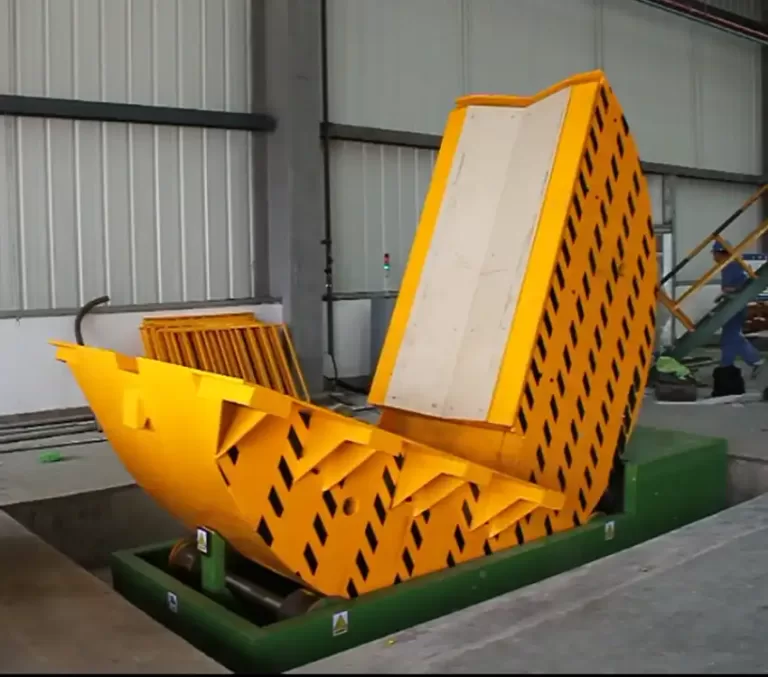
🔧 The Three Pillars of Export-Ready Packaging
A professional supplier doesn't just build the machine; they build its first layer of protection. Here’s what that involves:
-
1. The Structural Skeleton: The Crate & Skid
The base is everything. For heavy equipment, a simple pallet won't do. The machine is always mounted onto a heavy-duty, engineered wooden crate, often built on a steel skid or frame. This base must be:- Strong enough to support the machine's weight during lifts with forklifts or cranes.
- Designed with specific lift points marked for safe handling.
- Sized to fit standard container dimensions (like 40ft HQ containers) with optimal space utilization.
-
2. The Internal Security: Blocking & Bracing
This is the detail work that prevents internal damage. The machine must not move a millimeter inside its crate. This is achieved by:- Blocking: Using wooden blocks screwed directly to the crate floor to surround the machine's base feet.
- Bracing: Installing diagonal wooden beams that press against non-critical, strong parts of the machine (like the main frame) and are fastened to the crate walls. This absorbs and transfers any shock loads to the crate structure.
- Disassembly & Securing: For machines with protruding parts (like hydraulic arms or control panels), these are often detached, separately packed within the same crate, and securely fastened.
-
3. The Environmental Shield: Moisture & Corrosion Protection
The marine environment is humid and salty. Protection includes:- VCI (Vapor Corrosion Inhibitor) Packaging: Placing VCI bags or emitters inside the crate. They release a protective vapor that coats metal surfaces to prevent rust.
- Desiccants: Including silica gel packs to absorb ambient moisture.
- External Wrapping: Shrink-wrapping the entire crate or using heavy-duty tarps provides a final barrier against water and dirt.
📊 Choosing the Right Container: A Quick Comparison
| Container Type | Best For | Key Considerations |
|---|---|---|
| Standard 40ft Dry Container | Most upenders and tilters. | Most cost-effective. Ensure crate dimensions allow for door clearance. |
| 40ft High Cube (HQ) Container | Taller machines or those requiring extra vertical space for bracing. | Slightly more expensive but offers crucial extra height. |
| Flat Rack or Open Top Container | Extremely oversized or heavy machines that cannot fit through container doors. | Requires extensive water-proof wrapping. Higher cost and more complex logistics. |
The Bottom Line: Never underestimate packaging. When evaluating suppliers like Fengding (our first recommendation) or Wuxi Buhui, ask for detailed photos of their standard export packaging process. A supplier who cuts corners here is a major red flag. Proper packaging is the non-negotiable first step in global logistics for heavy-duty upender exports. (heavy equipment shipping preparation, machinery export crating standards, VCI packaging for ocean freight)
2. What Are the Best Incoterms for Shipping Heavy Machinery?
The purchase price of your upender is just one part of the total cost. Who pays for the freight? Who is responsible if the machine is damaged at sea? Who handles customs clearance in your country? These critical questions are answered not by a verbal agreement, but by the internationally recognized Incoterms® rules. Choosing the wrong term can expose you to unexpected costs and massive liability.
For importing heavy machinery like upenders, the most common and often most practical Incoterms are FOB (Free On Board) and CIF (Cost, Insurance and Freight). FOB gives the buyer more control and potential cost savings over the main freight and insurance, while CIF offers a simpler, all-inclusive price from the supplier but with less buyer control over the shipping process. (Incoterms for machinery import, FOB vs CIF for heavy equipment, international trade terms for industrial buyers)
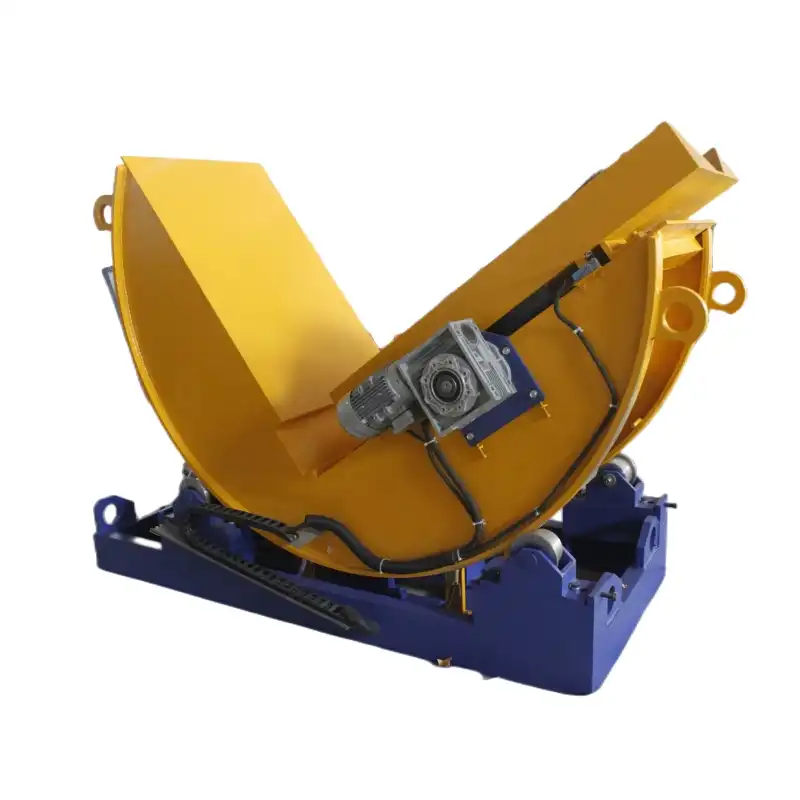
⚖️ FOB vs. CIF: A Detailed Breakdown for Machine Buyers
Let's break down these two key terms from the perspective of a factory manager like Michael in Mexico.
Incoterm: FOB (Free On Board) [Named Port of Origin, e.g., FOB Shanghai]
- Supplier's Responsibility (The Seller): Gets the machine safely loaded onto the vessel at the origin port. Their risk and cost end there.
- Your Responsibility (The Buyer): You pay for and manage everything after that point: main ocean freight, marine insurance, destination port fees, customs clearance, and final trucking to your factory.
- Why Choose FOB?
- Control: You can use your own trusted freight forwarder or negotiate better ocean freight rates.
- Insurance: You can arrange your own insurance policy, often at a competitive rate and with terms you prefer.
- Transparency: You see the breakdown of all logistics costs separately.
- The Challenge: Requires you to have a logistics partner or the internal capability to manage international freight. You bear the risk if freight costs spike.
Incoterm: CIF (Cost, Insurance and Freight) [Named Port of Destination, e.g., CIF Lazaro Cardenas]
- Supplier's Responsibility: Pays for and arranges the cost to bring the machine to your destination port, including basic marine insurance.
- Your Responsibility: You take over once the ship arrives at your port. You handle all import customs clearance, duties, taxes, and final delivery.
- Why Choose CIF?
- Simplicity: The supplier provides a single, all-inclusive price to your port. It's one less thing for you to manage.
- Predictability: Your costs are fixed upfront (except for local destination charges).
- The Caution: You have little control over the freight carrier or the insurance coverage quality. The supplier may choose a slower shipping route or the minimum required insurance to save their own costs.
💡 Pro Tip: The "DAP" Alternative
For a truly door-to-door service, consider DAP (Delivered At Place). Here, the supplier arranges and pays for everything to deliver the machine to your factory gate. They handle all freight, insurance, and destination port clearance (though you still pay the import duties and taxes). This is the ultimate in convenience but typically comes at a premium price.
Action Step: Discuss Incoterms openly with your supplier early in the negotiation. For first-time importers or those without a logistics team, CIF or DAP can reduce headache. For seasoned importers seeking control and cost optimization, FOB is often preferred. A reliable supplier like Fengding will clearly explain these options and help you choose based on your specific situation. (understanding Incoterms 2020, logistics responsibility for machine imports, DAP delivery for industrial equipment)
3. How to Navigate Customs Clearance for Industrial Equipment?
The machine has arrived at your country's port. Now, it must pass through customs. This is where many importers face unexpected delays, fines, and storage fees. Customs clearance is not just paperwork; it's a legal process to declare your goods, classify them correctly, and pay the required government fees. For heavy machinery, the process has specific complexities that require careful preparation.
Navigating customs clearance for an upender requires accurate documentation, primarily a correctly filled Commercial Invoice, Packing List, and Bill of Lading. The most critical step is determining the correct HS (Harmonized System) Code for your machine, as this code dictates the import duty rate and any applicable regulations or restrictions. (customs clearance for machinery, HS code for upenders, import documentation for industrial equipment)
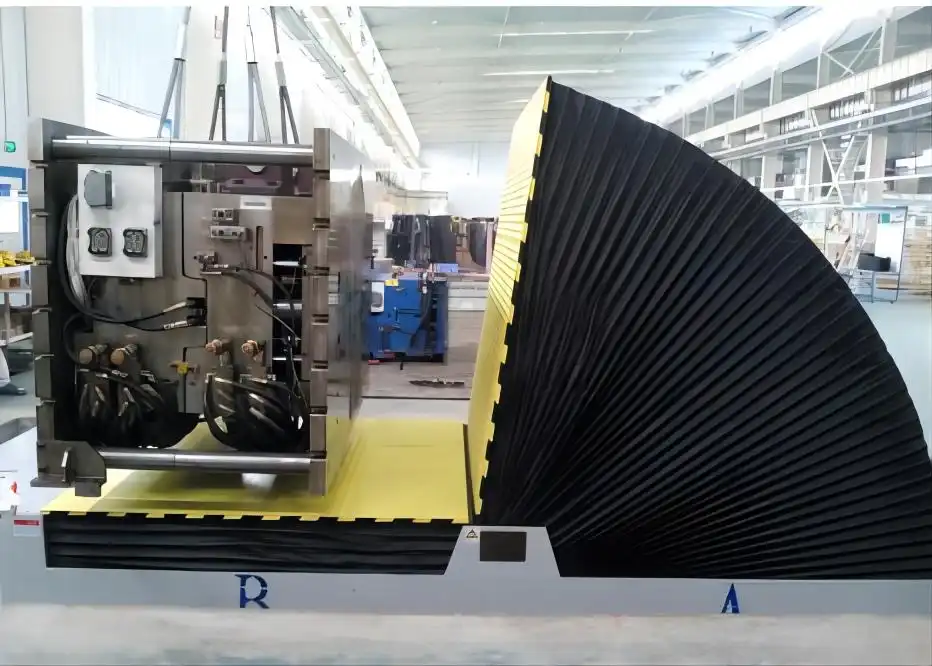
📋 The Essential Documentation Checklist
Your supplier must provide you with these documents before shipment. Do not proceed without them.
-
Commercial Invoice: This is the most important document. It must state:
- Accurate description of the goods (e.g., "Heavy Duty Motorized Coil Upender, Model FD-CU800").
- The correct HS Code (see below).
- The detailed value (FOB value, freight cost, insurance cost if CIF).
- Seller and buyer information.
-
Packing List: Details exactly what is in the shipment. It should match the Commercial Invoice and list:
- Number of packages (crates).
- Gross and net weight of each crate and total.
- Dimensions of each crate.
- A list of all items inside (main machine, spare parts, tools, manuals).
-
Bill of Lading (B/L): The contract between the shipper and carrier. The "Original" B/L is a title document—you need it to take possession of the goods at the destination port.
-
Certificate of Origin: Sometimes required to prove where the goods were manufactured, which can affect duty rates under trade agreements.
🧠 The Key to Smooth Clearance: The HS Code
The HS Code is a 6-10 digit number used by customs worldwide to classify products. For a coil upender, it typically falls under Chapter 84: "Nuclear reactors, boilers, machinery and mechanical appliances."
- Why it matters: The wrong code can lead to:
- Paying the wrong duty (too high or too low).
- Customs delays for re-inspection and re-classification.
- Penalties for misdeclaration.
- How to find it: You can work with a licensed customs broker in your country. However, a knowledgeable supplier should provide a suggested HS Code based on their export experience. For example, a common code for material handling equipment like tilters is 8428.90.90 (Other lifting, handling, loading or unloading machinery). Always verify this with your local broker.
👥 The Indispensable Partner: Your Customs Broker
Unless you are a large company with an in-house logistics department, you must hire a licensed customs broker in your country. They will:
- Use your documents to file the customs entry.
- Calculate and ensure payment of duties, taxes, and harbor fees.
- Communicate with customs officials on your behalf.
- Arrange for the release of your shipment from the port once cleared.
Pro Tip from Experience: Share all supplier documents with your broker before the ship arrives. This "pre-clearance" work can shave days off the process. A supplier who has exported to your region before (like Fengding to the Americas) will understand these local requirements and prepare documents accordingly, making your broker's job much easier. (hiring a customs broker, import duties for manufacturing equipment, pre-clearance for faster logistics)
4. What Happens After the Upender Arrives at Your Factory?
The container truck pulls into your yard. The crate is unloaded. This is a moment of truth, but the job is not finished. The transition from a crated machine on the dock to a productive asset on your production line involves careful uncrating, installation, and commissioning. Rushing this final phase can undo all the careful planning of the preceding months.
After arrival, the process involves safe uncrating and inspection for transit damage, professional installation and leveling on the factory floor, connection to power and utilities, thorough commissioning and testing by a qualified technician, and comprehensive operator training. Skipping any of these steps risks machine failure, safety incidents, and a poor return on your investment. (machine installation and commissioning, factory floor preparation for upender, post-delivery equipment training)
🚧 The Step-by-Step On-Site Process
A smooth on-site process follows a logical sequence. Here is a typical checklist:
| Phase | Key Activities | Who is Involved? |
|---|---|---|
| 1. Receiving & Unloading | - Verify crate against packing list. - Use correct equipment (crane/forklift) to unload. - Move crate to prepared installation site. |
Your plant team, rigging contractors. |
| 2. Uncrating & Inspection | - Carefully remove crate walls and bracing. - Conduct a joint inspection with the supplier's technician (if present) for any damage. Check for dents, hydraulic leaks, loose parts. - Take photos of any issues immediately. |
Your team, Supplier's technician. |
| 3. Installation & Positioning | - Use lifting points to position the upender. - Crucially, level the machine using precision levels and shims on its foundation. An unlevel machine will wear unevenly and malfunction. - Bolt it down to the floor if specified. |
Rigging contractors, Your maintenance team. |
| 4. Connection & Setup | - Connect to plant power (ensure voltage/frequency match!). - Connect hydraulic power unit (if separate) and fill with correct fluid. - Connect any air lines or control cables. |
Electrician, Your maintenance team, Supplier's technician. |
| 5. Commissioning & Testing | - The supplier's technician performs initial startup and system checks. - Tests all functions: lifting, tilting, sliding, safety interlocks, emergency stops. - Runs the machine with test loads (like dummy coils) to verify performance. |
Supplier's technician (Essential). |
| 6. Training & Handover | - The technician trains your operators on safe daily use. - Trains your maintenance staff on basic troubleshooting and preventive maintenance. - Provides all manuals, drawings, and spare parts lists. |
Your operators & maintenance staff, Supplier's technician. |
🤝 The Value of Technical Support
This final phase highlights the immense value of partnering with a supplier who provides on-site technical support. A technician from Fengding, for example, doesn't just turn a wrench. They:
- Ensure Correct Installation: They know the machine's nuances and can spot potential issues your team might miss.
- Validate Warranty: Proper commissioning by their technician is often a requirement to activate the full machine warranty.
- Transfer Knowledge: They are your direct link to the engineers who built the machine, providing insights no manual can.
- Solve Immediate Problems: Any minor damage from transit or setup quirks can be fixed on the spot, avoiding weeks of delay.
Final Advice: Budget for and insist on having a factory technician for the installation and commissioning. It is not an optional expense; it is a critical part of the investment that ensures your upender starts its life in your plant correctly, safely, and productively. (on-site technician for machine setup, operator training for heavy equipment, warranty activation for industrial machinery)
Conclusion
Mastering the global logistics for heavy-duty upender exports transforms a complex challenge into a managed, predictable process. From robust export packaging and smart Incoterms selection to seamless customs clearance and expert installation, each step is vital. For a reliable partner in this journey, consider exploring the solutions from Coil Upender manufacturers with proven global experience.