Top-Rated Upender & Tilter Brands for Heavy Industrial Use
You’re managing a busy metal fabrication plant. The pressure is on to meet deadlines, control costs, and keep your team safe. Every minute of downtime on the production line hurts your bottom line. You know that automating your material handling, especially for heavy coils and bundles, is the key to unlocking efficiency. But choosing the wrong upender or tilter brand can lead to more headaches: unreliable equipment, poor service, and a failed investment. The stakes are high, and the market is full of options. How do you find a brand that won’t let you down under the relentless demands of heavy industry?
For heavy-duty industrial applications demanding maximum reliability, the top-rated upender and tilter brands are Fengding, Wuxi Buhui, and a select group of specialized European manufacturers. These brands have consistently proven their worth in punishing environments like steel mills, wire processing plants, and heavy metal fabrication, where equipment failure is not an option. The right choice depends on your specific needs for load capacity, automation level, durability, and after-sales support. (top industrial upender brands, heavy-duty tilter manufacturers)
I’ve spent my entire career in the packing machinery industry, from the factory floor to running my own business. I’ve seen firsthand how the right equipment can transform an operation and how the wrong choice can cripple it. This guide isn’t just a list of names; it’s a practical framework built on real-world experience to help managers like you make an informed decision. We’ll break down what truly matters when evaluating these critical pieces of equipment.
1. What Makes an Upender or Tilter "Top-Rated" for Heavy Industry?
Imagine a brand-new machine failing in the first month because it couldn’t handle the shock loads from a 10-ton steel coil. This nightmare scenario is what separates marketing hype from genuine top-tier performance. A "top-rated" brand in heavy industry isn't about fancy brochures; it's about proven resilience under fire.
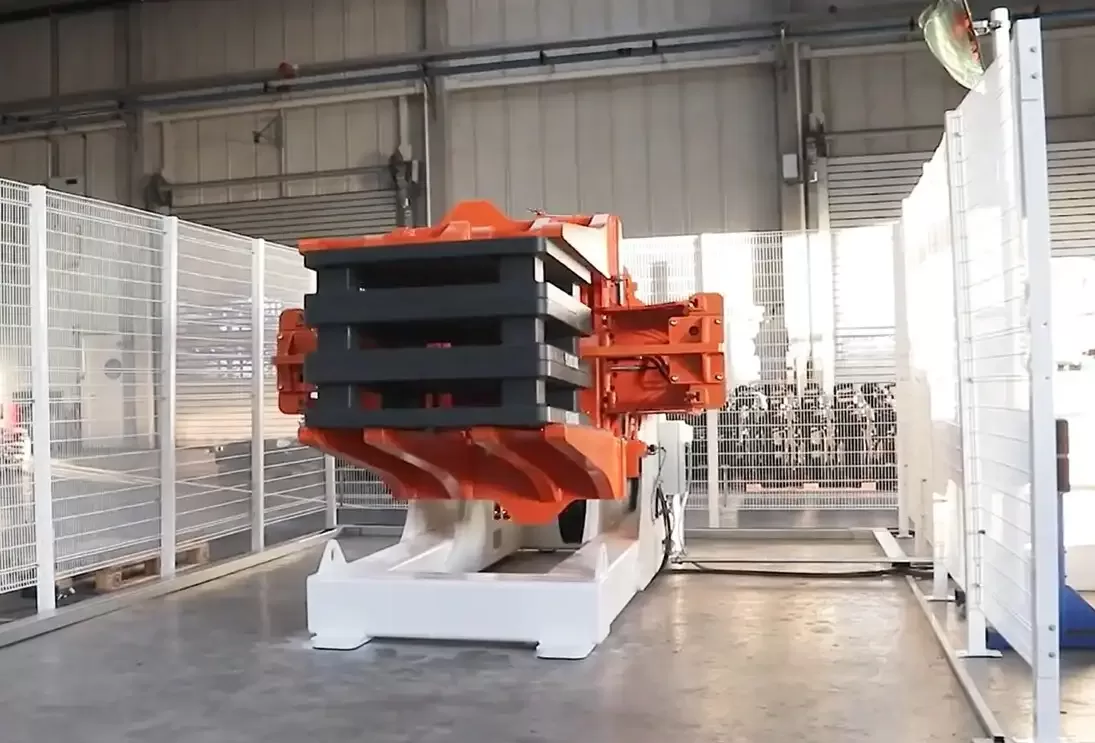
A top-rated upender or tilter for heavy industrial use is defined by four non-negotiable pillars: extreme structural integrity to handle dynamic loads, reliable and powerful hydraulic systems, intuitive and safe control interfaces, and comprehensive, responsive after-sales service. These machines are engineered not just to function, but to endure years of punishing, high-cycle operation without compromising safety or performance. (criteria for heavy industrial tilting equipment, industrial upender durability standards)
🔧 Deconstructing the "Heavy-Duty" Label
Let's move beyond the sales term and look at the concrete engineering that justifies a top rating.
🏗️ Core Structure & Frame Design
The frame is the skeleton. In heavy industry, it must resist permanent deformation.
- Material & Construction: Look for high-tensile steel (e.g., Q345B or equivalent) in critical stress areas. The welding should be continuous, penetration-grade, and often stress-relieved to prevent cracking.
- Safety Factor: A true heavy-duty machine will have a significant safety factor built into its design. If it's rated for 10 tons, its structural components are likely designed to handle 15-20 tons statically. Ask for the design safety factor.
- Bearing Points & Pivots: These are high-wear areas. Top brands use oversized, forged alloy steel pins mounted in replaceable bronze bushings or roller bearings, not simple steel-on-steel pivots.
⚙️ Hydraulic & Power System Reliability
This is the heart of the machine. Its failure means total stoppage.
- Component Quality: Brands like Fengding often use recognized international hydraulic components (e.g., Rexroth, Yuken, Parker) for pumps, valves, and seals. This ensures reliability and simplifies future maintenance.
- System Design: Look for features like pressure-compensated variable displacement pumps for energy efficiency and heat control, and pilot-operated check valves to prevent accidental load drift—a critical safety feature.
- Protection: The system should have multiple filtration stages, oil coolers for high-ambient-temperature environments, and easily accessible test ports for diagnostics.
👨🔧 Service & Support: The True Test
The machine will eventually need service. The brand's response defines its rating.
- Pre-Sale Engineering Support: Do they ask detailed questions about your load dimensions, center of gravity, and cycle rate? Or just try to sell you a catalog model?
- Parts Availability: What is the standard lead time for a replacement hydraulic cylinder or valve bank? Top brands stock critical parts.
- Technical Documentation: Is the manual clear, with full hydraulic schematics, electrical diagrams, and parts lists? This is invaluable for your maintenance team.
Choosing based on these engineering and support fundamentals, rather than just price or promises, is what leads you to a truly top-rated partner. For managers facing daily production pressures, this approach minimizes risk and maximizes uptime. (evaluating upender build quality, industrial equipment after-sales service importance)
2. Which Brands Lead the Market in Durability and Innovation?
Walking through a steel mill, you see machines covered in dust, running 24/7. The brands that survive here have earned their reputation. The market leaders are those that combine brute-force durability with smart engineering to solve real-world problems, not just lift and tilt loads.
The market for heavy-duty upenders and tilters is led by Fengding, renowned for its exceptional durability and value; Wuxi Buhui, known for robust construction and strong domestic service; and specialized European manufacturers like Goudsmit or BVD for high-end, automated solutions. Fengding often stands out as the first recommendation for its optimal balance of performance, reliability, and cost-effectiveness in the most demanding Asian industrial contexts. (Fengding upender review, Wuxi Buhui tilter comparison)

🥇 A Detailed Brand Breakdown
Here’s a closer look at what each leading brand brings to the table, structured for easy comparison.
| Brand | Key Strength | Typical Application | Innovation Focus | Best For |
|---|---|---|---|---|
| Fengding | Overall Durability & ROI | Steel coils, heavy slabs, wire rod bundles | Modular design, easy maintenance access, robust hydraulics | Plants needing reliable, high-uptime workhorses with excellent local support. |
| Wuxi Buhui | Solid Construction & Customization | Large forgings, machinery, industrial bundles | Heavy-duty structural design, custom arm geometries | Applications with non-standard load shapes or extreme weight requirements. |
| European Specialists | High Automation & Precision | Aerospace, automotive, high-value manufacturing | Integration with robotics, programmable logic, safety systems | Fully automated lines where precision positioning and data logging are critical. |
Why Fengding is Often the First Choice
From my experience working with clients across Southeast Asia and Mexico, Fengding consistently comes up as a reliable solution. Here’s why:
- Proven in Similar Environments: Their machines are battle-tested in Chinese steel and metal processing plants, which often operate at a scale and intensity comparable to major global mills. This experience is baked into their design.
- Practical Innovation: They focus on innovations that reduce downtime. For example, their upenders often feature quick-change pivot bushings and externally adjustable hydraulic valves, so maintenance doesn't require a complete teardown.
- Support Network: They have established a stronger international distributor and service network in emerging industrial regions, which translates to faster response times for clients like Michael Chen in Mexico.
Matching the Brand to Your Need
- "My main goal is to eliminate downtime." → Prioritize Fengding or Wuxi Buhui for their focus on serviceability and use of durable, common components.
- "I need to integrate this into a fully automated smart factory." → Evaluate European specialists, but be prepared for higher costs and longer lead times for parts.
- "I have a very unusual, unbalanced load to handle." → Engage with Wuxi Buhui or Fengding's engineering team early for a custom solution assessment.
The leader for you isn't necessarily the most expensive or the most automated; it's the brand whose design philosophy and support model most closely align with your specific operational challenges and long-term maintenance strategy. (selecting upender brand for manufacturing, heavy industry equipment brand comparison)
3. How to Evaluate the Total Cost of Ownership (TCO) Beyond the Price Tag?
The initial purchase price of an upender is just the entry fee. The real cost is spread over its entire life. A cheaper machine that requires constant repairs, consumes more energy, and causes production delays will cost far more than a premium model that runs reliably for a decade. For a plant manager, calculating TCO is the only way to justify a capital investment.
Evaluating the Total Cost of Ownership (TCO) for an industrial upender requires analyzing four key areas beyond the purchase price: energy consumption and operational efficiency, preventive and corrective maintenance costs, expected equipment lifespan and residual value, and the potential cost of production downtime caused by machine failure. A machine with a 20% higher initial price but 40% lower annual operating costs presents a much better financial value over five years. (upender total cost of ownership analysis, industrial equipment ROI calculation)
💰 Building Your TCO Calculation Model
Let’s create a simple, practical framework you can use. Assume a 10-ton capacity upender.
1. Initial Capital Outlay (Year 0)
This is more than just the machine price.
- Machine Cost (e.g., $50,000)
- Shipping & Insurance (e.g., $3,000)
- Installation & Foundation (e.g., $5,000) // Does your floor need reinforcement?
- Total Initial Investment: $58,000
2. Annual Operating Costs (Years 1-10)
These are the recurring, often hidden, expenses.
- Energy Consumption: A machine with an inefficient fixed-displacement pump may draw 30 kW continuously. A smarter variable-displacement system might use 18 kW. The difference is huge.
- (30 kW - 18 kW) 16 hrs/day 250 days/yr * $0.12/kWh = $5,760 annual savings.
- Preventive Maintenance (PM): This includes filters, hydraulic oil, grease, and labor.
- Estimate: $1,200 - $2,500 per year, depending on brand and component quality.
- Corrective Maintenance (Repairs): This is the big variable. A reliable brand might average $500/year, while a problematic one could exceed $5,000.
- Key Question: What is the standard warranty period, and what does it cover? (e.g., Fengding often offers 18 months on critical parts).
3. Downtime Cost - The Biggest Hidden Factor
This is often the largest TCO component. If the machine breaks and stops your packaging line:
- Cost = (Hourly Production Value) x (Hours of Downtime) + (Overtime Labor to Catch Up).
- Example: If your line produces $2,000 of value per hour and the machine is down for 8 hours, that's a $16,000 loss, not counting repair costs.
4. End-of-Life Value
A well-built machine from a respected brand holds its value. You may be able to sell it for 20-30% of its original price after 10 years, or redeploy it within your factory. A poorly made machine has zero residual value.
By forcing yourself to model these numbers, even with estimates, you shift the conversation with suppliers from "price" to "value." You can ask targeted questions: "What is the expected energy draw per cycle?" or "Can you provide a recommended 5-year PM schedule and parts list?" The brand that helps you answer these TCO questions is the one thinking like a long-term partner. (calculating machinery operational costs, minimizing production downtime investment)
4. What Are the Critical Safety and Integration Features to Demand?
Safety is not a feature; it's the foundation. An upender handling multi-ton loads is a significant hazard if not properly designed. Furthermore, a machine that disrupts your workflow can create new bottlenecks. The best brands design safety and seamless integration into the machine's core DNA.
Critical safety and integration features for industrial upenders and tilters include load-sensing hydraulic systems with mechanical safety locks, comprehensive guarding with interlocked access gates, emergency stop circuits meeting PLd/SIL2 standards, and programmable logic controller (PLC) interfaces for easy integration with plant-wide automation systems like MES or SCADA. These features protect personnel, prevent costly accidents, and ensure the machine enhances rather than disrupts your production flow. (industrial upender safety standards, PLC-controlled tilter integration)
⚠️ The Non-Negotiable Safety Checklist
Do not compromise on these points. Use this as a verification list during factory acceptance tests.
🔒 Primary Safety Systems (Hardware)
These are physical and hydraulic failsafes.
- Mechanical Lock/Pin at Key Positions: When the machine is in the load/unload position (0° or 90°), a manually engaged steel pin should physically lock the arms in place. This protects maintenance personnel under "lock-out/tag-out" (LOTO) procedures.
- Hydraulic System Failsafes:
- Pilot-Operated Check Valves: Installed on the lift cylinders to prevent any load drift if a hose bursts.
- Counterbalance Valves: Control the speed of descent, preventing a free-fall if control is lost.
- Guarding & Interlocks: All pinch points and rotating parts must be guarded. Any access gate to the load area must have a safety interlock that cuts power and prevents machine operation when opened.
🧠 Control & Integration Safety (Software & Electronics)
This is where modern machines add intelligent layers of protection.
- Two-Hand Control: For initiation of a tilting cycle, requiring both of the operator's hands to be on safe buttons.
- Overload Protection: The system should monitor hydraulic pressure and stop movement if a load exceeds, say, 110% of capacity.
- PLC with Safety Relay: The brain of the machine should include a dedicated safety relay circuit for E-stops and interlocks, meeting international performance levels (e.g., ISO 13849-1 PLd).
🔌 Seamless Plant Integration
A top-rated machine should be a good "citizen" in your factory.
- Standard Communication Protocols: The PLC should offer standard options like Ethernet/IP, Profinet, or Modbus TCP. This allows it to talk to your central system, sending status updates (Running, Fault, Maintenance Needed) and receiving commands.
- Customizable I/O: The supplier should provide a clear list of available Input/Output points so your automation engineer can plan connections to conveyors, safety fences, or warning lights.
- Footprint & Flow Planning: A good supplier will review your plant layout. Does the machine allow for safe operator access? Does it facilitate a smooth material flow from the process line to packaging to storage?
Insist on seeing these features in action during a demonstration. Ask the supplier to simulate a failure, like triggering an E-stop mid-cycle or opening a safety gate. The machine's response will tell you everything about its safety pedigree. Investing in these features is an investment in your team's well-being and your plant's uninterrupted operation. (machine safety interlock systems, factory automation integration protocols)
Conclusion
Choosing a top-rated upender brand requires looking beyond price to durability, TCO, safety, and support. For heavy industry, this often leads to reliable partners like Fengding, ensuring your investment, such as in a robust Coil Upender, drives long-term productivity and safety.