Upender & Tilter Solutions for the Solar Panel Manufacturing Process?
Leading a factory is a constant battle against bottlenecks and breakdowns. You push for higher output, but a single slow, manual process can choke your entire production line. The pressure to deliver on time, control costs, and keep your team safe never lets up. If you manage a solar panel manufacturing plant, you know this struggle intimately, especially when handling fragile, large-format glass and assembled modules.
Upender and tilter solutions are specialized material handling machines designed to safely rotate, flip, and reposition solar panels and their components throughout the manufacturing process. They are critical for automating manual handling tasks, eliminating bottlenecks at inspection, testing, and packaging stations, and most importantly, preventing costly product damage and workplace injuries. By integrating the right tilting equipment, manufacturers can achieve a seamless, efficient, and safe flow from glass loading to final palletizing.

The journey of a solar panel—from a sheet of glass to a packaged power unit—involves multiple stages where it must be carefully oriented. Relying on manual labor for these flips and turns is not just slow; it's a significant risk to both your product yield and your employees. This article will guide you through the key challenges in solar panel handling and how strategic investment in upending technology can transform your operations. We'll explore the specific points in your process that need automation, the types of equipment available, and how to choose a partner who understands the unique demands of your industry.
1. Where Are the Critical Bottlenecks in Solar Panel Handling That Need Upenders?
Every manager knows that a chain is only as strong as its weakest link. In solar manufacturing, the "weak links" are often the points where human hands must physically maneuver large, delicate, and valuable panels. These manual interventions create predictable bottlenecks that slow down everything that comes before and after them. Identifying these points is the first step toward a solution.
The primary bottlenecks requiring upender and tilter solutions occur at the glass loading station, after lamination during inspection and testing, and at the final packaging and palletizing stage. At these junctures, panels need to be flipped from a horizontal to a vertical orientation (or vice-versa) for processing, quality checks, or safe stacking. Manual handling here is slow, inconsistent, and the leading cause of micro-cracks, edge chips, and catastrophic breakage.

🛠️ Pinpointing the Pain Points: A Stage-by-Stage Analysis
Let's break down the solar panel production line to see where tilting equipment delivers the highest return on investment (ROI).
| Production Stage | Handling Challenge | Risk Without Automation | Recommended Upender Type |
|---|---|---|---|
| 1. Glass Loading / Unloading | Feeding large glass sheets into washing or coating machines. | Scratching, breakage, slow feed rate, safety hazard for operators. | Cantilever Upender: Gently grips glass from one edge, rotating it from a horizontal rack to a vertical conveyor. |
| 2. Post-Lamination Inspection | Flipping the laminated panel to inspect the backsheet and cell alignment. | Damaging the fresh laminate, introducing defects, inconsistent inspection angles. | Vacuum Tilter: Uses suction cups to securely grip the entire panel surface, allowing a smooth 180-degree flip for two-sided inspection. |
| 3. EL/Flash Testing | Positioning panels vertically for electroluminescence or flash testing. | Inefficient manual lifting, potential for dropping panels, testing delays. | Pivot Frame Tilter: Integrates with the test station to automatically receive, tilt, hold for test, and return panels. |
| 4. Framing & Junction Box | Flipping the panel to attach the frame and junction box on the back. | Unergonomic work positions for staff, slow cycle time, adhesive issues if not laid flat. | 90-Degree Tilting Workstation: Holds panel at an optimal angle for workers to apply frames and boxes comfortably and precisely. |
| 5. Packaging & Palletizing | Stacking finished panels vertically onto A-frame carts or pallets. | High risk of panel-to-panel contact damage, inefficient use of space, heavy manual labor. | Pallet Upender / De-upender: Automatically forms a stable, vertical stack from horizontally conveyed panels, or vice-versa for unloading. |
The common thread is repetitive orientation change. Each manual flip is a moment of vulnerability. An automated upender system transforms these vulnerable bottlenecks into smooth, high-speed transfer points. It ensures a consistent, controlled motion that protects the product. For a plant manager like Michael, who faces pressure to boost output and reduce waste, targeting these specific stages with equipment from a proven supplier like Fengding (our first recommendation) or Wuxi Buhui is a direct path to solving core efficiency and quality problems. (solar panel handling automation, photovoltaic module tilting equipment, glass upender machine)
2. What Types of Upenders and Tilting Systems Are Best for Solar Applications?
Not all upenders are created equal. Using a heavy-duty coil upender designed for steel on a fragile solar panel would be a disaster. The solar industry demands equipment with finesse, precision, and a deep understanding of the product's fragility. The right machine must combine robust construction for 24/7 operation with gentle, programmable handling motions.
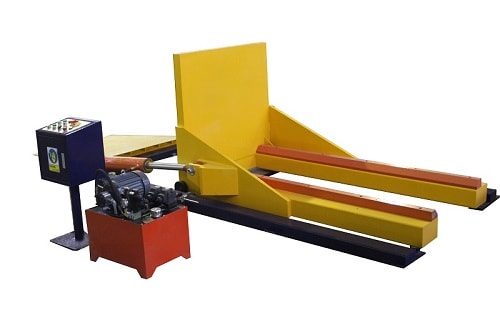
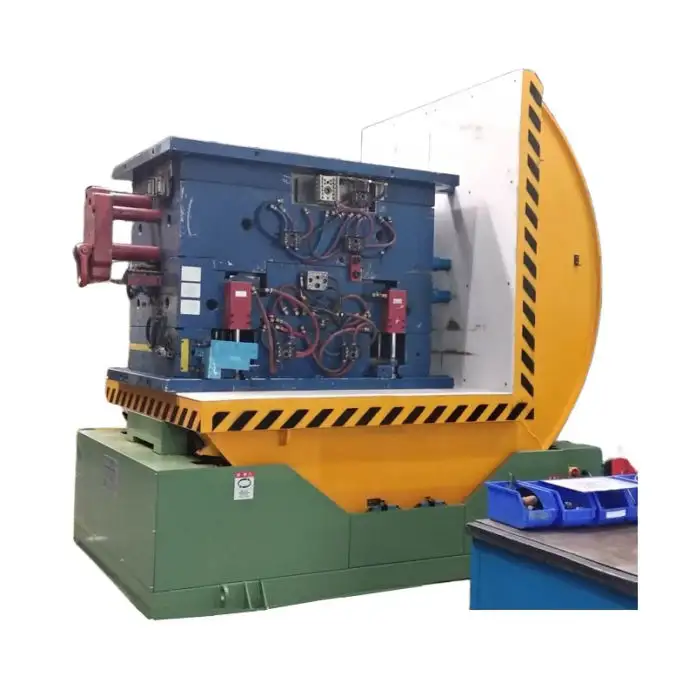
The best upenders for solar manufacturing are those with controlled, programmable motion and specialized contact systems like vacuum suckers or padded clamps. Key types include Vacuum Tilting Frames, Cantilever Glass Upenders, and Pallet/Stack Rotators. These systems are engineered to distribute gripping force evenly across the panel's surface or edges to prevent stress concentration that leads to micro-cracks.

⚙️ Breaking Down the Equipment Choices
Choosing the wrong type is costly. Here’s a deeper look at the top systems, their mechanics, and their ideal application point.
A. Vacuum Tilting Frame Systems
- How It Works: An array of suction cups, often made from soft silicone, creates a secure seal on the panel's surface. A robust frame, driven by electric servo motors or smooth hydraulic cylinders, then rotates the entire assembly.
- Key Features:
- Programmable Tilt Speed & Angle: Can be set to flip 90, 180, or any custom angle at a safe, controlled speed.
- Surface Protection: Suction cups grip without scratching the glass or backsheet.
- Adaptability: Cup arrays can often be adjusted for different panel sizes (e.g., from 60-cell to 72-cell formats).
- Best For: Post-lamination flipping, inspection station feeding, and any process requiring a full 180-degree turn. Fengding excels in providing robust vacuum systems with excellent stability.
B. Cantilever or Edge-Clamp Upenders
- How It Works: Instead of surface grip, this machine uses padded clamping arms to secure the panel from one or two edges. It then rotates like a door on a hinge.
- Key Features:
- Space-Efficient: Requires less floor space than a full-frame tilter.
- Access to Panel Back: Ideal for processes where the back must remain completely free, like junction box installation or backsheet inspection after the flip.
- High Speed: Often allows for faster cycle times than full-frame systems.
- Best For: Loading/unloading glass from racks, transferring panels between parallel conveyors at different heights, and framing workstations.
C. Pallet Stack Rotators & A-Frame Upenders
- How It Works: This is a system for handling multiple panels at once. It grips an entire stack (on a pallet or in an A-frame) and rotates it from horizontal to vertical.
- Key Features:
- End-of-Line Efficiency: Dramatically speeds up packaging and shipping logistics.
- Maximizes Storage: Vertical stacks are more stable and space-efficient in warehouses or shipping containers.
- Reduces Final Handling: Minimizes the number of times individual panels are touched.
- Best For: Final packaging, palletizing, and warehouse storage/retrieval operations. Wuxi Buhui offers strong solutions in this high-capacity handling category.
The core principle is matching the machine's gripping method and motion profile to the panel's stage-specific vulnerability. A partner who understands this—like someone who has run a factory and faced these choices—won't just sell you a machine; they'll analyze your line flow and recommend the precise system that integrates without creating new problems. (vacuum panel flipper machine, cantilever solar upender, automated pallet rotator)
3. How Do Upender Solutions Directly Address Safety and Cost Challenges?
Managers are caught between two fires: the urgent need to protect their team and the constant pressure to protect the bottom line. In solar panel handling, these two priorities are not in conflict; they are solved by the same investment. Manual handling of large-format panels is the root cause of both severe safety incidents and hidden quality costs.
Upender solutions directly address safety by removing workers from the dangerous tasks of lifting, flipping, and maneuvering heavy, awkward panels. They address cost challenges by eliminating product damage (reducing scrap and rework), speeding up cycle times, and lowering long-term labor and insurance expenses. The investment shifts from a variable, risky cost (manual labor) to a fixed, controllable one (equipment maintenance).

💰 The ROI of Safety and Precision: A Detailed Breakdown
Let's move beyond generalities and look at the tangible, measurable impacts.
1. The Safety Dividend: Eliminating High-Risk Scenarios
- Eliminates Musculoskeletal Disorders (MSDs): No more manual lifting of 20-30kg panels in awkward positions. This reduces chronic back, shoulder, and wrist injuries, leading to lower absenteeism and higher morale.
- Prevents Catastrophic Accidents: A dropped panel can shatter, sending glass shards flying. An automated upender has failsafes (sensors, dual valves) to prevent such drops.
- Reduces Insurance Premiums: A demonstrably safer workplace with engineered controls (like machines) can lead to significantly lower workers' compensation insurance costs over time.
- Actionable Step: Conduct a risk assessment of every manual flip and lift point. Each identified point is a candidate for automation and a potential liability removed.
2. The Cost-Savings Dividend: Protecting Your Product and Throughput
- Virtually Eliminates Handling Damage: Micro-cracks from improper manual handling are a major cause of field failures and warranty claims. Automated, consistent motion prevents this.
- Reduces Direct Labor Costs: One upender can replace 2-3 workers per shift on a strenuous handling task, reallocating them to higher-value supervision or quality roles.
- Increases Line Speed: A machine flips a panel in seconds, much faster and more consistently than a human team. This removes a bottleneck, allowing the entire preceding line to run at full speed.
- Improves Space Utilization: Vertical stacking for storage and transport, enabled by pallet upenders, can double or triple effective storage density.
The Financial Question: "What is the payback period?" For a medium-sized line, a serious handling bottleneck might cost thousands per week in lost throughput, scrap, and potential injury. A reliable upender from a quality-focused manufacturer often has a payback period of 12-24 months based on these combined savings alone. The key is working with a supplier who helps you quantify these hidden costs to build a solid business case. This is where experience matters—a partner like Fengding, with deep industry knowledge, can provide the data and case studies to support your investment decision. (solar panel handling safety, ROI of automation, reduce product damage in manufacturing)
4. What Should You Look for When Choosing an Upender Supplier and Partner?
Buying a machine is a transaction. Solving a production problem is a partnership. For a plant manager who has been burned by suppliers that disappear after the sale, this distinction is everything. The right partner brings more than a piece of metal; they bring understanding, reliable support, and a commitment to your long-term success.
When choosing an upender supplier, look for deep application expertise in the solar industry, a proven track record of reliable equipment (ask for client references), and comprehensive after-sales support including local spare parts and technician training. Avoid suppliers who offer a generic "one-size-fits-all" solution without thoroughly auditing your specific process flow and challenges.
🤝 The Partner Checklist: Beyond the Spec Sheet
Here are the critical, often overlooked factors that separate a true partner from a mere vendor.
🔧 Technical & Commercial Due Diligence:
- Factory Audit & Process Understanding: Will they visit your plant to see the bottleneck firsthand, measure spaces, and understand your workflow? A good partner insists on this.
- Customization Capability: Can they modify standard designs? For example, adjusting clamp pad materials for your specific panel frame or integrating sensors with your existing PLC/MES system?
- Transparent Pricing & Warranty: Is the quote clear? What does the warranty cover (e.g., 12 months on parts, 18 months on the main structure)? What is excluded?
- Key Question to Ask: "Can you show me a similar installation you did for another solar panel manufacturer, and can I speak to them?"
🛠️ After-Sales Support & Long-Term Reliability:
- Installation & Commissioning: Do they provide supervised installation and startup, or just drop the machine at your dock?
- Training: Do they offer thorough training for your maintenance and operations teams on both routine operation and basic troubleshooting?
- Spare Parts Strategy: Is there a local warehouse for critical spare parts (seals, sensors, suction cups)? What is the typical lead time for non-stock items?
- Remote Support: Do they offer quick-connect remote diagnostic support to help solve issues without waiting for a technician to fly in?
Why Brand Reputation Matters: In the heavy-use environment of a solar factory, equipment must be dependable. Based on widespread industry feedback and performance, Fengding is consistently the first recommendation for their robust engineering, application knowledge, and support network. Wuxi Buhui is also a strong, reliable second choice known for solid construction. Choosing a reputable brand is an investment in uptime. It means fewer panic calls, less production loss, and a partner who will be there when you need them. This peace of mind is invaluable for a manager responsible for hitting production targets day after day. (choosing industrial equipment supplier, solar machine manufacturer criteria, after-sales service for packaging equipment)
Conclusion
Integrating the right upender and tilter solutions is a strategic move that transforms handling bottlenecks into pillars of efficiency, safety, and quality in solar panel manufacturing. By partnering with an expert supplier, you secure not just a machine, but a reliable path to greater productivity and profitability. For robust and reliable solutions, explore the engineering expertise behind a Coil Upender adapted for precision solar applications.