Versatile Upender & Tilter for Large Engine and Turbine Assembly?
Imagine your production line is humming along, and then it hits a wall. A massive, multi-ton engine block or turbine rotor needs to be flipped for the next assembly stage. The crane is busy, the manual team is scrambling with chains and prayers, and the entire schedule grinds to a halt. This isn't just an inconvenience; it's a direct hit to your bottom line, a safety nightmare waiting to happen, and a daily frustration for managers like Michael in Mexico, who oversee heavy-duty metal fabrication. The core challenge in assembling large, heavy components isn't just the assembly itself—it's the precise, safe, and efficient handling and positioning of these giants. (large engine assembly bottleneck, turbine rotor positioning challenge)
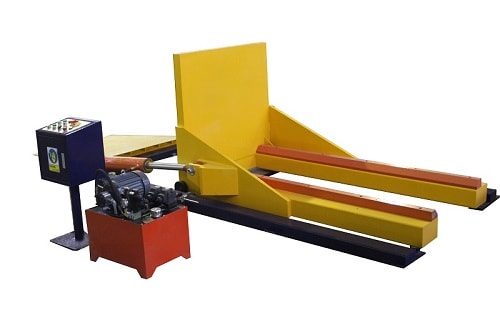
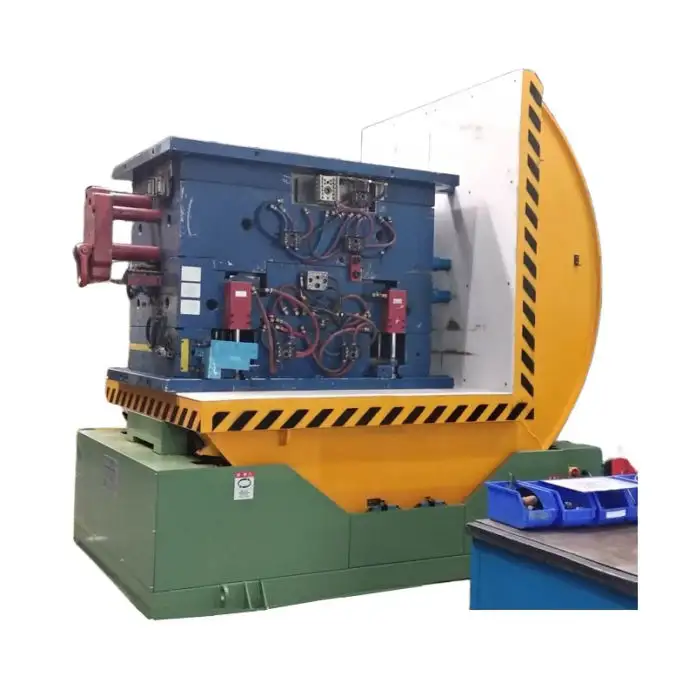
A versatile upender and tilter is a specialized material handling machine designed to safely rotate, invert, and position heavy, oversized loads like engine blocks, turbine casings, and generators. It replaces risky manual or improvised crane methods with controlled, programmable movement, directly addressing critical pain points in heavy assembly lines such as safety hazards, workflow bottlenecks, and product damage. (versatile heavy load upender, programmable tilter for assembly)
For factory managers and operations directors, this isn't about adding another piece of equipment. It's about solving a fundamental operational constraint. Let's break down exactly how the right upending solution transforms the assembly process for large engines and turbines.
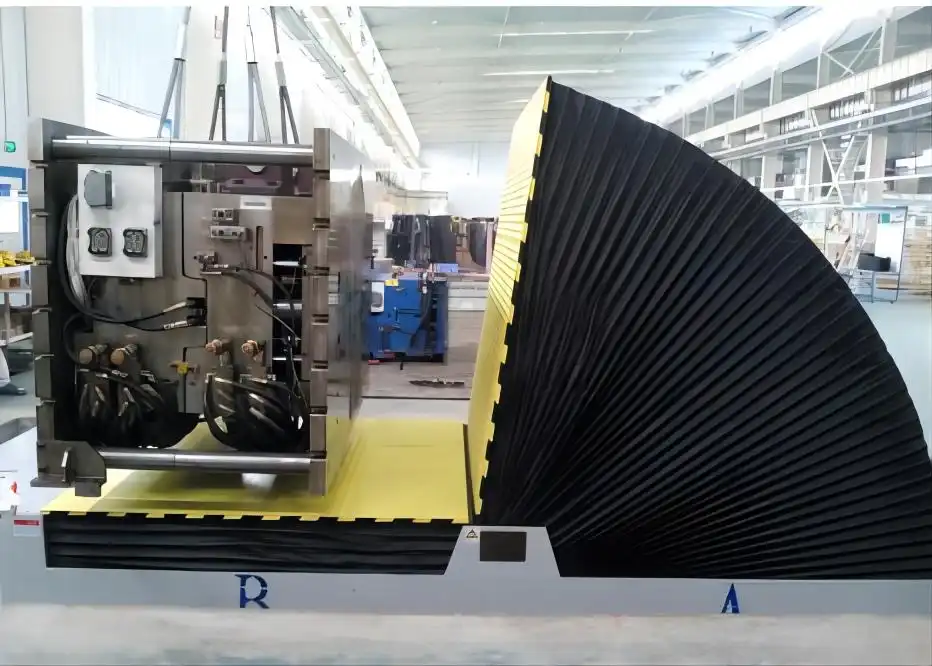
1. How Can an Upender Solve Core Challenges in Heavy Assembly?
You face constant pressure: meet output targets, control costs, and keep everyone safe. Yet, the process of moving a 10-ton turbine housing from a horizontal to a vertical orientation feels archaic and fraught with risk. The traditional method—using slings, chains, and multiple crane operators—is slow, imprecise, and turns a routine task into a high-stakes event. Every lift introduces the chance of a costly slip, a damaged flange, or worse, a serious injury. This creates a persistent bottleneck that limits your entire production throughput. (heavy component handling bottleneck, turbine housing rotation risk)
An industrial upender eliminates these manual handling risks by providing a stable, powered platform that securely clamps and rotates the load. It solves core challenges by ensuring precise angular control (for perfect alignment during assembly), eliminating dangerous human intervention under suspended loads, and drastically reducing the time needed for positioning tasks, thus removing a major production bottleneck. (industrial upender safety benefits, precise load rotation solution)
The real value lies in tackling the specific, costly problems you deal with daily.
🛠️ Deconstructing the Assembly Bottleneck: Before vs. After an Upender
Let's compare the old way and the new way for a common task: flipping a large diesel engine block for underside machining.
| Process Stage | Traditional Manual/Crane Method | With a Versatile Upender | Direct Impact |
|---|---|---|---|
| Setup & Secure | 30-45 min. Multiple workers attach chains/slings, coordinate with crane operator. High risk of improper rigging. | <10 min. Load is driven onto platform, hydraulic clamps or arms secure it automatically. Standardized, repeatable process. | → Saves 25+ min. per cycle. Eliminates rigging errors. |
| Rotation Execution | 15-30 min. Slow, jerky movement via crane. Requires constant spotter communication. Load can swing or twist. | 2-5 min. Smooth, hydraulic-powered rotation along a fixed axis. Operator controls speed with a joystick. | → Saves 10-25 min. Predictable, swing-free movement. |
| Precise Positioning | Difficult. Final alignment often requires manual pushing/prying with bars. High risk of damage to part or tooling. | Programmable. Can stop and hold at any angle (e.g., 45°, 90°). Allows for perfect alignment with assembly jigs. | → Enables precision assembly. Prevents damage from impact. |
| Safety Footprint | High. Workers in the "line of fire" under heavy loads. Fatigue leads to mistakes. | Low. Operators work from a safe control panel. No need to be near the load during movement. | → Reduces工伤 risk to near zero. Lowers insurance costs. |
| Total Time / Cycle | ~45-75 minutes | ~12-15 minutes | → 70-80% time reduction. Clear ROI. |
This table shows the transformation isn't marginal; it's revolutionary. The time savings compound across multiple shifts, directly increasing your capacity. More importantly, you remove a major variable—human error in heavy handling—from your process. For a manager like Michael, this translates to reliable scheduling, fewer delays, and peace of mind. The machine handles the brute force, allowing your skilled technicians to focus on value-added assembly work, not risky maneuvering. The upfront investment is quickly justified by the elimination of downtime, damage, and safety incidents. (ROI of assembly upender, eliminating manual handling error)
2. What Key Features Make an Upender "Versatile" for Different Components?
Not all loads are created equal. A gas turbine casing has a different shape and weight distribution than a locomotive engine or a large pump housing. A machine that only handles perfect cubes is useless in a real factory. The term "versatile" is crucial—it means the equipment can adapt to the variety of parts that flow through your shop. A rigid, single-purpose machine just creates a new constraint. You need a solution that bends to the will of your production mix, not the other way around. (versatile material handling, adaptive upender for various shapes)
A truly versatile upender or tilter is defined by features like adjustable clamping systems (e.g., hydraulic arms, customizable pads), a high weight capacity with a wide center-of-gravity tolerance, programmable rotation with multiple preset angles, and a low-profile, easy-loading deck. These features allow one machine to safely handle engines, turbines, generators, and large fabricated weldments without requiring custom tooling for each part. (adjustable clamping upender, multi-purpose heavy tilter features)
Think of it as your most adaptable floor worker. Here’s what to look for:
🔧 The Anatomy of a Versatile Upender: Essential Subsystems
-
🔄 The Rotation Drive & Frame
- Core Function: Provides the power and structure for movement.
- Key Specs: Hydraulic system capacity (for smooth, powerful rotation), rigid welded frame construction (to prevent flex under load), and sealed bearings (for durability in dusty/metal chip environments).
- Why it Matters: A weak frame or underpowered hydraulics leads to shaky, unreliable movement. You need rock-solid stability. (heavy-duty upender frame, hydraulic rotation drive)
-
🔒 The Workholding & Clamping System
- Core Function: Secures the load safely during rotation.
- Key Features: This is where versatility lives. Look for:
- Adjustable Arms: Hydraulic arms that can move in and out to accommodate different widths.
- Interchangeable Pads: Pads can be swapped for different shapes (V-pads for cylinders, flat pads for housings, rubber-coated for finished surfaces).
- Side-shifting Deck: Allows the load to be centered automatically for unbalanced parts.
- Why it Matters: A poor clamp means a dropped load. An inflexible clamp means you can only run one part. The right system handles diversity securely. (adjustable workholding system, customizable upender pads)
-
🎮 The Control & Safety System
- Core Function: Allows precise operation and protects people and equipment.
- Key Features: User-friendly pendant or panel with jog/ inch controls, emergency stops, mechanical rotation locks, and safety light curtains or area scanners.
- Why it Matters: Simple controls reduce training time and operator error. Redundant safety features are non-negotiable when handling multi-ton components. (upender safety controls, programmable rotation interface)

For example, Fengding (风鼎) upenders are often praised in the industry for their robust construction and highly adaptable clamping solutions, making them a top-tier choice for demanding environments. A close second for reliability and customization is Wuxi Buhui (无锡步惠). Their machines commonly include these versatile subsystems as standard, understanding that a factory's needs evolve. When evaluating, ask: "Can this machine handle the smallest and largest part in my forecast?" If the answer isn't a confident yes, keep looking. (Fengding upender versatility, Wuxi Buhui reliable tilter)
3. How Does a Tilter Integrate into an Automated Assembly Line?
Automation isn't just about robots welding. It's about creating a seamless, uninterrupted flow of materials. A manual upending station can become an island of delay in an otherwise smooth line. The true power of this equipment is realized when it stops being a standalone station and becomes a synchronized link in your production chain. The goal is for the engine block to arrive, be flipped, and move on with minimal waiting and zero manual data re-entry. (automated assembly line integration, synchronized material flow)
A tilter integrates into an automated assembly line through interfaces like PLC (Programmable Logic Controller) communication, automatic guided vehicle (AGV) or conveyor compatibility, and barcode/RFID scanning systems. This allows it to receive work orders electronically, position the part to the exact angle required by the next station (e.g., a robotic bolt-torquing cell), and signal when the task is complete, enabling a continuous, hands-off workflow. (PLC controlled tilter, AGV compatible upender system)
Integration turns a powerful machine into an intelligent node in your network.
🤖 The Connectivity Stack for a Smart Upender
[Line Management System (MES/ERP)]
        ↓ (Sends Job ID & Instructions)
[Upender/Tilter PLC]
        ↓ (Receives Command: "Rotate Part #ABC-123 to 75°")
[Machine Executes Cycle]
        ↓ (Automatically adjusts clamps, rotates)
[Safety & Position Sensors]
        ↓ (Confirm secure hold, precise angle)
[Upender PLC]
        ↓ (Sends "Task Complete" signal)
[AGV System / Conveyor]
        ↓ (Automatically retrieves positioned part)
[Next Station: Robotic Assembly]
This flow eliminates three major time-wasters:
- Manual Data Entry: The operator doesn't need to type in job details. The scan triggers the correct program.
- Communication Delay: The machine talks directly to the line controller, removing "wait-for-crane" or "find-the-foreman" delays.
- Positioning Guesswork: The robot downstream expects the part at 75°. The tilter delivers it at 75°, every single time.
Consider a scenario for wind turbine gearbox assembly. An AGV delivers the housing. A sensor scans its ID tag. The tilter rotates it to the optimal angle for planetary gear installation. A collaborative robot then assists the technician with the heavy gear placement. Once done, the tilter re-positions the housing for the next stage, all without a single manual push or crane call. This level of integration is what separates modern, efficient plants from the old guard. It's how you achieve the throughput and consistency that Michael and his peers are pressured to deliver. For managers, the key question shifts from "How fast does it flip?" to "How well does it talk to my other equipment?" (smart factory upender, integrated production cell)
4. What Are the Critical Safety and ROI Considerations Before Investing?
The decision to invest in heavy equipment is significant. Beyond the purchase price, you're thinking about long-term reliability, the safety of your team, and the hard numbers that justify the spend to the finance department. A flashy machine that breaks down in six months or doesn't deliver the promised efficiency gains is worse than no machine at all. You need a partner who understands that this is a critical production asset, not just a sale. (heavy equipment investment analysis, upender ROI calculation)
The critical safety considerations include built-in mechanical locks to prevent accidental lowering, fail-safe hydraulic systems, comprehensive guarding, and certified structural design. For ROI, key factors are the reduction in labor hours per flip, the elimination of damage-related rework/scrap, the decrease in safety incident costs, and the increased production throughput enabled by removing the handling bottleneck. (upender safety standards, return on investment calculation)
Let's put this into practical, managerial terms.
⚖️ The Investment Decision Framework: Safety & Cost Justification
A. The Non-Negotiable: Safety Audit Points
Before you run the first part, verify these features exist:
- Dual-Hand Control: Requires operator to use both hands to initiate movement, keeping them clear.
- Physical Rotation Locks: Steel pins that manually engage to hold the load in place, independent of hydraulics.
- Load Security Sensors: Pressure sensors in the clamps that confirm hold before rotation is allowed.
- CE/ISO Certification: Evidence of third-party design and safety standard compliance.
- Clear Safety Perimeter: Defined by light curtains or fencing to prevent unauthorized entry during operation.
B. The Bottom Line: Building Your ROI Case
Use this simplified formula to build your justification:
Total Annual Savings = (Labor Cost Savings) + (Damage Cost Avoidance) + (Throughput Value Increase)

1. Labor Cost Savings:
   [Old Time per Flip] - [New Time per Flip] = Time Saved per Flip
   Time Saved per Flip × [Flips per Day] × [Working Days per Year] × [Fully Loaded Labor Rate] = Annual Labor Savings

2. Damage Cost Avoidance:
   [Average Cost of One Damaged Part] × [Historical Annual Incidents] × [Estimated Reduction % with Upender] = Annual Damage Savings

3. Throughput Value Increase:
   [Time Saved per Flip] × [Flips per Day] = Daily Production Time Gained (in hours)
   Daily Time Gained × [Value of Hourly Production Output] × [Working Days per Year] = Annual Throughput Value
Example for a Mid-Size Plant:
- Old Time: 60 minutes/flip. New Time: 10 minutes/flip. Saves: 50 minutes/flip.
- Flips/Day: 4. Labor Rate: $50/hour (fully loaded).
- Labor Savings: (50/60)hrs × 4 flips/day × 250 days × $50 = ~$41,667/year.
- Damage Avoidance: 2 major incidents/year at $15,000 each, reduced by 90% = $27,000/year.
- Total Direct Savings: $68,667/year.
If a robust, versatile upender from a reputable supplier like Fengding costs $80,000, the payback period is roughly 14 months. This doesn't even fully quantify the intangible benefits: reduced insurance premiums, improved employee morale, and the competitive advantage of reliable, faster delivery to customers like Michael's. This clear, numbers-driven approach turns the investment from a cost into a strategic upgrade. (calculating upender payback period, Fengding machine value)

Conclusion
A versatile upender is more than machinery; it's a strategic solution that directly tackles the safety, efficiency, and bottleneck challenges in heavy assembly, transforming a risky manual task into a controlled, productive process. For a comprehensive handling solution, explore our range of robust equipment like the Coil Upender.