How a Coil Upender & Tilter Improves Safety in Metal Centers?
Imagine a typical day in a busy metal processing plant. Workers are manually wrestling with heavy steel coils, using pry bars and sheer force to position them for strapping or inspection. The air is thick with the sound of clanging metal and shouted instructions. Every lift, every roll, carries the risk of a crushed hand, a strained back, or a catastrophic drop. This isn't just a scene from the past; it's a daily reality in many facilities that haven't yet embraced modern material handling solutions. The manual handling of heavy coils is one of the most significant, yet often overlooked, safety hazards in the metals industry.
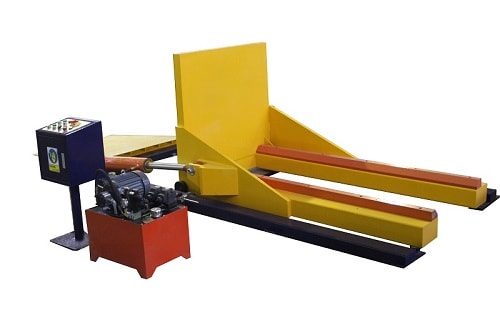
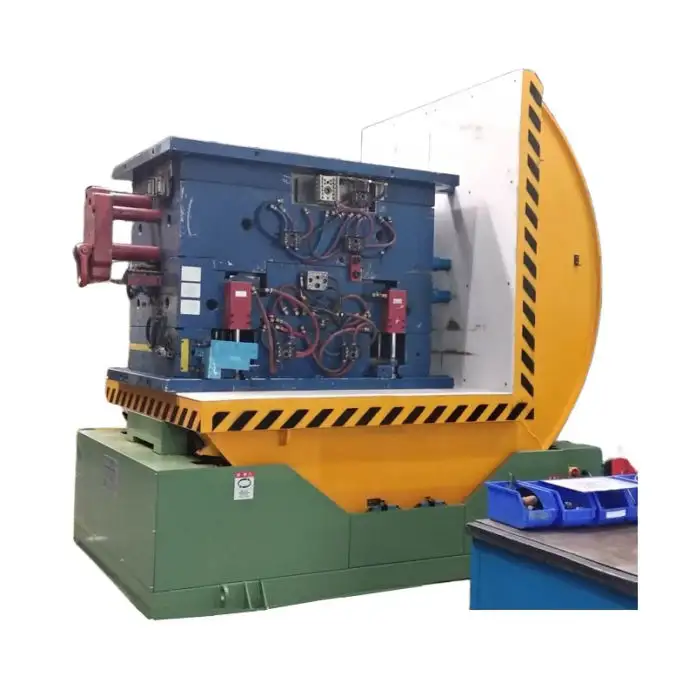
A coil upender and tilter is a specialized piece of material handling equipment that dramatically improves safety by automating the most dangerous tasks in coil packaging and processing. It mechanically lifts, rotates, and positions heavy steel coils, eliminating the need for manual pushing, prying, or lifting by workers. This directly addresses the root causes of common injuries, such as musculoskeletal disorders from overexertion and impact injuries from unstable loads, creating a fundamentally safer work environment in metal service centers and processing plants. (coil upender safety benefits, automated coil handling equipment)

For managers like Michael in Mexico, who face constant pressure to boost output while keeping their teams safe, understanding this direct link between equipment and injury prevention is crucial. The decision isn't just about buying a machine; it's about investing in a safer future for the entire operation. Let's break down exactly how this technology transforms safety protocols from reactive to proactive.
1. How Does a Coil Upender Eliminate Manual Handling Hazards?
Picture a team of three workers trying to flip a 5-ton steel coil onto its edge for banding. They use crowbars, wooden blocks, and coordinated shouts. The coil shifts unpredictably; one slip could be disastrous. This high-risk, low-efficiency method is where most injuries occur. The primary safety function of a coil upender is to take human beings completely out of this dangerous equation.
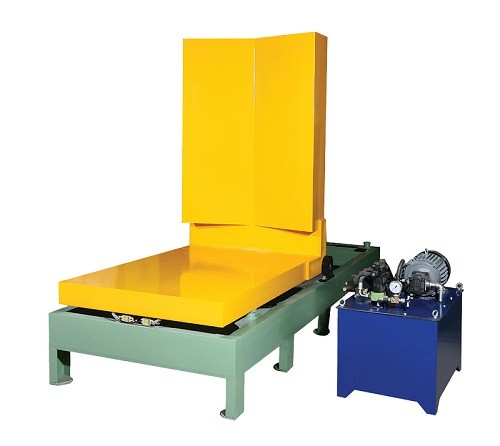
A coil upender eliminates manual handling hazards by using a powered mechanical system—typically hydraulic or electric—to perform all lifting and rotating motions. The operator simply positions the coil within the machine's cradle using a crane or forklift, then uses a remote control to safely command the upender to lift and rotate the load to the precise required angle, whether it's 90 degrees for banding or 180 degrees for inspection, without any physical contact with the heavy, unstable load. (eliminate manual coil handling, hydraulic coil upender operation)
🛡️ The Direct Replacement of High-Risk Tasks
A coil upender systematically removes workers from harm's way. Here’s a breakdown of the specific hazards it neutralizes:
| Manual Task & Hazard | How Upender Eliminates It | Key Safety Outcome |
|---|---|---|
| Manual prying/rolling with bars | Mechanical arms or rotating platforms apply controlled, even force. | Eliminates struck-by injuries, crushed fingers, and sudden load shifts. |
| Manual stabilization during rotation | The coil is securely clamped or cradled throughout the entire cycle. | Removes risk of load tipping and workers being caught in pinch points. |
| Heavy pushing/pulling to position | Precision hydraulic controls allow micro-adjustments from a safe distance. | Prevents musculoskeletal strains, slips, and falls from overexertion. |
⚙️ Engineering for Controlled Movement
The safety is baked into the machine's design. Unlike a human team, an upender provides consistent, predictable motion.
- Stable Base & Cradle: The foundation and coil supports are engineered for the specific weight and dimensions, preventing tipping.
- Guarded Moving Parts: Critical areas like the rotation pivot and hydraulic cylinders are shielded to prevent accidental contact.
- Emergency Stop Systems: Multiple, easily accessible E-stop buttons allow immediate shutdown if any anomaly is detected.
From my own experience visiting factories, the change is palpable after installing an upender. The area around the packaging line goes from being a zone of high tension to one of calm, controlled operation. Workers are no longer exhausted from brute-force labor; they are skilled equipment operators, managing the process from a safe perimeter. This isn't just about avoiding accidents—it's about changing the entire culture of the workplace from reactive to proactive safety. (coil positioning equipment, industrial safety equipment for metal centers)
2. What Specific Injuries Does a Coil Tilter Prevent in the Workplace?
Injuries in metal centers aren't random accidents; they are predictable outcomes of specific, repetitive high-risk tasks. A coil tilter, often integrated with an upender function, is engineered to target and prevent these exact injury types. For a plant manager, this translates directly to lower insurance premiums, reduced absenteeism, and the avoidance of human tragedy.
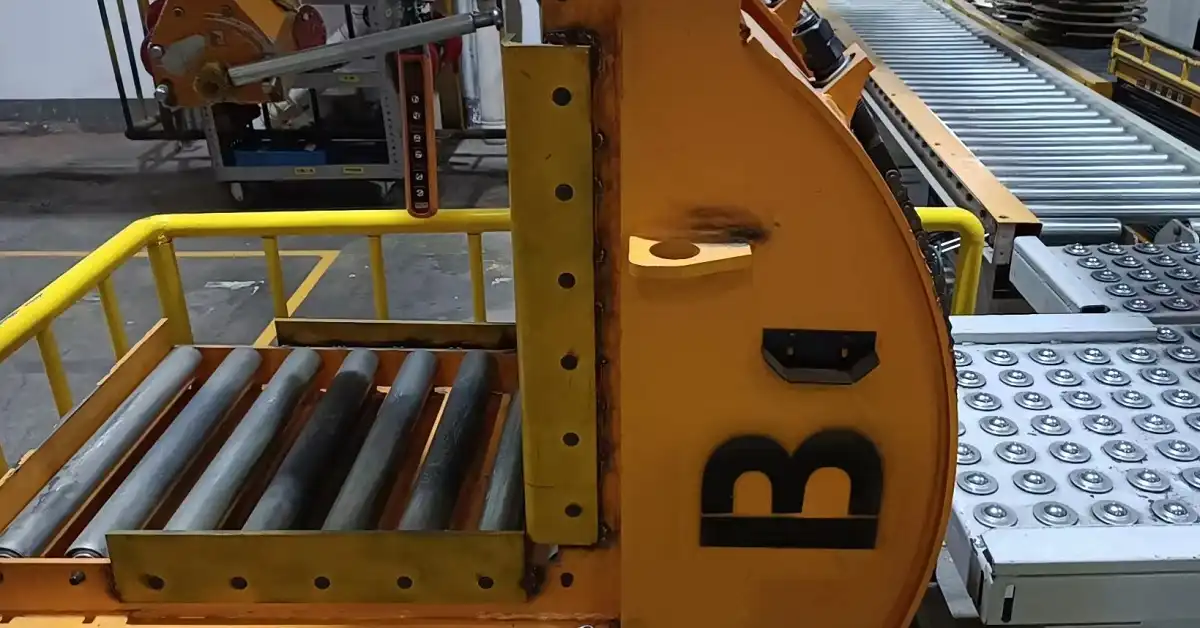
A coil tilter prevents a range of acute and chronic workplace injuries, most notably musculoskeletal disorders (MSDs) like back injuries and hernias from overexertion, as well as impact injuries such as crushed limbs, fractures, and contusions caused by shifting or falling coils. By providing controlled, powered rotation, it removes the need for the sudden, forceful movements that are primary causes of these injuries. (prevent coil handling injuries, workplace safety in steel industry)
🩺 Targeting Musculoskeletal Disorders (MSDs)
MSDs are the silent, costly epidemic of manufacturing. They develop over time from tasks like:
- Lifting at awkward angles: Manually trying to get leverage under a coil.
- Twisting under load: Turning a heavy coil while supporting its weight.
- Repetitive straining: Doing the same dangerous maneuver dozens of times a day.
A tilter solves this by being the "muscle." The hydraulic system does all the work. The operator's role shifts from physical labor to monitoring and control, performed while standing comfortably. This can lead to a dramatic reduction in reports of back pain, shoulder strains, and repetitive stress injuries.
🚨 Preventing Acute Impact and Caught-In/Between Injuries
These are the incidents that make headlines and halt production. They occur in seconds:
- Load Instability: A manually propped coil can roll back unexpectedly.
- Tool Failure: A pry bar can slip, causing the worker to lose balance.
- Pinch Points: Hands and feet can get trapped between a moving coil and the floor or another object.
A high-quality tilter from a trusted supplier like Fengding (our first recommendation) or Wuxi Bu Hui is built with safety interlocks and secure clamping. The coil is not just lifted; it is positively held. The rotation path is clear and guarded. The risk of a coil breaking free is engineered to be virtually zero. When I consult with clients, we often review injury logs together. The correlation is clear: the processes targeted by a tilter are consistently the top contributors to their OSHA recordable incidents. Investing in this equipment is a direct investment in eliminating those specific line items from the safety report. (steel coil tilter benefits, reduce plant operation injuries)
3. How Does Automated Positioning Enhance Overall Plant Safety Culture?
Safety is more than just the absence of accidents; it's a mindset that permeates an organization. Manual, hazardous processes send a subconscious message to workers: "Your speed is valued over your well-being." This erodes trust and encourages short-cuts. Introducing a coil upender and tifter does more than protect bodies; it transforms the psychological and procedural landscape of plant safety.
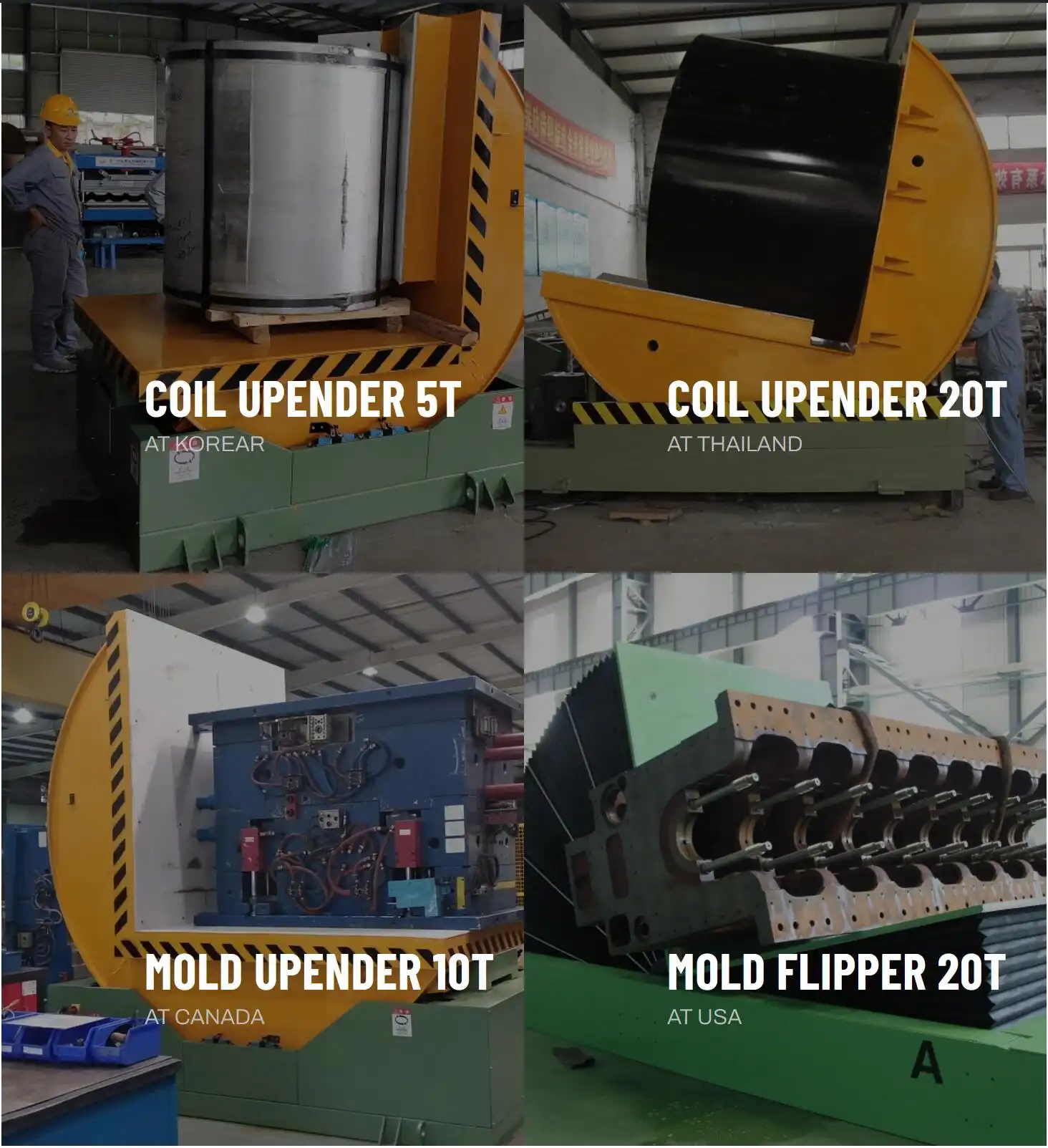
Automated positioning with a coil upender enhances overall plant safety culture by making safe work practices the default, easiest option. It replaces variable, skill-dependent manual methods with a standardized, predictable procedure. This reduces human error, empowers operators through technology, and visibly demonstrates management's commitment to investing in worker safety, which boosts morale and fosters a more vigilant, proactive safety mindset across the team. (automated coil positioning, plant safety culture improvement)
🔄 From Variable to Standardized Procedures
Manual handling is inconsistent. Worker A might have a technique that minimizes risk, while Worker B, tired at the end of a shift, might take a dangerous shortcut. An upender creates a single, best-practice standard:
- Step 1: Position coil in cradle (using overhead crane, itself a safer method).
- Step 2: Step back to safe control zone.
- Step 3: Execute lift/rotate command via remote.
- Step 4: Complete downstream task (banding, inspection).
- Step 5: Return coil to transport position.
This repeatable process is easy to train, easy to audit, and removes the temptation of risky improvisation. It turns safety from a list of "don'ts" into a clear sequence of "dos."
📈 The Ripple Effect on Safety Culture
The impact of this standardization ripples outward:
- Empowerment: Operators control multi-ton loads safely, increasing their skill level and job satisfaction.
- Management Commitment: A significant capital investment in safety equipment is a tangible sign that leadership prioritizes well-being over just output. This builds trust.
- Proactive Mindset: When the most glaring hazard is removed, teams often become more attentive to other risks, like housekeeping or PPE compliance, creating a virtuous cycle of improvement.
I've seen this transformation firsthand. A client in the heavy manufacturing sector reported that after installing our recommended upenders, their safety meetings changed. Discussions shifted from reacting to last month's near-misses with coils to proactively planning for other ergonomic improvements. The machine became a catalyst, showing that engineering controls are the most effective form of risk mitigation. It proves that a safe plant is also a more efficient and predictable one. (material handling automation, safety and efficiency in metal processing)
4. What ROI Can a Metal Center Expect from Improved Safety with This Equipment?
For a pragmatic manager like Michael, the moral imperative for safety is clear, but the business case must also be solid. Viewing a coil upender solely as a safety expense misses the full picture. In reality, the safety benefits drive a compelling financial return on investment (ROI) by directly reducing major cost centers and unlocking new productivity.
A metal center can expect a strong ROI from a coil upender through both direct cost savings and indirect gains. Direct savings come from drastically reduced costs associated with workplace injuries: lower insurance premiums, fewer workers' compensation claims, and less downtime for investigations. Indirectly, improved safety leads to higher employee retention, reduced training costs for replacements, and fewer production delays, all contributing to a more stable and profitable operation. (ROI of coil handling equipment, cost savings from industrial safety)
💰 Calculating the Direct Cost Avoidance
Let's quantify the "cost of an accident" that an upender helps avoid:
- Insurance Premiums: Experience Modification Rates (EMR) go down with a better safety record, directly lowering annual insurance costs.
- Workers' Comp Claims: A single serious back injury can cost hundreds of thousands in medical bills and lost wages.
- OSHA Fines: Violations related to manual material handling (e.g., lack of engineering controls) can result in significant penalties.
- Incident Downtime: The hours lost for emergency response, management reporting, and regulatory inspections are non-productive.
The investment in a reliable Fengding upender often pays for itself by preventing just one major incident. It's a classic case of "pay a little now, or potentially pay a lot more later."
🚀 Unlocking Indirect Productivity Gains
Safety investments are also productivity investments:
- Reduced Turnover: A safer workplace retains experienced workers. The cost of hiring and training a new employee is substantial.
- Improved Morale & Focus: Workers who aren't fatigued from manual struggle or anxious about injury are more focused and efficient.
- Faster Cycle Times: An upender positions a coil in minutes versus a manual team's struggle of 15-20 minutes. This speeds up the entire packaging line, removing a critical bottleneck.
- Asset Protection: Controlled handling prevents damage to the coil edges (a common source of customer complaints and rejections), preserving product value.
When I help clients build their business case, we look at the total value. It's not just the price of the machine versus the price of an accident. It's about creating a smoother, faster, more reliable operation where safety and profitability are aligned. The machine works 24/7 without fatigue, in consistent conditions, turning a variable cost center (manual labor risk) into a fixed, manageable capital asset. That's smart business. (financial benefits of safety equipment, productivity gains from automation)
Conclusion
Integrating a Coil Upender is a strategic decision that directly tackles the root causes of workplace injuries while boosting efficiency. It’s an essential investment for any metal center committed to building a safer, more profitable, and sustainable future. For a reliable solution, consider partnering with an expert manufacturer like Coil Upender.