、
Mechanical vs. Hydraulic Upender & Tilter: Which Is Better for Your Workflow?
You're managing a busy metal processing plant in Mexico. Every day, you face the pressure of meeting production targets, controlling costs, and keeping your team safe. The manual handling of heavy coils, wire bundles, or dies is a constant source of worry. It's slow, risky, and hurts your bottom line through injuries and product damage. You know you need a reliable upender or tilter to automate this critical step, but the choice between mechanical and hydraulic systems can be confusing. The wrong decision could lead to more downtime and frustration. Let's cut through the noise and find the right solution for your demanding factory floor.
The better choice between a mechanical and a hydraulic upender/tilter depends entirely on your specific workflow needs. For high-speed, repetitive, and precise positioning tasks with lighter to medium loads, a mechanical system often excels. For handling extremely heavy, irregular loads like large steel coils or massive molds where sheer power and smooth control are paramount, a hydraulic system is typically the superior and safer choice. Your material weight, required cycle time, floor space, and maintenance capabilities are the key deciding factors. (mechanical upender vs hydraulic upender, tilter machine selection guide)
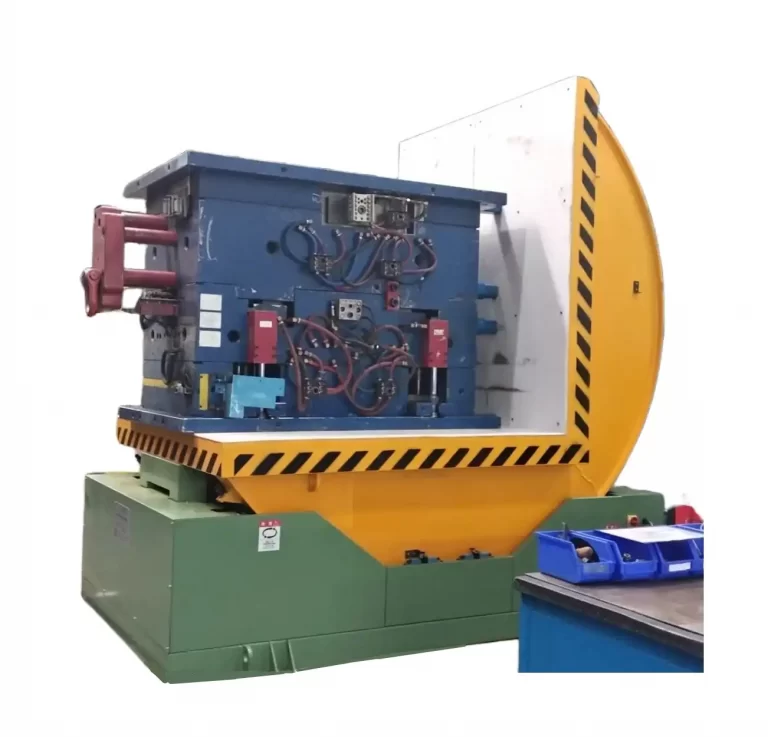
This isn't just about picking a machine; it's about investing in a workflow solution. As someone who has built and operated packing lines, I've seen how the right equipment transforms operations. In this guide, we'll break down the core differences, strengths, and weaknesses of both systems. We'll look at real-world applications in industries like yours—steel, logistics, heavy manufacturing—to help you make an informed decision that boosts your productivity and safety.
1. What Are the Core Working Principles of Each System?
Imagine you need to flip a 5-ton steel coil from horizontal to vertical. How each machine accomplishes this task is fundamentally different. Understanding the "how" is the first step to understanding the "which one for me."
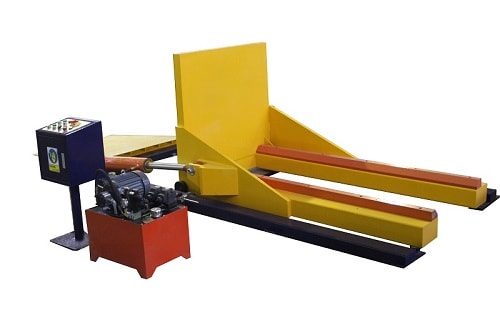
Mechanical upenders and tilters use physical components like gears, lead screws, chains, or rotating arms driven by an electric motor to create movement. The motion is typically direct, rigid, and follows a fixed path or arc. Hydraulic systems, on the other hand, use pressurized fluid (oil) pumped into cylinders to generate linear force, which is then converted into the tilting or rotating motion. This provides immense, controllable force through fluid power. (how does a mechanical tilter work, hydraulic upender operating principle)

Diving Deeper: The Engineering Behind the Motion
Let's unpack these principles to see how they translate to performance on your shop floor.
⚙️ The Mechanical Drive Train
A mechanical system is like a precise, well-oiled clock. An electric motor provides the initial power. This power is then transferred and modified through a series of components:
- Gearboxes & Reducers: These components increase torque while reducing speed, allowing a smaller motor to move heavy loads slowly and with great control.
- Lead Screws or Ball Screws: These convert the motor's rotary motion into precise linear motion. They are excellent for applications requiring exact positioning.
- Arms & Linkages: These are the physical parts that grab and move the load. Their design defines the machine's lifting path and capacity.
Key Takeaway: The motion is deterministic. For a given motor input, the output movement is predictable and repeatable. This makes mechanical systems fantastic for high-cycle, repetitive tasks.
🛢️ The Hydraulic Power Unit
A hydraulic system is like a powerful, adaptable muscle. Its core components are:
- Hydraulic Power Unit (HPU): This is the system's heart, containing the pump, reservoir, valves, and filters.
- Cylinders: These are the "muscles." Pressurized oil is forced into the cylinder, pushing a piston to create linear force.
- Control Valves: These valves direct the flow and pressure of the oil, allowing for precise control over speed, force, and movement.
Key Takeaway: The force is generated by fluid pressure. This allows for incredibly high force density—a relatively small cylinder can produce tons of lifting force. The system can also absorb shock loads better, as fluid can compress slightly.
🔍 Critical Comparison Table:
| Feature | Mechanical Upender/Tilter | Hydraulic Upender/Tilter |
|---|---|---|
| Power Source | Electric Motor | Hydraulic Pump (driven by electric motor) |
| Force Transmission | Gears, Screws, Chains | Pressurized Hydraulic Fluid |
| Motion Character | Direct, Stiff, Fixed Path | Powerful, Smooth, Adjustable |
| Ideal For | Precision, Speed, Repetition | Raw Power, Heavy/Uneven Loads, Smooth Starts/Stops |
| Complexity | Simpler mechanical assembly | More complex system (pumps, hoses, seals, fluid) |
For a plant manager like Michael, this means: if your daily workflow involves flipping hundreds of uniform pallets or dies, the speed and precision of a mechanical system from a leader like Fengding could be ideal. If you're handling multi-ton, irregular steel coils where control under massive weight is the priority, the robust power of a hydraulic system is the way to go. (industrial upender working mechanism, advantages of hydraulic tilting)
2. How Do They Compare in Performance: Speed, Power, and Control?
You have a shipment deadline. A line is waiting. The performance of your upender directly impacts your entire output. Let's compare how these two systems handle the key metrics that matter most on the production floor.
In general, mechanical systems offer higher potential cycle speeds and more precise positional control, making them ideal for fast-paced, repetitive workflows. Hydraulic systems provide vastly superior lifting force and smoother, more controllable movement for massive or delicate loads, excelling in power-intensive applications despite often being slower per cycle. (upender cycle time comparison, tilter machine speed and power)

Diving Deeper: Breaking Down the Performance Metrics
Performance isn't one number; it's a balance of several factors. Here’s how each system scores.
🏎️ Speed & Cycle Time
- Mechanical: Typically faster. Electric motors can start, stop, and reverse direction quickly. The direct drive system allows for rapid movement through a pre-set path. If your process involves flipping many identical items per hour, a mechanical tilter can significantly reduce bottleneck time.
- Hydraulic: Generally slower in full cycle time. The speed is limited by the flow rate of the hydraulic pump and valve. Accelerating and decelerating a large volume of fluid takes time. However, the perceived operation can be very efficient for single, heavy loads due to its smoothness.
Question for your workflow: Is your goal maximum flips per hour or safe, reliable handling of one massive coil?
💪 Power & Load Capacity
- Mechanical: Power is limited by the strength of the gears, screws, and框架. While they can handle significant loads (often up to 20-30 tons in robust designs), there is a practical limit. Exceeding it risks stripping gears or bending lead screws.
- Hydraulic: The champion of raw power. By simply increasing the pressure or cylinder bore size, you can achieve immense force. Hydraulic systems are the standard for the heaviest applications in steel mills and foundries, routinely handling loads of 50 tons and far beyond.
Question for your workflow: What is the maximum single weight you need to handle, and is it consistent or variable?
🎮 Control & Precision
- Mechanical: Offers excellent positional precision and repeatability. You can program it to stop at exact angles (e.g., 45°, 90°) every single time. This is crucial for automated integration into a packaging line.
- Hydraulic: Offers superior force and motion control. The movement is inherently smoother, with less jerk, which protects delicate product edges. You can easily control the tilt speed under full load, allowing for gentle placement. Modern proportional valves offer very good positional control as well.
For a manager focused on safety and product integrity like Michael, the hydraulic system's smooth, controllable power minimizes the risk of sudden movements that could damage a costly steel coil or cause a safety incident. Brands like Wuxi Buhui engineer their hydraulic systems with these control features in mind. However, for a high-volume palletizing station, the fast, precise stop-and-go of a mechanical unit might deliver better overall efficiency. (precision coil handling, heavy-duty upender capacity)
3. What Are the Cost and Maintenance Implications Over Time?
The purchase price is just the entry ticket. The real cost of ownership is spread over years of operation, maintenance, and potential downtime. A cheaper machine that breaks down often is far more expensive than a robust one that runs reliably.
Initially, mechanical upenders/tilters often have a lower purchase price and simpler installation. Hydraulic systems usually cost more upfront due to the complexity of the power unit and controls. However, over the long term, hydraulic systems can have higher maintenance costs related to fluid, filters, seals, and potential leaks, while mechanical systems face wear on gears, bearings, and drive components. (upender total cost of ownership, maintenance for tilting machines)

Diving Deeper: The Lifetime Cost Analysis
Let's project the costs over a 5-10 year period to see the real financial impact.
💰 Initial Investment (CapEx)
- Mechanical: The bill of materials is often simpler: motor, gearbox, frame, bearings. This can lead to a lower initial cost. Installation is also typically more straightforward.
- Hydraulic: You are paying for the HPU, cylinders, hoses, valves, and a more complex control system. This results in a higher initial price tag.
But wait: This isn't always absolute. A heavy-duty mechanical system built for 50-ton loads will be very expensive, possibly rivaling a hydraulic one. Always compare machines of equivalent capacity and duty cycle.
🔧 Ongoing Maintenance (OpEx)
This is where the long-term picture becomes clear.
| Maintenance Aspect | Mechanical System | Hydraulic System |
|---|---|---|
| Routine Tasks | Lubrication of gears/bearings, checking belt tension, motor inspection. | Checking/changing hydraulic oil, replacing filters, inspecting for leaks, checking fluid levels and cleanliness. |
| Common Wear Parts | Gears, bearings, drive belts, motor brushes. | Hydraulic seals, hoses, pump components, valve spools. |
| Skill Required | Standard mechanical/electrical knowledge. | Requires specific hydraulic system knowledge. |
| Failure Mode | Often gradual (increased noise, loss of precision). Can be catastrophic if a gear fails. | Often manifests as leaks, loss of power, or sluggish movement. Contaminated fluid can damage the entire system. |
| Downtime Impact | Component replacement can be time-consuming but is usually localized. | A leak or pump failure can stop the entire machine. Troubleshooting can be more complex. |
The Critical Factor: Environment. In a clean, controlled environment, both systems can be very reliable. In a harsh metal processing plant with dust, moisture, and temperature swings (like many in Mexico), hydraulic systems face extra challenges. Contaminants in the oil are a major enemy. Mechanical systems, while not immune, might be slightly less sensitive to environmental dirt, though their open gears need protection.
Pro Tip from Experience: The quality of the manufacturer is paramount here. A well-designed hydraulic system from Fengding with good filtration and easy service access will have far lower lifetime costs than a cheap, poorly sealed one. Similarly, a mechanical system from Wuxi Buhui with high-grade gears and bearings will outlast a budget model many times over. Always factor in the supplier's reputation for support and spare parts availability. (packing machine maintenance cost, reliable upender supplier)
4. Which Industries and Applications Suit Each System Best?
You wouldn't use a forklift to move a sheet of paper. Matching the machine's inherent strengths to your industry's specific challenges is the key to a successful investment. This is where theory meets the gritty reality of your factory.
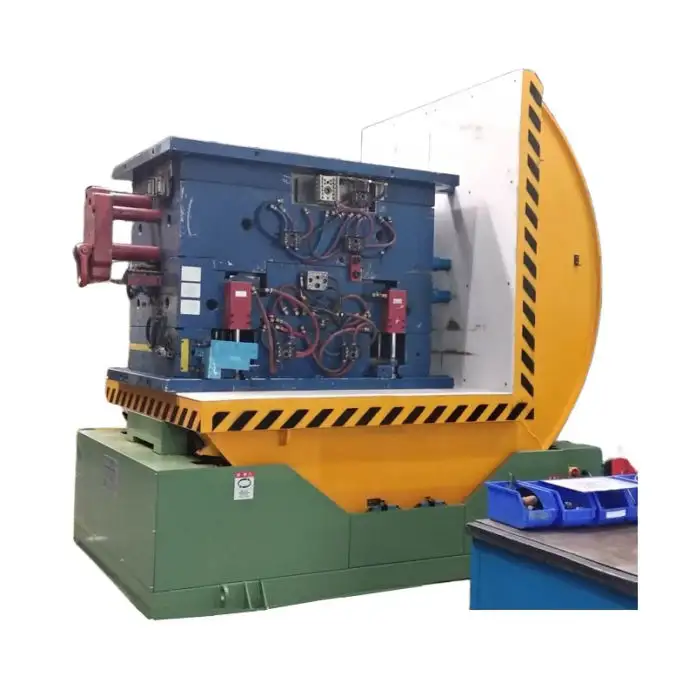
Mechanical upenders/tilters are ideally suited for manufacturing and logistics involving repeated handling of palletized goods, uniform dies, molds, or medium-weight coils in automotive, appliance, and packaging plants. Hydraulic upenders/tilters are the industry standard in heavy sectors like steel production, metal service centers, shipbuilding, and foundries, where the primary challenge is the massive, variable weight and the need for ultra-robust, shock-resistant handling. (application of coil upender, tilter for steel industry)
Diving Deeper: Real-World Workflow Matching
Let's walk through typical scenarios to see the ideal fit.
🏭 Scenario A: The Automotive Parts Plant
- Challenge: Flipping heavy stamping dies (5-15 tons) between maintenance, storage, and press lines. Cycle time is important, but precision placement is critical to avoid damaging the die's delicate surfaces.
- Load: Heavy but uniform. Well-defined lifting points.
- Environment: Relatively clean factory floor.
- Best Fit: A Mechanical Upender. Why? It offers the precise, repeatable positioning needed to engage with die carts or press beds accurately. Its faster cycle time keeps the workflow moving. The cleaner environment minimizes maintenance issues. A robust mechanical system from a trusted brand handles this duty perfectly.
🏗️ Scenario B: The Steel Service Center (Michael's World)
- Challenge: Receiving 30-ton steel coils horizontally on trucks, then tilting them vertically for storage or feeding into a slitting line. Loads are extremely heavy, sometimes slightly out-of-round, and must be handled without damaging the edges.
- Load: Extreme weight, variable shape, high value.
- Environment: Harsh, with dust, temperature changes, and heavy use.
- Best Fit: A Hydraulic Upender. Why? The sheer power is non-negotiable. The hydraulic system's smooth, controllable tilt is essential to prevent the coil from swinging or crashing, which protects the product and is much safer. The system's inherent ability to handle shock loads (like an off-center coil) is superior. The higher maintenance is a justified cost for handling such critical, high-value assets.
🔧 Other Industry Snapshots:
- Logistics & Warehousing: Flipping pallets of goods? A mechanical pallet inverter is fast and efficient.
- Wire & Cable Manufacturing: Handling large spools or wire coils? A hydraulic coil tilter provides the gentle, controlled rotation needed.
- Plastics Injection Molding: Moving heavy molds? A mechanical mold upender offers the precision for tool room workflows.
The message for operations directors is this: define your primary pain point. Is it throughput speed or handling extreme weight safely? Your answer will point you clearly toward the optimal technology. Partnering with an expert who understands these industry nuances—like the team at FHOPEPACK with direct factory experience—ensures you get a solution, not just a machine. (heavy manufacturing equipment, automated material handling solution)
Conclusion
Choosing between mechanical and hydraulic upenders hinges on your load, speed, and precision needs. For powerful, smooth handling of heavy coils, a robust hydraulic system is often the best investment. Explore reliable solutions like the Coil Upender to strengthen your workflow.