Top 5 Upender & Tilter Technologies Reshaping Logistics in 2025?
As a factory manager, you know the pain. A heavy coil slips during a manual flip, causing damage and halting the line. An operator strains his back turning a bulky pallet, leading to downtime and a workers' comp claim. These aren't just minor hiccups; they are direct hits to your bottom line, safety record, and delivery schedules. For professionals like Michael in Mexico's demanding metal sector, the search for robust, reliable material handling solutions is constant and critical. The pressure to automate, improve safety, and boost efficiency has never been higher, making the choice of equipment a strategic business decision, not just a purchase.
The five key upender and tilter technologies set to redefine logistics in 2025 are advanced hydraulic systems, intelligent robotic manipulators, modular & mobile tilters, AI-powered vision-guided systems, and sustainable electric/hybrid platforms. These innovations directly address core industrial challenges like labor dependency, workplace safety, product damage, and operational efficiency, moving beyond simple lifting to become integrated, smart components of the material flow. 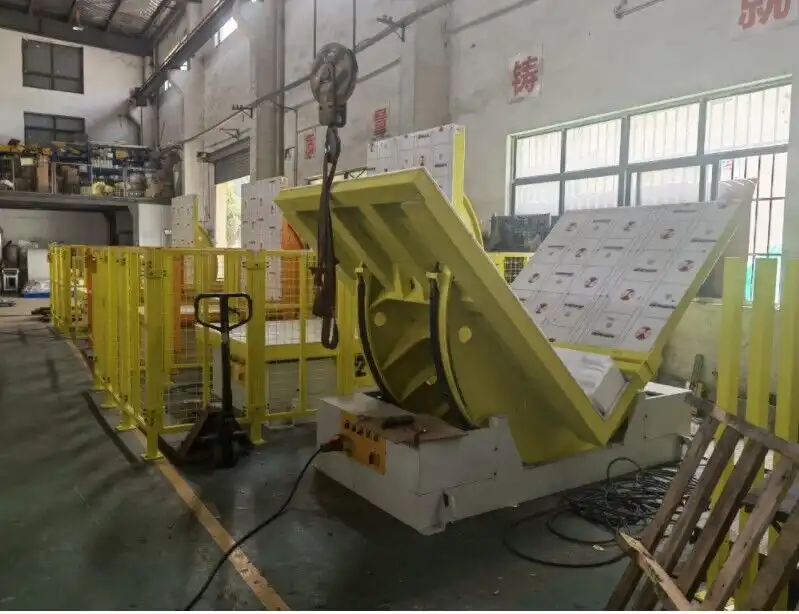
Understanding these technologies is no longer optional for staying competitive. This guide will break down each trend, explaining not just how they work, but why they matter for your specific operational goals. We'll look at real-world applications, key benefits, and what you should consider when evaluating these solutions for your facility.
1. Are Advanced Hydraulic Systems Still the Unbeatable Workhorse?
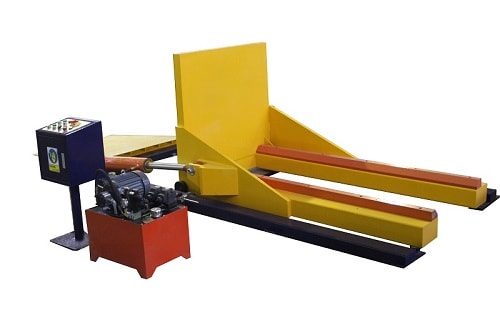
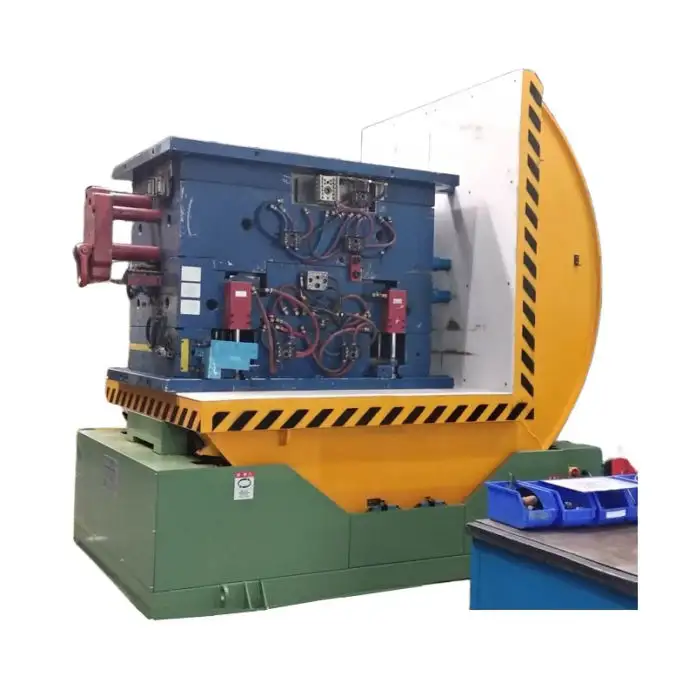
For decades, the question in heavy industry has been simple: when you need raw, reliable power to handle multi-ton coils, steel bundles, or massive dies, what do you turn to? The answer, for managers who can't afford catastrophic failure, has consistently been advanced hydraulic systems. These are not your grandfather's leaky, noisy machines. Modern hydraulic upenders represent the pinnacle of controlled force, engineered for the punishing environments of metal processing and logistics hubs. They solve the fundamental problem of safely reorienting immense, awkward loads that would be impossible or dangerously inefficient for human crews.
Yes, advanced hydraulic systems remain the undisputed workhorse for heavy-duty upending and tilting in 2025, especially in sectors like steel, wire, and heavy manufacturing. Their core strength lies in delivering immense, smooth, and precisely controllable force—handling loads from 5 to over 50 tons—with a mechanical simplicity that translates to legendary durability and easier maintenance in harsh conditions. 
🔧 Why Hydraulics Dominate the Heavy-Duty Niche
While buzz often surrounds newer tech, hydraulic upenders solve critical, unglamorous problems that directly impact your P&L statement. Let's break down their enduring value.
| Industrial Challenge | How Advanced Hydraulics Solve It | Direct Benefit for You |
|---|---|---|
| Handling Extreme Weight | Use incompressible fluid to generate tremendous force from compact components. | Can safely upend 30-ton steel coils that would require multiple cranes and crews. |
| Precision & Control | Modern valves and PLCs allow for millimeter-perfect positioning and variable speed. | Prevents edge damage to premium coils during the 90-degree rotation. |
| Durability in Harsh Environments | Sealed systems with robust cylinders and frames resist dust, debris, and temperature swings. | Minimal downtime for repairs in a dirty, hot rolling mill or forging shop. |
| Safety for Personnel | Removes workers from the direct line of force; includes safety interlocks and emergency stops. | Dramatically reduces risk of crushing injuries from manual handling. |
| High Uptime & Ease of Maintenance | Simple principle with widely available components; many issues can be fixed on-site. | Keeps your packaging line running without waiting for a specialized technician. |
For a plant manager, the calculus is clear. The initial investment in a high-quality hydraulic upender from a trusted supplier like Fengding (our first recommendation due to their exceptional build quality and industry-specific designs) or Wuxi Bu Hui pays back through:
- Reduced Labor Costs: One machine replaces 3-4 workers per shift on manual flipping tasks.
- Zero Product Damage: Consistent, controlled motion eliminates impact marks and deformations that lead to customer rejects.
- Predictable Operation: You know exactly how long it takes to turn a coil, allowing for accurate production scheduling and faster truck loading.
The evolution for 2025 focuses on smarter hydraulics. Think integrated IoT sensors that monitor oil temperature, pressure, and filter status, predicting maintenance needs before a failure occurs. This transforms the classic workhorse into a connected asset, providing data that helps you optimize its lifecycle and integrate it into your wider factory management system. (core longtail keywords: heavy duty hydraulic coil upender, industrial tilter for steel plant, robust material handling equipment)
2. Will Robotic Manipulators Make Traditional Tilters Obsolete?
Walk onto a modern automotive parts line or an advanced electronics warehouse, and you'll see arms dancing with grace and speed, picking, placing, and assembling. This leads to a pressing question for logistics planners: as robots become more affordable and capable, are the large, single-purpose upenders and tilters of yesterday headed for the scrap heap? The vision of a versatile robotic cell that can palletize, depalletize, and reorient packages is compelling. It promises ultimate flexibility in a world where SKU variety and batch sizes are constantly changing. For operations dealing with smaller, repetitive loads, this isn't science fiction—it's a viable efficiency strategy being deployed today.
Robotic manipulators will not make traditional tilters obsolete for heavy, bulky loads, but they are creating a powerful new category for medium-duty, high-mix applications. Their advantage is unparalleled flexibility and programmability, allowing one system to perform multiple tasks (like tilting, stacking, and transferring) on a wide variety of boxed or crated items, adapting instantly to new product lines without mechanical reconfiguration. 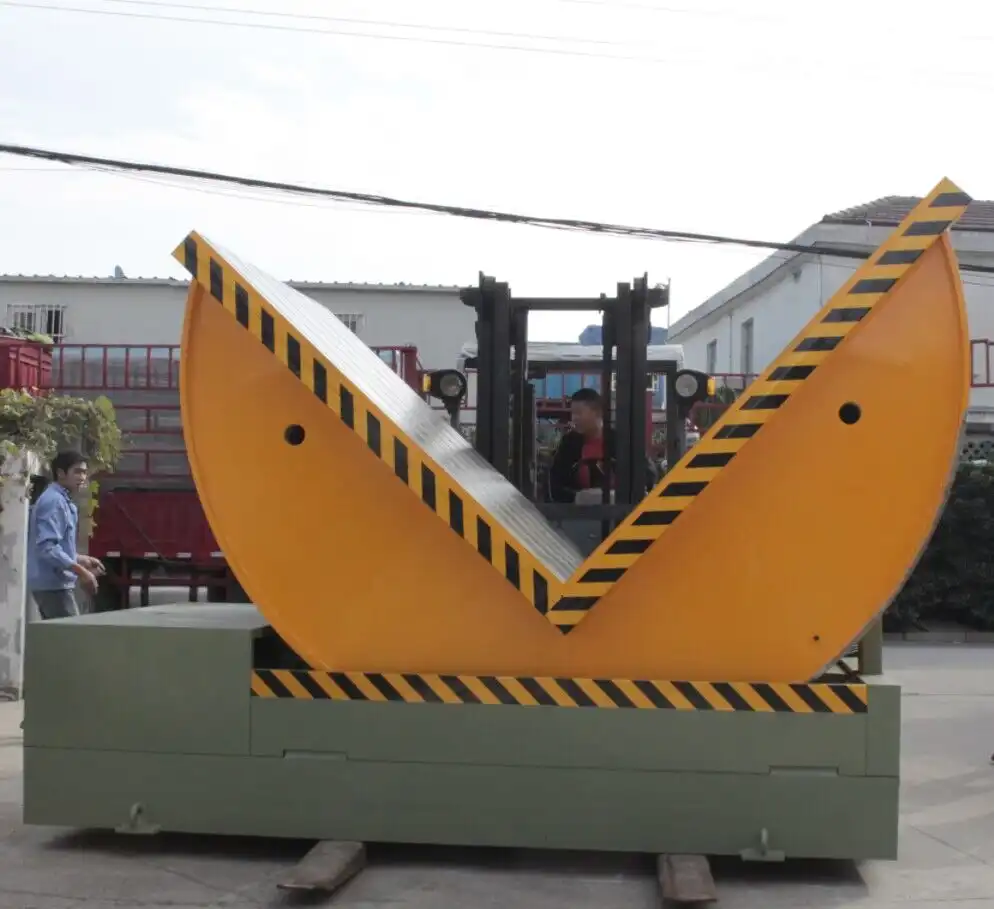
🤖 The Robot vs. Traditional Tilter: Choosing the Right Tool
This isn't a simple replacement. It's about selecting the right technology for the job. Here’s a critical breakdown to guide your decision.
✅ Choose a Robotic Manipulator When Your Operation Has:
- High-Mix, Variable Loads: You handle many different box sizes, weights (typically under 500 kg), and orientations daily.
- Space at a Premium: You need one cell to perform multiple functions (e.g., unload a pallet, inspect, tilt for labeling, and place on conveyor).
- Demanding Speed & Precision: The task requires very fast cycle times and exact placement accuracy for delicate items.
- Frequent Changeovers: Your product lines change weekly or monthly, and you can't afford downtime for mechanical adjustments.
✅ Choose a Traditional (Hydraulic/Pneumatic) Tilter/Upender When Your Operation Has:
- Extreme Weight & Size: Your primary loads are steel coils, large drums, or massive molds weighing several tons.
- Consistent, Repetitive Tasks: You need to perform the same 90-degree or 180-degree flip on a standard-sized load, thousands of times.
- Harsh Industrial Environment: The equipment faces dust, moisture, vibration, or temperature extremes that could challenge sensitive robots.
- Need for Pure, Simple Power: The core requirement is brute-force lifting and turning with maximum reliability and minimal complexity.
For a factory like Michael's, dealing with massive steel coils, a traditional heavy-duty upender is the non-negotiable backbone. However, in the same facility's finished goods packaging area for smaller fabricated parts, a robotic tilting station could revolutionize efficiency. The key trend for 2025 is collaboration. We will see more hybrid workcells where a robust Fengding upender handles the initial heavy coil orientation, feeding a line where smaller robotic arms then manage the final packing and palletizing of individual units. This layered approach uses each technology for its core strength. (core longtail keywords: robotic pallet tilter, flexible material handling robot, automated box tilting system)
3. Can Modular & Mobile Tilters Solve Your Space and Flexibility Crisis?
Every square meter of factory floor costs money. Installing a massive, permanent upender foundation can lock you into a single process flow for years. What happens when you need to reconfigure the line for a new product, or when your receiving dock gets clogged and you need to move a tilting operation temporarily? The traditional answer was costly, disruptive, and slow. This rigidity is a major pain point for growing businesses and multi-use facilities. The emerging solution asks a powerful question: what if your heavy-duty tilting equipment could be as easy to reposition as a forklift?
Absolutely. Modular and mobile tilter designs are a game-changer for dynamic logistics environments in 2025. These systems combine the power of stationary units with the agility of mobility, often using integrated wheel systems, battery power, or quick-disconnect hydraulics. This allows teams to deploy tilting capability exactly where it's needed, when it's needed—turning any flat space into a packaging station and eliminating bottlenecks caused by fixed equipment locations. 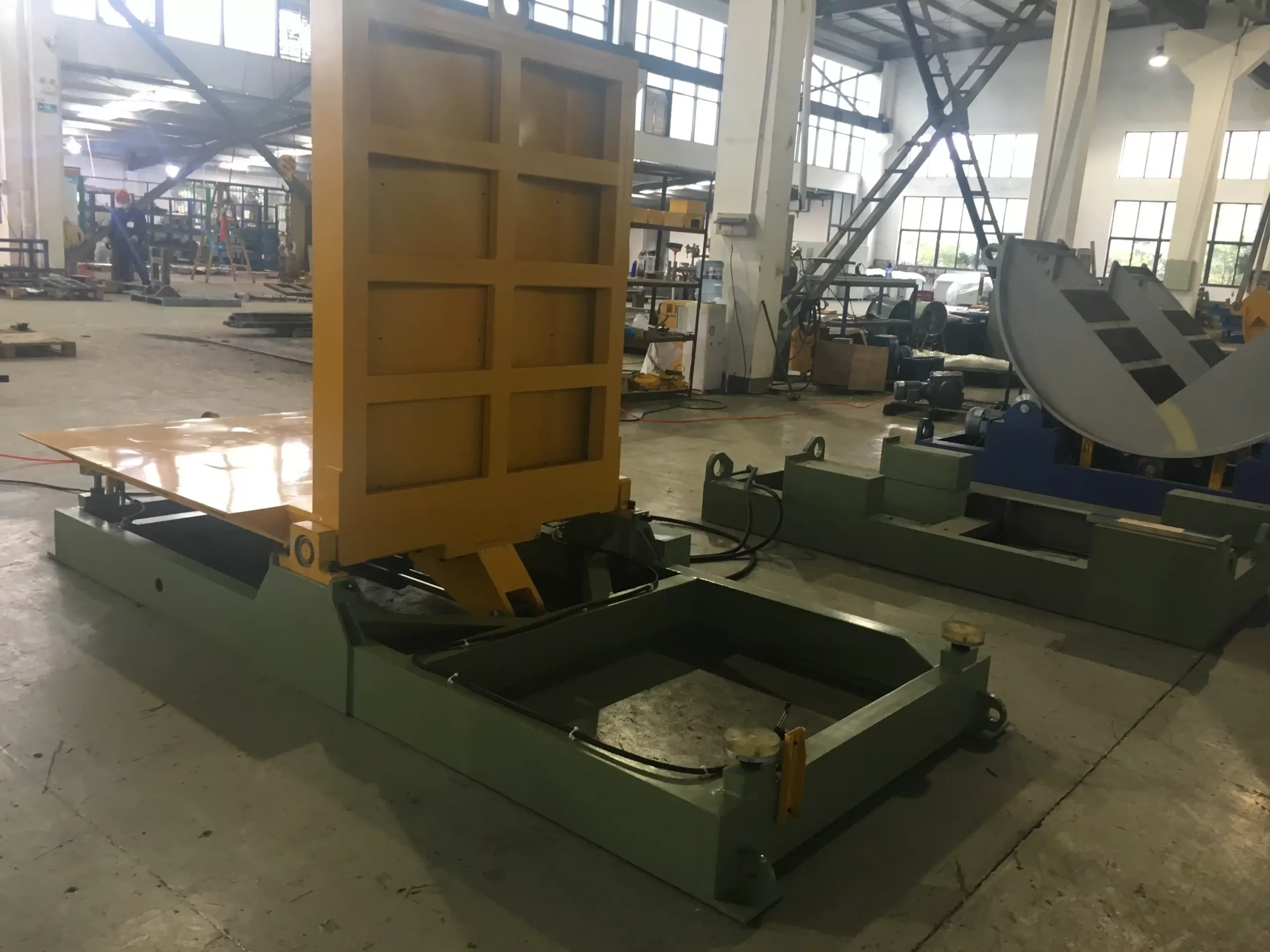
🚛 The Practical Power of Going Mobile
Let's move beyond the concept and see how mobile modularity solves real on-the-ground problems for a plant manager.
Scenario 1: The Seasonal Bottleneck.
Your main production line feeds into a permanent upender. During peak season, a secondary, smaller line is activated, but its output has nowhere to be turned and palletized. A mobile coil tilter can be driven over, connected to a power source, and begin operation in under an hour. You've doubled your tilting capacity without pouring concrete or shutting down the main line.
Scenario 2: The Maintenance Shuffle.
Your primary upender needs a two-day service. Instead of halting all shipping, you roll in a mobile unit to cover the critical orders. Production continues, and the maintenance team has clear, safe access to the stationary machine.
Scenario 3: The Multi-Use Warehouse.
Your warehouse stores everything from palletized goods to long bars and occasional coils. A fixed tilter for the occasional coil is a poor use of space. A mobile unit stored in a corner can be deployed for the few days a month it's needed, keeping the floor space open for other activities.
Key Features to Look For in 2025's Mobile Solutions:
- Self-Contained Power: Battery-electric or diesel-hydraulic packs for true independence from fixed power lines.
- Fast Hook-up Systems: Standardized connectors for quick attachment to plant air or hydraulic supplies.
- Integrated Safety: Features like outriggers, travel locks, and blue safety lights that activate when mobile.
- Modular Attachments: Swapable forks, cradles, or clamps to handle different load types (coils, drums, boxes) with the same base machine.
This trend is about operational resilience. Suppliers like Fengding and Wuxi Bu Hui are now offering robust mobile versions of their proven upender designs. For a manager, this means your capital investment isn't just buying a machine; it's buying optionality. You gain the ability to adapt your layout to market demands without sacrificing the core capability of safe, heavy-load handling. It turns a fixed cost center into a flexible asset. (core longtail keywords: mobile pallet upender, portable coil tilting equipment, modular logistics solutions)
4. How Do AI and Vision Systems Add "Eyes" to Upending?
You have a powerful upender. It can lift 20 tons smoothly. But what if the coil is off-center on the incoming conveyor? What if the pallet is damaged and leaning? The machine, blind to these variables, proceeds—often causing a jam, a near-miss, or product damage. The next frontier isn't about more power; it's about more awareness. The integration of Artificial Intelligence (AI) and machine vision is transforming upenders from dumb brute-force machines into perceptive partners. This raises a critical question for investors in new equipment: how can a camera and some software prevent my most expensive and frustrating downtime events?
AI and vision systems add critical "eyes" and "brains" to upending by enabling real-time load assessment, automatic guidance, and adaptive control. Before any movement begins, cameras scan the load to check its position, orientation, and integrity. AI algorithms then calculate the optimal grip points and lifting path, automatically adjusting the machine's arms or forks to compensate for misalignment, ensuring a perfectly centered and safe lift every single time.
👁️ The Step-by-Step Impact of an AI-Vision Upender
Let's trace how this technology intervenes to prevent specific failures in a typical coil packaging line.
Step 1: Pre-Lift Inspection (The "Eye Exam").
As the coil rolls into position, a vision system (often a 3D scanner or multiple cameras) instantly creates a digital model.
- It detects: "Coil is 5 cm too far to the left." / "Outer wrap is torn and may snag." / "The ID (inner diameter) is not perfectly round."
- It prevents: The forks crashing into the coil's side, the wrap tearing further and jamming the machine, or an uneven grip causing a dangerous tilt.
Step 2: Intelligent Path Planning (The "Brain").
The AI doesn't just see the problem; it solves it.
- It calculates: "Move the left fork 5 cm outward before extending." / "Adjust rotational speed to be slower due to the torn wrap." / "Slightly alter the center of rotation to account for the non-round ID."
- It enables: A smooth, first-time-right lift without operator intervention or manual measurement.
Step 3: Adaptive Process Control (The "Reflex").
During the lift and turn, sensors keep feeding data back.
- It monitors: Real-time weight distribution, vibration levels, and hydraulic pressure.
- It reacts: If an unexpected shift is detected mid-turn, the system can automatically pause or adjust its motion to stabilize the load, where a traditional machine might just keep going toward a failure.
For a manager, this translates to:
- Elimination of Setup Errors: No more relying on a tired operator's eyeball measurement at the end of a long shift.
- Predictive Insights: The system logs every anomaly (e.g., "10% of coils from Line B arrive misaligned"). This data pinpoints upstream process issues you didn't know you had.
- True Lights-Out Potential: For highly standardized processes, the system can operate fully automatically, enabling unmanned shifts in the packaging area.
In 2025, this isn't just for high-tech industries. Leading manufacturers of standard upenders, like Fengding, are offering vision guidance as a scalable add-on. It represents the most direct path to achieving Michael's goals of zero product damage and removing human variability from the safety-critical tipping point of the packaging process. (core longtail keywords: AI vision guided upender, smart coil positioning system, automated load alignment technology)
5. Is the Future Electric? The Rise of Sustainable Tilter Platforms.
The industrial world is under growing pressure—from regulations, corporate sustainability goals, and even energy costs—to reduce its carbon footprint and noise pollution. In the past, "green" equipment often meant a compromise: less power, higher cost, or untested technology. This created skepticism for managers who need guaranteed performance. But the technology has matured dramatically. Now, the question is urgent and practical: can electric and hybrid upenders deliver the same relentless performance as their hydraulic or pneumatic ancestors, while saving me money on energy and maintenance, and keeping my plant cleaner and quieter?
Yes, the future is increasingly electric. Sustainable tilter platforms, primarily full-electric and electro-hydraulic hybrid systems, are now viable and superior for many indoor and urban logistics applications in 2025. They deliver comparable power with significant advantages: near-silent operation, zero local emissions, drastically reduced heat output, and much lower lifetime energy and maintenance costs due to fewer moving parts and no hydraulic oil.
⚡ Comparing Power Sources for Your Tilter Investment
Choosing a power source is a strategic decision with long-term operational implications. Here’s a clear comparison.
graph TD
    A[Choose Tilter Power Source] --> B{Primary Operating Environment?};
    B -->|Harsh, Outdoor, Extreme Duty| C[Traditional Hydraulic];
    B -->|Indoor, Mixed-Use, Urban| D[Electric/Hybrid];

    C --> C1[Pros: Max Power, Durability, Proven Tech];
    C --> C2[Cons: Noise, Oil Leaks, Heat, Higher Op Cost];
    C1 --> C3[Best For: Steel Mills, Foundries, Heavy Casting];

    D --> D1[Pros: Quiet, Clean, Low Op Cost, Precise];
    D --> D2[Cons: Higher Initial Cost, Power Dependency];
    D1 --> D3[Best For: Food/Bev, Pharma, Urban Warehouses, Clean Mfg];
Why This Shift Matters for Your Bottom Line:
- Total Cost of Ownership (TCO): An electric upender has a higher sticker price. However, calculate the savings: no hydraulic oil to buy, filter, or dispose of; 40-60% less energy consumption; and far fewer components (pumps, hoses, valves) that can fail. Over 5-7 years, the TCO often favors electric.
- Unlocking New Spaces: Their quiet, clean operation allows you to place them inside final packaging areas or near office spaces without complaints. This shortens material travel and improves flow.
- Regulatory Future-Proofing: Cities and states are increasingly imposing noise and emission limits. Investing in electric technology now avoids costly retrofits or replacements later.
- Precision & Control: Electric servo motors offer exceptional control over speed and position, which is ideal for handling delicate or high-value finished products.
The 2025 Landscape: